
SaaS Architecture Explained: How Modern Cloud Platforms Are Built
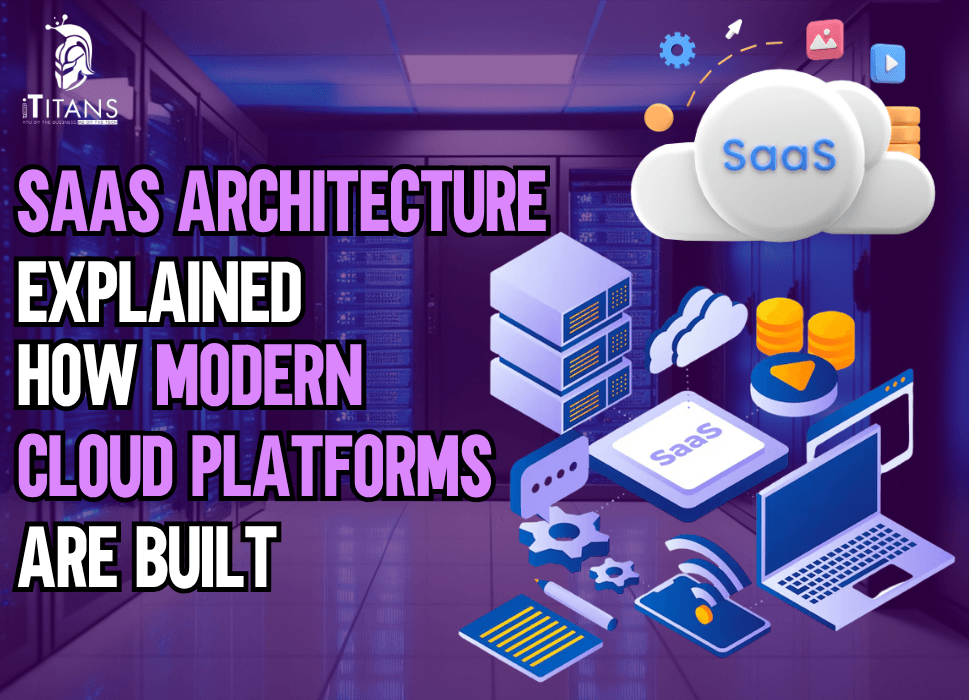
Modern businesses run on software that lives in the cloud. From project management apps and CRMs to AI-powered analytics platforms, Software as a Service (SaaS) has changed how companies build, deliver, and scale digital products.
But behind every smooth user experience is a carefully designed SaaS architecture that keeps everything running fast, secure, and reliable. Today’s cloud-native platforms are no longer simple web applications hosted on a single server. They rely on distributed systems, microservices, APIs, container orchestration, automation pipelines, and scalable cloud infrastructure.
As organizations push for better performance and lower operational overhead, understanding SaaS architecture has become essential for founders, CTOs, startups, and enterprises alike.
What is SaaS Architecture?
SaaS architecture refers to the technical framework used to build, deploy, manage, and scale cloud-based software applications delivered through the internet. Instead of installing software on local devices or company servers, users access SaaS applications through browsers or mobile apps.
Think about platforms like Slack, Zoom, Shopify, or Notion. Millions of users interact with these platforms every day without worrying about installation, maintenance, or infrastructure management. That seamless experience is only possible because of modern cloud architecture.
At its core, SaaS architecture combines several technologies:
- Frontend interfaces
- Backend services
- Databases
- APIs
- Cloud hosting
- Authentication systems
- Monitoring tools
- Security layers
- CI/CD pipelines
The goal is simple: create software that is scalable, reliable, secure, and accessible from anywhere.

Why SaaS Architecture Matters More Than Ever
The SaaS market has exploded over the last decade. Businesses want flexible software subscriptions instead of expensive on-premise deployments. Customers expect instant updates, real-time collaboration, and always-on availability.
This demand has pushed software engineering teams to rethink how applications are built. Traditional monolithic systems struggle to keep up with modern performance expectations. If one component fails, the entire application may go down. Scaling also becomes expensive because the whole application must scale together.
Modern SaaS platforms avoid these limitations by adopting cloud-native architecture patterns. According to Gartner, public cloud spending is expected to reach $723.4 billion in 2025, driven largely by AI workloads, hybrid cloud adoption, and cloud-native infrastructure.
This growth reflects a major shift in how companies approach digital transformation, custom software development, and enterprise application modernization.
Core Components of Modern SaaS Architecture
Frontend Layer
The frontend is what users interact with directly. It includes web dashboards, mobile interfaces, customer portals, and admin panels.
Modern SaaS applications often use frontend frameworks like:
- React
- Vue.js
- Angular
- Next.js
The frontend communicates with backend services through APIs. It handles user interactions, form submissions, notifications, dashboards, and real-time updates.
User experience matters heavily in SaaS products because competition is intense. Slow loading times or confusing interfaces can quickly drive customers away.
That is why many SaaS development companies invest heavily in UI/UX design services alongside frontend engineering.
Backend Services
The backend powers the actual business logic of the platform. It processes data, manages workflows, handles authentication, and connects external systems.
Modern SaaS architecture usually breaks backend functionality into smaller independent services called microservices.
For example, an eCommerce SaaS platform may separate:
- User management
- Payments
- Inventory
- Notifications
- Analytics
- Reporting
Each service operates independently while communicating through APIs.
This architecture improves scalability because teams can update or scale one service without affecting the entire system.
Databases and Data Storage
Data is the foundation of every SaaS application. Modern cloud platforms typically use multiple types of databases depending on their needs:
Relational Databases
These include:
- PostgreSQL
- MySQL
- Microsoft SQL Server
They work well for structured transactional data.
NoSQL Databases
Examples include:
- MongoDB
- Cassandra
- DynamoDB
These are ideal for flexible schemas and large-scale distributed applications.
Object Storage
Services like Amazon S3 store files, media assets, backups, and documents. Many SaaS products combine several storage approaches to optimize performance and cost.
Monolithic vs Microservices Architecture
One of the biggest conversations in SaaS engineering is the difference between monolithic and microservices architecture.
Monolithic Architecture
A monolithic application contains all functionality inside one codebase. This approach is simpler initially because everything lives together. Early-stage startups often begin with monolithic systems because they are faster to launch.
However, problems emerge as applications grow:
- Slower deployments
- Difficult maintenance
- Scaling limitations
- Increased downtime risks
- Dependency conflicts
Microservices Architecture
Microservices break applications into smaller independent services.
Each service:
- Handles a specific function
- Runs independently
- Has its own deployment cycle
- Communicates through APIs
This model improves flexibility and scalability significantly. Companies like Netflix, Amazon, and Uber popularized microservices because they needed infrastructure capable of supporting millions of users globally.
Still, microservices introduce complexity:
- Service discovery
- Distributed monitoring
- Network latency
- API management
- Data consistency challenges
That is why experienced cloud consulting teams are often needed to architect these environments correctly.
What is the Role of APIs in SaaS Platforms
APIs are the backbone of SaaS ecosystems. They allow different services, applications, and third-party tools to communicate seamlessly.
For example:
- Stripe APIs process payments
- Twilio APIs handle messaging
- Google Maps APIs power location services
- OpenAI APIs deliver AI capabilities
Modern SaaS products heavily rely on API-first development strategies. This approach improves:
- Integrations
- Mobile compatibility
- Partner ecosystems
- Automation
- Scalability
API gateways also help manage authentication, traffic routing, and rate limiting across cloud platforms.
Cloud Infrastructure: The Foundation of SaaS
Modern SaaS applications rarely rely on physical servers anymore. Instead, they run on cloud infrastructure platforms like:
- Amazon Web Services (AWS)
- Microsoft Azure
- Google Cloud Platform (GCP)
Cloud infrastructure provides:
- Elastic scaling
- High availability
- Disaster recovery
- Global deployment
- Automated provisioning
This flexibility allows SaaS companies to grow rapidly without massive upfront hardware investments. According to Gartner, 90% of organizations are expected to adopt hybrid cloud environments by 2027.
That means modern SaaS architecture increasingly supports:
- Public cloud
- Private cloud
- Multi-cloud deployments
- Hybrid infrastructure
Containers and Kubernetes in SaaS Development
Containers revolutionized modern cloud platforms. Tools like Docker package applications with all dependencies included. This ensures consistency across development, testing, and production environments.
Instead of saying:
“It works on my machine,”
developers now deploy identical containerized environments everywhere.
However, managing thousands of containers manually becomes impossible at scale. That is where Kubernetes enters the picture.
Kubernetes automates:
- Container deployment
- Scaling
- Load balancing
- Self-healing
- Service orchestration
Today, Kubernetes has become one of the most important technologies in SaaS product engineering. Large-scale SaaS systems rely on Kubernetes for resilience and operational efficiency.
Multi-Tenant Architecture Explained
Most SaaS products use multi-tenant architecture.
In this model:
- Multiple customers share the same infrastructure
- Each customer’s data remains isolated
- Resources are efficiently utilized
Think of it like an apartment building:
- Tenants share the building
- Each has private rooms and secure access
Multi-tenancy dramatically reduces operational costs while improving scalability.
However, it also creates challenges:
- Data isolation
- Security compliance
- Performance balancing
- Customization limitations
Choosing between single vs multitenant SaaS environment depends on the security and resource allocation preferences of the business.
Scalability: How SaaS Platforms Handle Millions of Users
Scalability is one of the defining characteristics of modern SaaS architecture. As user demand increases, systems must maintain performance without interruptions. There are two primary scaling approaches:
Vertical Scaling
Adding more power to existing servers:
- More CPU
- More RAM
- Faster storage
Horizontal Scaling
Adding more servers or instances. Modern cloud-native platforms prefer horizontal scaling because it improves redundancy and fault tolerance. These technologies can help SaaS applications support global traffic efficiently:
- Load balancers
- Auto-scaling groups
- Distributed databases
- Content delivery networks (CDNs)
Security in SaaS Architecture
Security is one of the most critical aspects of cloud platform engineering. A single vulnerability can expose millions of users. Modern SaaS security strategies include:
Identity and Access Management
Using:
- OAuth
- SSO
- MFA
- Role-based access controls
Encryption
Data encryption:
- At rest
- In transit
Zero Trust Architecture
Every request must be verified continuously.
Compliance Standards
SaaS platforms often follow:
- GDPR
- HIPAA
- SOC 2
- ISO 27001
Cybersecurity services now play a massive role in SaaS product development. As AI adoption increases, security complexity continues growing.
CI/CD Pipelines and DevOps Automation
Modern SaaS platforms deploy updates constantly. Some release new code dozens of times daily.
This speed is only possible through:
- DevOps practices
- Continuous Integration (CI)
- Continuous Deployment (CD)
CI/CD pipelines automate:
- Testing
- Code validation
- Deployment
- Rollbacks
- Monitoring
Popular DevOps tools include:
- GitHub Actions
- Jenkins
- GitLab CI/CD
- CircleCI
Automation reduces deployment risks while accelerating product innovation.

Observability and Monitoring in SaaS Platforms
Modern cloud systems generate enormous amounts of data. Without proper monitoring, debugging distributed systems becomes nearly impossible. Observability focuses on understanding system behavior through:
- Logs
- Metrics
- Traces
Popular tools include:
- Datadog
- Prometheus
- Grafana
- New Relic
Monitoring helps engineering teams detect:
- Performance bottlenecks
- Security incidents
- Downtime risks
- API failures
Real-time observability has become essential for enterprise SaaS reliability.
Rise of AI-Native SaaS Architecture
Artificial intelligence is rapidly reshaping SaaS architecture. Traditional vs SaaS applications are evolving into AI-powered platforms capable of:
- Automation
- Predictive analytics
- Natural language interactions
- Personalized workflows
According to recent industry reports, 75% of SaaS companies have already shipped AI features into their products. AI-native architecture introduces new infrastructure requirements:
- GPU compute environments
- Vector databases
- Model orchestration
- Real-time inference pipelines
- AI observability
This has increased demand for AI app development services and machine learning infrastructure expertise. Companies are now redesigning cloud systems specifically around AI workloads.
Serverless Architecture in SaaS Applications
Serverless computing has become increasingly popular in modern SaaS environments. With serverless architecture:
- Developers focus on code
- Cloud providers manage infrastructure automatically
Examples include:
- AWS Lambda
- Azure Functions
- Google Cloud Functions
Benefits include:
- Reduced operational overhead
- Automatic scaling
- Faster deployments
- Lower infrastructure management effort
However, serverless also introduces:
- Cold start latency
- Vendor lock-in concerns
- Execution time limitations
Many SaaS platforms now combine serverless and containerized workloads together.
Data Analytics and Real-Time Processing
Modern SaaS platforms rely heavily on data analytics. Businesses want actionable insights instantly. This has pushed SaaS engineering toward:
- Event-driven architecture
- Real-time streaming
- Distributed analytics systems
These Technologies enable real-time data processing at scale:
- Apache Kafka
- Apache Spark
- Flink
For example:
- Financial SaaS platforms monitor transactions instantly
- Marketing platforms track live engagement
- Logistics systems process location updates in real time
Data engineering services have become deeply integrated into SaaS architecture strategies.
Edge Computing and Global Performance Optimization
As SaaS platforms expand globally, latency becomes a major concern. Edge computing addresses this by processing data closer to users. CDNs and edge networks reduce delays by caching assets geographically.
This improves:
- Streaming performance
- Gaming applications
- AI inference
- Mobile responsiveness
Global SaaS providers increasingly deploy workloads across multiple regions to maintain fast user experiences worldwide.
Challenges of Building Modern SaaS Platforms
While modern cloud architecture offers incredible flexibility, it also introduces major engineering challenges.
Operational Complexity
Distributed systems require advanced expertise in:
- Networking
- Infrastructure
- Security
- Monitoring
Cloud Cost Management
Poorly optimized cloud environments can become extremely expensive.
Data Governance
Managing compliance across multiple regions becomes difficult at scale.
Service Reliability
One failing microservice can create cascading failures across the platform.
Talent Requirements
Building scalable SaaS systems requires:
- Cloud engineers
- DevOps specialists
- Backend architects
- Security experts
- Data engineers
This is why many companies partner with experienced software development firms instead of building everything internally.
How SaaS Architecture Impacts User Experience
Users may never see the architecture behind a SaaS product, but they experience its impact every day.
Good architecture creates:
- Faster load times
- Reliable uptime
- Seamless collaboration
- Better integrations
- Real-time responsiveness
Poor architecture creates:
- Crashes
- Slow dashboards
- Data inconsistencies
- Security concerns
In today’s market, user expectations are extremely high. The average company now uses more than 130 SaaS applications, making customer retention increasingly competitive. Performance and reliability directly influence subscription renewals and long-term growth.

Business Side of SaaS Infrastructure
SaaS architecture is not only a technical discussion. It directly affects business performance. Efficient architecture improves:
- Customer retention
- Infrastructure costs
- Feature delivery speed
- Scalability
- Revenue growth
According to Gartner, software spending is expected to exceed $1.23 trillion globally in 2025. Businesses investing in cloud modernization and scalable SaaS development are positioning themselves for long-term digital growth.
How iTitans Helps Businesses Build Scalable SaaS Platforms
iTitans is a USA-based software development company that helps businesses build scalable digital products for modern cloud environments. With expertise in SaaS product engineering, mobile app development, web application development, and digital transformation services, iTitans supports organizations throughout the entire product lifecycle.
How iTitans Contributes to SaaS Systems?
As SaaS architecture becomes increasingly complex, businesses often need experienced technical teams that understand cloud infrastructure, scalable backend systems, API integrations, DevOps automation, and post-launch optimization. iTitans works with startups, enterprises, and growing businesses to create high-performance digital platforms designed for long-term scalability.
Providing Complete Digital Transformation
Beyond development, iTitans also helps companies navigate digital transformation with scalable technology strategies and reliable technical support that aligns with business growth goals.
For organizations planning to launch a SaaS platform or modernize legacy applications, working with experienced cloud-focused engineering teams can significantly reduce technical debt and accelerate product delivery timelines.
Future Trends in SaaS Architecture
The future of SaaS architecture is evolving quickly. Several major trends are shaping the next generation of cloud platforms.
AI-Driven Infrastructure
AI will increasingly automate:
- Resource allocation
- Monitoring
- Security detection
- Performance optimization
Composable Architecture
Businesses want modular systems that integrate easily with third-party tools.
Low-Code and No-Code Platforms
These platforms are making SaaS product development faster for non-technical users.
Industry-Specific SaaS
Vertical SaaS products tailored to industries like healthcare, logistics, fintech, and education continue growing rapidly.
Multi-Cloud Strategies
Organizations increasingly avoid depending entirely on a single cloud provider.
Green Cloud Computing
Sustainability and energy-efficient infrastructure are becoming more important in enterprise IT strategies.
Why Modern SaaS Architecture Is Built Around Flexibility
One thing is clear: flexibility now drives software engineering decisions. Businesses need platforms capable of adapting quickly to:
- Market shifts
- AI adoption
- User demand
- Security risks
- Global expansion
That is why modern SaaS architecture emphasizes:
- Decoupled systems
- API-first design
- Cloud-native infrastructure
- Automation
- Real-time scalability
The old approach of deploying rigid software every few years no longer works.
SaaS Architecture: In a Nutshell!
SaaS architecture has become the foundation of modern digital business. Behind every successful cloud platform is a carefully engineered ecosystem of APIs, microservices, databases, cloud infrastructure, automation pipelines, and security layers working together seamlessly.
As cloud adoption accelerates and AI transforms software development, SaaS architecture will continue evolving toward even greater scalability, intelligence, and flexibility. Companies that invest in modern cloud-native engineering practices will be better prepared to handle growth, improve customer experiences, and adapt to changing technology demands.
With the right technical partner, you can always understand and implement the SaaS architecture more accurately. Share your requirements with iTitians and let the experts handle the SaaS architecture for your business!
FAQs
How does multi-tenant architecture work in SaaS platforms?
Multi-tenant architecture allows multiple customers, or tenants, to use the same software application while keeping their data separate and secure. Instead of creating a separate infrastructure for every client, SaaS providers share resources efficiently across users.
What role do APIs play in modern SaaS architecture?
APIs, or Application Programming Interfaces, act as communication bridges between different software systems within a SaaS platform. They allow applications to exchange data and integrate with third-party services like payment gateways, CRMs, and analytics tools. APIs make SaaS platforms flexible and highly customizable for businesses.
Why is scalability a core feature of SaaS architecture?
Scalability ensures that a SaaS platform can handle growing numbers of users, workloads, and data without performance issues. Cloud infrastructure allows providers to add resources dynamically whenever demand increases. This flexibility is essential for businesses experiencing rapid growth or seasonal traffic spikes. A scalable architecture also improves reliability and maintains smooth user experiences during high usage periods.
What is the difference between monolithic and microservices architecture in SaaS?
A monolithic architecture combines all application functions into a single system, making development simpler initially but harder to scale over time. Microservices architecture breaks the application into smaller, independent services that communicate through APIs. This modular approach improves flexibility, faster deployment, and fault isolation. Many modern SaaS companies prefer microservices because they support continuous updates and better scalability.
How does cloud computing support SaaS applications?
Cloud computing provides the infrastructure, storage, and computing power required to run SaaS applications online. Instead of relying on physical servers, SaaS platforms use cloud providers to host applications across distributed environments. This setup improves uptime, global accessibility, and cost efficiency for businesses.