
SaaS vs Traditional Software | Key Differences
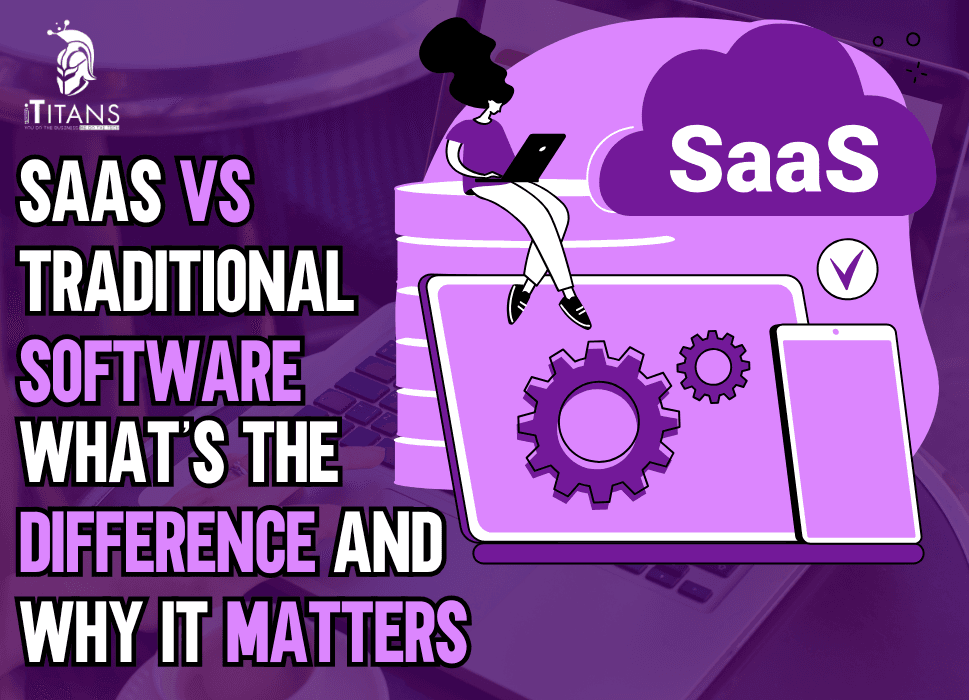
In today’s digital-first world, the way we interact with software has undergone a massive transformation. From loading bulky programs via CDs to logging into sleek web-based platforms from any device, the shift has been profound.
This evolution has sparked a common debate among businesses, developers, and even end-users: SaaS vs traditional software. But what really sets them apart? And more importantly, why should anyone care?
Let’s explore the contrast between Software as a Service (SaaS) and traditional software models, not just the technical aspects, but also why understanding this difference matters in today’s fast-paced business environment.
Understanding the Basics: What is Traditional Software?
Before we jump into the comparisons, let’s take a quick look at what traditional software actually is. Traditional software is what many of us grew up using, often referred to as on-premise software. Think Microsoft Office installed directly on your PC or a licensed version of Adobe Photoshop that you purchased once and used for years.
In this model, the software is physically installed on your computer or servers. You usually pay for a one-time license, and you’re responsible for updates, security, and maintenance. For businesses, this means maintaining in-house IT teams and infrastructure to keep things running smoothly.
The biggest draw for traditional software in the past was ownership and control. Once you bought it, it was yours. No monthly payments. No reliance on an internet connection. But as technology advanced, the cracks in this approach began to show.

What is SaaS? A Modern Take on Software Delivery
SaaS, or Software as a Service, flips the old model on its head. Instead of installing the software locally, you access it via the internet. The provider hosts, maintains, and updates the software on their own servers, and users typically pay a subscription fee, monthly or annually.
Platforms like Google Workspace, Salesforce, Dropbox, and Slack are all SaaS. You log in through a browser, your data is stored in the cloud, and you get automatic updates without lifting a finger.
According to a report by Gartner, the SaaS market is projected to grow to $232 billion by 2025, up from $146 billion in 2021. This rapid rise reflects how quickly businesses are moving away from the old model and embracing the benefits of cloud-based platforms.
Installation and Accessibility: Convenience Wins
One of the most significant differences between SaaS and traditional software is how they’re accessed and deployed.
Traditional software often requires installation on each device. If you’re a business rolling out a new system across multiple departments, this can be time-consuming and prone to errors.
SaaS, on the other hand, is accessible via web browsers. There’s no setup required on individual machines, and employees can use the software from virtually anywhere.
This ease of accessibility has been a game-changer, especially with the rise of remote work. Teams can collaborate in real-time, access data on the go, and scale quickly, something that was much harder with legacy software systems.
Cost Structure: Upfront vs Ongoing Investment
Money talks, especially when it comes to choosing the right tech tools for your business. Traditional software often comes with a hefty upfront cost. You pay for licenses, hardware, and the personnel needed to manage it. It’s a significant capital expense.
SaaS takes a different route. With a subscription-based model, you pay smaller amounts over time. While it may seem like a continuous expense, the total cost of ownership is often lower in the long run. Plus, you don’t have to worry about paying extra for updates or support.
A recent survey by BetterCloud found that 73% of organizations say SaaS is critical to their business success, largely due to its flexibility and budget-friendly nature. For startups and growing businesses, SaaS removes the barrier of massive initial investment.
Maintenance and Updates: Who’s Got the Wheel?
Another major distinction lies in who’s responsible for keeping things up to date. With traditional software, it’s all on you. Whether it’s patches, upgrades, or bug fixes, your IT team needs to handle it all, and that often means downtime and extra costs.
SaaS providers manage everything behind the scenes. Updates happen automatically, usually without any disruption. This ensures that users are always running the latest version, which is crucial for security and performance.
For businesses that don’t have the resources to maintain an in-house IT department, this hands-off approach is a big win.

Scalability and Flexibility: Adapting on the Fly
Today’s market demands agility. Whether you’re launching a new product or expanding your team, your software should grow with you.
Traditional software isn’t exactly known for flexibility. Adding users often means purchasing more licenses, installing software on new devices, and maybe even upgrading your infrastructure.
SaaS thrives on scalability. Most platforms allow you to add or remove users in a few clicks, adjust features based on your needs, and scale usage in real time. This is particularly beneficial for companies experiencing rapid growth or seasonal fluctuations.
Security Considerations: Who Keeps Your Data Safe?
Security is a hot-button issue in both models, and it often sparks debate. With traditional software, businesses have full control over their data and infrastructure. This can be appealing to industries with strict compliance requirements, like finance or healthcare.
However, with control comes responsibility. You’re on the hook for firewalls, encryption, backups, and more.
SaaS vendors, especially reputable ones, invest heavily in cybersecurity. They typically offer features like multi-factor authentication, end-to-end encryption, and regular security audits. For many small to mid-sized businesses, trusting a SaaS provider’s infrastructure is safer than managing their own.
According to a Cybersecurity Ventures report, SaaS platforms experience fewer data breaches per capita compared to on-premise software, thanks to their robust security frameworks.
Customization and Integration: Building Your Ecosystem
Businesses often need to tweak software to fit their workflows. Traditional software offers deep customization but usually at a high cost. You might need developers to modify the code, and changes could break compatibility with future updates.
SaaS platforms are designed for plug-and-play integration. While customization is sometimes limited, APIs and third-party integrations make it easier to connect SaaS with tools you already use, from CRMs to payment gateways.
Modern SaaS tools are also adopting modular architectures, allowing businesses to activate only the features they need without overcomplicating things.
Performance and Reliability: Staying Online, All the Time
Downtime can cost businesses more than just money, it can damage trust and reputation. Traditional software relies on your internal infrastructure, meaning hardware failures or power outages can bring everything to a halt.
SaaS operates on distributed cloud environments with built-in redundancies. Most reputable vendors boast uptime guarantees of 99.9% or higher, and they’re equipped with disaster recovery mechanisms to ensure continuity.
The Global Shift: Why SaaS is Taking Over
The numbers don’t lie, businesses are rapidly adopting SaaS. A McKinsey report predicts that by 2030, over 80% of software will be delivered via SaaS models. The shift isn’t just about convenience; it’s about staying competitive.
Companies need to move fast, collaborate across borders, and reduce overhead. SaaS enables all of that and more. It’s also empowering smaller businesses that previously couldn’t afford enterprise-grade software to access powerful tools and compete with the big players.
When Traditional Software Still Makes Sense
While SaaS has undeniable advantages, traditional software isn’t entirely obsolete. Certain industries with rigid compliance requirements or highly sensitive data may still prefer on-premise systems.
Moreover, businesses operating in areas with limited internet connectivity might opt for locally installed programs for reliability.
In some cases, hybrid models, combining elements of both SaaS and traditional software, offer the best of both worlds.

How iTitans Bridges the Gap in a SaaS-Driven World
Now, let’s talk about a company that truly understands this shift, iTitans. As a U.S.-based full-service software development company with a global reach, iTitans is right at the heart of the SaaS revolution.
Cloud Ready Software
Whether it’s building custom SaaS platforms, transforming legacy software into cloud-ready applications, or crafting intuitive mobile apps and websites, iTitans brings a mix of innovation and technical depth.
Wide Range Expertise
Their expertise spans across website development, mobile app development, UI/UX design, SEO, and even digital transformation. For companies ready to move beyond traditional models, iTitans provides a tailored approach to embracing modern, scalable, and efficient digital ecosystems.
Scalable Solutions
iTitans don’t just build software, they help businesses evolve. By focusing on long-term adaptability and business growth, they make the SaaS transition not just possible but profitable.
So, whether you’re a startup exploring an MVP or an enterprise looking to digitize workflows, iTitans is uniquely positioned to deliver the right architecture and experiences to support your journey.
How to Choose Between SaaS vs Traditional Software
Understand Your Business Needs
The first step in choosing between SaaS (Software as a Service) and traditional software is assessing your business requirements. SaaS is ideal for companies that need flexibility, scalability, and minimal IT involvement, while traditional software suits firms needing total control over their systems and customization. Startups and SMBs often lean towards SaaS due to its cost-effectiveness and easy deployment.
Consider the Cost Structure
SaaS usually operates on a subscription model, with monthly or annual fees, whereas traditional software involves a one-time purchase or perpetual license with recurring maintenance costs. According to Gartner, SaaS spending reached $197 billion in 2023, reflecting its growing preference due to lower upfront investment. Traditional models might be cost-effective in the long run but require higher initial capital.
Evaluate Deployment Time
SaaS applications are quick to deploy, often ready to use within minutes or hours. In contrast, traditional software installation can take days or weeks due to setup, hardware requirements, and compatibility checks. Businesses looking for speed and minimal downtime generally prefer SaaS, especially in fast-paced industries or for remote teams.
Examine Customization Options
Traditional software often offers greater customization possibilities since companies have direct access to the source code and local servers. SaaS, while improving in flexibility, still has limited customization due to shared infrastructure. Enterprises requiring highly tailored solutions, such as in finance or healthcare, might favor on-premise software.
Assess Maintenance and Support
With SaaS, the vendor handles all updates, maintenance, and technical support, freeing internal teams from these burdens. Traditional software requires manual updates, IT resources, and sometimes vendor assistance for upgrades. Companies lacking robust IT departments may find SaaS more manageable and efficient.
Look at Security Requirements
Data security is a critical factor. SaaS providers offer high-level security standards (like ISO 27001 or SOC 2 compliance), but data resides off-site, often raising regulatory concerns. Traditional software allows full data control within internal servers, appealing to organizations with stringent compliance needs. However, internal security costs and risks increase accordingly.
Review Scalability Potential
SaaS excels in scalability; it’s easy to add users, modules, or features as business needs grow. This makes it suitable for dynamic businesses experiencing rapid growth. Traditional software requires manual reconfiguration or hardware upgrades, often making scaling cumbersome and costly over time.
Determine Integration Capabilities
Most modern SaaS platforms offer seamless integration with popular tools like Slack, Salesforce, or QuickBooks through APIs. Traditional software might require custom development or third-party middleware for integration, which can be time-consuming and expensive. For businesses that rely on a diverse tech stack, SaaS is typically more integration-friendly.
Analyze Offline Accessibility
One advantage of traditional software is offline access, it operates even without internet connectivity. SaaS applications, being cloud-based, require stable internet to function optimally, though many offer limited offline capabilities. Businesses in areas with poor connectivity might favor traditional models.
Check Regulatory Compliance
Highly regulated industries (like government, banking, or pharmaceuticals) may have strict compliance rules that demand data residency, full audit trails, or internal control. Traditional software offers better alignment with such requirements, while SaaS vendors must be carefully vetted for compliance certifications and legal data handling.
Factor in IT Resources and Expertise
If your organization lacks a dedicated IT team, SaaS can be a game-changer. The vendor handles everything, from provisioning to patching. Traditional software, however, requires in-house technical expertise for implementation, maintenance, and troubleshooting. For lean organizations, SaaS offers a lower operational burden.
Consider Vendor Lock-In Risks
SaaS customers often face lock-in with specific vendors, making migrations difficult due to proprietary data formats or integration dependencies. Traditional software, particularly open-source options, allows more control over the system and data. Businesses with long-term strategic plans may weigh this risk heavily.
Review Update and Innovation Cycles
SaaS solutions receive regular updates with the latest features, security patches, and performance enhancements, often without user intervention. Traditional software updates are slower, manual, and sometimes costly. If staying technologically current is a priority, SaaS is generally more agile and innovative.
Evaluate User Experience and Accessibility
SaaS platforms are typically built for modern usability, featuring intuitive interfaces and mobile compatibility. Traditional software may have legacy UI/UX design that doesn’t meet today’s accessibility or design standards. For customer-facing or user-driven tools, SaaS often delivers a better experience.

Compare Vendor Ecosystems and Community
SaaS products usually benefit from active communities, third-party add-ons, and robust knowledge bases. Traditional software may have limited ecosystem support, especially if it’s niche or older. An active ecosystem helps users troubleshoot faster, explore integrations, and stay ahead of feature trends.
Analyze Total Cost of Ownership (TCO)
While SaaS is cheaper upfront, recurring fees can add up over time. Traditional software might have a higher TCO initially due to hardware, licenses, and IT infrastructure but becomes more economical long-term for stable environments. A TCO analysis over 3–5 years helps in making the right financial decision.
Project Future Business Needs
Think ahead: will your company expand, go remote, or adopt AI/ML tools? SaaS platforms are better positioned to evolve with future tech trends due to continuous cloud development. Traditional software might lag behind, needing periodic overhauls to stay competitive. Your future roadmap should align with your software strategy.
Why This Debate Really Matters
At its core, the debate between SaaS vs traditional software isn’t about which is better, it’s about what fits your needs today, and tomorrow. SaaS is clearly leading the charge in accessibility, scalability, and cost-efficiency. But traditional models still have a place, especially where customization, compliance, or autonomy are critical.
The important thing is understanding how each model impacts your operations, security, finances, and growth potential. As the digital landscape continues to evolve, staying informed isn’t just smart, it’s essential.
And if you’re looking for a team that can guide you through these decisions with expertise and global experience, iTitans is a name worth remembering.
Ready to get a SaaS based product that aligns with your business needs? Contact iTitans and get a free consultation on if you should go with traditional software or SaaS based products.
FAQs
What is the main difference between SaaS and traditional software?
The biggest difference lies in how the software is delivered and maintained. SaaS (Software as a Service) runs on the cloud and is accessed via the internet, usually through a subscription. Traditional software, on the other hand, is typically installed directly on a device or server and may require a one-time license purchase. With SaaS, updates and maintenance are handled by the provider, which makes it more convenient.
Why are businesses shifting towards SaaS over traditional software?
Companies are increasingly choosing SaaS because it’s flexible, scalable, and cost-effective. According to Statista, the global SaaS market is expected to reach $232 billion by 2024, up from just $31.4 billion in 2015. This massive growth reflects how businesses value the ease of access, automatic updates, and lower upfront costs that come with SaaS solutions.
Is SaaS more secure than traditional software?
Security can be a bit of a mixed bag. Top-tier SaaS providers often invest heavily in cloud security, with constant updates and monitoring. However, users must trust that the provider has robust data protection practices in place. With traditional software, you have more control over security settings but also more responsibility to maintain them yourself.
How does the pricing of SaaS compare to traditional software?
SaaS usually follows a subscription model, while traditional software often comes with a hefty one-time license fee. For example, Adobe switched from a $699 one-time purchase for Photoshop to a $20.99/month Creative Cloud subscription, making it more affordable upfront but potentially more expensive over time.
Can SaaS work offline like traditional software?
Most SaaS applications require an internet connection to function. However, some offer limited offline functionality that syncs when you reconnect. Traditional software generally works offline by default since it’s installed locally, making it more reliable in areas with poor connectivity.
Which option is better for scalability SaaS or traditional software?
SaaS takes the lead when it comes to scalability. You can add or remove users and services on demand without worrying about new hardware or IT overhead. Traditional software scaling typically involves purchasing additional licenses, installing updates manually, and possibly upgrading servers, more time-consuming and costly.
Are SaaS solutions customizable like traditional software?
SaaS platforms are becoming more customizable, but they still have limitations compared to traditional software, especially in niche industries. Traditional software allows deeper customization because you often have access to the code or configuration files. Still, many SaaS platforms now offer APIs and integrations to bridge that gap.
How do updates and maintenance differ between SaaS and traditional software?
With SaaS, the provider handles updates and maintenance automatically in the background. You always have access to the latest version. Traditional software requires manual updates, which can be time-consuming and sometimes disruptive to the workflow. This is one area where SaaS saves businesses a lot of hassle.
What happens if the internet goes down while using SaaS?
If you’re using a SaaS app and lose internet connectivity, your access may be interrupted unless the app has offline capabilities. That’s one of the main drawbacks of SaaS. Traditional software doesn’t usually have this issue since it’s installed directly on your machine and doesn’t rely on internet access to function.
Which is more suitable for startups, SaaS or traditional software?
Startups usually lean toward SaaS because it’s budget-friendly, quick to deploy, and requires less IT infrastructure. It also supports remote teams effectively, which is crucial in today’s hybrid work environment. Traditional software might offer more control, but it often requires upfront investments that startups may not be ready for.