
How to Build a Winning Mobile App Guide For Entrepreneurs
Are you launching a new business and planning to extend your reach with an interactive mobile application but not sure where to get started? Then this guide is for you! Its true that we cannot ignore the importance of mobile applications in the modern-day world. This statement can be backed up by the fact that there are over 3.5 million mobile apps on the Google Play Store and more than 1.6 million apps on the App Store.
With so many apps published online, it is challenging for new entrepreneurs to make their market online. Therefore, we have written this detailed step-by-step guide on how entrepreneurs can build a winning mobile application that helps them stand out in a diverse market.
Step #1: Identify Your Audience
Before building a mobile app for your business, its important to do some research. Start by analyzing your audience by understanding their persona, the way they interact with a mobile app, and the potential of how effective a mobile app would be. This exercise will help you prepare a strategy to develop the blueprint for your mobile app based on the following factors:
· Check for trends
· Collect user feedback based on the prototype version of your mobile app.
· Conduct qualitative and quantitative research
· Search for stats and insights
While analyzing your audience, try to go through every major source of data to find the relevant information. Demographics like gender, age, gender, and location play a vital role in designing the mobile application along with preparing the marketing strategy.
Step #2: Provide Genuine Value to Customers
Always keep in mind that a user will only draw towards a mobile app if they find its features useful and unique. A mobile app that delivers value for a certain group of customers often secures better value and credibility. Even the simplest mobile application games like Candy Crush are famous for providing simple yet interactive way for players to relieve stress.
So if you are willing to launch a mobile app, you should always incorporate it with the features that can motivate a user to download and install the app on their device. This unique value can be provided in many ways like a price that seems affordable, provides an interactive user experience, or has features and functionalities that solve a core user problem. A smart way to learn about providing customer value is by considering these factors:
· Business objectives
· Consumer needs
· Technological solutions

Step #3: State the Business Model for Your App
Most of the companies nowadays go with the strategy where they monetize their application through an ad revenue generation-based model. While other businesses often charge for a mobile application to download or they provide in-app purchases with a free trial to let users get the full experience. Each of these business models has its pros and cons which may vary depending on your competition and the type of audience that you’re targeting.
To find the right business model for your mobile application, start by analyzing the industry, the competition, and how the users interact with the application. You can also analyze what your competitors are doing and follow a practice that is better than what they have to offer. Keep in mind that every successful mobile app has to generate profits; otherwise its not going to work out.
Step #4: Define the Features and Functionalities
While thinking about the mobile app for your business, you may have imagined the interface, features, and integrations that you wish to have in that application. With all the high-end features like payment integrations, social sharing options, and notifications, you may overwhelm the application at first. But this is the point where you have to keep things balanced.
Instead of overloading the mobile app with loads of features, its better to focus on the functionalities that are necessary first. Keep in mind that every new feature can hinder the performance of mobile application that directly affects its responsiveness.
Step #5: Choose the Development Technology
Now that you have learned which features you wish to incorporate into your mobile app, the next step is to choose the mobile app development type and technology. This is the point where you have to be very decisive as this decision will define the performance, user experience, and budget that it is going to cost for development. Here are two popular types of mobile applications adapted by businesses nowadays:
Option #1: Native Mobile App Development
The first option you get is the native mobile app development specific to a mobile platform or device. This is the point where you have to hire either Android app developer or iOS app developer to build two separate applications for both operating systems.
Frameworks like React Native are more suitable for platform specific development. Businesses can go with native mobile app development if they wish to leverage hardware capabilities to a deeper extent with an enhanced user experience. Ultimately, it takes more time and costs more budget too.
Option #2: Cross Platform Mobile App Development
The next option which is suitable for startups and small businesses is the cross-platform mobile app development. This is the type of app development where you get mobile apps for both Android and iOS device using the same code-base. Frameworks like Flutter are very popular for cross platform app development.
Businesses can choose cross-platform app development when they need more time to market without spending too much on mobile app development. By paying the costs of a single mobile app, you can conquer multiple devices. However, you may compromise on the performance and in-depth hardware compatibility you get with functionalities in native mobile app development.

Step #6: Choose a Simple Yet Interactive Design
A mobile app’s design plays the primary role in success of a mobile application. Whether you are building a B2B or B2C app, having an interactive design can simplify navigation for your targeted audience, making it easier for them to navigate through all the options and features.
A well designed UX/UI defines the business’s success. Moreover, the design should be responsive to fit in the mobile screen of every device no matter if it’s a desktop or a handheld device. Poor responsiveness can also make the shopping experience difficult for the user, due to which they tend to leave the app often.
Step #7: Prioritize Speed and Performance
The reason why businesses switch to a mobile app instead of a web app is because of better loading speeds with the cache and higher responsiveness. Based on research, more than 50% of mobile apps are deleted within 30 days of downloading simply due to the fact that they become useless or take too much space.
Therefore, its vital for businesses to design a well-optimized mobile app that is free of glitches and bugs while it consumes optimal space on a mobile device. The initial size of the app has to be balanced. Moreover, the app should have better response rate with high performance speed to swiftly act for every function submitted on the app.
Step #8: Ensure Your App is Safe
Another important factor for every business’s app is the security. Since most the mobile apps have payment methods integrated into them, therefore, it is vital to ensure that all the data is kept safe and secure from any breach or third party access. A safe and secure mobile app must have the following features:
· Cryptographic key management and user session authorization (tokens)
· General OWASP-recommended checks that you can find in a mobile security review
· Proper encryption of sensitive personal data, such as the local database, cache, or API communication
· Proper implementation of safe communication standards (e.g certificate pinning in the case of HTTP)
· Token validation by assigning one to each device separately and with different expiration times of sessions
Step #9: Plan a Marketing Strategy
Once your mobile application is ready to launch or nearly ready, the next phase is to raise awareness about it. Start by understanding the user persona and incorporate digital marketing strategies that will best help your mobile app to promote.
A recommended way to market your mobile app is by leveraging social media marketing and SEO strategies. These two methods are most cost-effective ways to market a mobile application which also earns you better engagement from the targeted audience. In addition, you can use different tools and technologies to monitor the progress of your marketing campaigns.
Step #10: Regularly Update
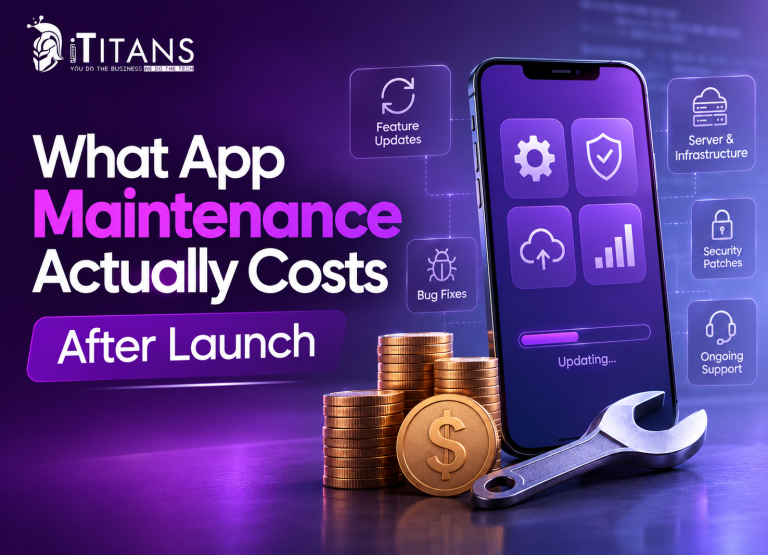
After you have built your app and launched it successfully in the market, the next step is to keep it up and running by posting regular updates online. This is the point where you must avail yourself the post launch support to keep your mobile app free of glitches, bugs, and errors. Moreover, you can update the mobile app with new options and features to make it useful for your audience.
Why You Should Build Your Business App with iTitans?
iTitans is the leading mobile app development company that has set the trends of app development in the USA with latest frameworks and technologies. With more than 10 years of experience, iTitans has helped numerous businesses to achieve scalable growth with high performance mobile applications. Here is why you should build your business app with iTitans:
Extensive Technology Stack
The experienced mobile app developers at iTitans have complete knowledge and experience of all the major app development frameworks such as React and Flutter. Whether it is about integrating complex features or providing an interactive user experience, iTitans will always recommend the best technology and framework that suits your business.
Dedicated Development Team
iTitans has a dedicated team of mobile app developers for Native, hybrid, and cross platform mobile app development. So no matter which development type you choose based on your business model, our team will be there to provide you with reliable service.
Agile Development Process
To maintain transparent communication with our clients, iTitans follows an agile development process where we keep all the stakeholders involved and updated at every step of the development process. By leveraging feedback, we ensure to deliver the product that meets your satisfaction.
Post Launch Support
iTitans provides dedicated post launch support even after publishing the mobile. By releasing regular updates, our team ensures that your mobile app remains free of errors, bugs, and glitches.
FAQs
Which type of mobile app development is more cost effective for businesses?
For small businesses and startups, cross platform app development is the most cost-effective option as it gives you an approach at multiple platforms for the costs of a single mobile app. Plus, you get more time to market as well.
How long does it take to develop a mobile app?
The mobile app development process can take anywhere from a couple of months to over a year starting from ideation to launch. The exact duration depends on the scope of the project and the complexity of the features that you wish to integrate into a mobile app.
How much does it cost to build a mobile app in the USA?
The number of features, choice of framework, and the type of development can vary the costs of mobile app development in the USA.
Conclusion
Developing a mobile app is the first step towards success for many businesses in the US market. With more and more users drawing towards handheld devices like smartphones and tablets, businesses have to invest in mobile app development to maintain their reputation while staying ahead of the competition.
Moreover, the ever-changing world of technology requires businesses to embrace and adapt to the trends of the market, which are now drawing towards dedicated mobile apps from web apps. So what are you waiting for? Contact iTitans now and launch your first business app to secure millions of new customers.