
White Label Mobile App Development
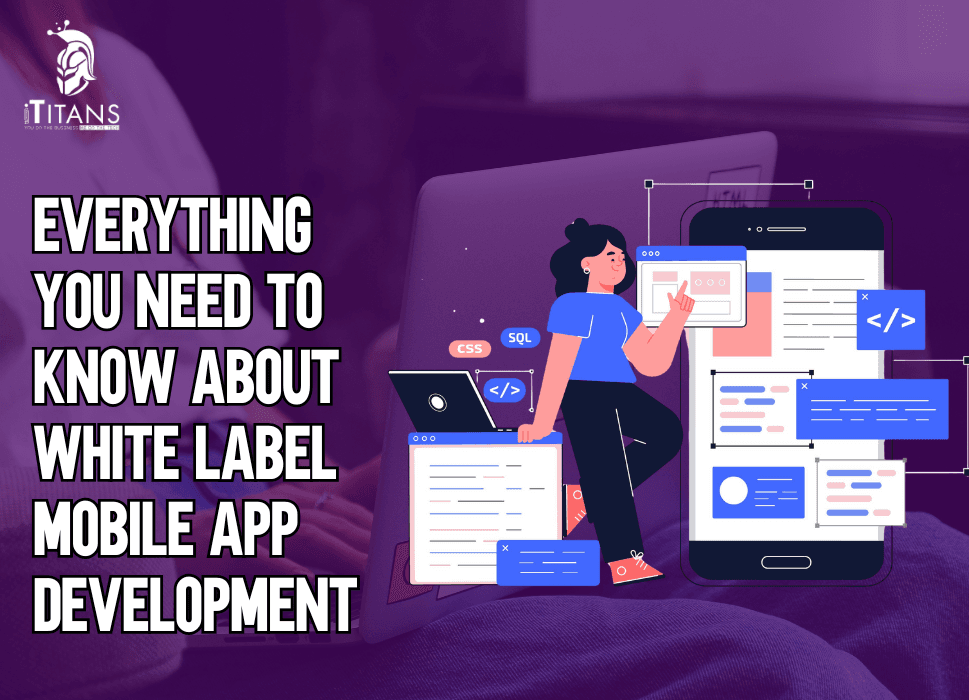
Forget long timelines, bloated budgets, and chasing developers. If you’re a startup founder, SaaS owner, or agency looking to launch a mobile app fast, white label mobile app development might be the smartest move you haven’t made yet.
But building an app from scratch can take 6–12 months and cost you more than you’re ready to spend. White label apps flip the script. You receive a fully functional, market-tested app framework, ready to be branded, customized, and launched as your own.
Whether you want to serve clients with branded apps, enter the market with an MVP, or generate recurring revenue without coding anything from scratch, this guide lays it all out.
In this blog, we’ll break down what white label apps really are, how they work, who they’re best for, what to watch out for, and how iTitans helps businesses like yours launch mobile products that look custom, without the custom price tag.

What Is White Label Mobile App Development?
White label app development is the process of using a ready-made app framework that’s built by one company and resold or rebranded by another.
Here’s how it usually works:
- A development company builds a flexible, reusable app framework.
- That app can be customized (design, logo, content, etc.) to match a different company’s brand.
- The end customer uses it as if it were their own app, without knowing it came from a white-label provider.
Think of it like buying a blank notebook that you stamp with your own brand, but the pages inside? Already perfectly lined, bound, and print-ready.
White label doesn’t mean low-quality. In fact, the best white label solutions are built to enterprise standards and tested across dozens of use cases. The goal is simple: launch faster with less overhead.
Why Is White Label Development So Popular in 2025?
In a world where every business wants an app, white labeling is no longer a Plan B. It’s often Plan A.
1. Faster Time to Market
Building from scratch can take anywhere from 4 to 8 months, depending on the complexity. With white label, you can launch in a matter of weeks.
Speed matters. Whether you’re chasing first-mover advantage or trying to close a client deal before your competitor, white label solutions give you a head start without compromising on quality.
2. Budget-Friendly Approach
Custom mobile apps cost anywhere from $25,000 to $150,000 or more. White label apps often start at a fraction of that cost.
By removing months of backend development, QA, and design hours, you keep your costs down and your profits up.
3. Built for Agencies and SaaS Providers
If you’re in the service industry, white-label apps can become a powerful part of your offering. You can sell the same app to 10, 50, or even 100 clients, with unique branding and minimal additional development time.
That’s recurring revenue with almost zero tech debt.
Who Should Consider White Label Apps?
Let’s say you’re wondering whether white label mobile apps fit your business. Ask yourself this:
- Are you trying to launch quickly?
- Do you offer services to multiple clients?
- Are you building something that’s been built before?
If yes, then here’s where white label development makes total sense.
1. Marketing Agencies
Agencies that build mobile apps for clients often struggle with meeting timelines and developing sufficient development capacity. White label apps let you scale without hiring an army of developers.
Imagine offering a mobile ordering app to 10 different restaurants, complete with their logos, menus, and colors. Same codebase, customized UI. Done in weeks, not months.
2. Startups Testing MVPs
Startups don’t always have the luxury of time or capital. If you need to test an idea in-market ASAP, white label gets you there without burning your runway.
You’ll know within weeks whether your app clicks with users before investing in a custom build.
3. Franchises and Multi-Location Brands
From gyms to grocery stores, franchises love white label apps. You get a consistent app experience across all locations, with location-specific tweaks such as offers and branding.
It simplifies customer retention, loyalty programs, and push notifications, all while maintaining a hyper-local approach.
4. SaaS Companies Expanding to Mobile
If you’ve built a robust SaaS platform and want to launch a mobile version for your clients, white label apps can help you go mobile without rebuilding from the ground up.
You can integrate your core APIs, create a consistent look, and deliver a branded app to clients in just a few days.

How White Label App Development Works
It’s not magic, it’s smart engineering. Here’s how the white label development process usually goes:
Step 1: Core App Framework
The development company builds a robust, modular app with universal features, such as login, notifications, user dashboards, and payment integration.
This core app becomes the base version for all future clients.
Step 2: Branding and Customization
When a client comes on board, the white label team swaps out logos, brand colors, fonts, and sometimes basic UI layouts.
In some cases, content (like menu items, service listings, or support info) is also customized.
Step 3: Testing & Approval
The customized app undergoes a round of client feedback, internal QA, and testing across various devices. Any bugs are fixed before submission.
Step 4: App Store Submission
The final app is submitted under the client’s name on the App Store or Google Play. To the end-user, it appears to have been built entirely by that brand.
All support and updates can be managed centrally or handed off, depending on the agreement.
Pros and Cons of White Label App Development
Let’s keep it real. White label is excellent, but not perfect. Here’s what to consider:
Pros:
- Massive Time Savings: From 6 months down to 6 weeks.
- Lower Costs: You save 30–70% compared to custom apps.
- Scalable Revenue: Sell the same app to dozens of clients.
- Tested Codebase: More stable, fewer bugs, less maintenance.
- Faster Client Onboarding: Offer mobile apps as part of your packages instantly.
Cons:
- Limited Customization: You’re working with a pre-built framework, so it may not be possible to implement deep custom features.
- Vendor Dependence: Your business relies on the original developer for support and updates, unless you purchase the code outright.
- Less Differentiation: If competitors use the same provider, features may overlap.
The key is finding a white-label partner that builds flexible products and offers support that scales with you.
Key Features to Expect in a Good White Label App
Not all white label platforms are created equal. Some provide a decent frontend, while others offer true scalability. Here’s what a solid white label app should offer:
- Brand Customization: Logo, color palette, fonts, splash screen, and app icons.
- Admin Dashboard: So your clients can manage their own content, users, and settings.
- Multi-Platform Support: Native iOS and Android builds from the same codebase.
- Push Notifications: For user engagement and real-time updates.
- API Integrations: To plug into your CRM, CMS, or eCommerce system.
- Analytics & Reporting: So you and your clients can track user behavior.
- Ongoing Support & Updates: Since mobile OS updates are continuing.
At iTitans, for example, we’ve helped agencies launch white-label apps that are flexible enough for multiple industries, ranging from fitness and food to finance and education.
Choosing the Right White Label Partner: What to Look For
This is where most businesses go wrong.
Not all white label development companies are built the same. Some sell you cookie-cutter apps that look dated the moment they launch. Others overpromise flexibility, but underdeliver when it’s time to customize.
If you’re serious about using white-label apps to grow, serve clients, or scale quickly, you need a partner who understands the big picture, not just the technology.
Here’s what to look for:
1. Proven Portfolio
Look for real apps in real industries. If a provider can’t show you case studies or live apps on the App Store or Google Play, walk away. You want to see how the apps perform, how they look, and how businesses are actually using them.
At iTitans, for example, we’ve shipped dozens of white-label apps across various industries, including retail, food delivery, ride-hailing, event management, and more. Each is proof, not a promise.
2. Customization Options That Actually Matter
Don’t get distracted by “skins” or color changes. Real white label flexibility includes:
- Switching out features (turning some on/off)
- Adding new content blocks
- Custom menus or layouts
- Integrating third-party APIs
Your partner should offer multiple layers of customization, including visual, functional, and experiential elements.
3. Clean, Scalable Codebase
Ask what the app is built in. React Native? Flutter? Swift or Kotlin?
You want clean, scalable code written using current frameworks and technologies. Otherwise, every future update will become a headache, and compatibility issues will accumulate quickly.
4. Clear Licensing Terms
Are you paying a one-time fee? Monthly license? Revenue share? Do you get access to the source code, or is it locked?
You need to know what you own, what you can change, and what happens if you stop paying.
Avoid platforms that lock you into their hosting or infrastructure unless that’s what you’re specifically looking for.
5. Support and Maintenance Commitment
Apps need updates. Bugs happen. Operating systems evolve. If your white label provider disappears after launch, you’re stuck.
Look for someone who offers:
- Post-launch support (ideally 3-6 months minimum)
- Regular feature updates
- Fast response times for bug reports
- Documentation or training if you’re managing the app yourself

Pricing Models: What You Can Expect to Pay
White label doesn’t mean cheap. But it does mean efficient.
Here’s how pricing usually breaks down in the white label world:
1. One-Time Licensing Fee
You pay upfront for a single-use license. You receive full customization and the right to publish under your name.
Ranges: $5,000–$30,000+, depending on features and complexity.
2. Subscription-Based (SaaS Model)
You pay a monthly fee to use the white-label platform, which typically includes hosting, updates, and limited support.
Ranges: $99–$1,000 per month, depending on usage and user base.
Best for startups or agencies that want to avoid infrastructure headaches.
3. Revenue Sharing
The provider takes a cut of your app revenue, e.g., from subscriptions, sales, and ads. This is less common, but it can be helpful if you want low upfront costs.
Common in B2C apps like food delivery, content platforms, or ticketing.
4. Custom and White Label Hybrid
You start with a white label base, then pay extra for deeper customization or integration.
This model is ideal when you want speed now, but room to grow later.
White Label vs Custom vs No-Code: What’s the Real Difference?
White label apps are pre-built solutions customized for your brand. They’re ready in 2–6 weeks, cost around $ 5,000–$ 30,000, and offer strong scalability with medium to high customization, but you usually don’t own the code.
Custom apps are built from scratch. They take 4–8 months, cost $ 25,000–$ 150,000+, and give you full ownership and unlimited flexibility, making them ideal for tech-heavy, unique projects. But they’re time-consuming and resource-intensive.
No-code platforms like Glide or Adalo enable you to launch in 1–2 weeks for $50–$500 per month, but customization is limited, and scalability presents a challenge. You don’t own the code, and app store publishing can be tricky.
- Go white label for speed and quality.
- Go custom for control and uniqueness.
- Go no-code for quick tests or internal tools.
Choose based on your goals, budget, and the speed at which you want to launch.
Debunking Common Myths About White Label Development
Let’s bust a few myths that often keep companies from using white label, especially when they should.
Myth 1: White Label Apps Look Generic
Only if you use a generic provider does the right partner offer deep visual and content customization to make the app feel 100% yours.
Myth 2: They’re Just MVPs
Many white-label apps support full-scale businesses, from delivery apps handling over 10,000 users to SaaS platforms with dynamic user dashboards.
Myth 3: You Can’t Add Features Later
Truth: A good white label base is modular, allowing for new features, plugins, and API integrations as your needs evolve.
Myth 4: You Don’t Own Anything
You own the brand, users, and content. Depending on the license, you may even get access to code or deployment rights.
Myth 5: White Label Is Only for Small Businesses
Truth: Enterprise brands use white label apps to spin off services, launch in new regions, or test features before rolling them out globally.
When Not to Use White Label Apps
Let’s be honest. White label apps aren’t the answer for everything. In some cases, custom is the better route.
Here’s when white label might not work:
1. Your App Has Complex Logic or Real-Time Data Needs
If you’re building a stock trading app, a multiplayer game, or a machine learning product, don’t white label it. You’ll need complete control over logic, performance, and integrations.
2. You Have Unique User Flows That Change Often
If your app requires new user flows every few weeks based on testing, you’ll quickly outgrow white labeling. Custom code offers more flexibility for iteration.
3. You Want IP Ownership for Exit or Investment
Some investors prefer startups that own their entire tech stack. If IP ownership is critical for valuation or M&A, go custom from day one.
Why Tech Businesses Are Turning to White Label Apps
You don’t have to reinvent the wheel to scale your brand, especially when speed and branding matter.
Here’s why tech-forward companies are choosing white label apps in 2025:
1. Speed Wins Markets
If your competitor launches a mobile app before you, even if it’s just average, they’ll own the audience first. Speed matters, and white label gets you live in weeks.
2. Lower Initial Risk
Whether you’re bootstrapped or testing a new idea, you don’t want to burn cash just to learn your app idea doesn’t convert. A white label build enables you to validate quickly.
3. Recurring Revenue Models
If you’re a service provider (agency, consultant, or digital marketer), you can resell white-label apps as part of your service stack. This adds a whole new income stream without extra hiring.
4. Easier Expansion
Want to expand to a new region or niche? Use a white-label version of your existing app, featuring localized branding, pricing, and features.
5 Mistakes to Avoid With White Label Mobile Apps
Although the process is more straightforward, mistakes can still occur. Here’s what we’ve seen, and how to steer clear.
1. Ignoring UX
Just because the base app is built doesn’t mean you skip UX strategy. Understand how users will move through your app and design accordingly.
2. Over-Customizing Too Soon
Stick with the essentials at launch. Get feedback. Then build on it. Overloading with features before you even have users is a common pitfall.
3. Not Budgeting for Growth
White label apps get you started fast, but you’ll still need a budget for things like server hosting, marketing, analytics tools, and future features.
4. Choosing the Wrong Platform
Don’t pick a provider just because they’re cheap. Bad code leads to crashes, bad reviews, and wasted time. Always test the demo app before signing a deal.
5. Skipping Legal and Compliance
Ensure your app complies with app store policies, local regulations such as GDPR, and privacy standards. We include this in all our white label projects.

Final Checklist: Is White Label the Right Fit for You?
Here’s a quick checklist to help you decide if white label is your best move:
- You want to launch an app in under 8 weeks
- You want to build a branded experience, without hiring a full dev team
- You have a clear business model (subscriptions, bookings, ecommerce, etc.)
- You’re OK with using a shared codebase, but want control over the experience
- You plan to test, launch, and improve based on user feedback
- You’d rather invest in users and marketing now, and build custom later
If most of these check out, white label is your play.
Ready To Launch Your White Label Mobile App?
We’ll show you live demos, walk you through the process, and answer every single question before we write a line of code. Let’s make your mobile app your strongest digital asset, starting today.
FAQs:
1. Will users know my app is white label?
Not at all. White label apps are built to resemble your own, featuring your branding, logo, and identity. Users won’t see any trace of the original provider.
2. Can I upgrade a white label app later?
Yes, many providers allow future upgrades or custom add-ons, so your app can grow as your business evolves.
3. What industries benefit most from white label apps?
From fitness trainers and food delivery startups to education platforms and real estate firms, white label apps are ideal for any business needing fast digital presence.
4. Is white label app development secure for customer data?
If built by a reputable provider, white label apps can include industry-standard security features like encryption and GDPR compliance to keep your user data safe.