
Trucking and Fleet Management App Development Cost (2026 Pricing Tiers)
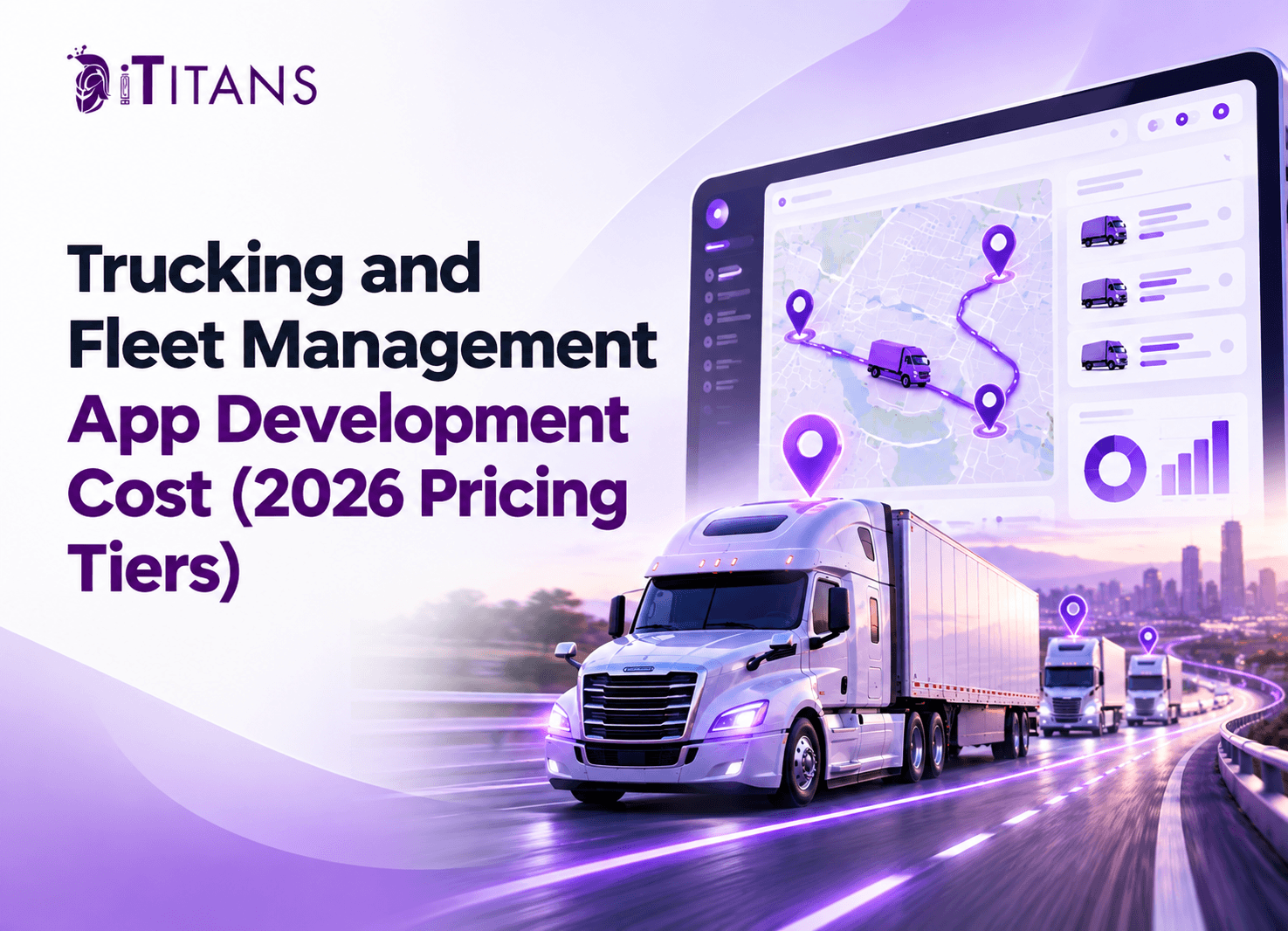
The trucking industry depends on timely deliveries, efficient routes, and well-maintained vehicles. However, managing these operations through spreadsheets and separate tracking tools creates unnecessary work.
A custom fleet management app brings vehicle tracking, dispatching, driver records, and maintenance into one system. The trucking and fleet management app development cost in 2026 typically ranges from $20,000 to $250,000 or more. The final budget depends on fleet size, required features, integrations, and platform complexity.
Understanding these expenses helps trucking companies plan their software investment and avoid unexpected costs after launch.
How Much Does It Cost to Develop a Trucking and Fleet Management App in 2026?
The cost to develop a fleet management app depends on what your business needs to manage. A basic tracking application requires less development than an enterprise platform supporting multiple depots and complex dispatch operations.
For initial budgeting, consider these three development tiers.
| Development tier | Estimated cost | Typical timeline |
| Basic fleet management app | 20,000–45,000 | 2–4 months |
| Mid-level trucking platform | 45,000–120,000 | 4–7 months |
| Advanced fleet management system | 120,000–250,000+ | 6–12 months |
These estimates cover custom software development, not necessarily vehicle tracking hardware, third-party subscriptions, or post-launch support. Actual timelines depend on team size, integrations, testing requirements, and project scope.
1. Basic Fleet Management App: 20,000–45,000
A basic fleet application suits small trucking companies and regional transport operators. It focuses on vehicle visibility, driver records, and straightforward trip management.
Typical features include:
- Driver registration and vehicle profiles
- Basic GPS tracking and trip history
- Trip assignments and status updates
- Fuel and maintenance records
- Basic notifications and administrative reports
For example, a company managing 20 trucks could use this system to monitor locations and organize driver assignments. It would still need separate tools for advanced routing or detailed financial analysis.
2. Mid-Level Trucking App: 45,000–120,000
Growing logistics companies often need more than vehicle tracking. They need dispatchers, drivers, and managers to share operational information without relying on constant phone calls.
A mid-level platform may include:
- Real-time GPS tracking and geofencing
- Driver mobile applications
- Dispatch scheduling and route planning
- Fuel consumption and maintenance tracking
- Electronic proof of delivery
- Driver performance reports
- Customer shipment tracking
- Accounting or transportation software integrations
This tier works well for businesses managing several routes, multiple dispatchers, and increasing delivery volumes. However, complex routing rules or extensive legacy integrations can increase the budget.
3. Advanced Fleet Management System: 120,000–250,000+
Enterprise trucking companies often need software that connects several operational departments. Their requirements can include large vehicle fleets, multiple locations, complex permissions, and substantial volumes of tracking data.
Advanced features may include:
- Predictive vehicle maintenance
- Telematics and onboard diagnostic integrations
- Electronic logging device (ELD) integrations
- Automated dispatch and advanced route optimization
- Fuel analytics and driver safety monitoring
- Multi-depot fleet management
- ERP, TMS, and accounting integrations
- Advanced dashboards and forecasting
Large projects can exceed $250,000 when they require extensive customization, specialized hardware, or complex compliance workflows.
What Features Affect Fleet Management App Development Cost?
Feature selection is one of the biggest factors affecting fleet management software development cost. Each module requires different development, testing, and integration work.
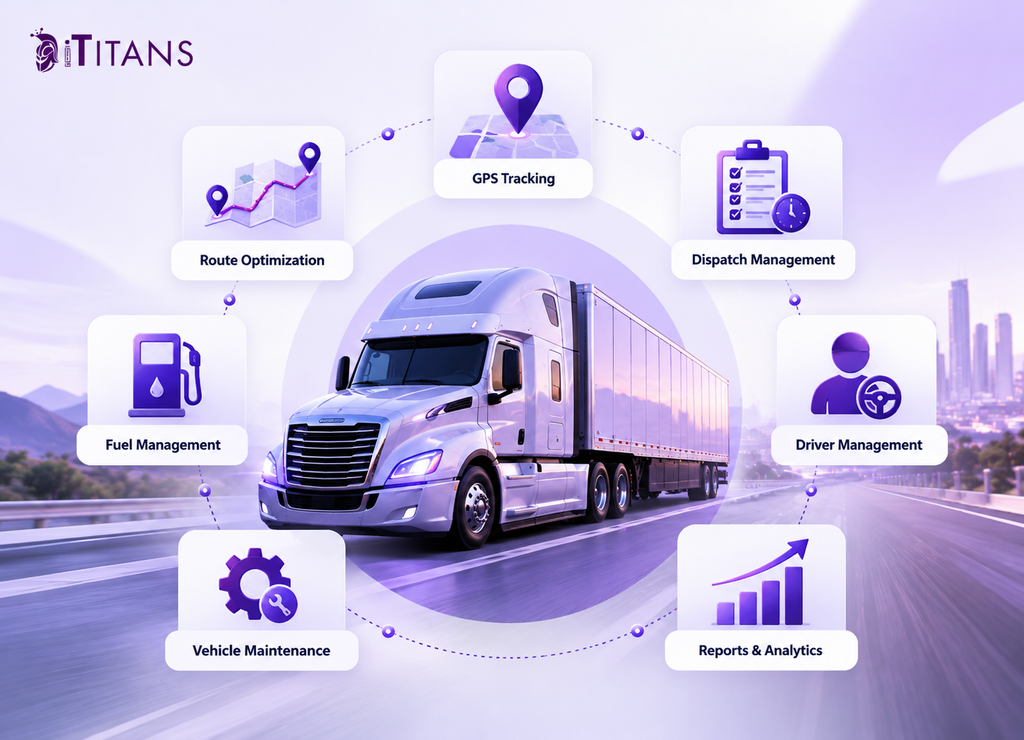
GPS Tracking and Real-Time Vehicle Monitoring
GPS tracking lets managers monitor vehicle locations, review previous trips, and identify unexpected stops. Basic tracking can use smartphone location services or data from existing tracking devices.
More advanced systems process frequent location updates across hundreds of vehicles. They may also need geofencing, route deviation alerts, and historical trip playback.
Costs rise when the application must connect directly with different telematics devices. Poor connectivity also requires careful handling of missing or delayed location data.
Route Optimization and Dispatch Management
Route optimization helps dispatchers assign vehicles and plan efficient journeys. The system can consider delivery windows, road restrictions, vehicle capacity, and driver availability.
Basic route planning can use existing mapping services. Advanced optimization requires additional rules and processing to handle multiple stops or changing delivery conditions.
Dispatch management also involves assigning loads, handling cancellations, and notifying drivers about schedule changes. These workflows often require more development than a simple tracking screen.
Driver Management and Electronic Proof of Delivery
A driver application gives employees access to assignments, navigation, delivery instructions, and trip updates.
Electronic proof of delivery (ePOD) allows drivers to capture signatures, photographs, timestamps, and delivery notes. This reduces paperwork and helps dispatchers resolve disputes.
Offline functionality adds another development requirement. Drivers may need to record deliveries in areas without mobile coverage and synchronize records later.
Fuel Management and Predictive Maintenance
Fuel management features track consumption, expenses, and unusual changes in vehicle efficiency. Maintenance modules record service schedules, inspections, repairs, and replacement dates.
Predictive maintenance requires more than a reminder system. It may use mileage, engine data, fault codes, and historical maintenance records to estimate potential problems.
These features can reduce avoidable downtime. However, their value depends on accurate vehicle data and consistent maintenance records.
Fleet Management Software Development Cost Breakdown
A trucking application includes several technical components beyond its visible screens. The following example shows how a mid-level project budget of $80,000 might be allocated.
| Development component | Illustrative budget |
| Requirements and UI/UX design | $8,000 |
| Driver app and web dashboard | $18,000 |
| Backend and database development | $20,000 |
| GPS, mapping, and third-party integrations | $12,000 |
| Testing and quality assurance | $10,000 |
| Deployment and initial infrastructure setup | $5,000 |
| Project management and release support | $7,000 |
| Total | $80,000 |
This is an illustrative allocation, not a universal pricing formula. Actual costs depend on the number of platforms, engineering rates, integration complexity, and testing scope.
Why Backend Development Matters
The backend processes tracking updates, trip assignments, user permissions, and operational reports. It must also protect business records and maintain accurate information across devices.
For a growing fleet, the backend needs to handle simultaneous location updates without slowing down dispatch operations. Database design and infrastructure choices can therefore affect both initial development and future hosting expenses.
Hidden Costs of Building a Trucking App
The initial development quote rarely covers every expense associated with running fleet software. Businesses should budget for the following recurring and additional costs.
1. GPS and Mapping API Fees
Mapping providers may charge for routing requests, geocoding, map usage, and other services. Frequent tracking and route recalculation can increase these expenses as vehicle activity grows.
2. Vehicle Tracking Hardware
Some fleets already have compatible GPS devices installed. Others may need new trackers, sensors, installation services, or data subscriptions.
Hardware costs depend on vehicle types and the information the application must collect. Confirm compatibility before choosing an integration approach.
3. Cloud Hosting and Data Storage
The application needs infrastructure for user accounts, trip records, location updates, documents, and reporting. Costs increase with usage, storage requirements, and data retention periods.
4. Third-Party Integrations
Connecting accounting systems, ELD providers, telematics platforms, and existing transportation software requires additional engineering. Some providers also charge licensing or API access fees.
5. Maintenance and Security Updates
Operating systems, APIs, and security requirements change over time. Your development team must fix defects, update dependencies, monitor performance, and maintain compatibility.
For planning purposes, businesses can reserve around 15–20% of the initial development budget annually for software maintenance. Actual spending varies with support agreements and the amount of ongoing development required.
For an $80,000 application, that means approximately 12,000–16,000 per year for maintenance.
How to Calculate the Total Cost of Fleet Management App Ownership
The initial development quote only covers part of your investment. To estimate the total cost of ownership (TCO), include development, hosting, maintenance, third-party services, and future improvements.
For example, consider a mid-level fleet management application with an initial development budget of $80,000.
| Expense | Estimated cost |
| Initial development | $80,000 |
| Annual maintenance (15–20%) | 12,000–16,000 |
| Annual hosting and infrastructure | 3,000–12,000 |
| Annual mapping and API services | 2,000–8,000 |
| Estimated first-year total | 97,000–116,000 |
These figures are illustrative planning estimates. Actual expenses depend on fleet size, tracking frequency, service providers, and support requirements. Hardware purchases and major feature additions are excluded.
What Should You Budget Over Three Years?
Assuming the same annual operating expenses, the application could cost approximately 131,000–188,000 over three years. This estimate includes initial development and recurring maintenance, hosting, and API expenses.
However, your actual spending may change as the fleet grows. More vehicles can increase data processing, mapping usage, storage, and support requirements.
To build a more accurate budget, ask your development partner to separate one-time expenses from recurring charges. Also, clarify whether the agreement includes bug fixes, security updates, monitoring, and minor enhancements.
What Factors Influence Trucking App Development Cost?
Several decisions can change the final budget even when two businesses request similar applications.
Platform Selection
A responsive web dashboard may cost less than separate native applications for iOS and Android. Cross-platform development can reduce duplicated work when both mobile platforms share most functionality.
However, driver applications may require background location tracking, offline storage, and device-specific integrations. These requirements should guide the platform decision.
Number of Vehicles and Users
A small fleet may need basic monitoring and simple reports. A larger operation may require stronger infrastructure, more granular permissions, and better monitoring tools.
Vehicle count alone does not determine cost. Update frequency, data volume, concurrent users, and reporting complexity also matter.
Integration Requirements
Connecting one established telematics API is different from supporting several hardware vendors. Legacy systems may use older interfaces, inconsistent data formats, or limited documentation.
Define the essential integrations before development begins. This makes the estimate more accurate and reduces unexpected work.
Development Team Location and Experience
Development rates vary by country, team structure, and specialist experience. A lower hourly rate does not automatically produce a lower total project cost.
A team familiar with GPS systems, logistics workflows, and mobile background services may identify technical risks earlier. Compare proposals by scope, testing standards, and delivery responsibilities instead of hourly rates alone.
Custom Fleet Management Software vs. Ready-Made Solutions
Custom development is not always the right choice. Some trucking companies can manage their operations through an existing fleet management subscription.
| Consideration | Ready-made software | Custom software |
| Initial expense | Usually lower | Higher |
| Deployment | Often faster | Requires development |
| Workflows | Based on available features | Built around defined business needs |
| Integrations | Limited to supported options | Can support specific systems |
| Ownership and control | Depends on the provider agreement | Greater control over custom code and product direction |
| Ongoing costs | Subscription and add-ons | Hosting, maintenance, and support |
A small fleet with standard tracking requirements may benefit from ready-made software. A large operator with unusual dispatch rules or specialized integrations may justify custom development.
Before deciding, compare the total cost of ownership over three to five years. Include subscriptions, hardware, support, integration fees, and internal administration.
How to Reduce Fleet Management App Development Costs
Reducing development costs does not mean removing every useful feature. Instead, prioritize the functions that address your biggest operational problems.
- Start with an MVP: Launch vehicle tracking, driver assignments, and essential reporting first.
- Use existing APIs: Avoid building mapping or telematics infrastructure from scratch when suitable services already exist.
- Prioritize integrations: Connect essential business systems first and defer less important integrations.
- Choose platforms carefully: Use cross-platform development when it meets driver and dispatcher requirements.
- Test with real users: Pilot the application with a small group before expanding across the entire fleet.
- Plan for future growth: Design the system to accommodate additional vehicles and modules without rebuilding its foundation.
A phased release also gives managers time to evaluate actual usage. Their feedback can guide the next development phase and prevent spending money on features employees rarely use.
How Long Does It Take to Build a Fleet Management App?
Development time depends on scope, integration access, and the complexity of the operating environment.
A basic application may take two to four months. A mid-level platform may require four to seven months, while a larger enterprise system can take six to twelve months or longer.
Typical project stages include:
- Discovery and planning: Define user roles, workflows, integrations, and business requirements.
- Design and prototyping: Prepare driver screens, dispatcher dashboards, and user journeys.
- Development: Build the mobile application, backend, database, and administrative tools.
- Integration and testing: Verify tracking accuracy, offline behavior, security, and connected systems.
- Deployment: Release the application, train users, and monitor early performance.
Integration delays can extend the schedule when external providers control credentials, testing environments, or device access. Confirm these dependencies before setting a launch date.
Essential Questions to Ask Before Hiring a Fleet App Development Company
Choosing a development partner affects your budget, delivery schedule, and ability to maintain the application after launch. Before signing a contract, discuss these practical questions.
1. What Does the Development Quote Include?
Ask for a breakdown covering discovery, design, mobile applications, backend development, integrations, testing, and deployment. Confirm whether the quote includes both driver-facing and administrative interfaces.
You should also identify excluded services. GPS hardware, third-party subscriptions, cloud hosting, and ongoing support may require separate budgets.
2. Who Owns the Source Code?
Confirm ownership rights for the application code, database structure, documentation, and custom components. The contract should explain access to repositories, deployment credentials, and relevant technical documentation.
Clear ownership terms help your business maintain or extend the software without unnecessary restrictions.
3. How Will the Application Handle Poor Connectivity?
Drivers frequently travel through areas with limited mobile coverage. Ask whether the application can store trip information, capture delivery evidence, and synchronize updates when connectivity returns.
Test these workflows before launch. Otherwise, missing records and delayed updates can disrupt dispatch operations.
4. Can the System Support Future Growth?
Discuss how the architecture will handle additional vehicles, users, locations, and integrations. Ask how the development team plans to monitor performance as tracking data increases.
You do not need every enterprise feature on day one. However, sensible architectural decisions can reduce the expense of adding new capabilities later.
5. What Support Is Available After Launch?
Confirm response times, maintenance responsibilities, backup procedures, security updates, and support fees. Also, ask how the team handles defects discovered after deployment.
A written support agreement helps prevent disagreements over what happens when the application encounters problems.
6. How Will Success Be Measured?
Agree on practical launch metrics, such as tracking accuracy, dispatch processing time, successful data synchronization, and delivery record completion. Establish a baseline before deployment so you can compare results afterward.
These measurements help determine whether the application addresses real operational problems. They also provide useful evidence when deciding which features deserve investment in later releases.
Build a Fleet Management App That Fits Your Operations
The right trucking application should solve your current operational problems without creating unnecessary development expenses. iTitans can help you assess your requirements, select the essential features, and plan a development budget around your fleet’s needs. Contact iTitans to discuss your trucking app idea and request a project estimate.
Frequently Asked Questions
1. How much does it cost to build a trucking app in 2026?
A basic trucking application may cost 20,000–45,000. A mid-level platform can cost 45,000–120,000, while enterprise systems may exceed $250,000. Features, integrations, and development requirements determine the final price.
2. How much does fleet management software cost per vehicle?
Ready-made fleet management software often charges a monthly subscription per vehicle. Pricing varies by provider, tracking hardware, and included features. Custom software instead involves development expenses, infrastructure, maintenance, and potentially separate device subscriptions.
3. What features should a fleet management app include?
Start with vehicle tracking, driver profiles, trip assignments, maintenance records, and operational reports. Growing fleets may also need route optimization, dispatch automation, fuel monitoring, and electronic proof of delivery.
4. How much does GPS tracking integration cost?
The cost depends on the tracking provider, API availability, update frequency, and required features. Connecting an existing GPS platform is generally simpler than supporting multiple hardware types or building a custom telematics data pipeline.
5. Is custom fleet management software better than SaaS?
Custom software suits businesses with specialized workflows, integration requirements, or greater control needs. SaaS usually suits fleets with standard requirements and smaller initial budgets. Compare long-term costs before choosing either approach.
6. How much does it cost to maintain a fleet management app?
A useful initial estimate is 15–20% of the original development budget annually. An $80,000 application could therefore require 12,000–16,000 per year. Hosting, tracking APIs, hardware subscriptions, and major new features may cost extra.