
Top 5 Languages for Efficient Mobile App Development
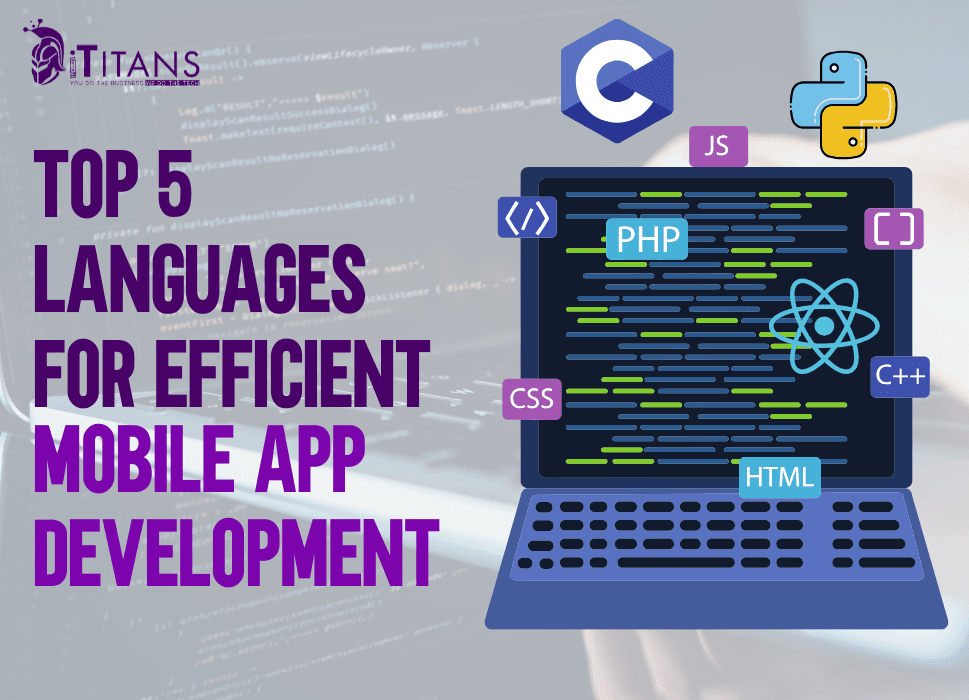
The world of mobile app development technologies is rapidly evolving with new frameworks and languages releasing every day to improvise experience on handheld devices. With technology evolving so rapidly, innovation has no limits in the world of mobile app development. Whether its about generative AI, blockchain, or the mind blowing metaverse, everything is now becoming a part of mobile applications. This is the point, where one has to choose the right framework that meets the modern day demands and compatibility with technologies.
The type of programming language you choose defines how user-friendly, robust, and secure your programming language can be. In the modern-day world, each programming language comes with a different compatibility, which adds to efficiency of custom mobile app development. Therefore, we have enlisted the top 5 languages for efficient mobile app development that can help to integrate all the modern-day features at your fingertips.
1. Swift

When we talk about seamless yet efficient iOS app development, Swift is the first option that comes to the mind. Being a block structured, functional, object-oriented language, Swift serves as the best multi-paradigm language designed by Apple as the most reliable language for iOS app development. The best thing about Swift is the fact that it supports Cocoa Touch, Cocoa frameworks, and Objective-C codes for different Apple solutions. Hence, this language offers seamless iOS development with the following USPs that are related to it:
· Automated memory management
· Flow control
· Operators
· Type-safe language
2. Kotlin

On the second position, we have Kotlin that is known for being statistically typed general purpose programming language for mobile app development. This language offers mixed features of object-oriented programming and functional programming, which has earned it the title of best programming language for Android app development. Besides being a popular language for mobile app development, developers also use Kotlin for building multiplatform server-side apps since this language offers the following prime features:
· Concise code
· JavaScript transpiration
· Null safety
· Smart cast function
3. Java

Java is probably the most prominent programming language known for its versatility and success in the mobile app development world. The single fact about java is that ‘write once, run everywhere’ which makes it perfect for reusing. This language was introduced by Sun Microsystem and now it is maintained by Oracle. As for mobile app development, Java is known for being the prime language that offers the following features:
· Extensive standard library
· Garbage collection
· Object-oriented nature
· Strong type checking
4. Python

Python is probably the ‘language of the future’ known for being a high-level, interpreted, object-oriented programming language. The versatility of this language expands to mobile app development as well due to a number of reasons. Due to its simplicity and readability, Python support cross-platform app development that makes it an efficient choice for Android and iOS app development.
For those who are new to mobile app development, Python lets developers focus more on adapting programming theories rather than detailing them. Here are some points that approve why Python is suitable for efficient mobile app development.
· Automatic garbage collection
· Beginner-friendly
· Dynamically typed and type-checking
· GUI programming support
5. C#

C# pronounced as ‘sharp’ not ‘hash’ is considered as the world’s best programming language known for its popularity in mobile app development. Built by Microsoft back in the days as a basic programming language, C# has gained popularity in the app development world due to its versatility. C# is also well known for integrating with other programming languages like C++, C, and Java while offering simplicity and system-level control. Eventually, this language has now became favorite of mobile app developers for its prime features including:
· Extended property patterns
· Interoperability
· Scalable and updateable
· Type safe
Why is it Important to Choose the Right Programming Language?
Besides making the coding process more efficient, choosing the right code is also important for a number of reasons like optimizing app performance, and streamlining maintenance. In addition, here we have outlined some reasons to implement the programming language correctly.
Code Reusability and Development
Every business is looking for ways to save time with mobile app development, and the best way to do so is by reusing the code for building different components. By choosing the right programming language that supports cross-platform app development, organizations can save time and make the app development process more efficient.
Performance
Choosing the right programming language makes a lot of difference on how your app performs while providing a seamless user experience. These development languages define how smooth your mobile app’s user interface will remain during hefty data processing.
Staffing of Resources
By using the right app development languages, mobile app developers can build apps that can work on multiple platforms including Web, Windows, Android, and iOS. Moreover, when it comes to staffing resources, its recommended to hire mobile app developers who have good knowledge of developing cross platform apps.
Future Updates
With the constant updates in the development world, its important to consider the future of mobile app development. Therefore, its important to choose a programming language that is future proof with support for all the right updates and changes required overtime.
10 Things to Consider While Choosing a Mobile App Development Language
When choosing the right mobile app development language, several critical factors come into play. Selecting the most suitable language can significantly impact your app’s performance, development time, scalability, and long-term maintenance. Here are the key factors to consider when making that decision:
Type of Application You’re Building
The nature of the mobile application, whether it’s a native app, cross-platform app, or hybrid app, plays a pivotal role in language selection. For native applications, Swift or Objective-C is typically used for iOS, while Kotlin or Java is preferred for Android. On the other hand, if you’re developing a cross-platform app, you might lean toward languages supported by frameworks like Flutter (Dart), React Native (JavaScript), or Xamarin (C#). Understanding the app’s goals and its interaction with device hardware will guide this choice.
Target Platforms
Your target audience and the devices they use will determine whether you need to build for iOS, Android, or both. If you’re focusing solely on one platform, a native language might be ideal for leveraging platform-specific features. However, for apps targeting both platforms, a cross-platform language could reduce development time and cost, ensuring code reusability across systems.
Performance Requirements
If your app demands high performance, such as in gaming, real-time processing, or augmented reality, native languages like Swift and Kotlin are better suited. They provide closer integration with the operating system, which translates into smoother performance and faster response times. Cross-platform solutions have improved significantly but may still fall short in performance-critical applications.
Development Speed and Cost
Time-to-market is crucial for many businesses. If you want to launch quickly, especially with limited resources, choosing a language with strong framework support and a large developer community can speed up development. Cross-platform languages, like JavaScript with React Native or Dart with Flutter, allow a single codebase for both Android and iOS, which significantly cuts down on time and cost.
Developer Skillset and Ecosystem
The availability of skilled developers in a particular language can influence your choice. For example, JavaScript has a massive global community and abundant resources, making it a practical option for many teams. Also, consider the strength of the development ecosystem, such as libraries, tools, and community support, which can streamline development and troubleshooting.
Maintenance and Scalability
Your app’s future scalability and ease of maintenance are important considerations. Languages with strong backward compatibility and robust community support are often better in the long term. Kotlin, for example, is fully interoperable with Java and is endorsed by Google, making it a future-proof choice for Android development. Similarly, Swift is actively maintained and growing rapidly for iOS apps.
Security Considerations
Mobile apps often handle sensitive user data. Choosing a language that allows for secure coding practices and integrates well with the platform’s security features is essential. Native languages tend to offer more comprehensive access to platform-level security APIs, which can be crucial for banking, healthcare, or enterprise apps.
Community and Documentation
A strong developer community and detailed documentation can be lifesavers when facing development roadblocks. Languages like Java, JavaScript, and Python have mature ecosystems, ensuring that most issues you encounter have already been addressed by others. This reduces downtime and accelerates the learning curve.
Third-party Integration and API Support
Your app might need to integrate with various services or APIs. Some languages offer better support for third-party tools and SDKs, especially those that are platform-specific. Ensuring the language, you choose aligns well with the integrations your app requires is key to smooth development.
Future-proofing the App
Technology evolves rapidly. Selecting a modern, well-supported language ensures your app can adapt to future platform updates. Languages like Kotlin and Swift, which are officially supported by Google and Apple respectively, are continuously updated to reflect the latest platform changes, giving your app longevity and compatibility with new OS features.
Conclusion
Choosing the right mobile app development language can make all the difference in terms of user experience, optimization, and responsiveness. Even though these factors are worth consideration, its also important to understand the demands of your business and technical requirements. Understanding your app’s needs in depth will help you align with the most effective language to deliver a high-quality, scalable, and maintainable mobile application. Not sure which programming language would be right for your requirements? Consult with iTitans now and let us help you with making a mobile app that shines through
Related Post