
Essential Tips for Building a Winning Mobile App Development Team
In today’s digital-first world, mobile apps are at the heart of user engagement and business growth. Whether it’s ordering food, booking a cab, or managing finances—apps have become an integral part of our lives. However, the success of any mobile application is directly linked to the quality and capability of the team behind it.
Building a winning mobile app development team requires more than just hiring skilled coders; it demands strategic thinking, collaboration, creativity, and a strong understanding of market needs. According to Statista, mobile apps generated over $475 billion in revenue in 2022, and this figure is projected to cross $614 billion by 2026. As the mobile market grows, the demand for robust, user-centric apps increases, making it even more critical to assemble a high-performing development team.
This article will guide you through essential tips for building a mobile app development team that not only meets business goals but also delivers a seamless user experience. We’ll also explore how iTitans, a premier technology solutions provider, can help businesses create and manage top-tier mobile app teams tailored to their unique needs.
Understanding the Foundation of a Strong Mobile App Team
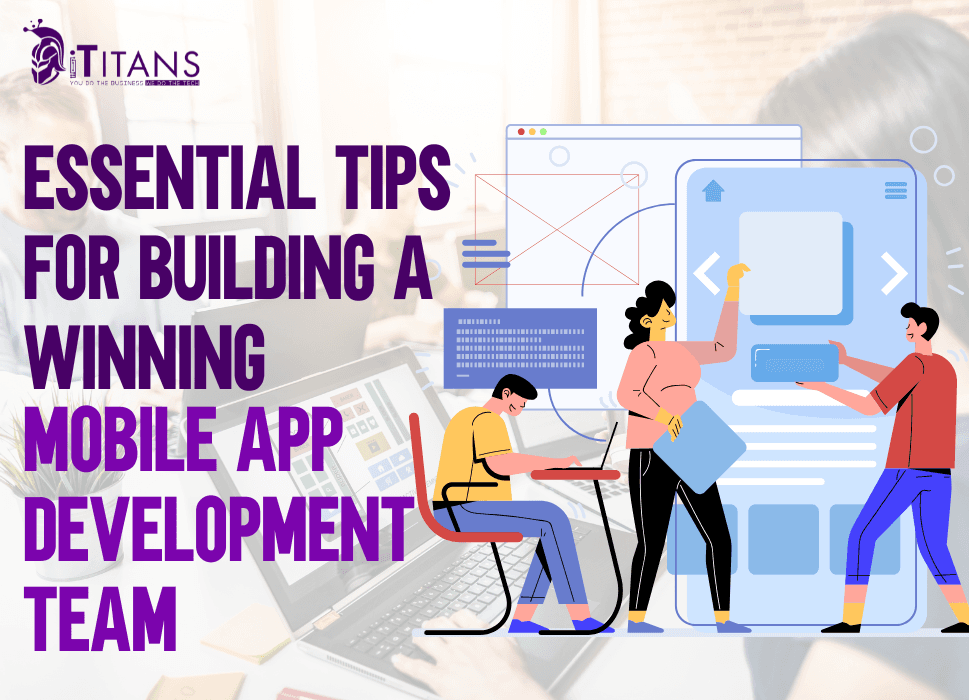
Before diving into recruitment, it’s essential to understand the core structure of a mobile app development team. At the very least, a typical team includes a project manager, UI/UX designer, mobile app developers (iOS and Android or cross-platform), backend developers, and QA engineers. Each role contributes to different stages of the app lifecycle, from ideation to deployment and maintenance. A well-rounded team fosters collaboration, minimizes development bottlenecks, and ensures accountability across functions.
Define Clear Goals and App Objectives
Clarity is key. Before hiring team members or assigning tasks, you must have a clearly defined app concept, functionality list, user flow, and business goals. This helps you determine the kind of expertise and experience you need on your team.
For example, if your goal is to build a healthcare app that integrates wearable technology, you’ll require developers with IoT and data privacy experience. Establishing these details early on saves time, prevents miscommunication, and keeps the entire development process aligned with your business objectives.

Hiring the Right Talent: More Than Just Skills
When selecting candidates for your mobile app development team, don’t just focus on technical skills. Cultural fit, communication abilities, and problem-solving aptitude are equally important. You want developers who can collaborate, think critically, and innovate when challenges arise.
For instance, a recent LinkedIn study found that 92% of talent professionals say soft skills are equally or more important than hard skills. Look for team members who can adapt to changing project needs, stay on top of trends, and bring fresh ideas to the table. Also, consider remote or hybrid models to access a broader talent pool, especially if you’re aiming for global scalability.
Choose Between In-House, Freelancers, or Outsourcing
Depending on your budget, timeline, and project complexity, you’ll need to decide whether to build an in-house team, hire freelancers, or outsource to an agency.
· In-house teams offer better control and communication but require higher long-term investment.
· Freelancers are cost-effective for short-term or specific tasks but may lack reliability.
· Outsourcing, especially to experienced companies like iTitans, combines cost efficiency with professional delivery standards.
Outsourcing also provides access to seasoned experts and a full-stack team, which is ideal for startups or businesses lacking technical infrastructure.
Encourage Agile Development Practices
Agile methodologies like Scrum and Kanban allow teams to work in sprints, prioritize features, and deliver incremental updates. This ensures better project visibility, faster development cycles, and more adaptability to user feedback.
Agile teams are more responsive and efficient, which is crucial in today’s fast-paced app market. According to the State of Agile Report, 95% of organizations say they’ve improved project visibility and delivery speed by adopting agile practices. Implementing agile requires not just the right tools but a mindset shift, fostering transparency, cross-functional teamwork, and continuous improvement.
Invest in UI/UX Design Early
Design should never be an afterthought. An intuitive, visually appealing interface can make or break your app’s success. According to Forrester Research, every $1 invested in UX results in a return of $100. Hire designers who understand not just visual aesthetics, but also user behavior, accessibility standards, and platform-specific guidelines (like Apple’s Human Interface Guidelines or Google’s Material Design).
Prototypes and wireframes should be tested early with real users to ensure that the design resonates with your target audience.
Ensure Strong Backend and API Integration
While users interact with the front end, the backend is what powers the app, managing databases, authentication, cloud storage, and APIs. Your backend developers must be skilled in server-side languages, cloud platforms, and database management systems.
Equally important is API integration, which enables your app to communicate with third-party services like payment gateways, chatbots, or analytics tools. Reliable and scalable backend infrastructure ensures app performance, even with high user loads.
Prioritize Quality Assurance and Testing
A winning mobile app team never underestimates the importance of QA. From unit tests and integration tests to manual testing and user acceptance testing (UAT), quality assurance ensures that your app functions as intended and is free of bugs.
QA engineers should be involved from the early stages of development, not just before deployment. This proactive approach prevents errors and ensures a polished final product.
Adopt the Right Tech Stack
Choosing the right tech stack is a strategic decision that affects performance, scalability, and long-term maintenance. Native development (Swift for iOS, Kotlin for Android) offers high performance, while cross-platform frameworks like Flutter and React Native provide faster development with shared codebases.
Make tech stack decisions based on your app’s goals, features, and target platforms. The right team will help you evaluate the pros and cons of each option before committing.

Foster Continuous Learning and Innovation
The tech landscape evolves rapidly. Encourage your team to stay updated with the latest development trends, attend workshops, and obtain certifications. Platforms like GitHub, Stack Overflow, and Coursera offer great learning resources for developers.
Innovation doesn’t just come from tools; it comes from a team that’s always looking for better ways to solve problems and improve user experience.
Maintain Transparent Communication
Strong communication is the glue that holds a development team together. Use collaboration tools like Slack, Jira, and Trello to keep everyone informed, track progress, and manage expectations. Weekly meetings and regular updates ensure that everyone is aligned and working towards the same goals.
How iTitans Can Help You Build a Winning Mobile App Team
If you’re unsure where to start, iTitans offers a comprehensive solution for assembling and managing elite mobile app development teams. With years of experience in the tech industry, iTitans provides businesses with access to pre-vetted, top-tier talent skilled in mobile development, UI/UX design, cloud services, and more. Here’s how iTitans stands out:
Customized Team Assembly
iTitans works closely with clients to understand project goals and curates a tailored team comprising developers, designers, and project managers best suited for your industry and app type.
Full-Stack Development Services
Whether you’re building a native iOS app, a cross-platform solution with Flutter, or a cloud-integrated backend, iTitans provides end-to-end mobile app development services with consistent quality and speed.
Agile Process and Fast Turnaround
The team follows agile methodologies to deliver projects quickly while maintaining flexibility. Sprints, daily stand-ups, and client demos ensure progress and transparency.
Quality Assurance and Ongoing Support
From automated testing to post-launch maintenance, iTitans ensures that your app is reliable, secure, and always up-to-date with market standards.
Industry Expertise and Innovation
With experience across healthcare, eCommerce, fintech, and education sectors, iTitans brings domain-specific knowledge and creative solutions to every project.
FAQs
What are the key roles needed in a mobile app development team?
A successful mobile app development team typically consists of a few core roles that work together to bring an idea to life. These include a project manager who oversees timelines and communication, UI/UX designers who craft user-friendly interfaces, mobile developers (iOS and Android) who write the app’s code, and QA testers who ensure the app is bug-free and functional.
How do I choose the right developers for my mobile app project?
When selecting developers for your mobile app, focus on technical expertise, relevant experience, and problem-solving abilities. Review their portfolio to see if they’ve worked on similar apps or industries. Conduct technical interviews and coding tests to assess their proficiency in platforms like Swift for iOS, Kotlin for Android, or cross-platform frameworks like Flutter or React Native.
What soft skills are important in a mobile app development team?
While technical skills are essential, soft skills play a critical role in building a high-performing app development team. These include clear communication, adaptability, collaboration, and critical thinking. Team members should be open to feedback and able to work well under pressure or tight deadlines.
Conclusion
Building a winning mobile app development team isn’t just about hiring skilled developers. It requires a strategic approach, clear communication, and a shared vision. By defining your goals, choosing the right team structure, adopting agile practices, and investing in design and testing, you can set the foundation for a successful mobile application.
As the mobile app industry continues to grow and evolve, businesses need expert guidance and reliable teams to stay ahead. That’s where iTitans comes in providing tailored team-building solutions and comprehensive app development services to bring your vision to life. Contact iTitans now and get in touch with our experts to work.
Related Post