Role of Push Notifications in Mobile App Engagement
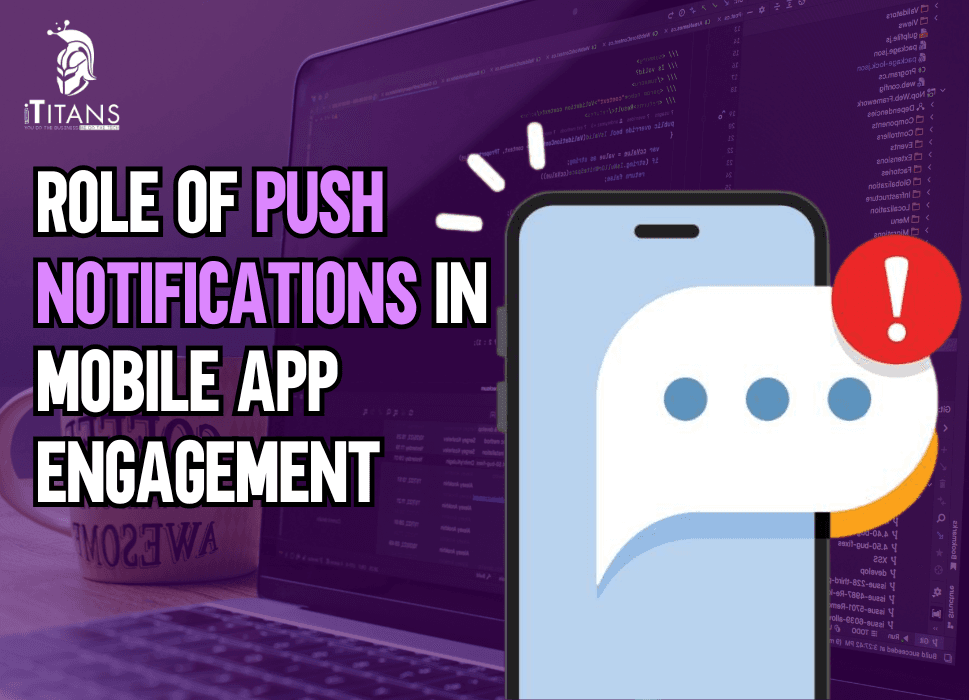
Mobile apps are everywhere. From ordering food and booking rides to managing finances and fitness goals, apps have become a daily habit for billions of users. Yet, with millions of apps competing for attention, building an app is only half the job. The real challenge is keeping users active, interested, and coming back. This is where the role of push notifications in mobile app engagement becomes truly important.
Push notifications are short, timely messages sent directly to a user’s device, even when the app is not open. When used thoughtfully, they can increase engagement, improve retention, and strengthen long-term user relationships. When used poorly, they can annoy users and lead to app uninstalls. In this article, we are going to explore how push notifications influence mobile app engagement, supported by recent statistics, real-world use cases, and industry insights.
Understanding Mobile App Engagement in Today’s Market
Mobile app engagement refers to how actively and consistently users interact with an app. This includes metrics such as daily active users, session length, retention rate, and in-app actions like purchases or content sharing.
Recent industry data shows just how competitive the app market has become:
- As of 2025, there are over 5 million mobile apps available across major app stores.
- Studies indicate that nearly 25% of users abandon an app after a single use.
- On average, only 30% of users return to an app after 90 days if there is no active engagement strategy.
These numbers highlight a simple truth: acquiring users is expensive, but retaining them is even more challenging. Push notifications, when aligned with user needs and behavior, act as a direct communication channel that helps apps stay relevant in users’ daily lives.

What Are Push Notifications and Why Do They Matter?
Push notifications are messages sent from an app’s server to a user’s mobile device. They can appear as banners, alerts, or lock-screen messages and may include text, images, emojis, or call-to-action buttons.
What makes push notifications powerful is their immediacy. Unlike emails or social media posts, push notifications reach users in real time. According to recent mobile engagement reports, push notifications can increase app retention rates by up to 3x when compared to apps that do not use them.
However, effectiveness depends on relevance. Users are more likely to engage with notifications that feel personal, timely, and useful rather than promotional or repetitive.
Direct Impact of Push Notifications on User Retention
Retention is one of the most critical indicators of app success. Push notifications play a strong role in improving retention by reminding users of the app’s value.
Recent statistics show:
- Apps that send personalized push notifications see up to 40% higher retention rates.
- Users who opt in to push notifications are 88% more likely to remain active compared to those who opt out.
- Timely notifications can reduce churn by up to 10–15% in competitive app categories like eCommerce and on-demand services.
For example, a fitness app might send reminders to complete a workout, while a finance app may notify users about unusual spending or upcoming bills. These messages are not just reminders; they are touchpoints that reinforce the app’s usefulness.
Personalization: The Heart of Effective Push Notifications
One-size-fits-all messaging no longer works. Modern users expect communication tailored to their preferences, location, and behavior. Personalization transforms push notifications from generic alerts into meaningful interactions.
Personalized push notifications may include:
- User name or location
- Behavior-based triggers, such as abandoned carts or incomplete tasks
- Preferences based on past interactions
Industry data suggests that personalized notifications deliver up to 4x higher open rates than generic messages. This is because users feel the message is meant specifically for them, not for a broad audience.
Personalization requires strong backend systems, user data management, and thoughtful UI/UX design. This is where experienced mobile app development teams, add value by building apps that can support intelligent notification strategies from day one.
Timing and Frequency: Finding the Right Balance
Even the most relevant message can fail if it is sent at the wrong time. Timing plays a crucial role in push notification success.
Recent engagement studies indicate:
- Notifications sent during peak usage hours can see up to 30% higher click-through rates.
- Sending too many notifications can lead to up to 60% higher opt-out rates.
- Apps that limit notifications to 2–3 per week often see better long-term engagement than those sending daily alerts.
The key is balance. Users want to stay informed, not overwhelmed. Smart apps use analytics and user behavior tracking to identify the best times and frequencies for each user segment.
Rich Push Notifications and Interactive Experiences
Push notifications have evolved beyond simple text messages. Today, rich notifications can include images, videos, and interactive buttons, allowing users to take action without opening the app.
For example, a food delivery app may allow users to reorder a meal directly from the notification. A news app might let users save or share an article instantly.
According to recent mobile UX reports:
- Rich push notifications can increase engagement rates by 25–35%.
- Interactive notifications reduce friction and improve user satisfaction.
Implementing such features requires advanced mobile app development expertise, careful UI/UX planning, and thorough testing across devices and platforms.
Push Notifications Across Different App Categories
The role of push notifications in mobile app engagement varies by industry, but their importance remains consistent.
- In eCommerce apps, notifications about discounts, order updates, and abandoned carts can significantly boost conversions. Studies show that cart reminder notifications can recover up to 20% of lost sales.
- In social media apps, notifications about likes, comments, or new followers encourage frequent check-ins. This drives daily active usage and longer session times.
- In healthcare and wellness apps, reminders for appointments, medications, or workouts improve adherence and user trust.
- In finance apps, alerts about transactions, bill due dates, or security updates enhance transparency and reliability.
Each use case requires a tailored communication strategy, supported by strong backend systems and data analytics.
Role of AI and Automation in Push Notifications
Artificial intelligence and automation are reshaping how push notifications are created and delivered. AI-driven systems analyze user behavior patterns and predict the best message, timing, and channel for each user.
Recent industry insights suggest:
- AI-powered notifications can improve engagement rates by up to 50%.
- Automated campaigns reduce manual effort while maintaining consistency and relevance.
- Predictive analytics help apps anticipate user needs rather than reacting to inactivity.
For businesses investing in digital transformation, integrating AI into mobile app engagement strategies is becoming less of an option and more of a necessity.
Security, Privacy, and User Trust
With increasing concerns around data privacy, users are more cautious about how apps communicate with them. Transparent notification practices build trust and long-term engagement.
Best practices include:
- Clearly explaining why notifications are sent
- Allowing users to customize notification preferences
- Avoiding sensitive data in notification previews
Apps that respect user privacy tend to see higher opt-in rates and stronger brand loyalty. Secure backend development and compliance with regulations like GDPR and CCPA are essential for maintaining this trust.
Companies Leading the Push Notification Ecosystem
Several technology companies have played a significant role in advancing push notification platforms and mobile engagement tools. Below are a few notable names, along with their location, expertise, and average online ratings.
Firebase (by Google)
Based in the United States, Firebase specializes in mobile and web app development tools, including push notifications through Firebase Cloud Messaging. It is widely used for analytics and backend services and maintains an average online rating of around 4.6 out of 5.
OneSignal
Headquartered in the United States, OneSignal focuses on customer messaging and push notification services for mobile and web apps. It is known for ease of use and scalability, with an average rating of approximately 4.5 out of 5.
Airship
Based in the United States, Airship offers customer engagement platforms with strong push notification and messaging capabilities. It is commonly used by enterprise-level apps and holds an average rating of about 4.4 out of 5.
Braze
Located in the United States, Braze specializes in customer engagement and lifecycle messaging, including advanced push notification features. It is favored by data-driven marketing teams and has an average rating close to 4.3 out of 5.
These platforms provide the technical foundation, but successful engagement still depends on how well notifications are planned, designed, and aligned with business goals.

How Push Notifications Support Business Growth
Beyond engagement, push notifications directly support business growth. They help drive conversions, increase lifetime value, and strengthen brand recall.
For example, targeted notifications can guide users through onboarding, highlight new features, or promote limited-time offers. Research indicates that users who engage with push notifications are up to 90% more likely to make in-app purchases.
This makes push notifications a valuable part of any mobile growth strategy, especially when combined with SEO, content marketing, and social media efforts.
Essential Components of Push Notifications
Opt-In Mechanism: The Gateway to Engagement
The very first step in push notifications is getting users to opt in. Without permission, your app can’t send any alerts, so this component is crucial. You’ve probably noticed that Android and iOS handle this differently.
Android often enables notifications by default, while iOS makes users explicitly agree to receive them. That difference shows in the numbers: Android opt-in rates hover around 81%, while iOS sits nearer to 51%, with an average overall opt-in of about 60% across devices.
Targeting and Personalization: Making Messages Feel Human
Once users opt in, the next big component is how personal and relevant each notification feels. We’ve moved past generic blasts today’s users expect messages that feel like they know them. That’s where targeting comes in: segmenting users by behavior, preferences, or past actions allows you to send stuff they actually care about.
And the impact here is huge. Personalized push notifications can increase reaction rates by up to 400% compared to generic ones. Think about it: if your message feels timely, helpful, or exciting, users are far more likely to tap and that’s the whole point of notifications.
Timing and Frequency: When to Catch Their Attention
You might have the best message in the world, but if users see it at 2 a.m. or right after they’ve unlocked their phone 50 times, they’ll start tuning out or turning notifications off. That’s why timing is an essential component. Sending alerts when your users are most likely to engage boosts effectiveness big time.
Studies show that tailored send times can improve reaction rates by around 40%. And there’s also a balance to find in frequency: too few notifications and users forget about your app, too many and they get annoyed. Some research suggests that receiving even one notification per week can push about 10% of users to disable all notifications and 6% to uninstall the app.
Message Content: What You Say and How You Say It
The actual content of a push notification matters more than you might think. With limited space, every word counts the title and message have to convince someone to stop scrolling and tap. Using actionable language, urgency (when appropriate), and value propositions like “Today only” or “Don’t miss out!” can significantly boost engagement.
Rich Media and Interactivity: More Than Just Text
Push notifications used to be plain text, but modern mobile platforms support rich media such as images, GIFs, videos, and buttons. This makes notifications far more engaging because they visually attract attention and can prompt specific actions directly from the notification. Rich formats can improve reaction rates by around 25%.
Deep Linking: Bridging Notification to Experience
A push notification only does its job if it leads somewhere meaningful. That’s where deep linking comes in which is about sending users not just into your app, but to the specific screen or section that matches the notification’s purpose.
For example, a message about a sale should take them straight to the sale page, not just open the app home screen. Deep links reduce friction and increase conversions because users don’t have to hunt for what they were alerted about.
Metrics and Analytics: Knowing What’s Working
You can’t improve what you don’t measure, and push notifications are no different. Tracking key metrics such as delivery rate, open rate, click-through rate (CTR), opt-out rate, and conversions, tells you how your notifications are performing. For example, industry CTR benchmarks hover around 4.6% on Android and 3.4% on iOS.
Metrics help you understand what kinds of messages resonate, what times are best, and which user segments are most active. Armed with that data, you can tweak content, refine timing, and test different strategies to keep improving engagement rather than guessing.
Segmentation: Speaking to the Right Crowd
Segmentation is a subset of targeting, but it deserves its own spotlight. Instead of sending all users the same notification, segmentation lets you group users with shared traits (like frequent buyers, new users, or inactive users) and send tailored messages to each group.
Advanced segmentation can drive much higher engagement than blanket messaging because it respects user differences. i.e. what appeals to an active gamer may not work for someone who rarely opens the app.
Behavioral Triggers: Responding to User Actions
Notifications triggered by behaviors such as like abandoning a cart, reaching a milestone, or not opening the app for a few days, can be super powerful because they feel timely and relevant. These are different from scheduled or broadcast notifications; they react to what the user actually did.
Triggered messages can remind, encourage, or reward users exactly when it matters most. For instance, someone who left items in their cart can get a gentle reminder with a discount, while a dormant user can receive a message highlighting what they’re missing. According to engagement stats, targeted push like this can boost retention significantly compared to generic pushes.
Testing and Optimization: The Continuous Improvement Loop
Finally, the push notification system should never be static. A/B testing different messages, send times, content styles, and other variables lets you learn what works best for your audience. For example, you might test short vs. longer messages, emojis vs. no emojis, or morning vs. evening sends.
By consistently testing and optimizing, you’ll keep refining your strategy and staying in tune with user preferences. Push notification performance changes over time, so ongoing optimization keeps your engagement high instead of letting it stagnate.

iTitans: Redefining Concept of Push Notifications
iTitans is a full-service software development company based in the United States with a global reach. With strong expertise in website development, mobile app development, software development, MVP development, and UI/UX designing, iTitans understands that engagement is not an afterthought but a core part of digital success.
Focusing on What Matters
In mobile app development projects, iTitans focuses on building scalable architectures that support advanced push notification features. This includes personalized messaging, real-time triggers, and secure data handling. By combining technical excellence with thoughtful UI/UX design, iTitans ensures that notifications feel natural and user-friendly rather than intrusive.
Automated Integrations
Their digital transformation services help businesses modernize legacy systems, making it easier to integrate analytics, automation, and AI-driven engagement tools. For startups, iTitans’ MVP development approach ensures that push notification strategies are tested early, allowing teams to learn what resonates with users before scaling.
Designed for Businesses
In eCommerce development, push notifications are used to drive repeat purchases, share order updates, and announce promotions. When paired with SEO and social media marketing services, notifications become part of a broader digital ecosystem that keeps users engaged across multiple channels.
Market Leading Strategies
iTitans also offers staff augmentation, allowing businesses to strengthen their in-house teams with experienced developers and designers who understand modern mobile engagement practices. This flexibility ensures that companies can adapt quickly to changing user expectations and market trends.
Future of Push Notifications in Mobile App Engagement
As mobile technology continues to evolve, push notifications will become even more intelligent and context-aware. Wearable devices, voice assistants, and IoT integrations are expanding how and where notifications appear.
Future trends suggest:
- Greater use of predictive analytics to anticipate user needs
- Increased focus on micro-moments and contextual messaging
- Deeper integration with omnichannel engagement strategies
Apps that invest in thoughtful notification practices today will be better positioned to adapt to these changes tomorrow.
The role of push notifications in mobile app engagement is both powerful and nuanced. When done right, notifications strengthen relationships, improve retention, and drive meaningful user actions. When done poorly, they risk alienating users and damaging brand trust.
Success lies in relevance, timing, personalization, and respect for user preferences. With the right development approach and strategic planning, push notifications become more than just messages; they become ongoing conversations with users.
Make your mobile apps more interactive with customized yet creative push notifications. Get in touch with iTitans today and let our team of experienced developers design mobile apps with interactive push notifications.
FAQs
How do push notifications improve mobile app engagement?
Push notifications encourage users to return to an app by delivering timely and relevant messages. They remind users of unfinished actions, new features, or valuable content. When done correctly, they create meaningful interactions rather than interruptions. This consistent communication helps keep users active and engaged.
Why is personalization important in push notifications?
Personalized push notifications are tailored to a user’s behavior, preferences, or location. They make messages feel more relevant and valuable, increasing open and click-through rates. Users are more likely to engage with notifications that address their specific needs. Personalization also reduces the risk of user fatigue or app uninstalls.
What types of push notifications drive the highest engagement?
Behavior-triggered notifications, such as abandoned cart reminders or activity alerts, tend to perform best. Time-sensitive messages like flash sales or event reminders also generate high engagement. Informational updates and personalized recommendations are effective when they add real value. The key is relevance and timing.
How does timing affect push notification effectiveness?
Sending notifications at the right time significantly impacts engagement rates. Messages delivered during a user’s active hours are more likely to be opened. Poor timing can lead to ignored notifications or user opt-outs. Using data-driven scheduling ensures notifications align with user behavior patterns.
Can push notifications help with user retention?
Yes, push notifications play a major role in retaining users over time. They re-engage inactive users by reminding them of the app’s value. Regular but well-spaced notifications help maintain long-term interest. This ongoing interaction strengthens user loyalty and reduces churn.