
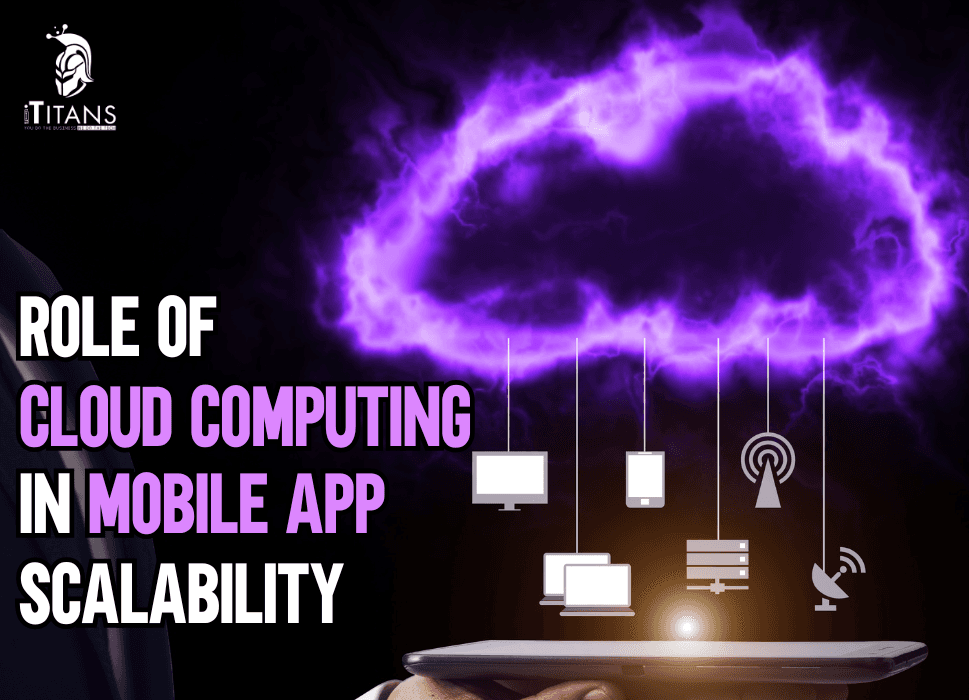
Role of Cloud Computing in Mobile App Scalability
The digital revolution has radically transformed how businesses and individuals interact with technology. Among the most significant developments in recent years is the rise of mobile applications as dominant channels for communication, productivity, entertainment, and commerce. But at the same time, mobile app development process is now integrating cloud services for an enhanced experience as it has become a need of time.
As the number of mobile users continues to grow, the demand for scalable and high-performance mobile applications has never been higher. At the heart of this evolution lies cloud computing, which serves as a technological innovation that has redefined the architecture and functionality of mobile apps. The role of cloud computing in mobile app scalability is crucial, not just for performance, but also for resilience, global reach, and innovation.
Understanding Mobile App Scalability in the Modern Age
Scalability refers to the ability of a system, network, or process to handle a growing amount of work or its potential to accommodate growth. In the context of mobile applications, scalability ensures that an app performs optimally regardless of the number of users or the volume of data being processed. The unpredictable nature of user behavior, especially in viral apps, means that custom mobile app developers need to build apps that can scale seamlessly without downtime or lag.
Traditionally, achieving this required significant investment in physical infrastructure, from on-premise servers to complex load balancing systems. However, this model was not only costly but also inflexible. Enter cloud computing: a paradigm shift that enables on-demand access to computing resources over the internet, offering unmatched flexibility, cost-efficiency, and scalability.

Cloud Computing: A Catalyst for Scalability
Cloud computing provides a dynamic environment where mobile applications can be hosted, deployed, and managed. Platforms like Amazon Web Services (AWS), Microsoft Azure, Google Cloud Platform (GCP), and IBM Cloud offer Infrastructure-as-a-Service (IaaS), Platform-as-a-Service (PaaS), and even Function-as-a-Service (FaaS), each catering to different scalability needs.
One of the main advantages of cloud computing is its ability to auto-scale. This means that resources such as storage, memory, and processing power can be automatically adjusted based on real-time demand. Whether an app has 100 users or a million, cloud infrastructure ensures it operates smoothly without manual intervention.
Global Mobile App Market and the Pressure to Scale
According to Statista, the number of mobile app downloads worldwide reached approximately 257 billion in 2023, up from 230 billion in 2021. The surge in user numbers puts immense pressure on app developers to maintain performance and availability. Users expect apps to be fast, responsive, and accessible anytime, anywhere. A single glitch or delay can lead to uninstalls and poor reviews, negatively impacting brand reputation.
In such a competitive environment, the scalability offered by cloud computing becomes a strategic asset. By leveraging cloud resources, developers can deploy their apps across multiple geographical regions, reducing latency and enhancing the user experience for a global audience.
Elasticity and Flexibility of Cloud Infrastructure
Elasticity is a key feature of cloud computing that directly impacts mobile app scalability. Elastic cloud environments can expand or shrink in real time based on current needs. For instance, a retail app may experience a spike in traffic during holiday sales.
Cloud services can automatically allocate more computing power and bandwidth to handle the surge, then scale down once the traffic subsides. This not only ensures seamless user experience but also optimizes cost by avoiding over-provisioning.
Moreover, cloud platforms provide flexible pricing models, such as pay-as-you-go or subscription-based services. This democratizes access to high-end infrastructure, enabling startups and small businesses to compete with larger enterprises without heavy capital investment.
Microservices Architecture and Containerization
The scalability of mobile apps is further enhanced through modern software development methodologies like microservices and containerization, both of which are deeply integrated with cloud computing.
Microservices architecture breaks down an app into smaller, independent services that can be developed, deployed, and scaled independently. This modular approach means that one component can be scaled without affecting others. For example, in a food delivery app, the order processing module can be scaled separately from the customer review module.
Containerization, facilitated by tools like Docker and Kubernetes, allows developers to package applications with all their dependencies into a single container that can run reliably across different environments.
Containers are lightweight and start faster than traditional virtual machines, making them ideal for auto-scaling scenarios. Kubernetes, in particular, provides powerful orchestration capabilities to manage containerized applications in a cloud environment, ensuring high availability and resilience.

Performance Optimization Through Edge Computing
While cloud computing provides centralized scalability, the advent of edge computing complements it by decentralizing data processing closer to the user. For mobile applications, this hybrid approach significantly enhances performance.
Edge computing allows time-sensitive data to be processed locally on the device or nearby servers, reducing latency and bandwidth usage. When combined with the cloud, edge computing enables mobile apps to deliver real-time experiences, such as live streaming, augmented reality, and multiplayer gaming. This synergy between edge and cloud is critical for next-generation mobile applications.
Storage Scalability and Data Management
Mobile applications generate a vast amount of data—from user profiles and activity logs to media uploads and transactional records. Managing and storing this data securely and efficiently is essential for scalability.
Cloud storage services like Amazon S3, Google Cloud Storage, and Azure Blob Storage provide virtually unlimited storage that scales automatically with demand. These platforms offer built-in redundancy, backup, and disaster recovery features, ensuring data durability and availability.
Furthermore, cloud-based databases like Firebase Realtime Database, Amazon DynamoDB, and Google Firestore offer seamless integration with mobile applications. These NoSQL databases support real-time data synchronization and automatic scaling, enabling dynamic and interactive app experiences.
Security and Compliance in Scalable Cloud Environments
One of the common concerns with cloud computing is security. As mobile applications scale and handle sensitive user data, robust security measures become essential. Cloud providers invest heavily in securing their platforms, offering features like encryption at rest and in transit, identity and access management (IAM), firewalls, and compliance with global regulations like GDPR and HIPAA.
In fact, a 2023 report by Gartner highlighted that public cloud infrastructure is more secure than traditional on-premise systems, thanks to continuous updates, patches, and rigorous compliance standards. For mobile developers, this means they can scale their apps without compromising on security or regulatory compliance.
Real-Time Analytics and Monitoring for Scalable Growth
Scalable mobile apps must be monitored continuously to ensure optimal performance. Cloud platforms offer a suite of monitoring and analytics tools that provide insights into user behavior, system health, and application performance.
Services like AWS CloudWatch, Google Cloud Monitoring, and Azure Application Insights allow developers to set alerts, track metrics, and diagnose issues in real time. These insights are invaluable for scaling decisions, enabling developers to anticipate demand, identify bottlenecks, and optimize resource allocation.
Real-time analytics also empower personalized user experiences. By analyzing usage patterns, apps can deliver customized content, notifications, and features, improving engagement and retention—two critical metrics for scalable growth.

DevOps, CI/CD, and Automation in Cloud Environments
The integration of DevOps practices with cloud computing accelerates the development and scaling of mobile applications. Continuous Integration and Continuous Deployment (CI/CD) pipelines enable developers to automate code testing, integration, and deployment, reducing manual errors and speeding up release cycles.
Cloud-native tools like GitHub Actions, GitLab CI, AWS CodePipeline, and Azure DevOps streamline the CI/CD process, allowing teams to roll out updates and features frequently. This agility is essential for scaling mobile apps in a fast-paced market, ensuring that apps evolve with user needs and technological advancements.
Disaster Recovery and Business Continuity
As mobile apps scale, the impact of downtime becomes more significant. Cloud computing offers robust disaster recovery solutions that ensure business continuity even in the face of system failures or cyberattacks.
Multi-region deployment, data replication, and automated failover mechanisms are standard features of cloud services. These capabilities ensure that if one server or data center goes down, traffic is rerouted to other functioning servers without affecting the user experience. This resilience is vital for maintaining user trust and operational efficiency.
Cost Efficiency and Resource Optimization
One of the strongest arguments for using cloud computing in mobile app scalability is cost efficiency. Traditional infrastructure required heavy upfront investments and ongoing maintenance costs. In contrast, cloud platforms offer an operational expenditure (OPEX) model, allowing businesses to pay only for what they use.
Auto-scaling, serverless architectures, and resource scheduling further reduce costs by eliminating idle resources. For example, AWS Lambda allows developers to run backend code in response to events without provisioning servers, charging only for execution time. This makes it easier to scale apps without overspending.
Cloud-Based Backend-as-a-Service (BaaS) Solutions
For many mobile apps, the backend functionality—such as authentication, databases, file storage, and push notifications—is as critical as the frontend. Cloud-based Backend-as-a-Service (BaaS) platforms like Firebase, Parse, and Backendless simplify backend development by offering ready-to-use services.
These platforms handle infrastructure, scaling, and security, enabling developers to focus on frontend development and user experience. This rapid development capability is particularly beneficial for startups and small teams aiming to scale quickly.
The Role of Artificial Intelligence and Machine Learning
Cloud computing also powers AI and ML capabilities that enhance mobile app scalability and intelligence. Cloud platforms offer pre-built AI services like natural language processing, image recognition, recommendation engines, and chatbots.
AI-Driven Resource Allocation in the Cloud
One of the primary challenges in mobile app scalability is effective resource allocation. Too many resources result in wasted costs, while too few cause app crashes and latency. AI, especially when deployed through the cloud, tackles this challenge head-on by analyzing historical usage patterns and predicting future demands.
Machine learning models can forecast traffic spikes based on user behavior, geographical location, and time of day. For example, an e-commerce mobile app can automatically allocate more servers during Black Friday sales. AI-based autoscaling systems ensure that resources scale up or down dynamically, reducing human intervention and enhancing efficiency.
Smart Load Balancing and Performance Optimization
AI and ML also play a crucial role in load balancing, which distributes user traffic across multiple servers to maintain optimal performance. Traditional load balancing methods often follow fixed rules, but AI introduces intelligent algorithms that adapt to changing traffic patterns in real-time.
Cloud-based AI solutions can identify bottlenecks and suggest or automatically apply optimizations such as compressing assets, offloading tasks, or adjusting cache settings. This smart performance tuning ensures that mobile apps remain fast and responsive, even under heavy loads.
Predictive Maintenance and Anomaly Detection
Downtime can significantly affect a mobile app’s reputation and user retention. AI-powered predictive maintenance and anomaly detection mechanisms hosted on cloud infrastructure prevent failures before they happen. By continuously monitoring logs, server health, and performance metrics, AI models can detect abnormal patterns and trigger alerts or corrective actions.
For instance, if a sudden spike in API response time is detected, the system can automatically reroute traffic, restart services, or allocate additional resources. This preemptive strategy greatly enhances app reliability and supports seamless scalability.
User Behavior Analytics and Personalization
Scalable apps aren’t just about handling more users—they also need to deliver personalized experiences. AI and ML, when deployed through cloud environments, provide deep insights into user behavior. These insights can be used to optimize UI/UX, recommend content, or adjust app functionality based on user preferences.
Using cloud-based analytics tools, developers can track user sessions, click-through rates, and retention statistics in real-time. The app can then adapt dynamically—for example, offering product recommendations, adjusting loading screens, or caching commonly used features—to cater to individual user needs efficiently, even as the user base grows.
Continuous Learning and Adaptive Scaling
One of the standout benefits of AI and ML in cloud-powered mobile app scalability is continuous learning. Unlike traditional rule-based systems, ML models evolve with time, becoming more accurate in their predictions and decisions. This adaptability is crucial for modern apps that operate in unpredictable environments.
Cloud platforms offer tools like TensorFlow, Amazon SageMaker, and Azure Machine Learning, enabling developers to train and deploy scalable models that learn from new data. This ongoing learning loop ensures that scaling strategies remain current and effective, no matter how user behavior or traffic patterns shift.
By integrating these services into mobile apps, developers can deliver smart features that adapt to user preferences and behavior. The scalability of these services ensures consistent performance, even as user demand increases.
Case Studies of Cloud-Scaled Mobile Applications
Google Cloud
Several successful mobile apps owe their scalability and performance to cloud computing. For instance, Spotify uses Google Cloud to stream music to millions of users globally. Instagram, owned by Meta, relies on cloud-based infrastructure to handle billions of image uploads, stories, and messages daily.
Lyft
Similarly, the ride-sharing app Lyft uses AWS for scalable infrastructure, allowing it to match drivers with riders in real time. These examples highlight how cloud computing underpins some of the world’s most popular mobile applications, ensuring scalability, speed, and innovation.
Uber: Scaling Global Ride-Hailing Operations
Uber’s mobile application is another textbook example of a cloud-scaled app. With millions of daily transactions occurring in real-time, Uber requires a robust and scalable backend. Originally built on monolithic architecture, Uber transitioned to a service-oriented model hosted primarily on AWS and Google Cloud Platform (GCP).
The scalability of Uber’s mobile platform is largely due to its use of real-time data processing, container orchestration with Kubernetes, and event-driven microservices. The cloud enables Uber to dynamically allocate resources based on regional demand—say, during a rainstorm in New York.
Uber also uses cloud-based machine learning models to optimize routes, estimate time of arrivals, and match riders with drivers more efficiently. By scaling up computer instances during periods of heavy traffic and scaling down during lulls, Uber maintains operational efficiency while controlling costs.
Netflix: Delivering Seamless Streaming to Millions
Netflix, though commonly associated with streaming on televisions, also operates one of the most heavily trafficked mobile applications globally. The company adopted a cloud-first strategy by migrating all its operations to Amazon Web Services (AWS). This transition allowed Netflix to scale its mobile app dynamically based on user demand across different regions and time zones.
By leveraging services such as Amazon EC2 for compute power, Amazon S3 for storage, and Amazon CloudFront for content delivery, Netflix ensures uninterrupted viewing experiences, even during peak times like weekends or new season releases. The mobile app uses microservices to manage individual tasks like recommendations, user profiles, and playback, enabling faster updates and modular scaling.
This approach dramatically reduced downtime and enabled the company to focus more on innovation and personalization features. The lesson from Netflix is clear: cloud scalability, when executed well, leads to improved user experiences and a significant reduction in infrastructure management.
Looking Ahead: The Future of Scalable Mobile Apps in the Cloud
As technologies like 5G, IoT, and augmented reality continue to evolve, the demand for scalable mobile applications will only grow. Cloud computing will remain central to this transformation, offering the tools and infrastructure needed to support next-generation apps.
Future trends like serverless computing, AI-enhanced DevOps, and distributed cloud models will further simplify scalability and reduce latency. Mobile developers who embrace cloud-first strategies will be better positioned to innovate and meet the expectations of a digitally connected world.
FAQs
How does cloud computing support mobile app scalability?
Cloud computing enables mobile apps to handle increased user demands by offering flexible, on-demand resources. With the ability to scale server capacity up or down, apps remain responsive during peak traffic times. iTitans integrates scalable cloud architecture to ensure consistent performance without compromising user experience.
Why is scalability important for mobile applications?
Scalability ensures that a mobile app can grow with its user base and handle more data, users, and transactions over time. Without proper scalability, apps can crash or slow down, leading to poor user retention. iTitans prioritizes scalable development strategies to help businesses maintain app efficiency under varying loads.
What cloud services are commonly used to scale mobile apps?
Popular cloud services like Amazon Web Services (AWS), Microsoft Azure, and Google Cloud offer features such as load balancing, auto-scaling, and distributed storage. These services help manage app performance efficiently. iTitans leverages these platforms to build robust, scalable mobile solutions for clients.
Can cloud computing reduce the cost of scaling mobile apps?
Yes, cloud computing minimizes infrastructure costs by allowing businesses to pay only for the resources they use. Instead of investing in expensive servers, companies can scale as needed. iTitans utilizes cloud-native solutions to provide cost-effective scalability without sacrificing quality or reliability.
How does iTitans ensure secure cloud-based scalability for mobile apps?
iTitans implements advanced security protocols such as data encryption, secure API integrations, and multi-factor authentication. These measures protect data while ensuring seamless scalability. Their team ensures that mobile apps remain secure even as they expand and attract more users.
Is cloud computing suitable for both iOS and Android apps?
Absolutely. Cloud computing platforms support cross-platform development, ensuring that both iOS and Android apps benefit from scalable backends and cloud-hosted services. iTitans uses a unified cloud strategy to deliver seamless experiences across all mobile platforms.
What role does backend-as-a-service (BaaS) play in app scalability?
BaaS provides ready-to-use backend functionalities like databases, user authentication, and push notifications. This reduces development time and simplifies scalability. iTitans often integrates BaaS into its mobile projects to accelerate deployment while ensuring high scalability.
How can businesses get started with scalable mobile app development at iTitans?
Businesses can start by consulting with iTitans to define their app goals and anticipated user load. The team then designs a custom cloud-based solution tailored to the app’s current and future needs. With a focus on growth and performance, iTitans delivers scalable mobile solutions that evolve with your business.
Conclusion
The role of cloud computing in mobile app scalability cannot be overstated. From elastic infrastructure and global availability to real-time analytics and seamless updates, the cloud empowers developers to build and scale applications with unprecedented speed and efficiency. As mobile usage continues to soar, leveraging cloud computing is no longer an option but a necessity for any app aiming to thrive in the modern digital ecosystem. Contact iTitans now and let us help you for cloud based mobile app and website development services.
Related Posts