
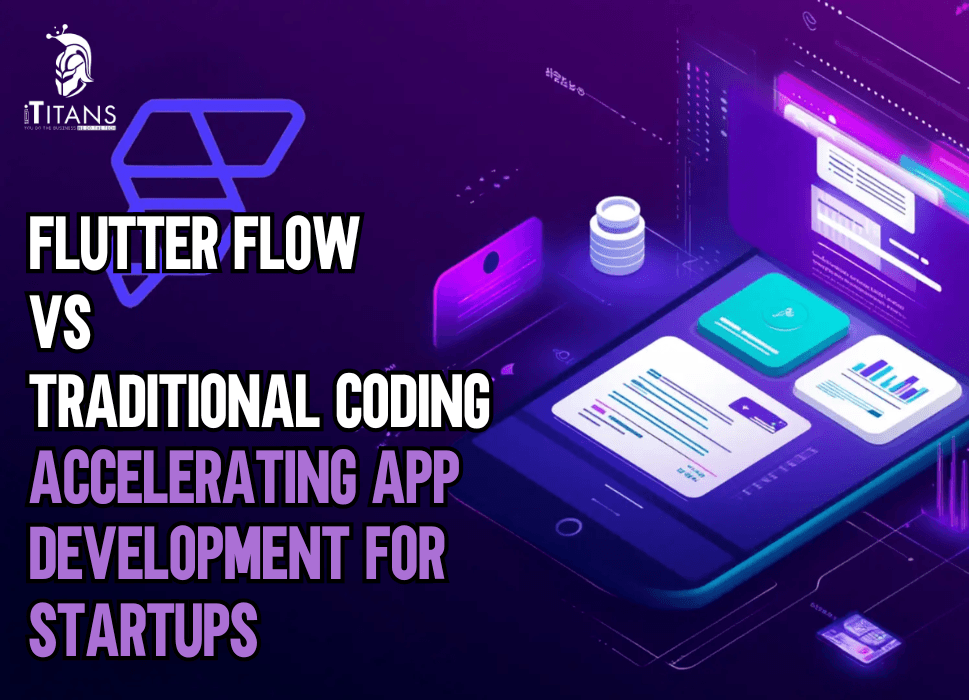
Flutter Flow vs Traditional Coding | Accelerating App Development for Startups
In today’s fast-paced digital world, startups need to build apps quickly and efficiently to stay competitive. The choice between Flutter Flow and traditional coding is a critical decision that can significantly impact development time, cost, and scalability. This is where choosing the right development technology can become a challenge for many startups considering all the major factors.
For startups, speed, cost-effectiveness, and flexibility are crucial for mobile app development. Flutter Flow, a no-code/low-code platform, promises rapid app development with minimal coding, while traditional coding offers complete customization and control. Understanding the strengths and limitations of both approaches is essential for making an informed decision.
Understanding Flutter Flow
Flutter Flow is a visual app development platform that allows users to build applications without writing extensive code. Built on Google’s Flutter framework, it provides an intuitive drag-and-drop interface for designing UI and integrating backend functionalities.
Startups with limited technical expertise or tight deadlines can leverage Flutter Flow to create functional mobile and web apps without hiring a full-fledged development team. By keeping in mind the budget, time to market, and other considerable factors, startups prefer to go with Flutter due to its cross-platform compatibility as well.
One of Flutter Flow’s major advantages is its pre-built components and seamless Firebase integration, which enable developers to prototype and launch apps faster. Additionally, it allows users to export Flutter code, giving developers the flexibility to modify and scale applications when needed.
Advantages of Flutter Flow for Startups
· Faster Development: Startups can create MVPs (Minimum Viable Products) within days rather than months, reducing time to market.
· Cost-Effective: Without the need for extensive coding, businesses save money on development resources.
· User-Friendly Interface: Non-technical founders and business teams can actively participate in the app development process.
· Cross-Platform Support: Apps can be deployed on both iOS and Android without extra effort.
· Easy Integration: Firebase backend integration makes it ideal for startups looking for cloud-based solutions.
However, while Flutter Flow provides ease of use and quick development, it has limitations in terms of customization and performance compared to traditional coding. Especially when it comes to integration of more complex features, Flutter falls short with its own set of limitations.

Traditional Coding: Comprehensive Overview
Traditional coding involves developing applications using programming languages like Dart (Flutter), Swift, Kotlin, Java, and React Native. It requires skilled developers who write custom code to achieve the desired functionality, performance, and design.
While traditional coding takes more time and effort, it offers unlimited flexibility and control, ensuring that applications are built to meet specific business needs. Startups that require unique features, high-performance apps, or long-term scalability often prefer traditional coding.
Advantages of Traditional Coding for Startups
· Complete Customization: Developers can create unique features and tailor apps according to exact business requirements.
· Better Performance: Apps built with traditional coding often run faster and smoother, especially for complex applications.
· Scalability: With full control over the codebase, developers can scale and expand the application seamlessly.
· Enhanced Security: More control over security protocols ensures data protection and compliance with industry standards.
· Integration Flexibility: Traditional coding allows integration with third-party services, APIs, and databases without limitations.
Despite these benefits, traditional coding comes with higher development costs and longer timelines, making it less suitable for startups that need rapid deployment. Startups require something that upscales faster and takes less time to market to boost their growth.
Flutter Flow vs Traditional Coding: A Detailed Comparison
1. Development Speed
Flutter Flow significantly accelerates development time due to its drag-and-drop functionality and pre-built components. Traditional coding, on the other hand, requires more effort to write, test, and debug the application.
For startups aiming for quick MVP launches, Flutter Flow is a great choice. However, businesses looking for long-term scalability may benefit from traditional coding. Traditional coding gives you more flexibility to code the complex features and functionalities. But to make things smooth and seamless, enterprises may have to provide post launch support as well.
2. Cost Considerations
Building an app using traditional coding requires hiring experienced developers, which increases costs. Flutter Flow reduces development expenses by enabling non-technical users and small teams to build apps without hiring full-time engineers.
If budget constraints are a concern, Flutter Flow is a cost-effective solution for early-stage startups. But if customization and long-term performance are priorities, investing in traditional development is worthwhile.
3. Flexibility & Customization
Traditional coding wins when it comes to customization. Developers can create fully tailored experiences, integrate unique features, and optimize performance for specific use cases.
Flutter Flow offers a structured approach but has limitations when it comes to building highly customized or complex applications. Startups with specific requirements may need to export Flutter Flow code and modify it manually, increasing the workload.
4. Maintenance & Scalability
For startups with long-term growth plans, scalability is a major factor. Traditional coding ensures that apps can evolve with business needs, incorporating new technologies and integrations seamlessly. While Flutter Flow supports basic scalability, it may not be the best option for large-scale applications that require continuous updates and performance enhancements.
5. Learning Curve
Flutter Flow is beginner-friendly, making it ideal for startups without dedicated tech teams. It enables business owners to participate in app development without extensive coding knowledge.
Traditional coding, however, requires a strong technical foundation. Developers must be proficient in programming languages and frameworks to build and maintain applications.

Choosing the Right Approach for Your Startup
The choice between Flutter Flow and traditional coding depends on several factors:
For Startups Needing a Quick MVP: Flutter Flow is ideal for validating ideas and launching prototypes.
For Businesses with Long-Term Growth Plans: Traditional coding is better for complex, scalable applications.
For Budget-Conscious Startups: Flutter Flow offers an affordable alternative to custom development.
For Performance-Critical Applications: Traditional coding ensures high efficiency and reliability.
Some startups opt for a hybrid approach, using Flutter Flow for rapid prototyping and transitioning to traditional coding as the business grows. This strategy allows companies to balance speed and customization effectively.
How iTitans Can Help Startups Build Scalable Apps
At iTitans, we specialize in both Flutter Flow development and traditional coding, offering tailored solutions for startups at every stage of growth. Whether you need a fast MVP or a fully customized app, our team of experts ensures high-quality development aligned with your business goals.
· Flutter Flow Development: We build fast, visually appealing applications using Flutter Flow for startups that need quick solutions.
· Custom App Development: Our skilled developers create scalable, high-performance applications using Flutter, React Native, Swift, and Kotlin.
· Hybrid Approach: We help startups transition from no-code to full-code development as their needs evolve.
· Scalability & Maintenance: We provide long-term support, ensuring your application stays updated and optimized.
· UI/UX Design & Optimization: Our design team ensures an intuitive user experience, enhancing app usability.
By leveraging our expertise in app development, startups can confidently choose the right approach and bring their ideas to life efficiently.
FAQs
What is the main difference between Flutter Flow and traditional coding?
Flutter Flow is a no-code/low-code development platform that allows users to create applications using a visual drag-and-drop interface. Traditional coding, on the other hand, involves manually writing code in programming languages like Dart, Java, or Swift to build applications.
Is Flutter Flow a good choice for startups?
Yes, Flutter Flow is an excellent choice for startups that need to quickly develop and launch an MVP (Minimum Viable Product) without requiring extensive coding knowledge. It reduces development time and costs, making it ideal for early-stage businesses with limited resources.
Can Flutter Flow apps be customized like traditionally coded apps?
Flutter Flow offers customization through its visual builder and allows users to integrate custom Dart code for advanced functionality. However, traditional coding provides greater flexibility and full control over the app’s logic, making it better suited for highly complex applications.
Which approach is better for long-term scalability: Flutter Flow or traditional coding?
Traditional coding is generally more scalable as it allows developers to optimize performance, integrate third-party tools more seamlessly, and handle complex business logic. While Flutter Flow is great for rapid prototyping, startups planning for long-term growth may need to transition to traditional coding as their app evolves.
Does Flutter Flow reduce development costs compared to traditional coding?
Yes, Flutter Flow significantly lowers development costs by reducing the need for a large team of developers and speeding up the development process. Traditional coding, while more expensive upfront, may be a better investment for businesses that require a fully customized and highly scalable application.
Final Thoughts
For startups, selecting the right development approach is crucial to success. Flutter Flow accelerates app development, making it perfect for quick MVPs and cost-effective solutions. However, traditional coding offers the flexibility, scalability, and performance required for complex applications.
At iTitans, we understand the unique challenges startups face. Whether you choose Flutter Flow or traditional coding, our expert team will guide you through the process, ensuring a seamless and successful app launch.
If you’re ready to build your startup’s next big app, contact iTitans today and let’s create something amazing together.