
Cost to Build an App Like HungerStation in Saudi Arabia (2026)
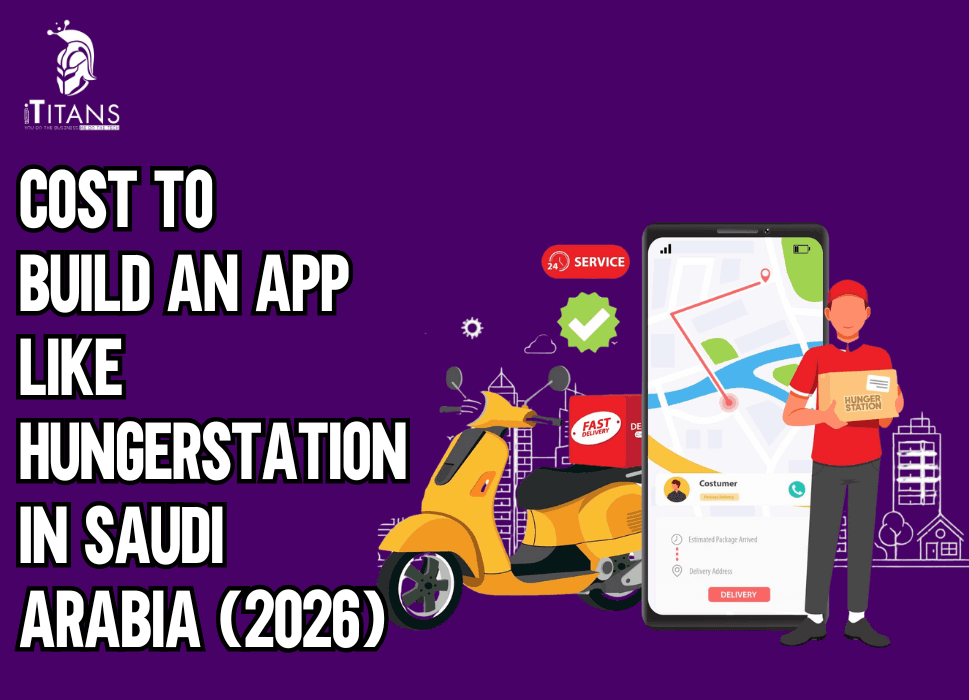
Food delivery apps are no longer experiments in Saudi Arabia. They are full-scale digital businesses competing on speed, coverage, and reliability. When founders search for the cost to build an app like HungerStation in Saudi Arabia, they are not just asking about development. They are asking whether this business model is still viable in 2026.
The short answer is yes, but only if you understand what you are paying for.
Many founders assume HungerStation is just a “food ordering app.” In reality, it is a multi-layer platform with customer apps, driver apps, restaurant dashboards, admin systems, logistics, payments, and compliance built specifically for the Saudi market.
This guide explains the food delivery mobile app development cost in detail, without inflated promises or vague ranges.

Understanding the HungerStation Business Model Before Talking About Cost
Before breaking down the food delivery mobile app development cost Saudi Arabia, it’s critical to understand what you’re trying to replicate.
HungerStation is not a single app. It is a system that includes:
- A customer-facing food ordering app
- A delivery driver app
- A restaurant partner dashboard
- A powerful admin and operations panel
Each layer increases development cost. Many HungerStation clone app development projects fail because founders budget for only one app instead of the full ecosystem.
This is why asking how much does it cost to build an app like HungerStation without understanding the architecture leads to unrealistic expectations.
Core Apps Required to Build a HungerStation Like App Development Cost in KSA
To calculate the real on-demand food delivery app cost, you must account for all four components.
Customer App
This is the app users see. It includes restaurant browsing, menus, ordering, payments, tracking, and reviews. This is often where founders focus, but it is only one part of the total cost.
Delivery Driver App
The driver app manages order assignments, navigation, status updates, and earnings. In Saudi Arabia, driver optimization directly affects delivery speed and customer satisfaction.
Restaurant Partner App / Dashboard
Restaurants manage menus, pricing, availability, and order preparation here. Weak restaurant tools slow down the entire system.
Admin Panel
This is the most complex and expensive part. It handles users, drivers, restaurants, commissions, disputes, analytics, and system controls. Most of the restaurant delivery app development cost Riyadh is driven by admin complexity.
Key Features That Drive the HungerStation App Development Cost
When founders ask about HungerStation clone app cost 2026, features are the biggest cost variable.
High-impact features include:
- Real-time order tracking
- Driver assignment logic
- Multi-restaurant cart handling
- Live order status updates
- Ratings and reviews
- Notifications (SMS, push, email)
Each feature requires backend logic, APIs, and testing. Cutting features reduces cost, but cutting the wrong ones breaks user trust.
This is why build a food delivery app like HungerStation is never a low-budget project when done seriously.
Saudi Arabia–Specific Factors That Increase Cost
The mobile app development cost of a food delivery app for Saudi market is higher than generic markets due to local requirements.
Saudi-specific cost drivers include:
- Arabic language support
- RTL (right-to-left) UI design
- Local payment gateways
- VAT handling
- Compliance with Saudi digital regulations
Ignoring these factors leads to rework later, which increases cost even more.
For example, Arabic + RTL support is not just translation. It affects layout, design logic, and testing across devices.
Payment Gateway and Logistics Costs in KSA
Payment integrations in Saudi Arabia are not the same as global apps.
Supporting local payment methods increases the food delivery app development cost Saudi Arabia, but it is mandatory for adoption.
Logistics also add complexity. Saudi cities like Riyadh and Jeddah require strong map integrations, driver optimization, and delivery radius logic.
These elements significantly impact the custom food delivery app development Saudi Arabia budget.
MVP vs Full-Scale App: Cost Reality for Founders
Many founders believe they can launch a “cheap MVP” and scale later. That works only if the MVP is designed correctly.
A basic MVP may include:
- Limited restaurants
- Simple driver flow
- Basic admin controls
This reduces the initial HungerStation clone app development cost, but scalability must be planned from day one.
A poorly built MVP often needs rebuilding, doubling the total cost.
Why HungerStation Clone Apps Often Fail
Most clone apps fail not because of competition, but because of underestimating cost and complexity.
Common mistakes include:
- Budgeting for only one app
- Ignoring driver operations
- Weak admin systems
- No post-launch budget
Understanding the cost to build an app like HungerStation in Saudi Arabia protects founders from these failures.
Early Cost Ranges Without False Promises
While exact numbers depend on scope, founders should expect the food delivery app development cost Saudi Arabia to vary widely based on:
- Number of apps
- Feature depth
- Scalability requirements
- Post-launch support
Any quote that sounds “too cheap” usually ignores critical components.
Food Delivery App Development Cost Saudi Arabia: Stage-by-Stage Breakdown
When founders ask for the cost to build an app like HungerStation in Saudi Arabia, they usually expect a single number. In reality, cost is distributed across multiple stages, and each stage has a clear purpose. Understanding this breakdown helps founders control budget instead of reacting to surprises.
The food delivery app development cost Saudi Arabia is not driven by coding alone. Planning mistakes in early stages quietly inflate costs later.
Stage 1: Discovery, Planning, and Architecture Cost
This stage is often underestimated or skipped entirely, yet it influences every other expense.
Discovery includes:
- Business model clarification
- Feature prioritization
- App architecture planning
- Scalability decisions
For a HungerStation like app development cost in KSA, this stage ensures you are not building features that don’t support revenue or growth.
Founders who skip discovery often change requirements during development, which increases cost more than any other factor.
Stage 2: UI/UX Design Cost (Arabic + RTL Impact)
Design cost is higher in Saudi Arabia due to language and layout requirements.
Arabic support is not a translation task. It affects:
- Layout direction (RTL)
- Icon placement
- Navigation flow
- Visual hierarchy
This directly impacts the custom food delivery app development Saudi Arabia budget. Poor RTL handling results in redesigns later, doubling design and development effort.
Design usually includes:
- User flows for customers, drivers, and restaurants
- Wireframes
- Interactive prototypes
Clear design reduces development confusion and lowers total cost.
Stage 3: Mobile App Development Cost (User, Driver, Restaurant)
This is where most of the HungerStation app development cost sits.
Development cost increases because you are not building one app, but multiple interconnected apps.
User App Development Cost
Includes restaurant discovery, menus, cart logic, checkout, tracking, and reviews. This is only one piece of the total on-demand food delivery app cost.
Driver App Development Cost
Driver apps require:
- Order assignment logic
- Navigation and location tracking
- Status updates
- Earnings and availability management
Driver efficiency directly affects delivery time and customer satisfaction.
Restaurant Partner App / Dashboard Cost
Restaurants manage menus, pricing, availability, and order acceptance here. Weak restaurant tools slow operations and increase support costs.
Ignoring restaurant tools is one of the biggest mistakes in HungerStation clone app development.
Stage 4: Backend, Admin Panel, and Infrastructure Cost
The admin panel is the brain of the system and often the most expensive part.
Admin systems handle:
- User management
- Driver management
- Restaurant onboarding
- Commission settings
- Order monitoring
- Dispute resolution
- Analytics and reporting
Most founders underestimate admin complexity when estimating restaurant delivery app development cost Riyadh.
Infrastructure also adds cost:
- Servers and cloud hosting
- Databases
- APIs
- Security layers
These are ongoing costs, not one-time expenses.
Stage 5: Payment Gateway and Saudi Compliance Cost
Payment integration significantly affects the cost to develop food delivery app for Saudi market.
Supporting local payment methods is mandatory for user trust and adoption. This includes:
- Integration effort
- Testing across scenarios
- Compliance with local regulations
VAT handling and invoicing logic also add backend complexity.
Compliance mistakes often cause app store delays and rework.
Stage 6: Testing, QA, and App Store Launch Cost
Testing is not optional. It protects your investment.
Testing covers:
- Functional testing
- Performance testing
- Security testing
- Device and OS compatibility
Skipping or reducing testing leads to negative reviews and emergency fixes, which cost more after launch.
App store launch also requires preparation:
- App metadata
- Screenshots
- Compliance checks
These steps are part of the HungerStation clone app cost 2026, not extras.
MVP vs Full-Scale Platform: Cost Comparison Reality
Many founders try to reduce the cost to build an app like HungerStation in Saudi Arabia by launching an MVP. This works only if the MVP is designed with scale in mind.
An MVP may limit:
- Number of restaurants
- Delivery zones
- Feature depth
This reduces initial cost but does not eliminate backend and admin needs. A poorly designed MVP often requires rebuilding, doubling total cost.
A full-scale platform costs more upfront but reduces long-term rework.

How Long Does It Take to Build a HungerStation-Like App?
Time and cost are linked. The question how long does it take to build a HungerStation-like app depends on scope and decision speed.
Timelines increase when:
- Requirements change frequently
- Feedback cycles are slow
- Design is unclear
Development speed is rarely the bottleneck. Decision delays usually are.
Understanding timelines helps founders plan funding and go-to-market strategy.
Cost Control Mistakes Founders Commonly Make
The most common mistakes that inflate food delivery app development cost Saudi Arabia include:
- Adding features mid-development
- Ignoring post-launch costs
- Choosing the cheapest vendor
- Underestimating admin complexity
Cost control comes from clarity, not negotiation.
Why Saudi Market Costs Are Higher but Justified
Saudi Arabia has a strong digital economy and high user expectations. Apps that feel slow or unreliable fail quickly.
The cost to develop food delivery app for Saudi market reflects:
- Higher UX expectations
- Local compliance
- Logistics complexity
Cutting corners may reduce upfront cost but usually kills adoption.
Final Cost to Build an App Like HungerStation in Saudi Arabia (2026 Estimates)
After understanding the architecture, features, stages, and Saudi-specific requirements, founders want clarity. The cost to build an app like HungerStation in Saudi Arabia in 2026 depends on scope, not assumptions.
There is no single price, but there are realistic ranges based on how serious the platform is.
A HungerStation clone app cost 2026 generally falls into three categories:
Basic MVP (Controlled Launch)
This version focuses on limited geography, fewer restaurants, and core delivery flows. It still includes customer, driver, restaurant, and admin systems, but with restricted functionality.
This approach lowers the initial food delivery app development cost Saudi Arabia, but only works if scalability is planned early. MVPs built without proper architecture often require rebuilding, which doubles total spend.
Growth-Ready Platform
This is the most common choice for founders targeting real market entry. It includes full workflows, better admin controls, analytics, and optimized logistics.
For founders asking how much does it cost to build an app like HungerStation, this is the most realistic reference point. It balances speed, cost, and long-term usability.
Enterprise-Level Platform
This version supports high order volumes, multiple cities, promotions, loyalty systems, advanced analytics, and large driver fleets.
This option carries the highest HungerStation app development cost, but it also minimizes future technical debt and supports aggressive scaling.
Any estimate below these ranges usually ignores admin systems, driver operations, or post-launch work.
HungerStation Clone vs Custom Development: Cost and Risk Comparison
Many founders ask whether HungerStation clone app development is cheaper than building a custom platform. The short answer is yes, but only in the short term.
Clone solutions often:
- Reuse generic codebases
- Limit customization
- Struggle with Saudi-specific needs
While clones may reduce upfront on-demand food delivery app cost, they introduce long-term risks. Custom development costs more initially but gives full control over scalability, features, and integrations.
For founders serious about the Saudi market, custom food delivery app development Saudi Arabia is usually the safer investment.
Is It Still Worth Building a Food Delivery App in Saudi Arabia in 2026?
Saudi Arabia remains one of the strongest markets for food delivery platforms. Urban density, digital payments, and logistics infrastructure continue to grow.
However, competition is intense. Success depends on:
- Strong operations
- Reliable delivery
- Consistent user experience
The cost to develop food delivery app for Saudi market is justified only when founders commit to operational excellence. Cheap apps fail quickly in this environment.
The market rewards reliability, not shortcuts.
Why Many Founders Miscalculate the HungerStation App Development Cost
Most miscalculations happen because founders focus only on development and ignore operations.
Hidden cost areas include:
- Driver onboarding and management
- Customer support systems
- Ongoing infrastructure
- Marketing and retention
These costs are part of running the business, not just building the app. Ignoring them creates cash flow problems post-launch.
Understanding the full food delivery app development cost Saudi Arabia protects founders from early failure.
Timeline Reality: Cost and Speed Are Connected
The question how long does it take to build a HungerStation-like app directly affects cost. Faster timelines often require larger teams, which increases budget.
Delays usually happen due to:
- Frequent requirement changes
- Slow approvals
- Poor planning
Development speed is rarely the main issue. Founder decision speed is.
Clear requirements reduce both cost and time.
When Founders Should Not Build a HungerStation-Like App
Not every business idea should become a food delivery platform.
You should reconsider building if:
- You lack logistics planning
- You underestimate driver operations
- You expect fast returns without marketing spend
The cost to build an app like HungerStation in Saudi Arabia is only worth it when founders commit to execution beyond development.

Founder Advice: How to Control Cost Without Killing Quality
Cost control is not about removing features blindly. It’s about sequencing.
Smart founders:
- Start with limited cities
- Launch with focused restaurant partnerships
- Expand features confirm demand
This approach reduces initial restaurant delivery app development cost Riyadh while preserving scalability.
Cutting admin or logistics features usually backfires.
Planning to Build a Food Delivery App in Saudi Arabia?
At ITitans, we help founders plan and build food delivery platforms that meet Saudi regulations, user expectations, and growth goals.
Speak with our team today to get a realistic cost estimate before you commit your budget.
FAQs
1. Why is the cost to build an app like HungerStation higher in Saudi Arabia?
The cost to build an app like HungerStation in Saudi Arabia is higher due to Arabic and RTL design requirements, local payment gateway integration, VAT handling, and logistics complexity in cities like Riyadh and Jeddah.
2. Can a startup realistically afford a HungerStation-like app in Saudi Arabia?
Yes, but only with a phased approach. Most startups begin with an MVP covering limited cities and features, then scale. Trying to launch a full platform at once significantly increases the food delivery app development cost Saudi Arabia.
3. What part of the HungerStation app costs the most to build?
The admin panel and backend systems usually drive the highest HungerStation app development cost, not the customer app. Admin logic, driver management, commissions, and analytics add major complexity.
4. Is building a HungerStation clone cheaper than custom development?
A HungerStation clone app development approach can reduce upfront cost, but it often limits customization and scalability. In the Saudi market, custom development is usually safer for long-term growth.
5. How much does Arabic and RTL support add to development cost?
Arabic and RTL support increase both design and development effort. It affects layouts, navigation logic, and testing, making it a noticeable factor in the cost to develop food delivery app for Saudi market.
6. How long does it take to build a HungerStation-like app for Saudi Arabia?
Depending on scope, it can take several months. Delays usually come from requirement changes and slow approvals, not coding speed. This directly impacts how long does it take to build a HungerStation-like app and overall cost.
7. Why do many food delivery apps fail after launch in Saudi Arabia?
Most failures happen due to weak driver operations, poor admin systems, and no post-launch budget. Founders often underestimate ongoing costs beyond the initial HungerStation clone app cost 2026.
8. Is the Saudi food delivery market still worth entering in 2026?
Yes, but only with strong execution. Competition is high, and users expect fast delivery and reliable service. Cutting corners to reduce the on-demand food delivery app cost usually leads to failure.