
Cloud-Based Mobile Apps
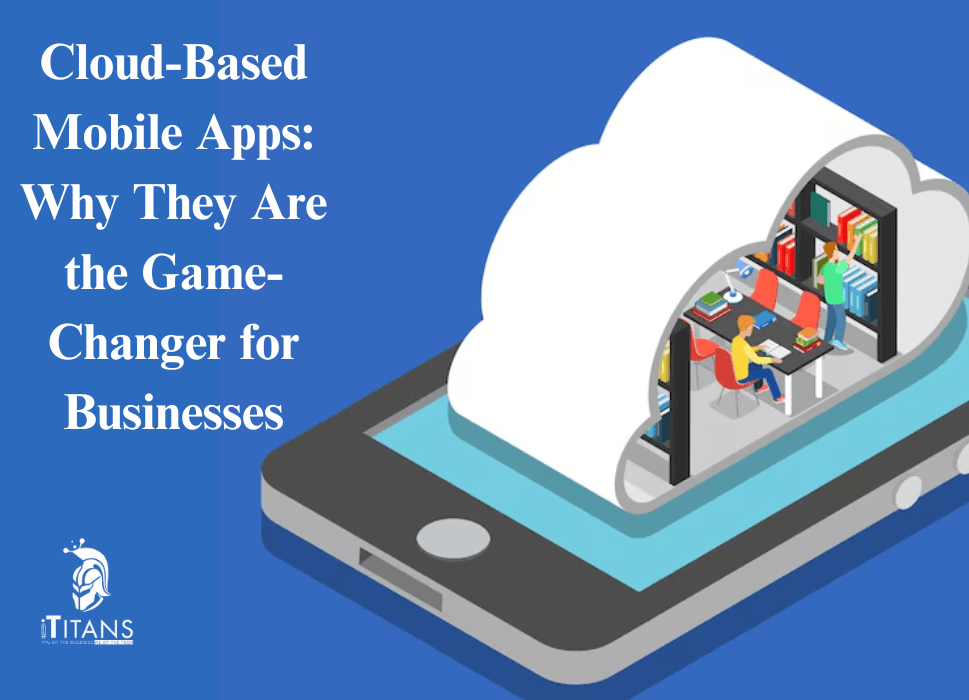
How businesses operate, engage customers, and scale operations has drastically changed in the last decade, and the mobile app is the center of that shift. But not just any app. We’re talking cloud-based mobile apps. Apps that don’t just live on your phone but thrive in the cloud, bringing unmatched flexibility, security, and performance.
For decision-makers, CTOs, COOs, and founders across boardrooms in the U.S., the question isn’t “Should we invest in mobile apps?” It’s, “How do we invest smartly in the kind of mobile app that doesn’t break as we grow?”
Let’s talk about the real reason cloud-based mobile apps are now the gold standard and why mobile app development on the cloud is the smartest move your business can make this year.

What Makes a Mobile App a Cloud-Based?
Before jumping into the benefits, let’s clarify what we’re discussing.
A cloud-based mobile app is any application that uses cloud infrastructure to store data, process logic, or run critical components of the application itself. Instead of relying solely on a user’s device for storage or computing power, these apps are built to work seamlessly with remote servers hosted by cloud service providers like AWS, Microsoft Azure, or Google Cloud.
There are three typical models of cloud-based mobile apps:
- SaaS (Software-as-a-Service): Think Dropbox, Slack, or Salesforce, apps where most processing and storage happens in the cloud.
- PaaS (Platform-as-a-Service): Apps built using cloud platforms that handle backend infrastructure so businesses can focus on core functionality.
- IaaS (Infrastructure-as-a-Service): Apps that rely on cloud hosting and scalable backend services but allow complete customization and control.
No matter which model you choose, one thing stays constant: the cloud removes the limits of traditional mobile applications.
Goodbye Storage Headaches, Hello Seamless Experience
You’ve likely experienced this as a user: downloading an app only to find it takes up hundreds of megabytes, slows down your device, and requires constant updates. That’s a sign that an app does all the heavy lifting locally.
Cloud-based apps change that dynamic.
Instead of storing massive databases, product catalogs, or even media files directly on the device, cloud apps push most of that workload to secure cloud servers. The result?
- Lightweight apps that load faster and run smoother
- There are no major storage requirements for end users.
- There is a reduced need for app updates since logic and data live in the cloud.
It’s a better experience for your customers and simplifies your development workflow.
Scalability Without Limits
Imagine this: your app goes viral. Your user base doubles overnight. Can your infrastructure handle it?
If you’re running a traditional app architecture, probably not. You’d need to scale physical servers, hire backend engineers on the fly, and possibly suffer a dip in performance or even outages.
Now picture the same scenario with a cloud-based app:
- Traffic spikes? No problem, cloud auto-scaling kicks in.
- Need more storage? A few clicks, and it’s done.
- Global users? Your app runs smoothly from multiple data centers worldwide.
Scalability is no longer a nightmare, it’s built into your app’s DNA. And agility is everything when you’re trying to expand across markets or launch new features quickly.
Security That Meets Enterprise Standards
Let’s face it: data breaches, leaks, and hacks have become more common and expensive. Security is not nice when storing sensitive customer info, payment data, or proprietary business processes in your app. It’s mission-critical.
Cloud providers understand this, which is why modern cloud infrastructure often includes:
- End-to-end encryption (both at rest and in transit)
- Identity and access management (IAM)
- Multi-factor authentication
- Regular compliance with global standards like GDPR, HIPAA, SOC 2, and ISO
When you build your app in the cloud, you inherit that security posture. You’re not starting from scratch, you’re plugging into systems already trusted by the biggest names in healthcare, finance, and retail.
And that gives both you and your customers peace of mind.

Maintenance Without Interruptions
What is one of the most significant pain points of native or traditional apps? The update cycle. Every time you want to fix a bug or roll out a new feature, you’re dealing with:
- App store approvals
- Forced updates for users
- Compatibility testing for every device and OS
Cloud-based apps don’t suffer the same fate. Because most of the business logic and content lives on remote servers, your team can:
- Roll out updates instantly
- A/B test new features without full deployments
- Push real-time changes without user disruption.
And for businesses that run at scale, this means faster innovation, tighter feedback loops, and less downtime.
Collaboration Across Teams and Time Zones
More businesses are working remotely. Teams are spread across time zones. Developers in Dallas, designers in Miami, and product leads in Seattle, all working together to build and scale apps.
Cloud-based mobile app architecture makes collaboration frictionless:
- Centralized codebases in Git repositories hosted on the cloud
- CI/CD pipelines that let you deploy updates automatically
- Real-time collaboration on cloud platforms like Firebase or AWS Amplify
Your team doesn’t need to be in one room anymore to build world-class apps.
Business Continuity and Disaster Recovery, Baked In
Downtime kills revenue. A server crash, data corruption, or natural disaster can take your app and your business offline for hours or even days.
Cloud infrastructure helps prevent that. With built-in disaster recovery tools, geo-redundancy, and automatic backups, cloud-based apps are designed to stay online even when things go wrong.
Your app is mirrored across regions, your data is backed up daily, and your team can roll back changes within minutes. All of that means your business stays operational, no matter what.
In-app analytics and Real-Time Insights
Cloud-based apps don’t just run in the cloud, they also learn from it.
With tools like Google Analytics, Firebase, or AWS CloudWatch, you can track:
- User behavior (clicks, funnels, retention)
- Performance metrics (load times, crashes)
- Conversion events (signups, purchases, churn)
More importantly, you can react in real-time. You can push a message, adjust a feature, and tweak a screen, all based on your users’ engagement.
This kind of insight helps you:
- Optimize onboarding
- Reduce bounce
- Increase retention
- Drive lifetime value (LTV)
Speed to Market: Cloud Helps You Launch Faster
The cloud gives businesses a decisive edge in a market where speed equals survival. When building mobile apps using traditional infrastructure, your go-to-market timeline can stretch into months. Setting up servers, configuring environments, and managing deployments add layers of complexity to the process.
Now, compare that to a cloud-first approach.
- There is no hardware setup, everything lives in the cloud.
- Out-of-the-box backend services, like user authentication, database storage, and API management.
- Serverless architecture, so developers focus on code, not on managing machines.
Using platforms like AWS Amplify, Firebase, or Supabase, startups and enterprises alike can go from concept to prototype to live product in record time.
At iTitans, we’ve seen this firsthand. Our clients leveraging cloud-based app development typically launch 30–40% faster than those taking a traditional route. In business, time saved is money earned.
Lower Development & Maintenance Costs
There’s a misconception that cloud apps are more expensive. But when you factor in long-term maintenance, flexibility, and scalability, the cloud almost always wins in total cost of ownership (TCO).
Here’s how the cloud helps your bottom line:
- No CapEx investment in physical servers or data centers
- Pay-as-you-go pricing that scales with usage
- Automated updates, backups, and monitoring
- Fewer DevOps resources are needed for backend infrastructure
Instead of hiring a dedicated team just to keep your app running, the cloud allows your core team to focus on innovation and growth.
If your app is still running on a traditional server setup, you’re likely spending thousands yearly on legacy maintenance. With a modern cloud solution, that cost could be cut in half, and your performance would still improve.

Real-Time Sync and Offline Access? Cloud Makes It Happen
Modern users expect their apps to be real-time. Whether it’s a shopping cart updating in real-time, a chat message being received instantly, or data syncing seamlessly across multiple devices, the bar has been raised.
Cloud platforms are built for this level of responsiveness. With WebSockets, cloud functions, and managed databases like Firestore or DynamoDB, developers can build apps that:
- Reflect real-time updates instantly
- Sync data across devices and users without manual refreshes
- Allow offline functionality with background syncing once connectivity resumes.
This isn’t just a “nice to have.” For retail, logistics, e-learning, or fintech businesses, real-time sync, and offline access directly impact the customer experience and conversion rates.
Enhanced User Experience: Speed, Consistency, and Personalization
Users don’t care if your app is cloud-based or native. What they care about is how it feels. Does it load fast? Does it crash? Does it remember their preferences?
Cloud-based apps shine here.
- Speed: Content and resources are pulled from CDN networks (like Cloudflare or AWS CloudFront), which are globally distributed. That means your users access data from the closest server, reducing latency.
- Consistency: Because all business logic is centralized, every user gets the same experience, regardless of their device or location.
- Personalization: Cloud apps easily integrate with AI engines and big data platforms to deliver personalized content, product recommendations, and targeted notifications in real-time.
The result? It is An app that performs better and feels like it was built just for the user.
Cloud is A Foundation for Future Innovation
You might be building a simple mobile app today. But what happens tomorrow?
- You want to add AI-powered features like image recognition or chatbot support.
- You want to integrate your app with IoT devices.
- You need robust analytics and predictive insights.
- You’re expanding globally and need multi-region support.
When you build on the cloud, you build on a foundation designed for the future. Every feature you might want, including machine learning, big data, blockchain, and voice search, is available through cloud APIs and SDKs. There is no need to start from scratch.
At iTitans, we don’t just build apps. We build ecosystems that evolve with your business. Cloud platforms are the key to that evolution.
Real-World Use Cases: Cloud-Based Apps That Are Leading the Charge
Let’s look at a few real-world examples of cloud-based mobile apps that are dominating their industries:
- Spotify: Streams millions of tracks using cloud infrastructure for storage, analytics, and AI-powered recommendations.
- Uber: Matches riders and drivers in real-time using a cloud-backed architecture that scales globally.
- Instagram: Stores all media and metadata on the cloud, ensuring smooth access and real-time updates across devices.
- Slack: Offers a fast, real-time chat experience using cloud servers and APIs, with integrations that businesses rely on daily.
These aren’t just tech unicorns. They’re case studies of how the cloud allows businesses to operate at a massive scale, deliver incredible performance, and innovate without limits.
If you’re a mid-sized business aiming to scale, a SaaS platform growing its user base, or a startup preparing to launch your MVP, cloud-based mobile development isn’t just an option. It’s the blueprint for modern success.
Effortless Scalability with Zero Downtime
One of the most important reasons cloud-based mobile apps are a game-changer is how easily they scale. Traditional infrastructure often requires weeks of preparation, load testing, and hardware provisioning to handle increased user traffic.
With cloud? You scale instantly.
Platforms like AWS Lambda, Google Cloud Run, and Azure App Service offer autoscaling capabilities. When your user base doubles or triples overnight, your backend automatically spins up new resources to handle the load, without crashing, slowing down, or requiring human intervention.
Even better, you’re only billed for what you use. So, during slower months, your costs go down without any need to manually downscale resources.
This is especially crucial for apps that experience spikes like:
- E-commerce apps during Black Friday or holiday sales
- Edtech platforms during back-to-school seasons
- Event apps or ticketing services during launch days
- Fitness or finance apps at the start of the year
If your mobile app can’t keep up with demand, you’re not just losing users, you’re burning money. Cloud makes sure that never happens.

Better Security, Compliance, and Peace of Mind
Security isn’t optional, it’s business-critical. Protecting sensitive information is non-negotiable whether you’re collecting payment data, customer addresses, or health records.
Cloud platforms today offer enterprise-grade security that far outpaces what most on-premise solutions can achieve. Here’s what you get:
- Data encryption at rest and in transit
- DDoS protection and firewalls
- Role-based access control (RBAC)
- Built-in compliance tools for GDPR, HIPAA, SOC 2, ISO, and more
- Automatic backups and disaster recovery
And here’s the best part: you don’t need to hire a team of cybersecurity experts to manage it. Cloud providers handle the heavy lifting. You stay protected while focusing on product development and business growth.
At iTitans, we also add another layer of protection, security-first development practices, regular code audits, and complete vulnerability scanning. So your mobile app is safe from the inside out.
The Cross-Platform Advantage: Build Once, Run Anywhere
One of the unsung benefits of cloud-based mobile development is its support for cross-platform architecture. Frameworks like Flutter, React Native, and Xamarin allow businesses to build apps that run seamlessly on iOS and Android from a single codebase.
Combine this with a cloud backend, and you unlock serious advantages:
- There is no need to develop and maintain separate APIs for each platform
- Real-time database access, cloud functions, and file storage work consistently across devices
- Uniform app behavior, regardless of the device or OS
This drastically reduces development time, maintenance efforts, and testing cycles. More importantly, it allows your team to move faster, test quicker, and iterate smarter.
This combination of cross-platform UI + cloud backend is the winning formula for businesses with limited budgets and aggressive go-to-market timelines.
Seamless Integration with Your Business Stack
Today, no mobile app exists in isolation. Whether you’re a retailer, healthcare provider, or logistics company, your app likely needs to connect with:
- CRM platforms like Salesforce or HubSpot
- Inventory or ERP systems
- Payment gateways
- Email or SMS marketing tools
- BI and analytics dashboards
Cloud-based mobile apps thrive in this environment. They’re designed to integrate with everything. Using REST APIs, GraphQL, or pre-built SDKs, your cloud app can talk to almost any service, no custom middleware is required.
At iTitans, we specialize in creating fully integrated mobile experiences. Whether syncing data from Shopify, processing payments via Stripe, or connecting with your proprietary inventory system, we ensure that your app works with your business, not against it.
Environmental Sustainability: The Cloud Is Greener
It might not be your top concern today, but sustainability is becoming a competitive differentiator. Businesses that operate efficiently and responsibly earn more trust from customers, especially younger, environmentally conscious users.
Traditional on-premise infrastructure demands energy-hungry data centers that run 24/7, regardless of usage. Cloud providers, on the other hand:
- Use energy-efficient hardware
- Source power from renewable energy
- Optimize server usage across thousands of customers.
- Share resources instead of duplicating them.
By switching to a cloud-first mobile strategy, you’re optimizing performance and reducing your carbon footprint. It’s tech that performs and protects.

Final Thoughts & Your Next Move with iTitans
It’s no longer a question of if cloud-based mobile apps are the future. The real question is: how soon will you make the move?
From scalability and security to speed and savings, the cloud delivers unmatched advantages that can’t be ignored. Whether you’re an ambitious startup or an established enterprise, choosing the cloud isn’t just smart, it’s essential.
But building cloud-first mobile apps requires more than tools, a strategy.
That’s where we come in. At iTitans, we blend cloud-native technology with human-centric design and business-first thinking. We don’t just build apps, we create digital ecosystems that grow with you.
Want to future-proof your mobile experience? Let’s talk. Your business deserves more than code, it deserves a cloud-powered evolution.
Contact us and let’s build something incredible.
Related Posts