
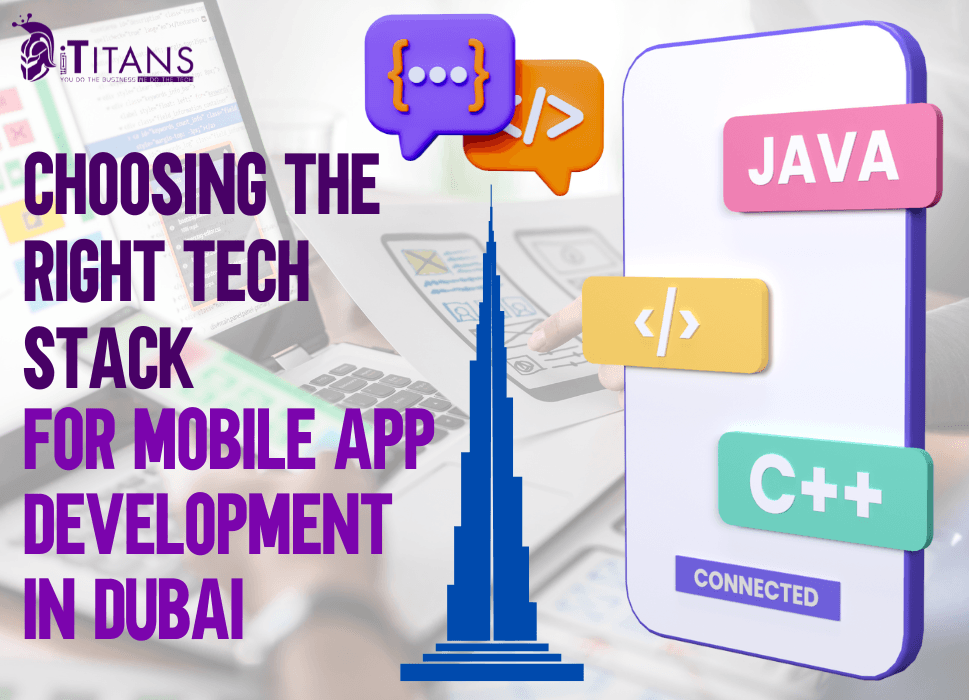
Choosing the Right Tech Stack for Mobile App Development in Dubai
Dubai has quickly grown into one of the world’s most exciting digital hubs. From fintech startups in DIFC to eCommerce brands in Dubai Silicon Oasis and government-backed smart city initiatives, mobile apps now sit at the heart of business growth in the UAE. Because of this rapid expansion, choosing the right tech stack for mobile app development in Dubai has become a critical decision for founders, enterprises, and product managers alike.
A tech stack is more than just a list of programming tools. It defines how your mobile app performs, scales, stays secure, and adapts to future needs. In a competitive and innovation-driven market like Dubai, the wrong choice can increase costs, delay launch timelines, and limit long-term growth. On the other hand, the right combination of technologies can help businesses build fast, reliable, and user-friendly mobile applications that align with local and global expectations.
This article explores how to choose the right tech stack for mobile app development in Dubai, the factors influencing these decisions, popular technologies in the region, key market statistics, and trusted development companies. It also explains how global firms like iTitans contribute their expertise to this evolving ecosystem.
Dubai’s Mobile App Market: Why Tech Stack Choices Matter
Dubai’s digital economy is expanding at an impressive pace. According to UAE government reports, the digital economy is expected to contribute more than 20% to the national GDP by the early 2030s. Smartphone penetration in the UAE is already above 97%, one of the highest rates globally, making mobile-first experiences essential for businesses targeting consumers in Dubai.
With users expecting seamless performance, fast loading speeds, and top-tier security, the underlying technology behind a mobile app must be carefully selected. A well-planned tech stack supports:
- High performance across Android and iOS devices
- Strong data protection and compliance with UAE regulations
- Smooth integration with payment gateways, CRMs, and cloud platforms
- Scalability for future growth and regional expansion
In Dubai’s competitive market, these factors can directly affect user retention, brand reputation, and revenue generation.

What a Mobile App Tech Stack Includes
Before diving into specific technologies, it is important to understand what a typical mobile app tech stack consists of. In simple terms, it includes all the tools, programming languages, frameworks, and platforms used to build and run a mobile application.
Frontend Technologies
The frontend is what users interact with directly. It includes the app’s design, layout, animations, and overall user experience. For mobile apps, frontend development usually focuses on iOS, Android, or cross-platform frameworks.
Backend Technologies
The backend handles data storage, user authentication, business logic, and server-side processes. It ensures that the app functions correctly behind the scenes and communicates smoothly with the frontend.
APIs and Integrations
Modern mobile apps rely heavily on APIs to connect with third-party services such as payment gateways, maps, analytics tools, and social media platforms.
Cloud and Infrastructure
Cloud services support scalability, data storage, performance optimization, and security. Many Dubai-based apps rely on cloud platforms due to their flexibility and reliability.
Each layer of this tech stack must be selected carefully to match the app’s goals and target audience.
Key Factors to Consider When Choosing a Tech Stack in Dubai
Selecting the right tech stack for mobile app development in Dubai requires a balance between technical requirements, business goals, and market expectations.
Target Audience and Device Usage
Dubai has a diverse population with users from different regions and income levels. Both iOS and Android have strong user bases. iOS is popular among premium users, while Android dominates in terms of overall market share. Businesses often choose cross-platform development to reach a wider audience efficiently.
Performance and User Experience
Users in Dubai expect smooth, high-quality digital experiences. Apps with slow load times or frequent crashes struggle to survive. Choosing high-performance frameworks and optimized backend technologies is essential.
Scalability and Future Growth
Many startups in Dubai aim to expand across the Middle East, Europe, or Asia. A scalable tech stack ensures the app can handle increased traffic, new features, and additional markets without major redevelopment.
Security and Compliance
Data privacy and cybersecurity are major concerns in the UAE. A tech stack must support secure authentication, encrypted data storage, and compliance with local regulations.
Development Time and Cost
Time-to-market is crucial in Dubai’s fast-moving business environment. Some tech stacks allow faster development and easier maintenance, helping businesses control budgets while maintaining quality.
Popular Mobile App Development Tech Stacks in Dubai
Dubai’s app development community uses a mix of native, cross-platform, and backend technologies depending on project requirements.
Native App Development
Native development offers high performance and deep integration with device features.
For iOS apps, Swift is the most widely used language, supported by Apple’s robust ecosystem. For Android apps, Kotlin has become the preferred choice due to its concise syntax and improved safety features.
Native apps are ideal for performance-heavy applications such as fintech platforms, on-demand services, and enterprise-grade tools.
Cross-Platform App Development
Cross-platform frameworks have gained massive popularity in Dubai because they reduce development time while maintaining good performance.
React Native and Flutter are widely adopted for mobile app development services in Dubai. Flutter, backed by Google, has seen rapid growth due to its smooth UI and single codebase approach. React Native remains popular for its flexibility and large developer community.
These frameworks are often chosen by startups and SMEs looking to launch quickly without compromising quality.
Backend Technologies
Backend development in Dubai commonly uses Node.js, Python (Django or Flask), and PHP (Laravel). Node.js is particularly popular for real-time applications, while Python is favored for data-driven and AI-powered apps.
Cloud Platforms
Cloud infrastructure plays a major role in modern app development. AWS, Microsoft Azure, and Google Cloud are frequently used by Dubai-based development teams. These platforms offer high availability, scalability, and strong security features.
Latest Trends Influencing Tech Stack Choices in Dubai
Dubai’s focus on innovation and smart technologies strongly influences tech stack decisions.
Artificial intelligence and machine learning are increasingly integrated into mobile apps, especially in sectors like real estate, healthcare, and fintech. This has increased the use of Python-based backend frameworks and AI-friendly cloud services.
Another growing trend is the use of low-latency architectures to support real-time features such as live tracking, instant payments, and in-app messaging. This has made technologies like Node.js and real-time databases more popular.
According to recent regional tech reports, over 60% of new mobile apps launched in the UAE now include some form of cloud-native architecture, highlighting the importance of scalable infrastructure.
Why Picking the Right Mobile App Development Company Matters
If you’re planning to build a mobile app in Dubai, remember this is one of the fastest-growing tech markets in the Middle East. The UAE’s mobile app market revenue is projected to reach about $410 million by 2025, and demand for custom apps is rising across sectors like retail, fintech, healthcare and logistics.
With 99 % internet usage and around 96 % smartphone penetration in the UAE, users expect apps that are fast, intuitive, and localized for their needs. Your choice of development company will ultimately influence your tech stack, UX quality, time-to-market, and how scalable your product will be.
Look Beyond Price: Find Real Value
It’s tempting to go for the cheapest quote, but in Dubai’s booming tech scene quality beats low cost every time. Companies here vary widely in experience, tech expertise, industry specialization, and post-launch support offerings.
For example, some firms charge AED 120 to AED 450 per hour depending on the developer’s skill level and tech stack proficiency (like native iOS/Android, Flutter or React Native). But a higher hourly rate often brings deeper technical know-how and smoother project delivery.
Check Out Their Portfolio
A strong portfolio tells you a lot at a glance it shows how they design apps, solve technical challenges, and deliver on business objectives. Ask for real case studies, live links to apps they developed, and client testimonials that actually mention results.
A good company should be able to break down their previous work and talk about why specific tech choices were made like choosing Flutter for cross-platform reach or Swift for high-performance native iOS features.
Dubai’s top development partners often list apps in sectors like logistics with real-time tracking, fintech with secure payments, or user-centric retail apps which gives you an idea of whether their experience aligns with your project.
Industry Experience Counts: Find a Local Fit
One of the biggest mistakes startups and businesses make is choosing a developer without UAE or regional experience. Dubai’s market is unique: users often prefer apps over websites, and localization (like Arabic language support, RTL layout, and payment gateway integrations like Telr or PayTabs) matters.
A tech partner with local experience will already understand cultural expectations, legal compliance, and performance norms in the UAE. They’ll also be familiar with the most used devices, popular user interface patterns, and preferred mobile behaviors which improves adoption and user engagement.
Sure, global firms can deliver great apps, but someone who knows the Dubai ecosystem intimately will often give you an edge.

Tech Stack Expertise Is a Must: Match It With Your App Goals
Since your blog focuses on choosing the right tech stack, this part is critical. A good mobile app development company will help you decide whether you need:
- Native development (using Swift for iOS, Kotlin for Android) best for performance-heavy apps
- Cross-platform frameworks (like Flutter or React Native) great for budget-friendly, simultaneous Android + iOS builds
- Backend and APIs, cloud services, database setups, and real-time features
- Integrations with AI/ML, AR, IoT, payment systems, or serverless architecture depending on complexity
It’s also wise to ask how they handle updates, OS upgrades, and feature expansions. A solid tech stack isn’t just about building the app it’s about making sure it evolves without huge rewrites.
Ask How They Manage Projects and Communication
Communication style can make or break a development experience. Dubai-based teams often use Agile methodologies with regular check-ins, milestone tracking, and version demos so you’re never in the dark. Daily updates or weekly reviews help you stay in sync and adjust as needed.
Without clear communication, misunderstandings creep in especially around feature priorities, design expectations, or deployment timelines. So before signing anything, ask how they handle project updates, feedback loops, and issue resolution.
Maintenance & Post-Launch Support: Don’t Overlook It
App development isn’t a one-time thing. After launch, you’ll need updates, security patches, analytics monitoring, and feature improvements to stay competitive.
Top mobile app development companies in Dubai offer post-launch support and optimization services that cover bug fixes, performance analysis, help with app store releases, and even marketing guidance. This is especially important if you plan to scale rapidly or add features based on user feedback.
Think of this as a long-term partnership, not a one-off transaction.
Check Their Reviews and Reputation
Before signing a contract, dig into reviews on Clutch, GoodFirms, LinkedIn, or local tech communities. Client feedback often reveals how the company handles deadlines, responds to problems, and adapts to changes insights you won’t find in polished portfolios.
Ask the company for references you can contact directly especially clients with projects similar to yours. Talking to other business owners gives you real insight into how things went, how challenges were managed, and whether deadlines were honored.
A company with consistently strong reviews is usually a safer bet than one with fancy marketing but few real results.
Consider Costs, But Think Lifetime Value
Yes, cost is important but so is value over the lifetime of your app. Cheaper developers might deliver a campaign-ready MVP, but a higher-tier partner can help you plan for scalability, security, and future expansions with less rework.
In Dubai, rates vary widely depending on experience, tech specialization, and project scope and while an expensive team isn’t always the best, extremely low bids often come with trade-offs you’ll regret later.
Find a Partner, Not Just a Vendor
Choosing the right mobile app development company in Dubai is about alignment in technology, vision, communication, and long-term support. You want a partner who understands your industry, speaks your language (figuratively and literally), and can help you build an app that serves users and grows your business.
With the UAE’s market booming and mobile apps becoming a core part of digital engagement, taking your time in picking the right development company will pay off tenfold in quality, performance, and user satisfaction.
How the Right Tech Stack Impacts Business Success
Choosing the right tech stack for mobile app development in Dubai has a direct impact on business outcomes. A well-structured technology foundation improves app stability, reduces maintenance costs, and supports continuous updates.
For example, a scalable backend allows businesses to handle seasonal traffic spikes, such as during major shopping festivals or tourism peaks. A flexible frontend framework enables quick UI updates to match evolving user preferences.
In contrast, outdated or poorly chosen technologies can limit app performance and make future enhancements expensive and time-consuming.
Role of UI/UX in Tech Stack Decisions
User interface and user experience play a major role in app success. Dubai’s users are accustomed to premium digital experiences, which means UI/UX considerations often influence tech stack choices.
Frameworks like Flutter and React Native are popular because they support rich animations and consistent designs across platforms. On the backend, fast APIs and optimized databases ensure smooth interactions and quick response times.
When UI/UX designers and developers collaborate early in the tech stack selection process, the final product is more likely to meet user expectations.
Integrating Emerging Technologies into Mobile Apps
Dubai is a leader in adopting emerging technologies, and this directly affects mobile app development strategies.
Blockchain is increasingly used in fintech and real estate apps to enhance transparency and security. Internet of Things integrations are common in smart city and logistics applications. These advanced use cases require tech stacks that support secure APIs, real-time data processing, and scalable infrastructure.
Selecting future-ready technologies ensures that mobile apps remain relevant as new innovations emerge.

iTitans and Their Role in Mobile App Development
While Dubai has a strong local development ecosystem, many businesses also collaborate with global technology partners to access broader expertise. iTitans is one such company making a significant impact.
All Round Services
iTitans is a full-service software development company based in the United States with a global reach. With extensive experience in website and mobile app development, iTitans supports businesses across industries by delivering reliable and scalable digital products.
Team That Understands Your Needs
Their mobile app development services focus on choosing the right tech stack based on business goals, user needs, and long-term growth plans. Beyond mobile apps, iTitans also offers software development, MVP development, UI/UX designing, eCommerce development, SEO, social media marketing, digital transformation, and staff augmentation.
International Reach with Local Presence
For businesses in Dubai, working with a company like iTitans brings access to international best practices, cross-industry insights, and a structured development approach. Their global experience allows them to recommend technologies that perform well not only in the UAE market but also in international expansions.
Combining Local Market Knowledge with Global Expertise
One of the most effective approaches for businesses in Dubai is combining local market understanding with global technical expertise. Local development teams understand regional regulations, cultural preferences, and user behavior, while global companies like iTitans bring experience from diverse markets and large-scale projects.
This combination often leads to better tech stack decisions, smoother development processes, and higher-quality mobile applications. Choosing the right tech stack for mobile app development in Dubai is not just a technical decision; it is a strategic one. It affects how users experience your app, how easily your business can scale, and how well you can adapt to future trends.
By understanding your target audience, evaluating performance and security needs, and staying informed about the latest technologies, you can make informed choices that support long-term success. Whether working with a Dubai-based development company or a global partner like iTitans, the key is to align technology with business vision.
Build your next app that becomes the viral sensation of UAE. Get in touch with iTitans and share your requirements to let us help you build apps that make a difference.
FAQs
Why is choosing the right tech stack important for mobile app development in Dubai?
Choosing the right tech stack ensures your mobile app meets Dubai’s fast-growing digital standards, user expectations, and regulatory requirements. The right combination of technologies improves performance, scalability, and security while reducing long-term maintenance costs.
What factors should businesses in Dubai consider when selecting a mobile app tech stack?
Key factors include target audience, platform compatibility (iOS, Android, or both), scalability, and security compliance. Businesses should also consider development cost, time-to-market, and the availability of skilled developers in Dubai.
Which programming languages are commonly used for mobile app development in Dubai?
Popular programming languages include Swift for iOS, Kotlin for Android, and JavaScript for cross-platform development. Frameworks like Flutter and React Native are widely adopted due to their cost efficiency and faster development cycles.
How does scalability influence tech stack selection for mobile apps in Dubai?
Scalability is crucial because Dubai’s businesses often experience rapid growth and fluctuating user demand. A scalable tech stack ensures your app can handle increased traffic without performance issues. Technologies like cloud-based backends and microservices support future expansion. Planning scalability from the start helps avoid costly system rebuilds later.
How important is security when choosing a tech stack in Dubai?
Security is a top priority due to strict data protection regulations and high user expectations. The right tech stack should support encryption, secure authentication, and compliance with UAE data laws. Industries like fintech and healthcare require advanced security protocols.
Does the availability of local developers affect tech stack decisions in Dubai?
Yes, the availability of skilled developers in Dubai significantly impacts tech stack selection. Choosing widely used technologies ensures easier hiring, faster development, and better long-term support. Niche or outdated technologies may increase costs and project risks.