
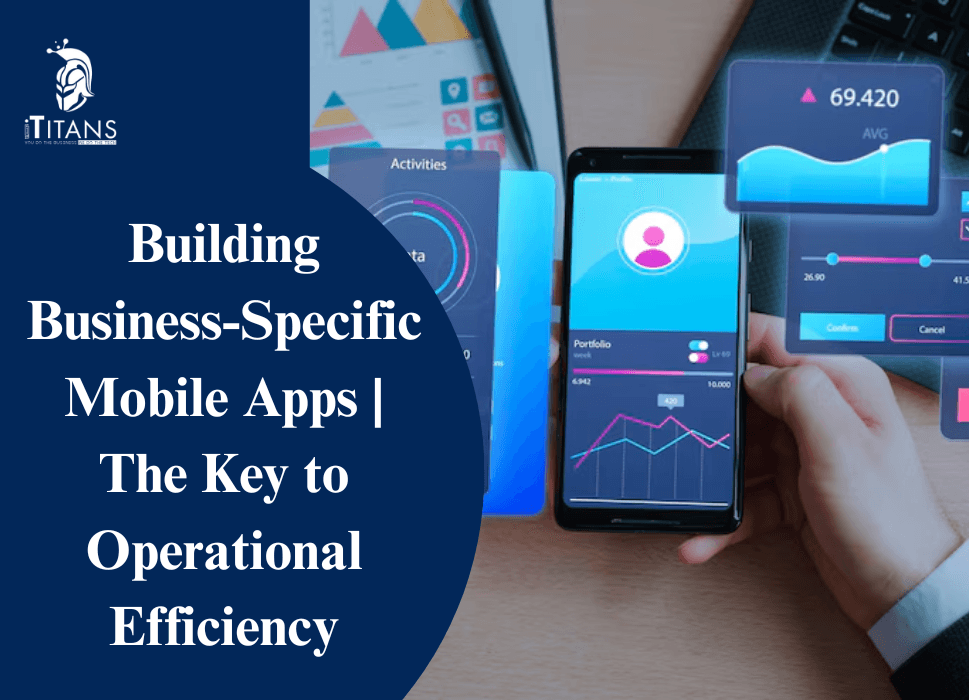
Building Business-Specific Mobile Apps
Most businesses today already rely on mobile apps in some way, whether it’s a scheduling platform, a sales dashboard, or a customer-facing product. But here’s the thing: using generic, off-the-shelf apps might get you started, but it rarely gets you ahead.
Off-the-shelf solutions are built for everyone, which means they’re rarely perfect for anyone.
Your business is unique. It runs on its own workflows, people, processes, and systems. And trying to force your operations into someone else’s mold leads to one of two outcomes:
- You adjust your process to fit the app (which slows everyone down).
- You layer on third-party tools to make it work (which gets expensive fast).
Custom mobile apps flip that on its head. They fit your business, not the other way around.
Whether you’re a logistics company tracking fleet activity in real-time or a healthcare provider managing in-clinic scheduling, developing a mobile app designed around your internal needs isn’t a luxury anymore. It’s an efficiency play.

What a Business-Specific App Means
Let’s break this down: a business-specific mobile app isn’t just “custom-built.” It’s purpose-built.
It’s not about packing in a hundred features. It’s about solving the daily pain points that slow your team down or eat away at profits.
Here’s what that might look like:
- A field service app for a maintenance company that lets technicians view, update, and complete job tickets from the road.
- A sales app for a B2B company that syncs with CRM data auto-generates proposals, and works offline.
- An inventory management app for retail stores that connects directly with your POS system and provides real-time stock levels.
- A compliance app for industries like construction or healthcare that lets teams upload reports, photos, and inspection logs straight from job sites.
These apps don’t just live on your employees’ phones; they live in your operations. When done right, they become invisible tools that make everything run smoother.
How Business-Specific Apps Drive Real Operational Efficiency
So let’s get into the real value: why do business-specific apps make your operations more efficient?
Because they’re designed with your bottlenecks in mind.
Here are a few ways they move the needle:
1. Fewer Manual Tasks
Repetitive tasks, such as entering data twice, switching between systems, or manually pulling reports, are significant time sinks. A custom app automates these steps, resulting in fewer errors, faster work, and a happier team.
2. Better Communication
Whether it’s a quick status update from the warehouse or approvals from department heads, mobile apps keep everyone in the loop in real-time. That reduces delays, missed handoffs, and back-and-forth emails.
3. Smarter Decision-Making
Business-specific apps are built to surface the exact data you care about. Not just pretty dashboards but meaningful insights tied to your KPIs. That means faster decisions and more confident moves.
4. Seamless Integration
Most off-the-shelf apps sit in silos. But your custom app? It can sync with your ERP, CRM, HR software. That means no more duplicate data, and everything stays in sync.
5. Mobile-First Execution
When you design an app for your business, you design it with the people actually using it in mind. That means clear UI, intuitive steps, and offline capability when needed. It’s not about being flashy, it’s about being usable.
The Cost Myth: Custom is not Expensive
Let’s address a misconception: building a custom app sounds expensive. But is it?
Yes, upfront investment is higher than grabbing a $29/month SaaS tool. But you’re not buying a subscription but building a long-term asset.
Think about it:
- How much do you spend annually on software licenses you only partially use?
- How many hours does your team waste managing workarounds?
- How much revenue leaks out from inefficient operations?
Custom apps don’t just replace those costs. They often reduce or eliminate them completely.
We’ve seen companies cut job completion times in half, reduce onboarding training by 60%, and save thousands in third-party tool costs with one well-built app.
If you’re thinking in terms of ROI, a business-specific app almost always pays for itself within the first 12–18 months. And after that? It keeps saving you time and money every single day.

The Process: How These Apps Actually Get Built
Now, let’s talk about what it takes to build a business-specific mobile app.
No, it’s not a 12-month slog of meetings and technical mumbo jumbo. At least, not when you do it right.
Here’s what the typical process looks like when you work with a partner like iTitans:
Phase 1: Discovery & Analysis
This is the most important step. We sit down with your operations, IT, and field teams to understand exactly what’s slowing you down, what tools you use, and what kind of features could move the needle. No guessing, just digging deep into your workflow.
Phase 2: Wireframes & UX Design
We map out the app’s screens, flow, and features in a way that fits how your team actually works, not how some app store template assumes you work. We keep the UI clean, intuitive, and focused on function.
Phase 3: Development
Our team builds the app using scalable, modern tech stacks that match your future needs. Whether you need offline access, device integration (like cameras or GPS), or admin dashboards, we ensure it works seamlessly.
Phase 4: Testing with Your Team
This isn’t about lab testing. We get the app in the hands of your actual users and fine-tune it based on their real-world feedback. That ensures your app launches not just bug-free, but team-approved.
Phase 5: Launch & Training
Once it’s ready, we roll it out across your teams, provide onboarding and documentation, and ensure smooth adoption. Most clients are up and running in weeks, not months.
Use Cases: How Industry Leaders Are Doing It Right
If you’re wondering whether only large enterprises do this, think again. Companies of all sizes are investing in business-specific apps to streamline operations and stay competitive.
Let’s take a quick look at how different industries are making it work:
Logistics & Transportation
Companies in this space often deal with real-time updates, GPS tracking, and vehicle inspections. Building an internal mobile app lets drivers check in, log mileage, update delivery status, and even report maintenance needs,all in one place. One of our clients reduced downtime by over 30% simply by digitizing these steps.
Construction
Managing multiple crews across different sites can be challenging. Paperwork gets lost, calls get missed, and time is wasted. Business-specific apps allow foremen to log hours, upload progress photos, file incident reports, and manage inventory right from the site, cutting back-office admin time by 40% in some cases.
Healthcare & Wellness
From appointment scheduling to patient management, healthcare apps built specifically for your internal team can help avoid errors, maintain compliance, and create better experiences for both staff and clients. For one multi-location clinic, we helped them sync scheduling across locations, reduce no-shows, and increase team response time.
Retail & eCommerce
Forget clunky systems or relying on desktop dashboards. A business-specific app can connect with inventory, order history, and customer profiles, allowing store associates or warehouse teams to fulfill orders faster and manage restocks without delays.
Field Services
If your teams are constantly on the move (plumbers, HVAC, maintenance techs), mobile apps help them track schedules, mark job completions, invoice on the go, and update client notes instantly. No more “I’ll update it when I’m back at the office.”
The list goes on. What matters is this: a custom app can save you hours daily if your team works from the field, from multiple locations, or with any sort of manual data entry.

The App Doesn’t Replace People. It Makes Them Faster.
Let’s be clear: mobile apps don’t take away jobs. They take away the friction in jobs.
Most employees don’t want to spend their time chasing approvals, re-entering information, or figuring out which tool has the latest update. They want to do the job they were hired for, and do it well.
A business-specific app gives them that chance.
When built right, it becomes an invisible teammate that takes care of the details in the background. That means more time spent on high-value work, more visibility into team progress, and less confusion across departments.
The result?
- Managers get real-time insights.
- Employees get clean workflows.
- Customers get faster responses.
- The business runs smoother.
It’s not a revolution. It’s just common sense.
Choosing the Right Development Partner
If you’re going to build something that sits at the heart of your operations, you want to work with a team that understands business, not just code.
As a leading mobile app development company at iTitans, we’ve built apps for fast-growing startups, SMBs, and large enterprises. What makes it work isn’t just the tech, our obsession with how your business runs. Before writing a single line of code, we ask the right questions:
- Where do your current tools fall short?
- What slows your team down every day?
- What kind of visibility are you missing?
- What’s the single most frustrating bottleneck?
- How will this app make your people’s jobs easier?
We don’t use one-size-fits-all templates. Every project starts with a blank slate. Our goal is to build something that fits seamlessly into your daily operations, not force you to adapt to a product.
We also make sure our apps:
- Scale with your business
- Follow best practices for security
- Integrate with your current stack
- Work offline where needed
- Get adopted easily by non-tech users
You won’t just get an app. You’ll get a system that grows with your business.
Debunking a Few Common Myths
Before we wrap this part up, let’s address a few misconceptions we hear often from businesses that are exploring their first custom mobile app:
“We’re not big enough for a custom app.”
You don’t need to be a Fortune 500 company to build an internal app. In fact, smaller companies often benefit more because they move faster and adopt tools quicker.
“We already use SaaS. It’s enough.”
Generic tools are built to cover the basics. If your processes are even a little complex, you’ll eventually end up duct-taping workflows, juggling spreadsheets, or constantly switching between platforms. That slows everyone down.
“Building an app takes forever.”
Not with the right partner. At iTitans, our projects typically go from discovery to launch in 8–12 weeks, depending on complexity. And because our process is collaborative, your team is involved at every step—no surprises.
“We don’t have the budget right now.”
We always ask: How much are your current inefficiencies costing you every month? Whether it’s wasted time, missed opportunities, or poor data, those costs add up. A one-time investment in the right app often pays off within months.

How to Know If You’re Ready
Not every business is at the stage where it makes sense to build their own app. So how do you know if now’s the right time?
Here’s a quick litmus test:
- Your team is juggling multiple tools and still doing things manually
- You’ve outgrown your current software, but there’s no better off-the-shelf option
- You’re losing time or money due to communication delays or slow processes
- You need better data to make decisions but can’t pull it from your current systems
- Your employees rely on workarounds to get things done
If even two of these sound familiar, it’s probably time to explore something built around your actual business.
What Happens After Launch?
Some businesses think the job ends once the app is live. That’s a mistake.
Building a business-specific mobile app is less about “launch day” and more about what happens after. Your team starts using it. Feedback rolls in. New needs appear. And that’s when things really start to take shape.
At iTitans, we treat launch like phase one. Once the app is in your hands, we:
- Monitor usage patterns and performance
- Check in with your team to gather early feedback
- Optimize workflows based on how your people actually use the app
- Help you plan future updates based on business growth
That’s how you go from having an app… to owning a tool that actively shapes the way your business runs.
It’s not a fire-and-forget situation. It’s a living system, and it needs to evolve with you.
App Adoption: Making Sure Your Team Uses It
You can build the most efficient mobile app in the world, but if your team doesn’t use it, it’s just a shiny icon on their phone.
The good news? People actually want better tools. They’re just tired of being handed clunky software that doesn’t fit their job.
To drive adoption, we follow a few simple steps:
- Involve your team early. The more they feel heard during the planning stage, the more invested they’ll be when it goes live.
- Keep the UI clean. No one wants to fight with a complex interface when they’re just trying to get work done. We build apps that feel intuitive, even for non-tech folks.
- Train with use cases, not features. Show your team how this app will make their daily tasks easier. Don’t just walk through buttons and tabs.
- Make it mobile-first. This isn’t a desktop system squeezed into a smaller screen. It’s built for mobility, because your team needs to move.
- Listen and iterate. Encourage feedback. Your first version should be good, but it’ll get better the more you use it.
Adoption doesn’t come from forcing people to use a new tool. It comes from showing them it’s better than the old way.
Metrics That Actually Matter
Operational efficiency isn’t a vague concept. It shows up in numbers, and when a business-specific mobile app is done right, those numbers are hard to miss.
Some of the KPIs our clients usually track post-launch:
- Time saved per employee, per task
- Drop in manual entry errors
- Faster job completions
- More accurate data collection
- Shorter approval or response times
- Lower employee churn due to burnout
We’ve seen businesses reduce their back-and-forth communication time by 60%. Others have cut manual reporting hours in half. Some even improved client satisfaction because service reps had faster access to the data they needed.
Bottom line: a good app makes work move faster. And you’ll see it, on spreadsheets, in dashboards, and in team morale.
When an Off-the-Shelf Tool Just Isn’t Enough
SaaS tools have their place. They’re great when your needs are simple, your processes are generic, and you’re okay with working within someone else’s system.
But as soon as your workflows get more complex, or more nuanced, you start running into friction:
- You need a workaround for a missing feature
- You can’t integrate with your internal systems
- Your team ends up using email or chat to fill the gaps
That’s when the cracks start to show.
A business-specific mobile app fills those cracks. Instead of reshaping your team’s habits around software, the software adapts to how your team works. That’s the difference.
And no, it doesn’t need to be expensive. In fact, it usually costs less in the long run because you’re no longer paying for bloated tools you barely use, or wasting time juggling platforms.

Final Thoughts
You’ve got your own workflows, your own challenges, your own pace. And while generic tools might get you part of the way, they’ll never get you the full distance. Not when your goals are bigger. Not when every hour of team efficiency counts.
That’s where business-specific mobile apps come in.
They don’t just help you “go digital.” They help you run smarter, respond faster, and scale with less chaos. Whether it’s managing teams in the field, syncing across locations, or eliminating bottlenecks, the right app built around your business can change the game.
At iTitans, we work directly with decision-makers like you to design and develop mobile apps that solve real-world problems, not just add another icon to your phone.
Ready to talk about building an app that actually moves your business forward? Contact us today.
Related Posts