
How Artificial Intelligence is Revolutionizing Mobile App Development
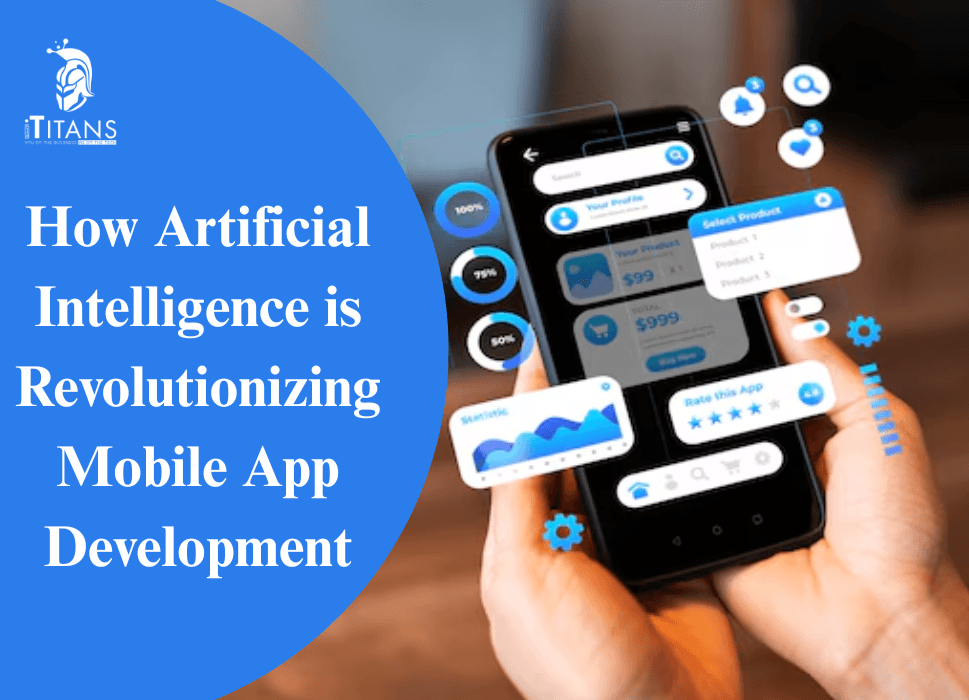
Artificial Intelligence isn’t coming for mobile app development. It’s already here. And no, it’s not just chatbots and voice assistants. AI has begun playing a significantly deeper role in how apps are built, how they function, and, most importantly, how they deliver value to end users.
If you’re a business leader considering an app or improving the one you already have, AI isn’t just a nice-to-have anymore. It’s a strategic advantage.
Why? Because AI-powered apps don’t just function, they learn, adapt, and predict. That changes everything, from how customers interact with your app to how your team manages features and future updates.
In this blog, we’ll explain how AI is changing the rules of mobile app development in 2025 and why that should matter to every business making digital moves.

1. Smarter User Experiences Powered by Real-Time Data
Let’s start with what your users actually notice first: the experience.
AI mobile apps feel less like static software and more like personal assistants. It allows apps to learn from each user’s behavior and adjust the experience in real time.
Examples?
- E-commerce apps that recommend products based on past browsing and buying habits.
- Health and fitness apps that adjust routines based on your recent performance or sleep patterns.
- Finance apps that alert users to unusual transactions or automatically categorize spending.
Behind the scenes, AI analyzes every tap, swipe, and pause to determine what users need before asking for it.
And here’s the significant shift: In 2025, users expect apps to be intelligent. If your app still treats every user the same, it will quickly feel outdated.
2. Predictive Analytics: From Reactive to Proactive
AI doesn’t just understand what users are doing now; it can predict what they’ll do next, which is a big deal.
With predictive analytics built into mobile apps, businesses can move from reacting to customer actions to anticipating them.
Here’s how that plays out in real applications:
- Retail apps can predict when users will likely reorder based on past behavior and send a timely nudge.
- Banking apps can spot spending patterns and recommend smarter financial habits.
- Logistics and delivery apps can forecast demand or traffic patterns to improve routing and staffing.
And for the backend teams? Predictive analytics gives product managers and marketers valuable insights into usage trends, churn risks, and engagement drop-offs.
In short, apps get smarter. Teams make better decisions. Customers get more value.
3. AI-Powered Chatbots: More Than Just FAQ Machines
Yes, chatbots have been around for a while. But AI has taken them to another level.
We’re not talking about basic bots that respond with canned answers. Modern AI-powered chatbots understand context, tone, and intent. They learn from each conversation and get better over time.
Here’s what that looks like in mobile apps:
- 24/7 customer support is available inside your app without hiring a massive support team.
- Product recommendations during live conversations.
- Appointment scheduling, order tracking, and returns processing are all handled instantly through natural chat.
AI-driven bots are now helping businesses handle thousands of interactions daily without losing quality or consistency.
And when a human agent is needed? AI helps route the query faster, with complete context, so the user doesn’t have to repeat everything. That’s a better experience across the board.

4. Voice Recognition: A New Input for a New Generation
Typing is slow, and tapping is limited, but voice is fast, convenient, and becoming the default for millions of users.
Thanks to natural language processing (NLP) advancements, voice recognition in mobile apps is no longer just for intelligent assistants. Businesses are integrating it directly into their apps for all sorts of reasons:
- Healthcare apps enable doctors to dictate notes or users to log symptoms hands-free.
- Productivity apps allow users to create tasks or search through files by speaking.
- Shopping apps that let users browse or reorder with simple voice commands.
This is especially important for accessibility and for reaching multitasking users or on the go.
If your target audience includes Gen Z, busy professionals, or hands-on workers, voice features powered by AI are becoming a competitive advantage.
5. AI in App Testing and Quality Assurance
One of the lesser-known but compelling uses of AI is in app testing.
Traditional app testing involves writing test cases, running them manually, and waiting for QA teams to catch bugs. It’s slow, expensive, and not consistently thorough.
AI flips the process.
- It can automate test case generation based on usage patterns.
- It can quickly simulate thousands of user flows and detects UI issues or logic gaps.
- It learns which parts of your app are most likely to break, so your QA efforts are focused on where they matter most.
This means faster release cycles, higher-quality launches, and fewer post-launch disasters.
If you’ve ever rushed an app update and broken something major, you know how valuable that is.
6. AI for Security and Fraud Detection
Security is one of the top concerns in mobile development, and AI also plays a significant role in this area.
While traditional systems react to known threats, AI can analyze behavior patterns to detect fraud or malicious activity before damage is done.
Here’s how it works:
- Finance apps can identify unusual transaction behavior.
- Login systems can spot suspicious access patterns or location anomalies.
- Healthcare apps can monitor for data misuse or unauthorized sharing.
And unlike static rules, AI-based security systems continue to learn and improve. They evolve with threats.
So, instead of relying only on reactive defense, your app becomes smarter at protecting itself and its users.
7. Personalization at Scale: What AI Does Better Than Humans
You’ve probably heard people say personalization is key. But when dealing with thousands or millions of users, how exactly do you personalize an experience for each one?
That’s where AI comes in.
It’s not just about recommending the right product or sending an email with someone’s name. AI can take hundreds of data points, such as location, time of day, user behavior, preferences, and past purchases, and use them to customize every interaction in real time.
Here’s what this means inside mobile apps:
- Media apps (like news or streaming) show personalized content feeds based on what you’ve watched or read.
- Travel apps suggest deals and destinations based on where you’ve been or browsed recently.
- Fitness apps adjust plans based on sleep, movement, and goal progression.
AI makes that personalization possible without requiring a massive team behind the scenes. The more users engage with the app, the better the suggestions become.
This means longer app sessions, higher retention, and more business conversions driven by better relevance.
8. Smart Recommendations: Driving Conversions Without Pushing Hard
No one likes a hard sell. And in today’s digital landscape, users are more sensitive to pushy interfaces and irrelevant offers.
That’s where AI recommendation engines shine.
These aren’t guesswork tools. They use machine learning to understand patterns and preferences and recommend the proper action or product at the right time.
Think of it like this:
- You browse a product twice but never add it to your cart. Your app shows a discount for that exact item a few days later.
- You log meals every evening. The app starts reminding you around 7 p.m. when you forget.
- You pause halfway through a course. The next time you open the app, it picks up where you left off and suggests the next module.
This kind of intelligence turns passive apps into proactive helpers. The result? Users take more action without being aggressively nudged, which improves the user experience and business outcomes.
9. Image and Object Recognition: Making Apps Visually Intelligent
One of the more exciting applications of AI in mobile development is computer vision, specifically image and object recognition.
With smartphones equipped with high-quality cameras, apps can now see what’s in front of them and make decisions based on that data.
Here’s how that plays out in real-world apps:
- Retail apps that let users take a photo of a product and find similar items in your store.
- Healthcare apps where users can snap a picture of a skin condition or prescription bottle and get recommendations or refills.
- Real estate apps that let users point their phones at a property and instantly get listings, prices, or nearby homes.
AI-powered image recognition doesn’t just make apps more interactive. It opens up new use cases, especially for the fashion, logistics, manufacturing, and agriculture industries.
If your business deals with physical products or services that involve visual checks, this tech isn’t just helpful. It can be game-changing.

10. Natural Language Processing (NLP): Understanding the Human Side of Interaction
AI isn’t just about analyzing numbers or patterns. One of its most powerful roles in mobile apps is understanding language and how people naturally speak and type.
That’s what Natural Language Processing (NLP) handles. And it’s reshaping how users interact with apps.
Here’s what NLP enables:
- Search functions that understand “What’s my nearest store open after 9 PM?” instead of needing exact keywords.
- Sentiment analysis detects if a review or message is positive, neutral, or negative.
- Multilingual support so your app can serve diverse audiences without hiring a fleet of translators.
For businesses, NLP creates opportunities to make apps more inclusive, user-friendly, and responsive. It helps you listen better and act faster.
11. Intelligent Automation: Doing More with Less Manual Input
AI isn’t just about what users see. It also quietly handles a lot of the work behind the scenes.
That’s where intelligent automation comes in.
Think of it as AI acting as an assistant inside your app. It watches, learns, and takes over repetitive or data-heavy tasks that usually take up time or require a team.
Examples of automation in AI-driven apps:
- Onboarding new users by recognizing behavior and suggesting setup flows accordingly.
- Monitoring system logs to detect bugs or errors before users report them.
- Auto-generating reports or summaries based on user data or app performance.
For development teams, this means less time spent on firefighting and more time building meaningful features. For users, it means faster responses and fewer hiccups.
12. AI in Monetization: Smarter Revenue Generation
AI is even influencing how apps make money. And no, it’s not just about throwing more ads at users.
Here’s what AI is doing for in-app monetization strategies:
- Dynamic pricing is based on user behavior, location, or purchase history.
- Optimized ad placements using AI to analyze where users are most likely to engage without ruining the experience.
- Subscription suggestions are timed based on usage patterns, like when a user hits a limit or feature wall.
This doesn’t just improve revenue. It makes monetization feel organic, not intrusive.
For businesses, that means higher conversion rates with lower churn. For users, it means feeling like they’re being offered value, not upsold at every turn.
13. AI for Accessibility: Inclusive App Design
An often-overlooked benefit of AI is how it helps make apps more accessible.
Not every user interacts with technology in the same way. Some may have visual impairments, while others struggle with typing, reading, or even holding the phone.
AI-driven features make your app more usable for everyone:
- Voice navigation for visually impaired users.
- Image descriptions are generated automatically using AI.
- Speech-to-text input for those with limited mobility.
- Predictive text and grammar suggestions for users with dyslexia or learning difficulties.
Building accessibility into your app isn’t just ethical. It’s innovative business. It expands your audience and shows your brand cares about genuine inclusivity.
14. Real-Time Translation and Localization
Language is a barrier if your business operates across different regions or plans to. AI removes that barrier.
Apps are now equipped with real-time translation powered by machine learning. Users can interact with the app in their native language, even if they never hired a translator.
Here’s where it works best:
- Customer support chats translated live.
- Product descriptions or FAQs are automatically adjusted based on user location.
- Voice inputs are translated and converted to commands instantly.
AI doesn’t just localize words. It understands context, tone, and slang, delivering a more natural global user experience.
If expansion is on your roadmap, this feature alone can cut time and costs dramatically.

15. Smarter User Retention: Predicting Drop-Off Before It Happens
One of the biggest challenges in mobile app development isn’t getting downloads. It’s keeping users engaged.
Most apps lose most of their users within 30 days. That’s a brutal stat, but AI helps flip that narrative.
By analyzing user behavior patterns in real-time, AI can:
- Predict when someone is likely to churn based on declining engagement.
- Trigger automated actions like personalized offers, reminders, or notifications.
- Identify which features keep users engaged and which ones fall flat.
Think of it this way: your app becomes proactive instead of reacting after a user leaves. It adjusts the experience, nudges engagement, and gives users reasons to return without relying on guesswork.
This retention strategy, powered by machine learning, can dramatically extend user lifecycles and increase ROI for mobile products.
16. Security and Fraud Detection: AI as a Silent Watchdog
App security isn’t nice to have. It’s mission-critical, especially when dealing with sensitive user data, payments, or identity verification.
And AI’s role in app security is becoming more critical than ever.
Here’s what it can handle quietly in the background:
- Anomaly detection: Spotting unusual behavior (like logging in from two countries simultaneously.
- Biometric authentication: Fingerprint, facial, or voice recognition AI makes these faster and more accurate.
- Transaction monitoring: Real-time analysis of payment activity to flag potentially fraudulent behavior.
AI-based security doesn’t replace encryption or best practices. It enhances them. It helps your app respond faster and smarter when something’s off without interrupting the user experience.
17. AI in Backend Optimization: Better Performance Without More Code
Most people talk about AI from a user-facing perspective. But it’s just as valuable behind the scenes.
AI can now monitor your backend systems, analyze API performance, and identify where bottlenecks are forming, all automatically.
For example:
- Auto-scaling cloud resources based on traffic predictions.
- Monitoring server response times and alerting your team before issues spike.
- Managing data flow to ensure smooth performance, especially during peak usage.
This backend intelligence helps your app stay fast, responsive, and reliable even as your user base grows. That operational efficiency keeps your team focused on feature-building rather than firefighting.
18. Conversational UX: Making Apps Feel Like Talking to a Real Person
Modern apps aren’t just touch-and-scroll interfaces anymore. With AI, they’re becoming conversational.
Chatbots powered by AI don’t just reply with canned messages. They understand what users want, respond empathetically, and even escalate to human support when needed.
Here’s how this plays out:
- In a banking app, users can ask, “What were my last three transactions?” and get a natural response.
- In an e-commerce app, a bot can help you find the perfect product by asking guiding questions.
- In a health app, users can describe symptoms and receive appropriate educational responses or a link to schedule a consultation.
This isn’t just better support. It’s a richer, more natural interface that invites users to interact more frequently and intuitively.
19. Cost Efficiency: Building Smarter, Not Just Bigger
AI often gets lumped into the expensive category. But it can save your business time and money, especially over the long run.
Here’s how AI reduces costs:
- Less manual data handling: Let the algorithm manage segmentation, reporting, tagging, etc.
- Lower customer support costs: Chatbots can handle a significant portion of queries.
- Smarter marketing spend: AI tells you which user segments are worth re-targeting and which ads are underperforming.
Instead of throwing more resources at a problem, AI helps your app do more with what it already has. And when margins matter, that’s a strategic advantage.

Businesses Using AI in Mobile Apps
Let’s look at how real companies are putting these AI principles into action:
- Starbucks uses AI in its app to offer drink recommendations based on weather, time of day, and your order history.
- Sephora integrates AI-powered skin analysis and makeup try-on tools in its app, which are powered by image recognition.
- Spotify uses machine learning to generate “Discover Weekly” playlists tailored to each listener’s taste.
- Domino’s Pizza leverages AI chat to let users place orders via voice or text inside the app.
These aren’t experimental ideas. They are proven strategies businesses use to engage customers and increase revenue. The takeaway? AI isn’t some futuristic vision. It’s part of the mobile app development playbook today.
The Future Is Smarter, and It’s Already Here
Artificial Intelligence has moved beyond the buzzword phase. Mobile app development solves real problems, faster user onboarding, better recommendations, smarter retention, stronger security, and increased personalization.
The question for decision-makers isn’t “Should we use AI?” it’s “Where can AI deliver the most value in our mobile product today?”
If your business is considering building an app, enhancing an existing one, or planning a long-term product roadmap, AI should be part of the discussion from Day 1, not as a gimmick but as a growth driver.
At iTitans, we don’t just build apps. We create intelligent, user-first mobile experiences backed by strategy, data, and practical AI integration. If you’re ready to explore how AI can give your app the edge it needs, we’re here to help.
Contact us today.
Related Posts