
Rise of AI-Powered Mobile Apps
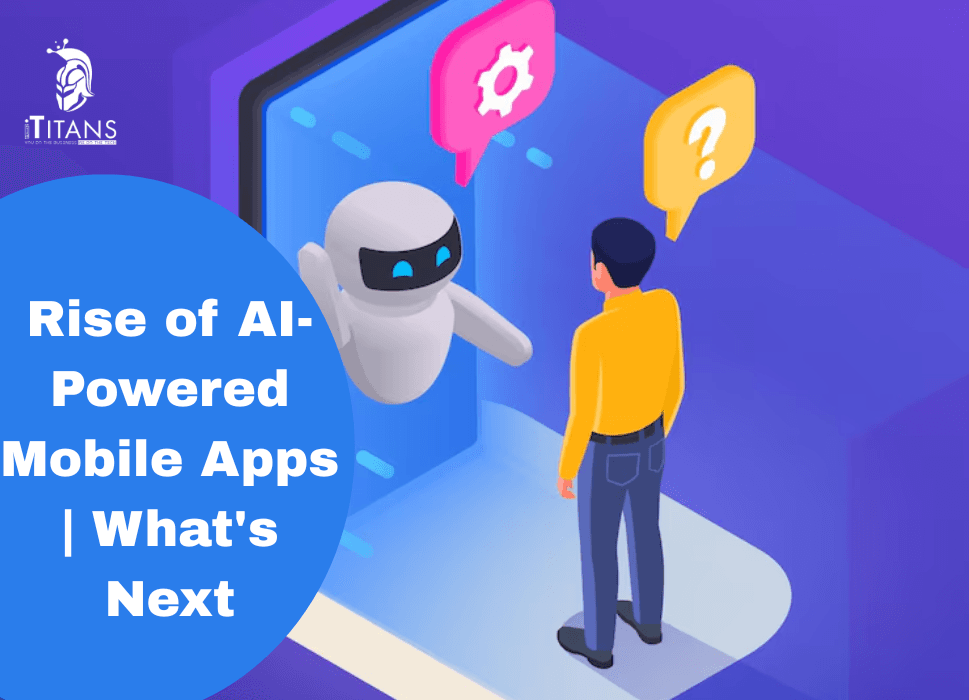
In 2025, mobile apps have become smart assistants, learning from your actions and predicting what you’ll need next. From ride-hailing platforms that know your commute patterns to shopping apps that understand your taste better than your best friend, AI-powered mobile apps have quietly taken over. But this is just the beginning.
In this blog, we’ll explore what’s fueling this shift, what AI is already doing behind the scenes, and most importantly, what’s coming next. Whether you’re building apps or using them to grow your business, these changes are too big to ignore.

How AI Is Changing Mobile Apps Right Now
Artificial Intelligence isn’t new. What’s new is its real-time application in mobile environments. A few years ago, AI in apps meant a chatbot or a few recommendations. Now? It’s baked into almost every tap, swipe, and scroll.
1. Smarter User Interactions
Voice assistants like Siri and Google Assistant paved the way, but they were just the surface. Today, AI allows apps to understand context, predict behavior, and customize entire experiences. Think food delivery apps that reorder your favorites or fitness apps that adapt workouts based on your fatigue levels, automatically.
2. Visual Recognition & AR
AI-enabled camera features are everywhere, from scanning receipts for expense trackers to applying real-time makeup filters in beauty apps. AI understands shapes, objects, and even facial expressions now, which means apps can offer functionality that was once only possible with expensive hardware or large teams.
3. Hyper-Personalization
Forget general suggestions. AI analyzes how long you spend on a screen, your location patterns, the time of day you shop, and even how fast you type. The result? Hyper-personalized content, push notifications, offers, and feeds that are far more likely to engage users.
The Business Case Behind AI in Mobile Apps
1. Better Retention Rates
AI helps reduce app abandonment. When apps offer experiences that feel helpful and “just right,” users are more likely to stick around. Spotify’s Discover Weekly and Netflix’s recommendation engine are prime examples of this in action. and they run on AI.
2. Data-Driven Decision Making
With AI tools, companies no longer need to guess what users want. Apps track behavior in real-time, and AI breaks that data down to show trends, drop-offs, friction points, and opportunities, giving businesses clear action items to improve UX and drive revenue.
3. Faster Support with AI Chatbots
Support doesn’t have to be 24/7 live agents anymore. AI chatbots now handle complex conversations, provide relevant links or information, and even escalate issues when needed. Apps like Duolingo and banking apps are already using this to cut response times and support costs.
Types of AI Technology Behind Mobile Apps
Several branches of AI contribute to this evolution. Here’s how they’re being used:
1. Machine Learning (ML)
This is the backbone of most intelligent app behaviors. Apps “learn” from user interactions and adjust accordingly. For instance, language learning apps adjust lesson difficulty based on your performance, all thanks to ML.
2. Natural Language Processing (NLP)
From chatbots to voice commands, NLP helps apps understand and process human language. It’s what lets you talk to your phone or type informal questions and still get relevant responses.
3. Computer Vision
This enables apps to “see.” Think about Instagram’s auto-tagging, facial recognition in photo apps, or QR code scanning, all of that is computer vision in action.
4. Recommendation Systems
These systems analyze user preferences and behaviors to suggest products, music, news, or content. They’re the reason your YouTube home feed looks different from everyone else’s.
Industries Leading the AI App Evolution
Some industries have adopted AI faster than others. Let’s take a look:
1. eCommerce
AI helps online stores offer personalized shopping experiences, suggest products, and even power visual searches, where users snap a photo to find similar items. Amazon and Noon are ahead here.
2. Healthcare
Apps like Ada and Babylon Health use AI to suggest possible diagnoses, schedule appointments, and track patient health. Wearable data and AI make smarter health advice.
3. Banking and Fintech
AI powers fraud detection, budgeting insights, and credit scoring. Fintech apps can now alert users of unusual transactions in real-time, saving millions.
4. Travel and Hospitality
From suggesting travel itineraries to real-time translation, AI is making travel apps more helpful and intuitive. Airlines and hotels are also using AI to streamline booking and customer service.
5. Education
Language learning, tutoring, and exam prep apps use AI to deliver personalized paths. Students get smarter feedback, adaptive testing, and faster progress.
AI Features That Users Expect in 2025 Apps
Even average users are getting used to AI-driven experiences. Some features are quickly becoming baseline expectations:
- Smart search and filtering
- Voice commands
- Personalized recommendations
- Predictive text and autofill
- Instant support bots
- Behavior-based alerts
If your app doesn’t have at least a few of these, chances are it’ll feel outdated soon.

Challenges of Using AI in Mobile Apps
It’s not all smooth sailing. Building AI-powered apps comes with real-world hurdles:
1. Data Privacy
AI needs data. But with increasing regulations (like GDPR and CCPA), developers need to walk a fine line between smart features and user privacy.
2. Performance Load
AI models can be heavy on processing. This can slow down the app or drain battery life. Developers need to optimize or use cloud-based solutions to manage load.
3. Bias and Fairness
AI systems can unintentionally inherit biases from the data they’re trained on. This can lead to skewed recommendations, unfair outcomes, or poor user experiences if not addressed.
4. Complexity in Development
Integrating AI into mobile apps isn’t plug-and-play. It requires the right datasets, training, testing, and often ongoing monitoring, which means more work for development teams.
What Makes AI a Non-Negotiable for Mobile Apps Now?
Apps that stay relevant are the ones that constantly evolve. AI helps them do just that. It’s not about making apps futuristic anymore, it’s about meeting current user expectations. Every extra second saved, every personalized experience delivered, and every smarter interaction can mean the difference between a daily user and an uninstalled app.
The Future of AI in Mobile Apps: What’s on the Horizon?
While today’s AI-powered apps are smart, what’s next will feel more intuitive, context-aware, and downright human-like in behavior. Let’s dive into the major trends shaping the future.
1. AI That Understands Emotion (Affective AI)
Emotion-sensing AI is no longer sci-fi. Apps are being trained to read facial expressions, voice tones, and even text patterns to understand how users feel.
Imagine a meditation app that changes its background music or voice tone based on your mood. Or a mental health app that picks up on signs of anxiety through your typing speed or language and responds accordingly. The goal here is to make apps more empathetic, which could transform everything from healthcare to e-commerce.
2. Real-Time Personalization Across Devices
As people switch between phones, tablets, and laptops, AI will begin offering a seamless transition in experience, not just saving your data but actively adapting content to your behavior across platforms.
For example, if you pause a tutorial on your phone halfway through, AI will remember not just where you left off, but how focused you were, whether you skipped parts, and how long you spent, then adjust the next session on your tablet accordingly.
3. Predictive UX Design
Forget A/B testing. AI will soon power user interfaces that change in real-time based on how people behave. If a user is struggling to navigate a certain feature, the app might redesign that section on the fly, offering fewer steps, bigger buttons, or clearer instructions.
This concept of predictive UX could make apps significantly more user-friendly, especially for complex services like banking, investing, or healthcare.
4. AI, Voice, and Visual means Multi-Modal Interfaces
Typing is already taking a backseat. The future is multi-modal, where users interact through voice, gestures, visual cues, and even biometric feedback.
Apps will not only understand what you say but how you say it, your surroundings, and your expressions. This will unlock more accessibility and personalization, especially for users with disabilities, the elderly, or those in non-text-friendly environments.
5. Offline AI Models for Privacy & Speed
As concerns around data privacy grow, we’ll see more mobile apps using on-device AI models. This means AI will process data locally on your phone, without sending it to cloud servers. The benefits?
- Faster responses
- No internet required
- Better user privacy
Google’s Gboard already uses this for predictive text. In the future, apps in finance, healthcare, and education will likely follow suit.
AI and App Monetization: A New Era
AI isn’t just about UX, it’s also becoming the backbone of smarter, less intrusive monetization strategies. Here’s how:
1. Smarter Ads Without Killing UX
AI helps serve ads that users might actually find useful. Instead of annoying popups, users get ads that are contextually relevant, like showing a coupon for a ride-sharing app when they’re leaving work.
In gaming apps, AI adjusts ad frequency based on player engagement. If someone’s getting frustrated and close to quitting, the app might reduce ad frequency to keep them around longer.
2. AI-Powered Subscriptions
Freemium models are becoming more flexible thanks to AI. Apps can now personalize pricing tiers based on a user’s behavior. For instance:
- Heavy users might see more premium feature prompts
- Occasional users might get special retention offers
- Students or professionals might get AI-suggested plans based on usage
This allows businesses to sell smarter, without overwhelming users.
3. AI in In-App Purchases
From recommending the right digital items (like filters, features, templates) to optimizing pricing in real time, AI is making in-app purchases feel less like sales, and more like natural upgrades.

The Role of AI in App Security
Security has always been a top concern, especially for finance, healthcare, and communication apps. With AI, there’s a shift toward proactive security.
1. Behavioral Authentication
Instead of just passwords or facial scans, AI now monitors how you use an app. How you scroll, type, swipe, or hold your phone creates a unique behavioral fingerprint.
If someone else starts using your phone or app account, the AI can detect anomalies and flag suspicious activity, even if they’ve cracked your password.
2. Fraud Detection in Real Time
Banking and eCommerce apps already use AI to detect unusual behavior. However, this is expanding into more sophisticated fraud prevention, such as stopping subscription scams, refund abuse, or multiple account manipulation.
3. Smarter Data Encryption and Access Control
AI systems can predict potential vulnerabilities in the app and suggest fixes, helping developers stay ahead of evolving threats without relying solely on manual security testing.
Why Businesses Must Think AI-First in Mobile Strategy
With AI rapidly becoming the standard, the question for businesses is no longer should we use AI in our app, but how deeply should we integrate it?
If you’re building a mobile app in 2025 or beyond, here’s why AI can’t be an afterthought:
- Users expect intelligence. They don’t want basic interactions anymore.
- Competitors are moving fast. AI-driven experiences can be the difference between gaining and losing users.
- Operational efficiency. From support to sales, AI reduces overhead and improves decision-making.
iTitans: Building Smarter Apps with AI at the Core
At iTitans, we’ve been pushing AI into mobile development not because it’s trendy, but because it works. Our team has delivered AI-powered features across various industries, from real-time tracking for logistics apps to smart scheduling tools for enterprise teams.
Whether you’re launching a brand-new idea or upgrading your current app to meet today’s user expectations, we help you do it smartly, with AI that fits naturally into the experience, not forced gimmicks.
Our belief is simple: Apps should make life easier. AI helps us get there faster, and better.
How Can Businesses Prepare for the AI App Wave?
There’s no shortcut. The businesses that win tomorrow are the ones that start preparing today. Here are some key steps to take if you’re planning to build or upgrade your app:
1. Start with the Problem, Not the Buzzword
AI should never be included just for the sake of looking modern. The most successful AI apps solve a real user problem. So before diving into development, identify:
- What pain points your users face
- What behaviors or actions you can track
- What decisions your app can help make smarter
Once that’s clear, AI can be a powerful tool, not just another feature.
2. Invest in Data Readiness
AI feeds on data. But most businesses don’t realize they already sit on a goldmine of user data, they just haven’t structured or analyzed it properly.
Clean, categorized, and organized data gives AI the ability to actually learn and improve. If you’re just starting out, create a basic data plan that answers:
- What kind of data will we collect?
- How will it be stored and secured?
- Who will have access to it?
3. Work with AI-Aware Developers
AI doesn’t just sit on top of your app, it affects the entire backend, how your app thinks, and how it evolves. That’s why you need a team that understands how AI fits into your business logic, user interface, and user flow.
At iTitans, we always start by understanding your business goals before recommending where, or whether, AI should be introduced. For some apps, a simple recommendation engine is enough. For others, a full-on predictive system may be worth exploring.
4. Plan for Constant Learning
Unlike static features, AI is never finished. The more users engage, the more your AI system should improve. That means your development team needs to think long-term:
- Will we monitor and retrain AI models?
- Who manages the quality of AI-generated outputs?
- What guardrails are in place to avoid biased or wrong predictions?
Your app needs to learn, and your team needs to plan for that.

Emerging Types of AI-Powered Apps to Watch
So, what kind of mobile apps will dominate the next few years with the help of AI? Here are a few areas seeing explosive growth:
1. AI Health Coaches
Apps like WHOOP and Fitbit already offer health insights, but the next wave will act more like coaches, telling you what to do and when to do it based on your routines, not just stats.
These apps may help prevent health issues, give personalized diet plans, or even monitor mental health trends using voice tone or typing behavior.
2. Hyperlocal Shopping & Delivery
AI will boost last-mile delivery and real-time inventory tracking. Users will be able to see exactly which products are available nearby, how quickly they can get them, and even whether they’ll like a product, all before ordering.
3. AI Learning Assistants
EdTech apps will evolve from static lessons to interactive assistants that respond to how students learn. Struggling with a topic? The app might slow down. Acing quizzes? It might skip ahead. AI allows content to flex with the learner.
4. Creative Apps That Think With You
From video editing apps that auto-cut based on scene changes to music apps that generate background tracks as you record, AI is helping people become creators, not just consumers.
Apps like Lensa and Runway are already testing these waters, and we’ll only see more.
5. AI Legal & Finance Advisors
Imagine an app that reads your bills and bank statements, then advises you how to manage your money, not just track it. Or an app that breaks down legal documents into everyday language and flags risky terms.
These “advisor apps” will likely become a category of their own.
Challenges Ahead: What Needs to Be Addressed?
As exciting as all this sounds, it’s not without real concerns. Businesses and developers need to move forward responsibly. Here’s why:
1. Bias and Fairness
If your AI is trained on biased data, it will make biased decisions. Developers must review datasets to ensure inclusivity and fairness, especially in healthcare, finance, and hiring-related applications.
2. User Trust and Transparency
Users should know when an app is using AI and how it’s making decisions. Give people the option to opt out or understand the logic behind certain recommendations.
This builds trust, which is essential for long-term app success.
3. AI Fatigue
Not everything needs to be AI-powered. Overuse can confuse users, slow down performance, or simply feel unnecessary. Focus on usefulness, not flash.

The AI App Revolution Is Just Getting Started
The rise of AI in mobile apps isn’t just a trend, it’s the beginning of a shift in how we interact with technology. Apps are moving from passive tools to active participants in our daily lives. They learn from us, respond to us, and even anticipate us.
At iTitans, we see this not as a challenge but as a new opportunity, to build apps that feel less like machines and more like helpful companions. Whether you’re a startup with a bold idea or a business ready to revamp your digital strategy, AI is no longer a nice-to-have, it’s becoming the heart of good design.
We help businesses build AI-powered apps that are smart, responsive, and built around real user needs, not just trends. Let’s talk.
Related Posts: