
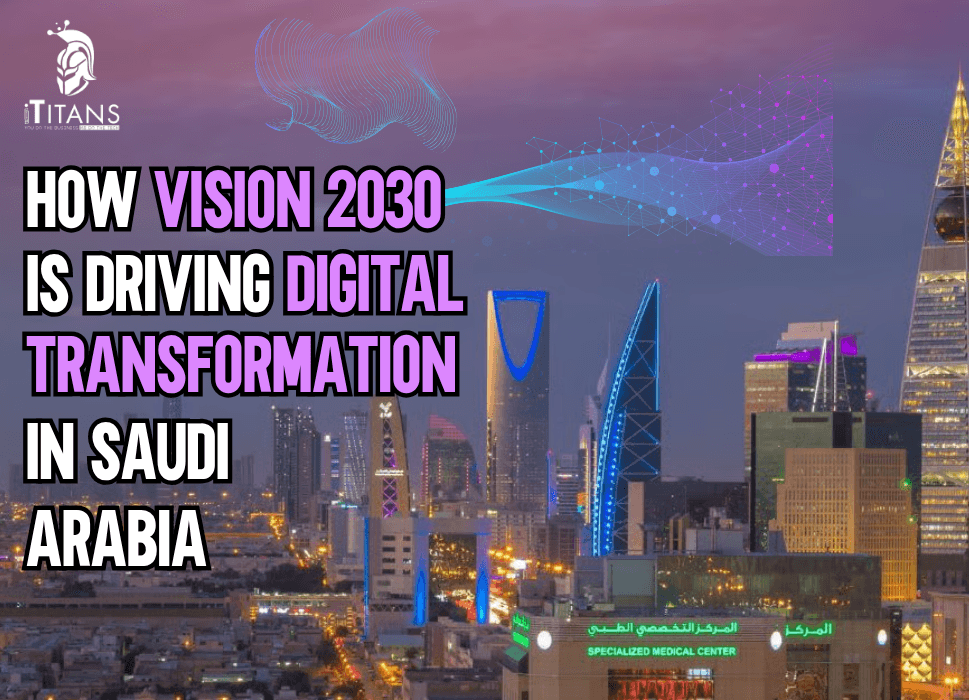
How Vision 2030 Is Driving Digital Transformation in Saudi Arabia
Saudi Arabia is going through one of the biggest economic and technological shifts in its history. At the center of this transformation is Vision 2030, an ambitious national strategy launched to diversify the economy, reduce dependence on oil, and create a future powered by innovation, technology, and sustainability.
Over the last few years, the Kingdom has rapidly accelerated investments in artificial intelligence, cloud computing, smart cities, fintech, eCommerce, cybersecurity, and digital infrastructure. This shift is changing how businesses operate, how people access services, and how industries grow. From government platforms and smart healthcare systems to digital banking and advanced logistics, Saudi Arabia is becoming a global technology hub.
As companies embrace digital transformation services, the demand for software development, mobile app development, cloud integration, and enterprise automation continues to grow across the region.
Understanding Vision 2030 and Its Digital Ambitions
Vision 2030 was introduced in 2016 by Crown Prince Mohammed bin Salman with the goal of modernizing Saudi Arabia’s economy and positioning the Kingdom as a global leader in innovation and investment. While the initiative covers several sectors including tourism, healthcare, entertainment, and education, digital transformation remains one of its strongest pillars.
Role of Modern Technology for Economic Growth
The Kingdom recognized early that technology would play a central role in economic growth. As a result, Saudi Arabia started investing heavily in digital infrastructure, smart governance, artificial intelligence, and data-driven industries. Today, nearly every major sector in the country is integrating technology into its operations.
What Role is Saudi Government Playing?
The government has also focused on improving internet penetration, expanding cloud adoption, and creating regulations that encourage innovation. According to the Saudi Communications, Space & Technology Commission (CST), internet penetration in Saudi Arabia exceeded 99% in 2023, making it one of the most digitally connected countries in the region.
The Kingdom’s focus is not only about adopting technology but also about building a complete digital ecosystem that supports startups, enterprises, investors, and international technology companies.

The Rise of Smart Government Services
One of the most visible impacts of Vision 2030 is the modernization of government services. Saudi Arabia has made significant progress in eGovernment development, allowing citizens and residents to access services digitally without visiting physical offices.
Innovating With Digital Technology
Platforms like Absher, Tawakkalna, and Najiz have transformed how people interact with public services. Whether renewing documents, accessing healthcare information, or handling legal procedures, users can now complete tasks online within minutes.
This digital-first approach has improved efficiency, reduced paperwork, and enhanced transparency. According to the United Nations E-Government Development Index 2024, Saudi Arabia ranked among the leading countries globally in digital government services.
The government’s investment in digital public infrastructure has also created opportunities for software companies, UI/UX design agencies, cloud service providers, and mobile app development firms that support these initiatives.
Artificial Intelligence Becoming a National Priority
Artificial intelligence is now one of the most important areas of Saudi Arabia’s digital journey. The Kingdom aims to become a global AI leader by investing billions into research, infrastructure, and AI-powered industries.
Influencing Every Sector With AI
The Saudi Data and Artificial Intelligence Authority (SDAIA) has been leading multiple AI initiatives across healthcare, transportation, education, and public administration. AI is being used to improve city planning, automate services, analyze large datasets, and optimize operations.
Saudi Arabia announced plans to attract billions in AI investments over the coming years as part of its long-term economic strategy. According to PwC, artificial intelligence could contribute approximately $135 billion to Saudi Arabia’s economy by 2030.
Adoption of AI for Businesses
Businesses operating in the Kingdom are also adopting AI-powered business automation tools, predictive analytics, and machine learning systems to improve efficiency and customer experiences. This trend has significantly increased the demand for AI software development services and cloud-based enterprise systems.
NEOM and the Future of Smart Cities
No discussion about Saudi Arabia’s digital transformation is complete without mentioning NEOM. The futuristic mega-city project represents the Kingdom’s vision for a technology-driven future.
NEOM is designed to operate using advanced technologies including AI, robotics, IoT, renewable energy, and autonomous transportation. The city aims to create a fully connected digital environment where technology improves everyday life.
The Line Project
One of NEOM’s most talked-about projects is The Line, a smart urban development planned to operate with zero cars and zero carbon emissions. Sensors, AI systems, and real-time data processing will help manage transportation, utilities, healthcare, and security.
Projects like NEOM are creating massive opportunities for businesses involved in:
- Custom software development
- Smart city infrastructure
- IoT app development
- Cybersecurity services
- Cloud computing
- Data analytics
- Enterprise mobility services
As Saudi Arabia expands its smart city initiatives, technology companies around the world are entering the market to participate in this transformation.
Growth of the Saudi Fintech Sector
Saudi Arabia’s financial technology sector has experienced explosive growth under Vision 2030. Digital payments, online banking, and fintech startups are rapidly changing the financial landscape.
The Saudi Central Bank has introduced regulations that encourage innovation while supporting digital banking and cashless transactions. Today, consumers across the Kingdom increasingly rely on mobile wallets, digital banking apps, and online payment systems.
According to Saudi Central Bank data, digital payments represented over 70% of retail transactions in 2023, reflecting the country’s rapid shift toward a cashless economy.
Fintech startups in Saudi Arabia are focusing on:
- Digital payment platforms
- Buy-now-pay-later services
- Blockchain technology
- Financial management apps
- AI-powered banking tools
This growth has increased demand for fintech app development, cybersecurity consulting, payment gateway integration, and SaaS development services.
Cloud Computing Reshaping Saudi Businesses
Cloud computing has become one of the key drivers of digital transformation in Saudi Arabia. Organizations are moving away from traditional IT infrastructure and adopting cloud-based systems to improve scalability, flexibility, and operational efficiency.
Global technology companies including Amazon Web Services, Google Cloud, and Microsoft Azure have expanded their presence in Saudi Arabia to meet growing demand.
Businesses are using cloud platforms for:
- Enterprise resource planning
- Remote collaboration
- Data storage
- Software deployment
- AI processing
- Customer relationship management
Cloud adoption is especially important for startups and growing businesses because it allows them to scale operations without investing heavily in physical infrastructure.
As a result, cloud migration services, DevOps consulting, SaaS product development, and managed IT services are becoming highly valuable across the Saudi market.
The Expansion of eCommerce and Digital Consumer Behavior
Saudi Arabia’s eCommerce industry has grown dramatically over the last few years. Consumers are increasingly shopping online for electronics, fashion, groceries, healthcare products, and digital services.
Several factors are driving this growth:
- High smartphone penetration
- Improved internet connectivity
- Secure online payment systems
- Faster logistics networks
- Young tech-savvy population
According to Statista, Saudi Arabia’s eCommerce market revenue is projected to exceed $20 billion in the coming years.
Businesses are now investing heavily in:
- eCommerce website development
- Mobile commerce apps
- Digital marketing services
- Customer experience optimization
- AI-powered personalization
This digital retail boom has opened opportunities for web development companies, UI/UX specialists, digital transformation consultants, and software engineering teams.

Cybersecurity Becoming a National Focus
As Saudi Arabia becomes more digitally connected, cybersecurity has become a top priority. With increased online services and cloud adoption, organizations face growing cybersecurity risks including data breaches, ransomware attacks, and digital fraud.
The Kingdom has introduced strict cybersecurity frameworks and regulations to protect businesses and citizens. The National Cybersecurity Authority continues to strengthen policies related to data privacy and digital protection.
Companies operating in Saudi Arabia are increasingly investing in:
- Security infrastructure
- Threat monitoring systems
- Identity management
- Endpoint security
- Compliance management
This has fueled demand for cybersecurity consulting services, secure software architecture, penetration testing, and enterprise security integration.
Cybersecurity is no longer viewed as just an IT requirement. It has become an essential part of every company’s digital growth strategy.
Digital Transformation in Healthcare
Saudi Arabia’s healthcare sector is also undergoing rapid modernization under Vision 2030. Hospitals and healthcare providers are adopting digital systems to improve patient experiences, reduce operational delays, and enhance medical services.
Telemedicine platforms, electronic health records, AI-assisted diagnostics, and wearable health technologies are becoming more common across the Kingdom.
The government has invested heavily in healthcare digitization to improve accessibility and efficiency. Patients can now schedule appointments, access prescriptions, and communicate with healthcare providers through mobile applications and online portals.
Healthcare technology companies are seeing increasing opportunities in:
- Healthcare app development
- Telemedicine platforms
- AI healthcare analytics
- Cloud-based patient management systems
- Medical software engineering
This transformation is improving healthcare accessibility while creating a more connected healthcare ecosystem.
Education and eLearning Are Rapidly Evolving
Vision 2030 has also accelerated digital transformation in education. Schools, universities, and training institutions are integrating digital technologies into learning environments.
Online learning platforms, virtual classrooms, AI-driven educational tools, and mobile learning applications are becoming more popular. The COVID-19 pandemic further accelerated the adoption of eLearning technologies across Saudi Arabia.
Educational institutions are now investing in:
- Learning management systems
- Virtual classroom software
- Educational mobile apps
- Interactive digital content
- Cloud-based learning platforms
This growth has increased demand for custom software development and educational technology services.
How Businesses Are Adapting to Saudi Arabia’s Digital Economy
Businesses in Saudi Arabia are quickly realizing that digital transformation is no longer optional. Companies across retail, healthcare, logistics, finance, and manufacturing are investing in technology to remain competitive.
Organizations are adopting:
- ERP systems
- CRM platforms
- AI-powered analytics
- Business automation software
- Mobile applications
- Cloud infrastructure
Companies that embrace technology are improving customer experiences, increasing operational efficiency, and expanding market reach.
This shift is also creating opportunities for software development companies that can build scalable digital products tailored to Saudi market needs.
The Role of Startups and Entrepreneurship
Saudi Arabia’s startup ecosystem is growing rapidly thanks to government-backed investment programs and innovation initiatives. Entrepreneurs now have greater access to funding, mentorship, and digital infrastructure.
Technology startups in fintech, healthtech, logistics, AI, and SaaS are attracting local and international investors.
Government initiatives including startup accelerators and innovation hubs are helping create a thriving entrepreneurial environment. Venture capital funding in Saudi Arabia has increased significantly over the last few years, positioning the Kingdom as a major startup destination in the Middle East.
This growth continues to increase demand for MVP development services, startup app development, SaaS engineering, and scalable cloud architecture.
Challenges Facing Digital Transformation in Saudi Arabia
Despite the remarkable progress, Saudi Arabia still faces several challenges in its digital transformation journey.
- One major challenge is the growing need for skilled technology professionals. As demand for software engineers, cybersecurity experts, AI specialists, and cloud architects rises, businesses are competing for talent.
- Another challenge involves data privacy and cybersecurity concerns. Organizations must continuously update security frameworks to protect digital assets and maintain customer trust.
- Digital transformation also requires businesses to adapt culturally and operationally. Some traditional industries may take longer to fully integrate advanced technologies into their operations.
However, Saudi Arabia continues to address these challenges through education programs, technology investments, and international partnerships.

How iTitans Supports Digital Transformation Initiatives
As businesses across Saudi Arabia accelerate their digital transformation efforts, experienced technology partners play a critical role in helping organizations build scalable digital products and modern business systems. This is where iTitans contributes with its expertise in software engineering and digital services.
iTitans is a full-service software development company based in the USA with global capabilities and a team of experienced technical professionals. The company works with businesses looking to modernize operations, improve customer engagement, and launch advanced digital platforms.
With Saudi Arabia rapidly investing in smart technologies, cloud infrastructure, fintech innovation, and AI-powered business operations, companies increasingly require reliable partners that understand modern software ecosystems.
Businesses operating in sectors like healthcare, finance, retail, logistics, and eCommerce often require scalable digital platforms capable of handling evolving market demands. iTitans helps companies build technology-driven products that support long-term business growth and digital expansion.
The company’s experience with web technologies, enterprise platforms, and mobile applications positions it well for organizations adapting to the fast-changing digital economy shaped by Vision 2030.
The Future of Saudi Arabia’s Digital Economy
Saudi Arabia’s digital transformation journey is still in its early stages, but the progress achieved so far is remarkable. Vision 2030 has created a strong foundation for innovation, entrepreneurship, and technology-driven economic growth.
The Kingdom is investing aggressively in artificial intelligence, smart infrastructure, cloud computing, renewable energy, and advanced connectivity technologies. As these initiatives continue to expand, Saudi Arabia is expected to become one of the leading digital economies in the Middle East and beyond.
International companies are increasingly viewing Saudi Arabia as a strategic technology market with significant growth potential. At the same time, local businesses are embracing modernization to stay competitive in a rapidly evolving economy.
The future will likely bring even greater adoption of:
- AI-powered automation
- Smart city technologies
- Blockchain systems
- Advanced cybersecurity frameworks
- IoT ecosystems
- Cloud-native enterprise applications
For technology companies, software developers, digital consultants, and innovative startups, Saudi Arabia offers enormous opportunities for growth and collaboration.
Vision 2030 is fundamentally reshaping Saudi Arabia’s economy through technology, innovation, and digital transformation. From smart government services and AI investments to fintech growth and cloud adoption, the Kingdom is building a future centered around connectivity and innovation.
iTitans are helping businesses navigate this rapidly changing digital landscape by contributing services like software development, enterprise applications, mobile platforms, and cloud technologies continues to grow. Share your requirements today and let us help you become a part of Saudia’s 2030 digital transformation.
FAQs
What is Saudi Arabia’s Vision 2030 and how does it support digital transformation?
Saudi Arabia’s Vision 2030 is a national strategy designed to diversify the economy and reduce dependence on oil. Digital transformation plays a major role in achieving these goals by modernizing government services, improving infrastructure, and encouraging innovation.
What role does artificial intelligence play in Saudi Arabia’s digital transformation?
Artificial intelligence is a key pillar of Saudi Arabia’s Vision 2030 strategy and is being integrated into multiple industries. AI technologies are helping improve healthcare diagnostics, traffic management, cybersecurity, and customer service operations.
What is the significance of smart cities in Saudi Arabia’s Vision 2030?
Smart cities are an important component of Vision 2030 because they use advanced technologies to improve urban living and sustainability. Projects like NEOM aim to integrate artificial intelligence, renewable energy, and smart infrastructure into daily life. These cities are designed to enhance transportation, security, healthcare, and environmental management.
How is digital transformation helping Saudi Arabia diversify its economy?
Digital transformation is creating new industries and reducing the Kingdom’s reliance on oil revenues. Investments in fintech, e-commerce, cybersecurity, and cloud computing are opening new economic opportunities. Technology-driven sectors contribute to job creation, innovation, and international competitiveness.
What future opportunities could Vision 2030 create through digital transformation?
Vision 2030 is expected to create significant opportunities in technology, innovation, and global business partnerships. Emerging fields such as artificial intelligence, robotics, renewable energy, and digital finance are likely to grow rapidly in the coming years. Saudi Arabia’s focus on smart infrastructure and digital services could attract international companies and skilled professionals.