
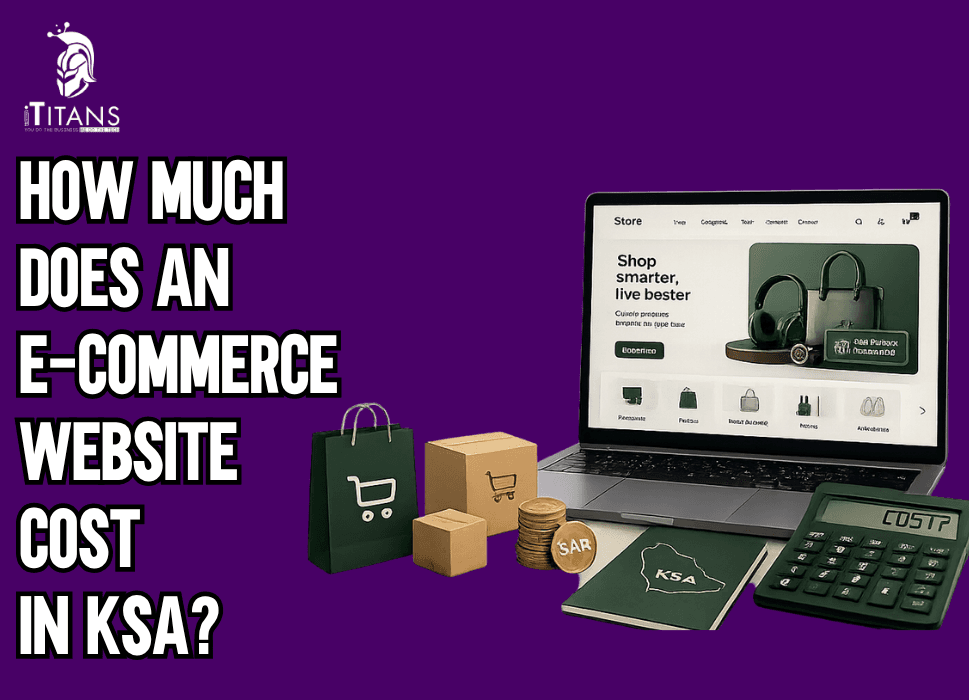
How Much Does an E-Commerce Website Cost in KSA?
Saudi Arabia’s ecommerce sector is expanding at a pace that very few regional markets can match. From retail startups in Riyadh to enterprise distributors launching B2B portals across the Kingdom, businesses are aggressively investing in digital commerce infrastructure.
Yet one question continues to dominate boardroom discussions, startup planning meetings, and vendor consultations:
How much should an ecommerce website actually cost in Saudi Arabia?
The problem is that pricing conversations in this industry are rarely transparent. One agency quotes SAR 8,000. Another proposes SAR 120,000 for what appears to be the same project.
Founders become trapped between cheap offshore teams promising unrealistic timelines and expensive vendors hiding vague deliverables behind polished sales decks.
Months later, many businesses end up with delayed launches, broken checkout systems, slow mobile performance, poor Arabic UX, and websites that fail to convert traffic into revenue.
This guide breaks down the real-world pricing structure behind ecommerce website cost Saudi Arabia, what drives those costs higher, where businesses overspend unnecessarily, and how founders can avoid the most common development mistakes.
The Rapid Growth of Ecommerce in Saudi Arabia Is Changing Development Costs
Saudi Arabia is no longer an emerging ecommerce market. It has become one of the Middle East’s fastest-growing digital economies, supported by increasing internet penetration, digital banking adoption, logistics expansion, and consumer demand for mobile-first shopping experiences.
This growth has created a major shift in how businesses approach ecommerce development.
Five years ago, many companies treated online stores as secondary sales channels. Today, ecommerce platforms are core business infrastructure. They handle customer acquisition, inventory management, payment processing, retention marketing, analytics, and operational automation simultaneously.
As expectations rise, development costs naturally rise with them.
A modern Saudi ecommerce website is expected to include:
- Arabic and English support
- Mobile-optimized checkout
- Mada integration
- STC Pay support
- Fast page speed across regions
- Inventory synchronization
- CRM integrations
- SEO-ready architecture
- Secure customer data handling
- Marketing automation support
The moment businesses move beyond a basic template website, costs begin increasing rapidly.
This is why many founders searching for online store development cost in KSA often encounter pricing ranges that vary dramatically from one vendor to another.
The reality is simple: two ecommerce websites may look visually similar while being completely different underneath the surface.
One might be held together with unstable plugins and outsourced code patches. The other may be engineered for long-term scalability, high traffic handling, multilingual SEO, and operational stability.
That difference affects cost more than design alone.
Average Ecommerce Website Development Cost in Saudi Arabia
The average cost of an ecommerce website in Saudi Arabia typically falls into three categories: entry-level stores, mid-market ecommerce platforms, and enterprise-grade commerce systems.
Each category serves different business goals and operational demands.
Basic Ecommerce Website Cost in KSA
A basic ecommerce website usually costs between SAR 8,000 and SAR 25,000.
This category generally includes:
- Template-based design
- Shopify or WooCommerce setup
- Limited product uploads
- Basic payment integration
- Standard checkout flow
- Minimal customization
- Basic hosting configuration
These websites are common among startups and small retailers testing ecommerce demand for the first time.
At first glance, this pricing appears attractive. However, many low-cost projects fail because businesses underestimate post-launch challenges.
A cheap ecommerce website often introduces hidden operational problems:
- Slow mobile speed
- Weak SEO structure
- Plugin conflicts
- Checkout instability
- Security vulnerabilities
- Poor Arabic responsiveness
- Difficult inventory management
Founders frequently discover these problems only after traffic begins increasing.
In Saudi Arabia, where mobile commerce dominates purchasing behavior, even small usability issues can reduce conversion rates significantly.
This is particularly important for businesses planning paid advertising campaigns. Driving traffic to an unstable ecommerce platform creates acquisition losses almost immediately.
Mid-Level Ecommerce Website Pricing
Most serious ecommerce businesses in Saudi Arabia operate within the SAR 30,000 to SAR 90,000 range.
This is where development becomes substantially more strategic.
Mid-level ecommerce projects usually include:
- Custom UI/UX design
- Arabic-first mobile optimization
- Advanced filtering systems
- ERP or CRM integrations
- Inventory synchronization
- Marketing automation setup
- SEO architecture planning
- Conversion-focused checkout experiences
- Enhanced security implementation
- Custom feature development
This pricing category is often ideal for:
- Growing retail brands
- Multi-category stores
- Fashion ecommerce businesses
- Electronics retailers
- Healthcare ecommerce platforms
- B2B distributors entering digital commerce
Companies investing in this range are typically focused on long-term revenue growth rather than launching the cheapest possible website.
Enterprise Ecommerce Website Development Cost
Enterprise ecommerce systems in Saudi Arabia commonly range from SAR 100,000 to SAR 500,000 or more.
These projects involve significantly higher technical complexity.
Enterprise ecommerce environments often include:
Multi-System Integrations
Large businesses rarely operate ecommerce platforms independently. Their systems must communicate with:
- ERP platforms
- Warehouse management systems
- Logistics APIs
- Accounting software
- CRM environments
- Customer support systems
- POS infrastructure
Integration complexity alone can dramatically increase development timelines.
Multi-Vendor Marketplace Functionality
Some Saudi businesses are moving toward marketplace models similar to Amazon or Noon.
These systems require:
- Vendor dashboards
- Commission logic
- Multi-seller inventory management
- Complex order routing
- Role-based permissions
- Escrow payment systems
Marketplace development significantly increases both backend and infrastructure costs.
Advanced Security and Compliance
Enterprise ecommerce businesses operating in Saudi Arabia often require:
- Advanced cybersecurity implementation
- Fraud monitoring systems
- Secure customer data environments
- VAT-compliant invoicing
- High-volume transaction handling
- Disaster recovery architecture
Security investment becomes essential once transaction volume increases.
The financial damage caused by downtime, payment failures, or customer data breaches can exceed the original development budget itself.
Why Ecommerce Website Pricing Varies So Much in Saudi Arabia
Many business owners become frustrated when agencies provide wildly different project estimates.
But ecommerce pricing variations usually reflect differences in technical depth rather than random pricing behavior.
Several major factors influence ecommerce web design pricing Saudi Arabia.
Platform Selection Changes Everything
The platform chosen for development directly impacts project cost, flexibility, maintenance requirements, and long-term scalability.
For example:
Shopify
Shopify website cost Saudi Arabia is usually lower during the initial launch phase because Shopify simplifies infrastructure management.
However, businesses often face limitations later when requiring:
- Advanced custom functionality
- Specialized workflows
- Complex inventory structures
- Deep backend customization
Monthly app subscriptions also increase operational costs over time.
WooCommerce
WooCommerce development cost KSA may appear affordable initially because WordPress itself is free.
But WooCommerce projects become expensive when businesses require:
- Performance optimization
- Security hardening
- Plugin stability management
- Enterprise-grade hosting
- Advanced integrations
Poor WooCommerce development is one of the most common causes of unstable ecommerce environments in the region.
Custom Ecommerce Development
Custom-built ecommerce platforms require larger upfront investment but offer greater flexibility for businesses with unique operational requirements.
This approach is common among:
- Enterprise retailers
- Large wholesalers
- B2B commerce platforms
- Multi-location operations
- Businesses with complex workflows
Custom development becomes particularly valuable when existing ecommerce platforms cannot support operational goals efficiently.
The Hidden Financial Risks Most Businesses Ignore
One of the biggest misconceptions surrounding ecommerce development is the belief that launch cost is the only meaningful expense.
In reality, the initial build is often just the beginning.
Businesses that focus exclusively on the cheapest proposal frequently encounter expensive operational failures later.
These failures commonly include:
- Poor code quality
- Delayed milestones
- Communication breakdowns
- Weak documentation
- SEO limitations
- Platform instability
- Dependency on unreliable freelancers
- Unmaintainable backend architecture
Many founders realize too late that replacing a poorly built ecommerce system costs far more than building it correctly the first time.
Key Factors That Affect Ecommerce Website Pricing in Saudi Arabia
When businesses compare ecommerce proposals from different agencies, they often assume they are evaluating identical deliverables. In reality, two vendors may be pricing completely different levels of engineering depth, operational planning, and long-term maintainability.
Arabic and English Language Support Increases Complexity
One of the most underestimated cost factors in Saudi ecommerce development is bilingual functionality.
Many business owners assume adding Arabic is simply a matter of translation. Technically, it changes the entire user experience architecture.
Arabic ecommerce environments require:
- RTL (right-to-left) interface support
- Arabic typography optimization
- Mobile responsiveness adjustments
- Dynamic layout restructuring
- Dual-language SEO architecture
- Localized checkout experiences
- Region-specific content formatting
Payment Gateway Integration Impacts Pricing More Than Most Founders Expect
Saudi ecommerce businesses cannot rely exclusively on global payment systems.
Local consumer behavior strongly favors regional payment solutions such as:
- Mada
- STC Pay
- Apple Pay
- Tabby
- Tamara
Integrating these systems properly requires more than installing plugins.
Each gateway introduces unique technical requirements involving:
- Security protocols
- API integrations
- Testing environments
- Currency handling
- VAT calculations
- Checkout logic
- Refund workflows
- Transaction verification
Payment failures can severely damage ecommerce performance.
SEO Architecture Changes Ecommerce Development Cost
Many ecommerce websites in Saudi Arabia fail because SEO planning happens after development instead of during development.
This creates serious structural limitations.
An ecommerce platform built without SEO architecture planning often suffers from:
- Duplicate content issues
- Weak URL structures
- Poor mobile performance
- Slow indexing
- Crawl inefficiencies
- Broken schema implementation
- Thin category pages
- Poor internal linking
Fixing these problems later becomes extremely expensive.
For ecommerce businesses competing in aggressive sectors like electronics, fashion, furniture, healthcare, or automotive retail, SEO infrastructure directly affects customer acquisition cost.
Businesses spending SAR 50,000 monthly on paid advertising while ignoring technical SEO are usually operating inefficiently.
A properly optimized ecommerce website includes:
Search-Friendly Category Architecture
Products must be grouped strategically to improve crawlability and keyword targeting.
This includes:
- SEO-focused collections
- Hierarchical URL structures
- Internal category linking
- Optimized filter systems
Technical Performance Optimization
Google increasingly prioritizes performance metrics.
Saudi ecommerce websites must optimize for:
- Core Web Vitals
- Mobile responsiveness
- Image compression
- Server response time
- Script optimization
Mobile speed matters enormously because Saudi Arabia has one of the region’s strongest mobile-commerce adoption rates.
Multilingual SEO Structure
Bilingual ecommerce websites require:
- Hreflang implementation
- Arabic keyword mapping
- Localized metadata
- Proper indexation controls
- Language-specific URLs
Many low-cost developers completely mishandle multilingual SEO structure, creating long-term visibility problems.
This is why experienced businesses increasingly invest in ecommerce SEO services during the initial development phase rather than treating SEO as an afterthought.
Shopify vs WooCommerce vs Custom Ecommerce Development Cost in KSA
One of the most important pricing decisions businesses face involves platform selection.
The wrong platform creates operational limitations that become expensive later.
The right platform supports growth without forcing complete redevelopment after scaling begins.
Each ecommerce platform carries different strengths, limitations, and long-term cost implications.
Shopify Pricing in Saudi Arabia
For startups entering ecommerce quickly, Shopify remains one of the most accessible platforms.
The average Shopify website cost Saudi Arabia usually ranges between SAR 8,000 and SAR 40,000 depending on complexity.
Shopify offers several advantages:
- Faster launch timelines
- Managed infrastructure
- Simplified backend management
- Lower technical maintenance
- Large plugin ecosystem
- Stable hosting environment
For small and medium-sized businesses without technical teams, Shopify reduces operational pressure significantly.
However, many Saudi businesses eventually encounter limitations.
As ecommerce operations grow, companies often require:
- Custom pricing systems
- Advanced warehouse integrations
- Complex B2B workflows
- Region-specific functionality
- Subscription logic
- Marketplace capabilities
These features can become difficult or expensive within Shopify’s ecosystem.
Another issue involves ongoing operational costs.
Many businesses initially launch affordably but later accumulate significant monthly expenses through:
- Paid apps
- Third-party integrations
- Transaction fees
- Advanced automation tools
Founders frequently underestimate these recurring costs during initial budgeting discussions.
WooCommerce Development Cost in KSA
WooCommerce is extremely popular among businesses seeking flexibility and ownership control.
Average WooCommerce development cost KSA ranges between SAR 12,000 and SAR 70,000 depending on feature depth.
WooCommerce offers strong advantages for content-driven ecommerce brands because it operates within WordPress.
This creates flexibility for:
- SEO optimization
- Content marketing
- Blogging infrastructure
- Landing page creation
- Marketing integrations
However, WooCommerce development quality varies dramatically between vendors.
This is where many Saudi businesses experience major problems.
Poor WooCommerce implementations commonly suffer from:
- Bloated plugin stacks
- Weak security
- Database inefficiencies
- Slow performance
- Hosting instability
- Broken updates
Cheap WooCommerce projects often become maintenance nightmares after traffic begins scaling.
Custom Ecommerce Website Development
Custom ecommerce systems represent the highest investment category.
Yet for many Saudi businesses, they become the most financially efficient long-term option.
Average custom ecommerce website development Saudi Arabia projects often begin around SAR 80,000 and can exceed SAR 500,000 depending on operational requirements.
Custom development is commonly chosen by businesses with:
- Complex operational workflows
- B2B commerce models
- Multi-warehouse operations
- Enterprise inventory systems
- Marketplace functionality
- Custom pricing logic
- Advanced analytics requirements
The biggest advantage is operational control.
Unlike template-driven systems, custom ecommerce platforms are built around business processes instead of forcing businesses to adapt around platform limitations.
This becomes increasingly valuable as operational complexity grows.
However, custom development also carries greater risk if the wrong agency is selected.
Many businesses fail because they hire technically weak development teams incapable of managing large-scale ecommerce architecture.
Common warning signs include:
- Unrealistically low pricing
- Vague project documentation
- No technical roadmap
- Poor communication structure
- Inexperienced project management
- Lack of post-launch support
Enterprise ecommerce projects fail far more often because of management failures than technical failures.
Why Cheap Ecommerce Development Often Becomes Expensive Later
One of the biggest financial mistakes founders make is evaluating ecommerce vendors purely on initial pricing.
Cheap development proposals often hide operational risks that emerge after launch.
This is especially common when businesses outsource projects to inexperienced offshore freelancers or low-cost agencies focused purely on delivery speed.
Initially, everything appears acceptable.
- The website launches.
- Products are uploaded.
- Payments appear functional.
- Then operational pressure begins exposing the weaknesses underneath.
- Traffic increases and servers crash.
- Plugin conflicts break checkout systems.
- Security vulnerabilities emerge.
- Page speed deteriorates.
- SEO visibility stagnates.
- Developers disappear after deployment.
- Internal teams struggle to maintain unstable codebases.
At that point, the original “cheap” website becomes extremely expensive.
Many Saudi businesses eventually rebuild their ecommerce systems entirely within 12 to 24 months because the original architecture cannot support growth.
This cycle is surprisingly common in ecommerce development.
Businesses trying to save SAR 20,000 during development often lose significantly more later through:
- Revenue losses
- Downtime
- Poor customer experience
- Failed marketing campaigns
- SEO rebuilds
- Migration costs
- Emergency development fixes
Strong ecommerce development is less about launching quickly and more about reducing operational risk over the next several years.
Ecommerce Website Cost Based on Business Size
The budget required for an ecommerce website in Saudi Arabia changes significantly depending on the business model, operational complexity, and growth objectives.
A startup launching a niche fashion store does not need the same infrastructure as a national distributor handling thousands of daily transactions across multiple warehouses.
This is where many ecommerce projects become financially misaligned from the beginning.
Some businesses overspend on enterprise-level architecture they do not yet need. Others severely underinvest, creating technical bottlenecks that restrict growth within months.
Understanding how pricing aligns with business stage is one of the most important parts of controlling ecommerce website cost Saudi Arabia effectively.
Startup Ecommerce Website Costs
Startups typically operate with tighter financial constraints and shorter launch timelines.
Most startup ecommerce projects in Saudi Arabia fall between SAR 10,000 and SAR 35,000.
At this stage, businesses are usually focused on:
- Validating demand
- Building initial brand visibility
- Launching quickly
- Testing customer acquisition channels
- Creating operational workflows
For startups, speed matters. But stability matters more.
Many early-stage founders make the mistake of prioritizing launch speed while ignoring technical quality. They hire inexpensive freelancers promising delivery within a few weeks, only to discover major operational failures after paid campaigns begin.
This problem becomes especially dangerous when startups rely heavily on social commerce, influencer traffic, or Meta advertising during launch.
A weak ecommerce infrastructure can destroy marketing performance immediately.
Common startup ecommerce requirements include:
Mobile-First Shopping Experience
Saudi consumers increasingly purchase directly from smartphones.
A startup ecommerce website must prioritize:
- Fast mobile loading
- Simplified checkout
- Mobile-friendly product browsing
- Smooth Arabic responsiveness
Mobile friction kills conversion rates faster than almost any other UX issue.
SEO-Friendly Product Structure
Many startups overlook SEO during launch because they focus entirely on paid advertising.
This creates long-term acquisition problems.
An SEO-ready ecommerce website should include:
- Optimized category architecture
- Proper product indexing
- Internal linking
- Structured metadata
- Search-friendly URLs
Ignoring these foundations early usually creates expensive SEO reconstruction later.
Stable Hosting Infrastructure
Cheap shared hosting environments are one of the biggest causes of startup ecommerce instability.
Traffic spikes during campaigns frequently lead to:
- Site crashes
- Checkout failures
- Slow loading times
- Payment interruptions
Even small ecommerce businesses require dependable hosting environments once customer acquisition begins scaling.
SME Ecommerce Website Development Costs
Small and medium-sized businesses usually require far more operational functionality than startups.
Their ecommerce systems often support:
- Higher inventory volume
- Multiple staff accounts
- ERP synchronization
- Marketing automation
- CRM integration
- Delivery management
- Analytics tracking
- Customer retention systems
Most SME ecommerce projects in Saudi Arabia range between SAR 40,000 and SAR 120,000.
This pricing range reflects businesses moving from “launch mode” into operational maturity.
At this level, development quality becomes directly tied to profitability.
Operational inefficiencies begin affecting:
- Staff productivity
- Customer support workload
- Marketing ROI
- Inventory management
- Repeat purchase rates
Businesses entering this stage often experience frustration with earlier low-cost systems.
Many discover their original ecommerce infrastructure was never designed for operational growth.
This is especially common among companies relying on poorly structured WooCommerce environments overloaded with unstable plugins.
The initial website may have worked for 50 orders monthly.
It collapses operationally at 2,000.
Enterprise Ecommerce Website Costs
Enterprise ecommerce projects represent a completely different level of technical and operational complexity.
These systems often support:
- Multiple regions
- Multi-warehouse logistics
- High-volume transactions
- Marketplace environments
- ERP ecosystems
- Large customer databases
- Advanced automation
- Role-based access systems
Enterprise ecommerce development in Saudi Arabia commonly exceeds SAR 250,000.
For large businesses, ecommerce infrastructure becomes mission-critical operational software rather than simply a website.
Downtime at this level creates immediate financial consequences.
A payment processing issue lasting several hours during a large campaign can generate losses far exceeding monthly development costs.
This is why enterprise ecommerce projects involve significantly deeper planning around:
- Security
- Infrastructure redundancy
- Performance optimization
- Database management
- API architecture
- Disaster recovery
Enterprise businesses also require stronger technical documentation because internal teams often continue maintaining the platform long after launch.
Weak documentation creates long-term operational dependence on the original development vendor, which many companies later regret.
The Hidden Costs of Ecommerce Websites in Saudi Arabia
One of the biggest misconceptions in ecommerce development is assuming the initial build cost represents the total investment.
In reality, launch cost is only one part of the financial picture.
Operational costs continue long after deployment.
Businesses that fail to plan for these ongoing expenses often experience serious budgeting problems later.
Understanding hidden costs is critical when evaluating ecommerce website maintenance cost Saudi Arabia.
Hosting and Infrastructure Costs
Hosting quality directly affects ecommerce performance.
Cheap hosting environments create problems that eventually impact:
- SEO rankings
- Conversion rates
- Customer trust
- Payment stability
- Mobile performance
As traffic increases, infrastructure requirements increase with it.
High-volume ecommerce businesses may require:
- Cloud hosting
- CDN configuration
- Database optimization
- Server redundancy
- Advanced caching
- Load balancing
Many businesses initially launch cheaply but later face rising hosting expenses as operational demand grows.
Maintenance and Security Costs
Ecommerce platforms require continuous maintenance.
This includes:
- Security updates
- Plugin management
- Performance optimization
- Bug fixes
- Backup monitoring
- API maintenance
Ignoring maintenance creates major operational risks.
Cybersecurity threats targeting ecommerce businesses continue increasing globally, and Saudi businesses are not exempt.
Poorly maintained ecommerce environments become vulnerable to:
- Customer data breaches
- Payment exploitation
- Malware injections
- SEO spam attacks
- Server compromise
Recovering from a security breach often costs far more than preventative maintenance itself.
SEO and Content Costs
Many founders underestimate how competitive ecommerce SEO has become in Saudi Arabia.
Launching a website alone does not generate traffic.
Businesses competing in high-demand sectors require:
- Category page optimization
- Product SEO
- Technical SEO audits
- Blog content production
- Internal linking strategies
- Conversion optimization
- Performance monitoring
This is particularly important because customer acquisition costs through paid advertising continue rising.
Strong organic visibility reduces dependency on expensive ad campaigns over time.
Businesses investing early in ecommerce SEO services often achieve lower long-term acquisition costs compared to competitors relying exclusively on paid media.
How to Reduce Ecommerce Development Costs Without Sacrificing Quality
Reducing ecommerce costs does not mean choosing the cheapest vendor.
It means making smarter technical and operational decisions from the beginning.
The businesses that control development costs successfully are usually the ones that define clear priorities early.
Start With Core Revenue Features First
Many businesses waste budget building unnecessary features during initial launch.
A more effective approach is prioritizing:
- Stable checkout
- Mobile UX
- SEO structure
- Payment integration
- Inventory management
Additional features can be added after revenue generation begins.
Trying to launch every possible feature at once often creates budget overruns and development delays.
Avoid Overengineering Early-Stage Projects
Some founders attempt to build enterprise-grade systems before validating market demand.
This creates unnecessary financial pressure.
A startup selling 50 products does not require marketplace infrastructure, AI recommendation systems, or advanced automation workflows immediately.
Businesses should align technical investment with operational reality.
Choose Agencies With Ecommerce Experience in Saudi Arabia
Regional experience matters enormously.
Saudi ecommerce development involves unique operational factors including:
- Arabic UX expectations
- Local payment systems
- Regional logistics behavior
- Consumer trust signals
- VAT requirements
Agencies unfamiliar with the Saudi market often create user experiences that feel disconnected from local customer expectations.
This affects both conversions and retention.
Choosing a development partner with proven ecommerce experience inside Saudi Arabia reduces operational risk significantly.
How to Choose the Right Ecommerce Development Company in Saudi Arabia
Choosing an ecommerce agency is less about flashy portfolios and more about operational competence.
Many businesses are impressed by visual design while ignoring deeper technical questions that determine long-term success.
Before hiring an agency, businesses should evaluate:
Technical Planning Process
Professional agencies should provide:
- Clear project scope
- Technical architecture planning
- Timeline structure
- Milestone breakdowns
- Post-launch support expectations
Vague proposals usually indicate weak project management.
Communication Structure
Communication failures are one of the biggest causes of ecommerce project delays.
Businesses should understand:
- Who manages the project
- Response timelines
- Reporting frequency
- Escalation procedures
- Revision processes
Poor communication destroys development momentum quickly.
Long-Term Support Capabilities
Ecommerce systems require ongoing maintenance.
Businesses should verify whether the agency offers:
- Security monitoring
- Technical support
- Infrastructure optimization
- SEO support
- Feature expansion
Launching the website is only the beginning of the ecommerce lifecycle.
Build an Ecommerce Website That Supports Long-Term Growth
At ITitans, we help businesses build ecommerce platforms designed around performance, usability, SEO, Arabic UX, and operational stability. Whether you need a Shopify store, WooCommerce platform, or custom ecommerce solution, our team focuses on creating systems that support real business growth instead of short-term launches.
FAQs
How much does it cost to build a Shopify store in Saudi Arabia?
A Shopify store in Saudi Arabia usually costs between SAR 8,000 and SAR 40,000 depending on custom design, app integrations, Arabic support, and payment gateway requirements.
Why are ecommerce websites more expensive in Riyadh than other cities?
Riyadh-based agencies often charge higher rates because businesses there typically require enterprise functionality, advanced integrations, stronger UI/UX standards, and long-term technical support.
Does Arabic language support increase ecommerce website development cost?
Yes. Arabic ecommerce websites require RTL layout adjustments, bilingual SEO setup, Arabic typography optimization, and additional frontend testing across devices.
What is the biggest hidden cost in ecommerce website development?
Post-launch maintenance is one of the most overlooked expenses. Hosting upgrades, security updates, plugin conflicts, SEO optimization, and technical support can significantly increase operational costs over time.
Is WooCommerce cheaper than custom ecommerce development in KSA?
WooCommerce usually has lower upfront costs, but poorly developed WooCommerce stores often become expensive later due to maintenance issues, security risks, and performance problems.
How long does it take to develop an ecommerce website in Saudi Arabia?
Basic ecommerce websites may take 3–6 weeks, while custom or enterprise ecommerce platforms with integrations can require 3–8 months depending on complexity.
Which payment gateways are most commonly used in Saudi ecommerce websites?
Mada, STC Pay, Apple Pay, Tabby, and Tamara are among the most widely used payment solutions because they align with local customer payment preferences.
Can a low-cost ecommerce website handle high traffic in Saudi Arabia?
Most low-cost ecommerce websites struggle during heavy traffic periods because they often use weak hosting environments, unstable plugins, and poorly optimized code structures.