
API-First Architecture | GraphQL vs REST
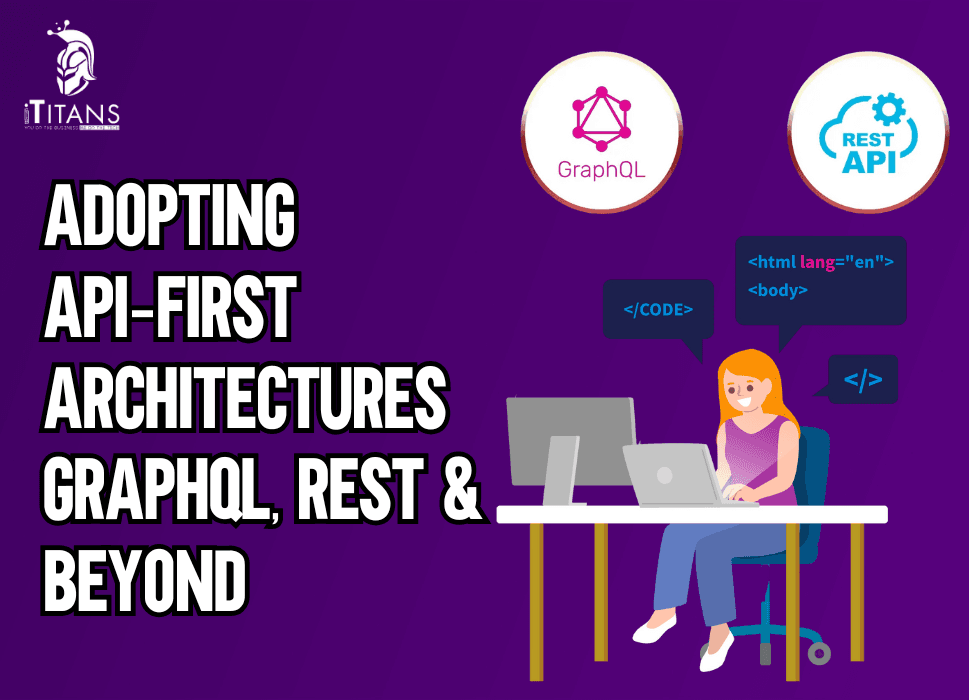
APIs have now become the backbone of how digital products are built, scaled, and experienced. From simple web apps to enterprise-grade SaaS platforms, everything today hinges on how efficiently your APIs communicate.
But here’s the problem: most teams still treat APIs like an afterthought, designing them after the app is already halfway done.
That’s where API-first architecture flips the script.
By putting APIs at the very beginning of the development process, teams unlock faster launches, cleaner codebases, and seamless collaboration between frontend and backend teams.
Whether you’re working on cloud-native apps, complex microservices, or a high-growth SaaS application development roadmap, the API first development workflow is reshaping how modern software is built.
In this guide, we’ll break down the real-world value of adopting API-first approach, compare GraphQL vs REST API performance, explore API-first for microservices, and share best practices API-first design teams should know in 2025.

What is API-First Architecture?
Let’s not overcomplicate this. API-first architecture simply means that APIs aren’t an afterthought, they’re the first thing you design, test, and document before moving into development.
Instead of treating APIs as internal plumbing, this approach puts them front and center. Your APIs become the contract between teams.
That contract allows the backend, frontend, and mobile teams to work simultaneously without constantly waiting on each other. It’s not just efficient, it’s foundational to modern software projects.
And it’s not only useful for large platforms. Even startups working on MVP development process or companies offering mobile app development can benefit from this approach. A clearly defined API reduces miscommunication and helps scale your product as your team grows.
The Real API First Architecture Benefits
While the term sounds technical, the impact hits on practical levels that developers and business owners feel every day.
1. Parallel Development Becomes a Reality
By creating an API contract before any line of code is written, your frontend and backend teams can build independently. This drastically reduces bottlenecks and time lost in dependency loops.
Imagine your frontend frameworks team building interfaces while the backend is still being set up, with API mocks or stubs, it’s completely doable.
2. Consistency and Reusability
Whether you’re working on a single product or an entire suite, an API-first development workflow ensures consistency in how data is accessed, used, and modified. This uniformity makes it easier to add features, reduce bugs, and maintain long-term code health.
3. Faster Time to Market
For teams delivering SaaS products or working in cloud-native apps, shaving weeks off development time can be the difference between market leaders and laggards.
An API-first approach gets you to deployment quicker by eliminating redundant back-and-forth communication and enabling quicker testing cycles.
4. Better Documentation and Developer Experience
When APIs are treated as first-class citizens, documentation comes first. That means easier onboarding, quicker integration, and fewer “what does this endpoint even do?” moments.
For companies offering API integration services, this is a massive advantage in reducing support tickets and improving user experience.
Why API-First Works So Well for Microservices
If you’re moving toward a microservices-based infrastructure, API‑first for microservices is more than just a good practice, it’s essential.
Each microservice operates independently, but needs to communicate with others predictably and securely. A well-defined API ensures that those services can talk to each other without tightly coupling the codebase.
For example, in large projects involving custom software development, it’s common to split services like authentication, payments, and notifications into independent microservices. If you define your APIs first, each service can be built and deployed in isolation, making the system more flexible and resilient.
Teams involved in software architecture consulting constantly emphasize the importance of clear contracts and boundaries, and API-first architecture is exactly how you enforce those.
GraphQL vs REST API: Which One Fits the API‑First Model?
One of the most debated questions in tech today is GraphQL vs REST API, especially in the context of building API-first systems. Let’s break it down.
REST APIs
REST has been around for a long time. It’s stable, simple, and widely supported. Most traditional web apps and services still rely on REST. When combined with good documentation and clear standards, it fits well into an API-first architecture model.
For teams offering web development services, REST APIs are often the default choice because of their flexibility and maturity.
GraphQL
GraphQL, on the other hand, gives clients more power. Instead of multiple endpoints, you get a single entry point with the ability to query exactly what you need, nothing more, nothing less.
This can reduce over-fetching and under-fetching problems, making it especially useful in cross-platform app development environments.
In the debate between REST API vs GraphQL performance, it often depends on your use case. REST can be faster for simple operations, but GraphQL wins when you need to minimize round trips and deliver highly customized data.
The key is choosing the right one for the job, not following trends.
The Hidden ROI of Adopting an API‑First Approach
Too often, companies make the mistake of seeing adopting an API-first approach as an engineering decision only. But the truth is, the benefits extend far beyond the tech team.
From DevOps best practices to project management and customer experience, the entire organization gains when systems are predictable, stable, and faster to build on.
Let’s take a look at a company that recently moved from a backend-driven model to API-first. Their backend development team was constantly overloaded, while frontend teams were blocked waiting for endpoints.
After shifting to an API-first strategy and defining contracts up front, development velocity increased by over 40%. Their product roadmap, once lagging, caught up in two quarters. That’s not just technical improvement, it’s business transformation.
Best Practices API-First Design Teams Should Know
A successful API-first strategy isn’t just about writing better code. It’s about how you structure your workflow, documentation, and team collaboration.
Here are some best practices API-first design teams swear by:
- Define clear contracts early: Your API spec should be the foundation of every feature.
- Use mock servers for testing: Tools like Postman, Swagger, or Stoplight let frontend teams test without waiting.
- Automate documentation: Swagger UI or Redoc lets your docs update with your spec.
- Review and iterate APIs as you would code: Just like you review pull requests, treat your API definitions with the same scrutiny.
- Involve stakeholders: Product managers, QA, and even clients should review APIs early. This ensures alignment across departments.
These practices help companies working on SaaS application development deliver more consistent experiences and scale faster.

From Legacy to Modern: Transitioning to API-First
For many businesses, the challenge isn’t starting from scratch, it’s figuring out how to move from a legacy, backend-first system to a modern API-first architecture.
This shift can feel overwhelming, especially when you’re dealing with tightly coupled codebases, outdated documentation, and data models built with zero flexibility in mind.
But here’s the truth: You don’t need a full rewrite to start reaping the benefits. Many organizations begin by identifying key modules or services and gradually applying API first development workflow principles to those areas.
For example, if your product has a user authentication system that’s constantly being reused across platforms, that’s a perfect candidate to isolate as a service. Design its API contract, create mock endpoints, and allow the frontend and mobile teams to integrate without relying on the actual backend logic.
This is the stepping stone to building a more scalable structure, and it’s especially useful for teams offering full-stack development services.
Common Roadblocks and How to Fix Them
Adopting an API-first architecture doesn’t come without hurdles. If you’re leading this transition, expect pushback, especially from developers used to doing things a certain way. Here are the most common challenges:
1. Lack of API Design Skills
Most developers are used to building functionality, not designing for reuse. This can result in inconsistent endpoint structures or poor naming conventions.
That’s where documentation-first tools like Swagger or Postman come into play. When the API spec becomes the blueprint, the final product is far easier to manage and scale.
2. Resistance from Leadership
If you’re in a company where business decisions don’t include tech teams early, pushing for an adoption of an API-first approach can be tough. To overcome this, speak in terms that leadership understands: faster time-to-market, improved developer velocity, and lower integration costs.
Explain how building with an API-first architecture unlocks better collaboration across teams working on mobile app development, web development services, and even digital product design.
3. Misaligned Team Processes
When product managers, QA, and developers aren’t on the same page, even the best-designed API can fall apart. Creating a shared API spec early in the sprint solves this. Everyone knows what to expect, and developers are free to build without waiting for clarification.
Where GraphQL Wins Over REST And Where It Doesn’t
Let’s dig deeper into GraphQL vs REST API with some real-world comparisons. Both have their pros and cons, and both can fit into an API-first development workflow, but only if used intentionally.
GraphQL Shines in Frontend-Heavy Apps
One of the major benefits of GraphQL is that it puts control in the client’s hands. If your frontend team is working with cross-platform app development tools like React Native or Flutter, GraphQL can simplify data fetching by letting clients request only the data they need.
This leads to better performance, fewer server calls, and less over-fetching. For example, in apps where performance matters, like social media platforms or real-time dashboards, REST API vs GraphQL performance tends to lean in favor of GraphQL.
REST Still Works for Simpler Systems
Don’t throw out REST just because it’s older. If your project is straightforward, say, a blog platform or an eCommerce backend, REST is often easier to implement, debug, and scale.
REST also works well for teams without much experience in GraphQL, or when working with legacy systems.
The smart move isn’t choosing one or the other blindly. Use REST where standard CRUD operations dominate, and consider GraphQL for client-heavy applications or complex UIs.
API-First for Startups and Enterprises Alike
You don’t need a 100-person team or a multi-million-dollar infrastructure to adopt API‑first for microservices. Smaller teams might benefit even more. When you’re trying to build fast with limited resources, anything that saves time and reduces confusion is a win.
Startups, especially those in custom software development, are increasingly choosing this approach from day one. Why? Because it lets them build multiple features in parallel, easily onboard new devs, and push updates faster.
On the enterprise side, API-first unlocks organizational agility. Enterprises often run into communication silos, backend in one office, frontend in another, QA in yet another. With an API first development workflow, each team can run independently while still working toward a unified product.
Teams following the agile development methodology find this particularly valuable. API specs become shared understanding, and backend delays no longer block sprints.
Documentation Isn’t Optional, It’s Your Foundation
In API-first development, documentation isn’t a nice-to-have. It’s the source of truth. When you skip proper documentation, you invite bugs, bottlenecks, and confusion.
Great documentation should:
- Be auto-generated from your spec (OpenAPI or GraphQL)
- Include usage examples and request/response models
- Stay versioned and easily accessible
- Be usable by internal and external developers alike
For companies working in backend development, this is critical. When your backend is consumed by multiple frontends (web, mobile, B2B clients), the clarity of your API is a direct reflection of your engineering quality.
If your documentation isn’t clear, you’ll spend more time answering tickets and debugging integrations than building new features.
Real Use Cases: How API-First Drives Business Outcomes
Let’s bring this into the real world.
Case Study 1: A Mobile SaaS Platform
A startup building a B2B SaaS app with both mobile and web interfaces adopted an API-first approach from day one. Their team used OpenAPI to define contracts and generated mock servers for testing.
The result? They built their MVP in 90 days and onboarded users 3 weeks ahead of schedule. Their SaaS application development team continues to use the same APIs for their admin dashboard and partner portal.
Case Study 2: Migrating Legacy Code
A mid-sized company running a monolithic PHP application wanted to modernize without rewriting everything. They started by creating APIs around key modules, users, inventory, and payments, and slowly decoupled services.
After a year, 70% of the app had transitioned to a cloud-native app structure. Their developers now push updates faster, with fewer deployment failures.
These aren’t unicorn stories. They’re results from applying a clear strategy and sticking to it. If you’re offering software architecture consulting, showing clients how to apply these small changes can lead to massive long-term improvements.
Your API-First Implementation Checklist
If you’re serious about shifting to an API-first architecture, you’ll need more than just a mindset change, you need a system. Whether you’re just starting out or trying to improve an existing setup, here’s a practical checklist to follow:
1. Start With the API Contract
Define your endpoints, request/response structures, and error handling rules before writing any logic. Tools like Swagger/OpenAPI or GraphQL SDL (Schema Definition Language) allow teams to collaborate on contracts that serve as a blueprint for all development.
2. Build Mock Servers
Mock APIs save your frontend team from waiting on the backend. As soon as the API contract is ready, you can generate mock endpoints and let your UI team start building and testing, perfect for companies doing digital product design and fast-paced prototyping.
3. Establish Versioning From Day One
Breaking changes can kill product velocity. Always version your APIs, even if you’re starting small. This allows for backward compatibility and smoother rollouts when your app grows.
4. Create a Governance Model
If multiple teams are creating APIs, you need consistency. Use API linting tools and shared design patterns to keep your ecosystem clean. This step becomes especially important as your product scales and spans across frontend frameworks, microservices, and integrations.
5. Automate Documentation
Your documentation should evolve with your API, not lag behind. Invest in tools that auto-generate documentation from your specs. Good documentation will help internal teams and external partners navigate your platform faster.
Measuring API-First Success: What to Track
Success isn’t just about how “modern” your stack looks. If you’re adopting an API-first approach, measure it the way you’d measure any other engineering initiative, with results.
Here are some metrics to track:
- Time to first deployment after project kick-off
- Frontend/backend team velocity (features completed per sprint)
- Number of support tickets related to API misunderstandings
- Time taken to onboard new devs
- Integration speed with 3rd-party platforms or services
Many organizations report that, post-adoption, they ship new features 30–50% faster. They also reduce integration bugs and cut onboarding time in half. For teams building enterprise SaaS tools, or those in custom software development, this translates directly into cost savings and customer satisfaction.
REST API vs GraphQL Performance
Performance comparisons between REST API vs GraphQL are common, but they often miss the context. It’s not always about raw speed, it’s about how well your architecture fits your app’s actual needs.
REST May Be Simpler
In use cases with predictable data structures and simple CRUD operations, REST often wins. It’s easy to cache, and widely supported by existing infrastructure.
Teams focused on backend development often default to REST for exactly these reasons.
GraphQL Handles Complexity Better
In apps where users customize what data they need, like dashboards, analytics platforms, or multi-device apps, GraphQL shines. It lets you avoid over-fetching or under-fetching, and minimizes the number of API calls.
This is ideal for mobile app development where bandwidth and responsiveness matter.
Ultimately, it’s not either/or. Many teams use both: REST for internal APIs and GraphQL for client-facing queries. That hybrid model lets you benefit from REST’s simplicity and GraphQL’s flexibility.
Best Practices API-First Design Teams Should Adopt Today
To keep things consistent and scalable, best practices API-first design aren’t just helpful, it’s essential.
Here’s a quick roundup of what top teams follow:
- Use OpenAPI or GraphQL SDL consistently across all services
- Keep endpoint naming predictable (e.g., /users/{id} not /getUserData)
- Stick to standard HTTP verbs and status codes
- Write clear error messages and use common response formats
- Run contract reviews like code reviews
This level of consistency helps build a shared understanding across development, QA, DevOps, and product teams. It’s especially useful for teams applying DevOps best practices, since automation thrives on predictability.

Why This Matters for Your Product’s Future
Whether you’re running a fast-growing startup or a mature tech company, adopting an API-first architecture isn’t just about staying trendy, it’s about staying stable, scalable, and adaptable.
Think about the systems you’re integrating with: third-party tools, CRMs, analytics platforms, payment processors, and internal dashboards. Every one of them relies on APIs. Wouldn’t it make more sense to put your APIs at the center of your design?
In a world driven by API integration services and interconnectivity, treating your API as the core product, not an afterthought, is what sets modern teams apart.
And if you’re planning to expand into cloud-native apps, or build multiple clients (mobile, web, desktop), starting with an API-first model is the most efficient path forward.
Ready to Go API-First? Here’s What to Do Next
If you’re unsure where to start, or need expert guidance, our team at iTitans offers complete software architecture consulting, custom software development, and full-stack development services to help you make the transition smoothly.
FAQs
What is the main advantage of adopting an API-first approach?
The key benefit is faster, parallel development by aligning backend and frontend teams early using standardized, documented APIs.
Is API-first architecture better for microservices?
Yes, API‑first for microservices ensures modular, decoupled services that communicate efficiently via consistent API contracts.
How does GraphQL perform compared to REST in API-first development?
GraphQL vs REST API shows GraphQL handles complex queries more efficiently, but REST remains better for simpler, cacheable endpoints.
What is an API first development workflow?
It begins with designing the API contract first, before any code, using tools like Swagger or Postman to enable faster collaboration and integration.
When should you use GraphQL instead of REST in API-first design?
Choose GraphQL when clients need flexible, dynamic data fetching, ideal for mobile or multi-platform environments with variable data needs.
What are the best practices for API-first architecture?
Best practices API-first design include versioning, clear documentation, reusable schemas, and early stakeholder alignment on API specs.