
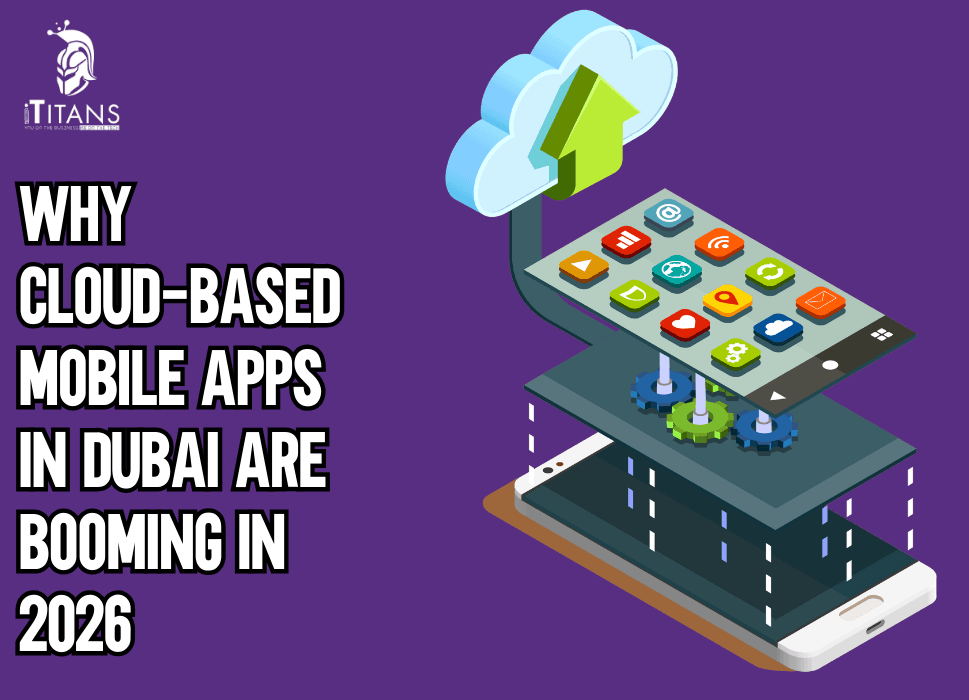
Why Cloud Based Mobile Apps Dubai Are Booming in 2026
In the last five years, cloud based mobile apps Dubai has shifted from being a technical trend to a boardroom decision. Founders are no longer debating whether to move to the cloud. They are debating how fast they can migrate without disrupting revenue, customer experience, and internal operations.
Across the UAE, startups and enterprise leaders are rethinking infrastructure because traditional app architectures are slowing them down. High hosting costs. Painful updates. Downtime during traffic spikes.
Offshore teams that ship code but leave behind technical debt. These are not theoretical risks. They are daily realities for product owners in Dubai’s competitive digital market.
The rise of cloud mobile app development Dubai is not accidental. It is a direct response to market pressure, consumer behavior, and the region’s aggressive digital transformation agenda.
If you are a CTO or founder building in Dubai today, understanding why this shift is happening is not optional. It directly impacts your product velocity, burn rate, and long-term valuation.

The Shift: From Traditional Apps to Cloud-First Architectures
Before diving into the Dubai context, let’s clarify what we are discussing.
What Are Cloud-Based Mobile Apps?
At their core, cloud-based mobile apps rely on remote cloud infrastructure for data storage, processing power, and backend services rather than depending heavily on on-device resources or on-premise servers.
When someone searches for what are cloud based mobile apps in Dubai, they are typically trying to understand this shift in architecture.
Instead of hosting your backend on a physical server in your office or a single rented machine, your app connects to distributed cloud environments. This enables real-time updates, elastic server capacity, centralized data management, and faster deployment cycles.
For businesses exploring cloud apps for businesses in Dubai, this architecture means fewer infrastructure headaches and more focus on product growth.
Why Traditional Mobile Architectures Are Breaking Down
In the past, many businesses built apps with rigid backend systems. Updates required manual deployments. Scaling meant provisioning new servers weeks in advance. If traffic doubled overnight due to a marketing campaign or seasonal surge, systems crashed.
In Dubai’s fast-moving market, this rigidity is fatal.
Retail brands run flash sales that generate unpredictable spikes. Fintech startups must comply with strict regulatory frameworks while maintaining performance. Tourism platforms face seasonal demand surges. A static backend simply cannot keep up.
This is where the comparison of cloud vs native mobile apps Dubai comparison becomes relevant. It is not about abandoning native mobile development. It is about where the processing power and business logic live.
Smart founders are keeping native performance on the device while moving heavy workloads to the cloud.
Why Dubai Is the Perfect Environment for Cloud Adoption
Government-Led Digital Acceleration
Dubai is not passively adopting technology. It is actively engineering a digital economy. From smart city initiatives to paperless government systems, the infrastructure push creates a strong foundation for mobile cloud services.
When founders research mobile app trends in Dubai, they quickly realize that the ecosystem encourages rapid digital deployment. Regulatory frameworks are modernizing. Payment systems are evolving. Enterprise digitization is accelerating.
Cloud architecture aligns perfectly with this ecosystem because it enables faster integrations, API-based services, and centralized data management.
Startup Culture and Speed-to-Market Pressure
Dubai’s startup environment is competitive and well-funded. Venture-backed startups cannot afford 12-month backend rebuilds or bloated infrastructure costs.
Many founders ask: why use cloud mobile apps for UAE startups? The answer is simple. Cash runway.
Cloud infrastructure allows early-stage companies to:
- Avoid heavy upfront hardware investment
- Pay for usage instead of fixed infrastructure
- Deploy updates rapidly without downtime
- Scale server capacity based on real demand
When capital efficiency becomes critical, cloud-based models win.
The Real Business Drivers Behind the Boom
Technology alone does not create momentum. Business pressure does.
Cost Control Without Compromising Growth
One of the most frequent leadership concerns is hidden cost overruns. Traditional infrastructure often looks cheaper at the beginning. A server is purchased. Hosting is set up. Everything seems stable.
Then growth happens.
More users require more hardware. More features require more backend resources. Maintenance costs increase. Security compliance demands external audits.
This is why decision-makers investigate benefits of cloud based apps UAE with serious intent. Cloud environments shift costs from capital expenditure to operational expenditure. Businesses pay for what they consume. Scaling up or down becomes a financial decision, not a logistical nightmare.
When founders explore benefits of migrating mobile apps to cloud Dubai, they are often reacting to financial unpredictability in legacy systems.
Faster Product Iteration Cycles
Missed deadlines are one of the most expensive mistakes in product development. Delays destroy user trust and investor confidence.
Cloud-based architectures reduce friction in deployment pipelines. CI/CD workflows, automated testing, and centralized backend management enable faster release cycles.
If your offshore team delivers poor code, refactoring in a cloud-first environment is less disruptive than rebuilding monolithic on-premise systems.
This is one reason cloud mobile app development Dubai is accelerating among CTOs who previously struggled with fragmented tech stacks.
Industry-Specific Acceleration in Dubai
eCommerce and Retail
Dubai’s eCommerce sector thrives on high-traffic events, seasonal campaigns, and aggressive customer acquisition strategies.
When business leaders research cloud apps for businesses in Dubai, retail platforms are often at the forefront. Flash sales require elastic backend systems. Real-time inventory updates must sync across multiple sales channels. Payment gateways must process transactions without latency.
Cloud backends allow horizontal scaling during demand spikes, ensuring the user experience remains stable.
Fintech and Digital Payments
The fintech landscape in the UAE demands performance and compliance. Payment processing, fraud detection, and user authentication require cloud-powered infrastructure capable of real-time analysis.
As startups examine enterprise cloud mobile apps UAE, fintech becomes a core case study. High availability, disaster recovery, and encrypted storage are easier to implement in mature cloud environments than in isolated server setups.
Healthcare and Telemedicine
Healthcare apps in Dubai are expanding, especially post-pandemic. Teleconsultation platforms require secure data storage and reliable video infrastructure.
When founders evaluate how cloud apps improve mobile performance UAE, they are also considering compliance with data residency requirements and high-performance video streaming capabilities.
Cloud providers offer regional hosting options that help meet regulatory needs while maintaining speed.
Technical Advantages That Drive Executive Decisions
Centralized Data and Real-Time Synchronization
Cloud backends allow real-time updates across devices. A change in pricing, inventory, or user data reflects instantly across all sessions.
This matters for businesses managing multi-branch operations or cross-border transactions.
Integration with Cloud APIs and Microservices
Modern products rarely exist in isolation. Payment processors, analytics platforms, CRM systems, and marketing automation tools all connect via APIs.
A cloud backend simplifies integration with these systems. When companies explore cloud app security challenges in Dubai market, they are also assessing how these integrations affect data governance and risk management.
Reliability and Disaster Recovery
Downtime is expensive. Every minute of service disruption can mean lost revenue and damaged reputation.
Cloud environments distribute workloads across multiple data centers. This reduces single points of failure and supports business continuity planning. For founders operating in a city that prides itself on operational excellence, this reliability is not optional.
The Hidden Risks Founders Are Trying to Avoid
Behind every infrastructure decision is a story of something that went wrong.
In Dubai’s fast-growth environment, many founders have already experienced failed builds, underperforming offshore teams, or backend systems that could not handle scale. The move toward cloud based mobile apps Dubai is often less about ambition and more about prevention.
The Offshore Development Trap
It usually starts with cost savings. A remote team promises to build your app at a fraction of the local price. Timelines look aggressive. Everything feels efficient.
Then the cracks appear.
Communication delays stretch release cycles. Documentation is incomplete. Security standards are unclear. Backend architecture decisions are made without long-term thinking. When traffic increases, performance degrades. Refactoring becomes expensive.
For founders who begin searching for how to choose cloud app development services in Dubai, this history shapes their priorities. They are no longer just looking for developers. They are looking for architecture accountability.
Cloud-first systems make it easier to audit infrastructure, track performance metrics, and implement standardized DevOps pipelines. When managed correctly, they reduce dependency on individual developers and increase transparency across the tech stack.
Technical Debt from Monolithic Backends
Traditional monolithic architectures often become rigid over time. New features require changes across multiple modules. Testing cycles expand. Deployment windows grow longer.
In contrast, cloud-native approaches encourage modular backend services. Microservices, serverless functions, and distributed databases allow teams to iterate without rewriting the entire system.
When CTOs compare cloud vs native mobile apps Dubai comparison, they are often really comparing flexibility versus fragility.
A cloud backend does not automatically solve architectural mistakes, but it creates a structure where improvement is possible without total rebuilds.

The Performance Imperative in a Hyper-Competitive Market
Dubai consumers are accustomed to speed. Same-day delivery. Instant booking confirmations. Immediate payment processing.
An app that loads slowly or crashes under traffic pressure is abandoned within seconds.
Elastic Infrastructure for Unpredictable Growth
Growth in Dubai can be explosive. A successful influencer campaign, a Ramadan promotion, or a government partnership can multiply user traffic overnight.
Companies investigating how cloud apps improve mobile performance UAE want one thing: stability under pressure.
Cloud environments allow automatic resource allocation based on demand. When user activity spikes, servers expand capacity. When traffic drops, costs reduce. This elasticity protects both performance and margins.
Without it, businesses must over-provision infrastructure just in case, which leads to wasted capital.
Real-Time Data Processing and Analytics
Modern mobile apps rely on real-time insights. Personalized offers. Fraud detection. Dynamic pricing. User behavior tracking.
Cloud platforms enable high-speed data processing pipelines that feed analytics dashboards and AI models. For founders building fintech, logistics, or marketplace apps, this capability directly affects revenue optimization.
When business leaders search for enterprise cloud mobile apps UAE, they are often evaluating whether their current infrastructure can support advanced analytics without collapsing under data load.
Security, Compliance, and the Dubai Advantage
Security concerns frequently surface when discussing cloud systems. The assumption is that moving data to the cloud increases exposure.
In reality, the opposite is often true.
Security Standards That Outpace On-Premise Systems
Reputable cloud providers invest billions into cybersecurity infrastructure. Encryption protocols, threat detection systems, automated monitoring, and compliance certifications are standard.
When executives research cloud app security challenges in Dubai market, they are usually weighing data residency requirements, regulatory compliance, and access control policies.
Dubai’s regulatory environment encourages digital growth while maintaining clear compliance standards. Cloud environments can be configured to meet regional data residency requirements, helping businesses maintain control while benefiting from distributed infrastructure.
Disaster Recovery and Business Continuity
On-premise systems often lack comprehensive disaster recovery frameworks. A single hardware failure can disrupt operations for hours or days.
Cloud platforms distribute workloads across multiple geographic regions. Automated backups, failover systems, and redundancy protocols ensure continuity even during unexpected outages.
For founders managing investor expectations and enterprise contracts, downtime is not just a technical issue. It is a credibility issue.
Cost Structures That Make Strategic Sense
Infrastructure decisions are rarely purely technical. They are financial strategies.
Operational Expenditure vs Capital Expenditure
Traditional server setups require upfront hardware investment. Maintenance costs accumulate. Upgrades demand additional capital.
Cloud models convert these heavy initial costs into operational expenses. Usage-based billing provides clearer forecasting. For CFOs and founders managing burn rates, this visibility matters.
When startups search for how much does cloud mobile app development cost in Dubai, they are typically balancing development investment against long-term infrastructure savings.
The answer depends on app complexity, integrations, compliance requirements, and user scale. However, cloud-based systems often reduce hidden maintenance costs that accumulate in traditional architectures.
Resource Efficiency and Team Productivity
Cloud platforms streamline backend management. DevOps automation reduces manual deployment errors. Monitoring dashboards provide real-time insights into system performance.
This efficiency translates into smaller backend teams, faster debugging cycles, and fewer emergency fixes.
For founders who previously faced poor code quality or unstable builds, the shift toward cloud-first development becomes a risk mitigation strategy rather than a trend-following move.
Sector-Wide Momentum: Who Is Driving the Demand?
The boom in cloud based mobile apps Dubai is not limited to one industry. It spans multiple verticals, each with unique pressures.
Logistics and Delivery Platforms
Dubai’s logistics ecosystem supports retail, hospitality, and cross-border trade. Delivery apps require route optimization, real-time tracking, and dynamic dispatch systems.
Cloud infrastructure supports these complex operations without overwhelming on-device resources.
Tourism and Hospitality
Hotel booking apps, travel platforms, and event management systems must handle international traffic. Seasonal demand surges require backend flexibility.
Cloud systems provide global content delivery networks, reducing latency for users accessing apps from different regions.
Real Estate and Property Platforms
Dubai’s property market operates at high transaction values and fast-moving timelines. Mobile apps enable property browsing, digital documentation, and appointment scheduling.
When leaders explore best cloud mobile development companies in Dubai, real estate tech platforms often represent large-scale projects requiring high-performance cloud backends.
The Talent and Infrastructure Ecosystem in Dubai
Dubai’s technology ecosystem has matured significantly. Access to cloud-certified engineers, DevOps specialists, and security professionals is expanding.
The demand for cloud mobile app development Dubai services is increasing not just because of global trends but because local enterprises now expect cloud-ready architecture as a baseline.
Founders are no longer asking whether their app should integrate with cloud services. They are asking how to architect it correctly from day one.
Mistakes at this stage can lock businesses into expensive rebuild cycles later.
Strategic Architecture Decisions: What Smart CTOs Are Doing Differently
By now, it’s clear that the rise of cloud based mobile apps Dubai is not fueled by hype. It is driven by founders who are tired of rebuilding unstable systems and explaining delays to investors.
But the companies that win in this environment are not simply “moving to the cloud.” They are rethinking architecture from the ground up.
Cloud-First from Day One vs Painful Migration Later
There are two types of businesses in Dubai right now.
The first builds quickly using whatever backend is easiest. Growth comes. Technical debt accumulates. Eventually, they begin searching for benefits of migrating mobile apps to cloud Dubai because performance issues and infrastructure costs are spiraling.
The second group designs cloud-first from the start. They align backend services, storage, and APIs with long-term growth assumptions. They think about DevOps pipelines, monitoring tools, and security policies before writing the first line of production code.
The difference in outcomes is dramatic.
Migrating later is possible, but it is expensive. Data restructuring, API refactoring, and downtime risks increase project complexity. Founders who start with a cloud-native mindset avoid these setbacks.
Microservices, Serverless, and Modular Thinking
Modern cloud architecture in Dubai increasingly relies on modular backend components rather than single monolithic systems.
Microservices allow teams to isolate business functions. Payments, authentication, notifications, and analytics operate independently. When one module requires updates, it does not compromise the entire system.
Serverless computing further reduces infrastructure management. Instead of provisioning full-time servers, businesses execute code in response to events. This lowers idle resource costs and increases deployment flexibility.
When CTOs evaluate enterprise cloud mobile apps UAE, they are often assessing whether their internal teams can manage this level of architectural sophistication or whether external partners are required.
Cloud vs Native: Clearing the Confusion
One of the most common misconceptions arises when executives research cloud vs native mobile apps Dubai comparison.
Cloud-based does not mean abandoning native app performance.
Native apps still run on iOS or Android, delivering device-level responsiveness. The cloud manages backend processes such as data storage, authentication, push notifications, and analytics.
The most successful mobile products in Dubai combine both:
- Native front-end for smooth user experience
- Cloud backend for performance stability and growth management
This hybrid strategy allows founders to protect app speed while gaining the operational advantages of distributed infrastructure.
Avoiding Common Mistakes in Cloud Adoption
Even though the demand for cloud mobile app development Dubai is accelerating, implementation mistakes still occur.
Choosing Vendors Based Only on Cost
Cheap development contracts often result in fragmented architecture and undocumented backend logic. Rebuilding these systems later is significantly more expensive than investing correctly from the start.
Ignoring DevOps and Monitoring
Cloud infrastructure without monitoring tools is like driving without a dashboard. Performance metrics, server load indicators, and security alerts must be configured early.
Overcomplicating Architecture Too Soon
While modular systems are powerful, overengineering early-stage products can waste resources. The key is balanced architecture aligned with realistic growth projections.
Founders who understand this balance are better positioned to compete.

The Long-Term Business Impact
The boom in cloud based mobile apps Dubai reflects a deeper shift in how companies think about technology.
Mobile apps are no longer marketing extensions. They are core revenue engines. They process transactions, manage logistics, store sensitive data, and drive user engagement.
Infrastructure decisions now influence:
- Customer retention rates
- Operational efficiency
- Security compliance
- Investor confidence
- Exit valuation
In Dubai’s rapidly evolving market, companies that hesitate risk being outpaced by competitors who deploy faster, iterate quicker, and maintain performance stability during demand spikes.
Work with iTitans to Build High-Performance Cloud Mobile Apps
At iTitans, we design and build cloud-first mobile applications that help Dubai businesses reduce infrastructure risk, improve performance under pressure, and launch faster without technical debt slowing them down.
Contact us today to discuss your cloud mobile app strategy.
FAQs
1. Why are startups in Dubai moving from traditional hosting to cloud-based mobile apps?
Startups are shifting to cloud-based systems to reduce upfront infrastructure costs, improve deployment speed, and handle unpredictable traffic growth without service disruption.
2. Do cloud-based mobile apps reduce operational costs for UAE businesses?
Yes, cloud models convert heavy capital expenses into usage-based operational costs, helping businesses control burn rate and avoid over-provisioned servers.
3. How do cloud mobile apps handle sudden traffic spikes during sales or events in Dubai?
Cloud infrastructure automatically allocates additional computing resources during high-demand periods, preventing crashes and maintaining performance stability.
4. Are cloud-based mobile apps compliant with UAE data regulations?
They can be fully compliant when configured with proper data residency settings, encryption standards, and access control policies aligned with UAE regulatory requirements.
5. What risks should founders consider before migrating an existing app to the cloud?
Founders should assess data migration complexity, integration dependencies, downtime risks, and whether the current codebase can support modular cloud architecture.
6. Is cloud architecture suitable for fintech and payment apps in Dubai?
Yes, cloud environments support real-time processing, advanced encryption, and distributed reliability, making them ideal for fintech and high-transaction applications.
7. How long does it take to build a cloud-based mobile app in Dubai?
Development timelines vary based on complexity, integrations, and compliance requirements, but cloud-native architectures often reduce long-term maintenance delays.
8. What makes a cloud app development partner reliable in Dubai?
A reliable partner demonstrates architectural expertise, transparent communication, DevOps maturity, and a clear long-term support strategy beyond initial deployment.