
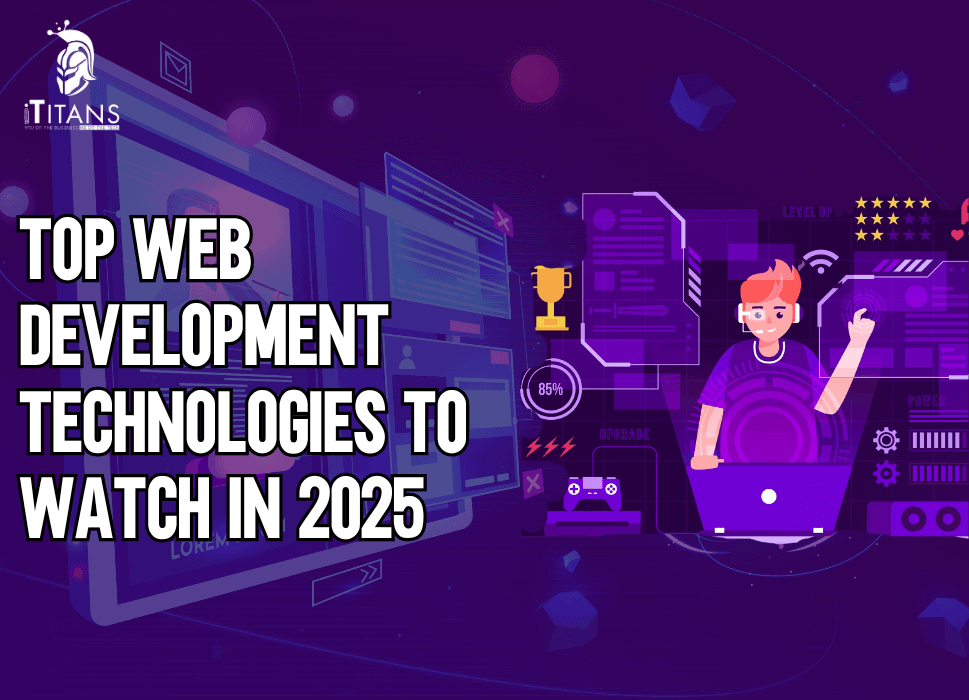
Top Web Development Technologies to Watch in 2025
The web isn’t what it was five years ago, and it won’t stay the same five years from now either. If you’re building websites, apps, or digital platforms, keeping up with the latest web technologies isn’t optional, it’s necessary.
Clients want speed, security, and smooth experiences. Developers want flexibility, community support, and tools that don’t break with every browser update. And users? They don’t care about what’s under the hood. They just want things to work fast.
That’s why 2025 is shaping up to be a defining year for web development. Some frameworks are evolving. Others are fading. And new players are entering with smart features built for today’s users.
In this guide, we’ll walk you through the top web development technologies you should watch, and maybe adopt, this year. Whether you’re running an agency, freelancing, or managing an in-house tech team, these tools and platforms will likely shape how you build in 2025.

Next.js 14 — Moving Beyond Traditional React
If you’re in web development, chances are you’ve worked with React. But 2025 isn’t just about React itself, it’s about how React is being used differently. And that’s where Next.js 14 stands out.
This framework has become the go-to for server-side rendering, image optimization, and routing that just works. Version 14 makes it even smoother to build full-stack apps without jumping between environments.
Why it matters in 2025:
- Enhanced server components reduce page size and load time.
- It simplifies building dynamic, SEO-friendly apps.
- Developers can now handle frontend and backend logic in one project.
If you’re building anything from eCommerce to SaaS dashboards, Next.js is no longer a nice-to-have—it’s becoming the default.
Astro — The Rise of the “Islands” Architecture
Astro has been gaining serious attention. Its unique selling point? You can build fast websites with zero JavaScript by default.
It ships only what’s needed to the browser. Instead of sending down a massive bundle, Astro breaks pages into islands, only interactive parts load scripts, while the rest stays static. That means lightning-fast load times.
Why Astro deserves your attention in 2025:
- It supports multiple frameworks (React, Vue, Svelte, Solid).
- Perfect for content-heavy sites like blogs, marketing pages, and documentation.
- Built-in MDX support means developers can mix markdown and JSX.
With SEO and performance becoming top priorities, Astro solves problems without needing workarounds.
HTMX — The Quiet Revolution in Frontend Development
Not every project needs React or Vue. Sometimes you want something simpler, lighter, and easier to maintain.
Enter HTMX, a JavaScript library that lets you build dynamic interfaces using plain HTML. It communicates with the server using attributes, so you can create interactive UIs without writing JavaScript, especially for custom website development.
Why HTMX is picking up in 2025:
- No complex build tools required
- Works perfectly with traditional server-side frameworks like Django, Laravel, Flask, or Rails
- Reduces frontend bloat for smaller projects
HTMX is perfect for apps that need interactivity but don’t justify a full frontend framework. Think dashboards, admin panels, forms, or internal tools.
SvelteKit — Simplicity Meets Speed
Svelte isn’t new, but SvelteKit, the official framework built around it, is making real progress in 2025.
Unlike React or Vue, Svelte compiles your code at build time. There’s no virtual DOM. Instead, the app runs with actual DOM updates, which makes it faster and cleaner.
Why developers are moving to SvelteKit:
- Smaller bundles and faster initial loads
- Cleaner syntax, especially for new devs
- Great integration with APIs and TypeScript
SvelteKit also makes routing and SSR easy. If you want a modern frontend without the overhead of other ecosystems, SvelteKit is becoming a serious contender.
WebAssembly (WASM) — Power Beyond JavaScript
WebAssembly isn’t just for gaming or high-performance apps anymore. In 2025, WASM is entering more mainstream web development spaces.
Imagine running Python, Rust, or even C++ code in the browser, securely and at near-native speed. That’s what WebAssembly makes possible.
Why WebAssembly is growing in 2025:
- More frameworks support WASM out of the box.
- It allows computation-heavy features (e.g., 3D, image editing, finance calculators) in-browser.
- Secure and sandboxed by default.
Big names like Figma, AutoCAD, and Photoshop’s online versions use WASM. In 2025, you’ll see it integrated into more SaaS and enterprise tools.
Bun — A New Era for JavaScript Runtimes
Node.js ruled backend JavaScript for over a decade. But in 2025, Bun is making serious waves as a faster alternative that also handles bundling and package management.
Built in Zig, Bun runs JavaScript and TypeScript with blazing speed and far fewer dependencies.
What makes Bun exciting:
- Replaces multiple tools (Node, npm, Webpack, Babel)
- Built-in TypeScript support
- Faster installs and execution
For developers tired of setting up 10 tools just to run a project, Bun simplifies the process without sacrificing power.

Qwik — Framework Built for Instant Loading
Qwik is designed with one goal: fast startup time. Its trick? It doesn’t load JavaScript until it’s actually needed. This is known as resumability.
So instead of hydrating the page after load, Qwik resumes where the server left off. It’s like giving your page a head start without slowing down the browser.
Why Qwik is different:
- Ultra-fast initial load, even on slow devices
- Built with SEO and performance in mind
- Works well for content-heavy websites
As more users access websites from low-end phones or slow networks, Qwik gives developers the tools to meet those challenges head-on.
Node.js vs Deno — The Backend Battle Continues
Node.js has been the backbone of JavaScript-based backend development for over a decade. But in 2025, Deno is gaining ground fast.
Built by the creator of Node.js, Deno fixes many of the pain points developers have lived with for years: better security, TypeScript support out of the box, and a simpler permission model.
Why Deno is rising in 2025:
- Native TypeScript support, no setup required
- No need for package managers (uses URLs for modules)
- Secure by default (access to file system/network must be granted explicitly)
Node.js is still strong, but Deno is becoming a smart pick for projects that want a cleaner start, better security controls, and fewer moving parts.
Laravel 11 — PHP Is Not Dead
Despite the memes, PHP is still powering over 70% of the web. And Laravel continues to be its shining star.
Laravel 11 introduces smoother routing, enhanced job handling, and simplified testing, all while maintaining readability and power.
Why Laravel still matters in 2025:
- Great for fast MVPs and full-scale apps
- Massive ecosystem: from APIs to payment integration
- Blade templates and Livewire make frontend work easier
For developers building SaaS, internal dashboards, or content-heavy sites, Laravel remains a go-to tool, especially when paired with Vue or Inertia.js.
Headless CMS — The Smart Way to Manage Content
Traditional CMS platforms like WordPress are still in use, but in 2025, developers and businesses are going headless more than ever.
What does that mean? You use a CMS just for managing content, then pull that content into your app via API. It gives developers total control over the frontend and lets marketers manage content without breaking layouts.
Top Headless CMS Platforms in 2025:
- Strapi: Open-source, self-hosted, customizable
- Sanity: Real-time collaboration and structured content models
- Contentful: Cloud-native, scalable, used by major brands
- Payload CMS: Built on Node.js, modern UI, self-hostable
Why it works: You can pair any headless CMS with a frontend built in React, Next.js, Astro, or even mobile apps. This flexibility makes it ideal for brands managing multiple channels.
Supabase — The Open-Source Firebase Alternative
Firebase is great, but some developers want more control and fewer limits.
Enter Supabase, the open-source alternative that uses PostgreSQL under the hood but adds real-time support, authentication, storage, and functions, all out of the box.
Why Supabase is gaining traction in 2025:
- Self-hosted or managed options
- Realtime database and auth without vendor lock-in
- Built-in API layer over your Postgres DB
It’s perfect for startups, internal tools, or apps that need real-time features without Google’s ecosystem.
Vite — The Dev Server That Actually Feels Fast
Waiting for a dev server to rebuild is frustrating. That’s why Vite has taken over the frontend tooling world in 2025.
Pronounced “veet,” Vite offers instant startup and lightning-fast updates during development. It works great with Vue, React, Svelte, and more.
Why everyone’s moving to Vite:
- Hot Module Replacement (HMR) works seamlessly
- Uses native ES modules, no need for Webpack complexity
- Built-in support for TypeScript and JSX
Even established projects are switching from older bundlers to Vite because it simply makes development faster and smoother.
Playwright — A New Standard for Web Testing
You can’t ship software without testing, and Playwright is becoming the go-to tool in 2025 for automated browser testing.
Created by Microsoft, it supports multi-browser, multi-device testing with powerful APIs and headless runs.
Why it’s better than Selenium or Cypress:
- Can test Chromium, Firefox, and WebKit
- Automates across mobile and desktop
- Handles flaky tests and network conditions gracefully
For QA engineers and developers alike, Playwright simplifies end-to-end testing while giving full control over the environment.

Real-World Stack Examples (2025)
So, what are companies actually using in 2025? Let’s break down a few real-world stacks:
Example 1: Startup SaaS Platform
- Frontend: SvelteKit + Tailwind CSS
- Backend: Supabase
- Auth: Supabase Auth
- CMS: Sanity
- Deploy: Vercel
Why: Speed, cost-efficiency, and easy real-time features.
Example 2: eCommerce Website
- Frontend: Next.js 14 + Shopify Storefront API
- Backend: Node.js + Express
- Payments: Stripe
- CMS: Payload CMS
- Deploy: Netlify
Why: SEO benefits, flexible backend, and modern design.
Example 3: Corporate Blog & Docs
- Frontend: Astro
- CMS: Contentful
- Search: Algolia
- Analytics: Plausible
Why: Speed, control, and clean user experience.
Staying Lean Without Losing Power
One thing all these tech stacks have in common? They don’t overcomplicate. Developers in 2025 are choosing tools that help them move fast, stay flexible, and avoid tech debt.
That means:
- Picking frameworks with clear documentation and active communities
- Avoiding bloated frontend stacks unless absolutely necessary
- Using backend tools that scale but don’t lock you in
Whether you’re building solo or part of a 50-person team, the goal is the same, build something that works, runs fast, and is easy to improve over time.
How AI Is Influencing Web Development in 2025
AI isn’t replacing developers. But it is changing how they work.
In 2025, AI tools are deeply woven into the development workflow, from writing boilerplate code to reviewing pull requests, generating test cases, and even designing UI components.
Key AI tools gaining traction:
- GitHub Copilot X – Speeds up coding with context-aware suggestions
- Cursor IDE – A dev environment where AI co-pilots your code edits
- Builder.io with AI – Generates HTML/CSS components with plain text prompts
- Locofy.ai – Converts Figma designs into frontend code instantly
These tools don’t eliminate the need for developers. Instead, they help teams move faster, reduce repetitive work, and focus on solving real problems.
Web3 and Decentralized Apps — Still Early, Still Evolving
Web3 promised a lot. In 2025, it’s not taking over the web, but it’s carving out specific spaces where decentralization makes sense.
Where Web3 tech is gaining momentum:
- Decentralized identity systems (DIDs)
- NFT-based memberships or gated content
- Smart contracts for escrow, loyalty programs, or licensing
- Blockchain-backed databases for audit trails
Ethereum, Solana, and Polygon continue to evolve, and frameworks like Thirdweb, Moralis, and RainbowKit are helping developers integrate Web3 features more easily.
For most businesses, Web3 isn’t essential yet, but it’s worth exploring if your product involves ownership, royalties, or decentralized trust.

Accessibility Isn’t Optional Anymore
2025 is the year accessibility stopped being an afterthought. With lawsuits on the rise and users more vocal than ever, making your web apps usable for everyone isn’t just nice, it’s expected.
What developers are prioritizing:
- Keyboard navigation
- Screen reader support
- Color contrast and font sizing
- Skip links and semantic HTML
Frameworks like Next.js, SvelteKit, and Astro make it easier to bake in accessibility from the start. And tools like axe DevTools and Lighthouse help catch issues early.
Making your site accessible doesn’t just help a small group, it improves UX for everyone.
Predictions for the Next 3 Years
The web keeps evolving fast—but some clear trends are already shaping what’s next. Here’s what to expect from 2025 to 2027:
1. The Line Between Frontend and Backend Will Keep Blurring
With tools like Next.js, Remix, and Qwik, developers can handle routing, server logic, and rendering in one project. Full-stack roles are the new standard.
2. More Devs Will Build With Fewer Tools
Instead of dozens of dependencies, modern stacks will rely on frameworks that come ready to go out of the box. Think Vite, SvelteKit, Astro, Supabase.
3. AI Will Be Built Into the Stack
Expect more integrations like:
- Autocomplete from Copilot
- AI-generated tests and documentation
- UI scaffolding with plain prompts
AI won’t replace devs, but it’ll become a standard part of every IDE.
4. Serverless Will Win Over Traditional Hosting
With Vercel, Netlify, AWS Lambda, and Cloudflare Workers, developers are skipping backend servers altogether for many apps. It’s easier, cheaper, and scales automatically.
5. Privacy-First Analytics Will Replace Big Trackers
Tools like Plausible and Umami are gaining traction because they respect user privacy while offering clean, actionable data.
What Businesses Should Do Right Now
If you run a tech startup, SaaS platform, or even an eCommerce site, you can’t afford to ignore these shifts. Here’s what you should start doing:
1. Audit Your Current Stack
Is your tech helping you move fast, or slowing you down? Look for ways to simplify without cutting performance.
Ask yourself:
- Is our site slow on mobile?
- Is the codebase bloated with outdated packages?
- Can our team easily manage updates and features?
2. Talk to Your Developers
Ask what tools they wish they could use. Often, your devs already know which frameworks could improve speed, quality, and morale, they just need permission to explore them.
3. Start With One Project
You don’t have to rebuild everything overnight. Choose a small project (landing page, internal tool, blog) and try a modern stack like Astro and Sanity or SvelteKit and Supabase.
See how much faster it is to build and how much easier it is to maintain.
4. Focus on the User Experience
You can have the fanciest tech stack, but if your users struggle to navigate your site or wait too long for pages to load, you’re losing business.
Use Lighthouse or PageSpeed Insights. Look at bounce rates. Fix what hurts most.
5. Hire or Train With 2025 in Mind
Whether you’re growing your dev team or outsourcing projects, work with people who understand how the web is evolving right now, not five years ago.
Ask candidates about Vite, serverless architecture, or their experience with SvelteKit. These aren’t niche skills anymore, they’re part of the modern toolkit.
The Future of the Web Is Already Here
You don’t need to chase every shiny new framework. But you also can’t afford to stay stuck with slow, outdated tools that cost you time, users, and talent.
The best teams in 2025 are doing one thing right: They’re paying attention. They test, adapt, and ship with tools that match their goals, not buzzwords.
Whether you’re a solo dev, a CTO, or a business owner, the next few years will reward those who choose smart, lean, and future-friendly technologies.
At iTitans, we help companies build modern websites and apps using stacks that work now and tomorrow. From Astro to Svelte, Next.js to Supabase, we know what delivers.
Let’s build something your users will love. Contact us today.

FAQs
1. What are the top web development frameworks to learn in 2025?
Next.js 14, SvelteKit, and Astro are among the top frameworks in 2025, offering speed, flexibility, and better performance for modern web apps.
2. Is WebAssembly still relevant for developers in 2025?
Yes, WebAssembly is gaining traction in 2025 for enabling high-performance features like 3D rendering, image editing, and complex calculations directly in the browser.
3. Should I switch from Node.js to Deno in 2025?
Deno offers built-in TypeScript support and better security, making it a smart choice for new projects, while Node.js remains reliable for legacy and large-scale apps.
4. How is AI changing web development in 2025?
AI tools now assist with coding, testing, and UI generation, helping developers build faster and reduce repetitive tasks without replacing human creativity.
Related Posts