
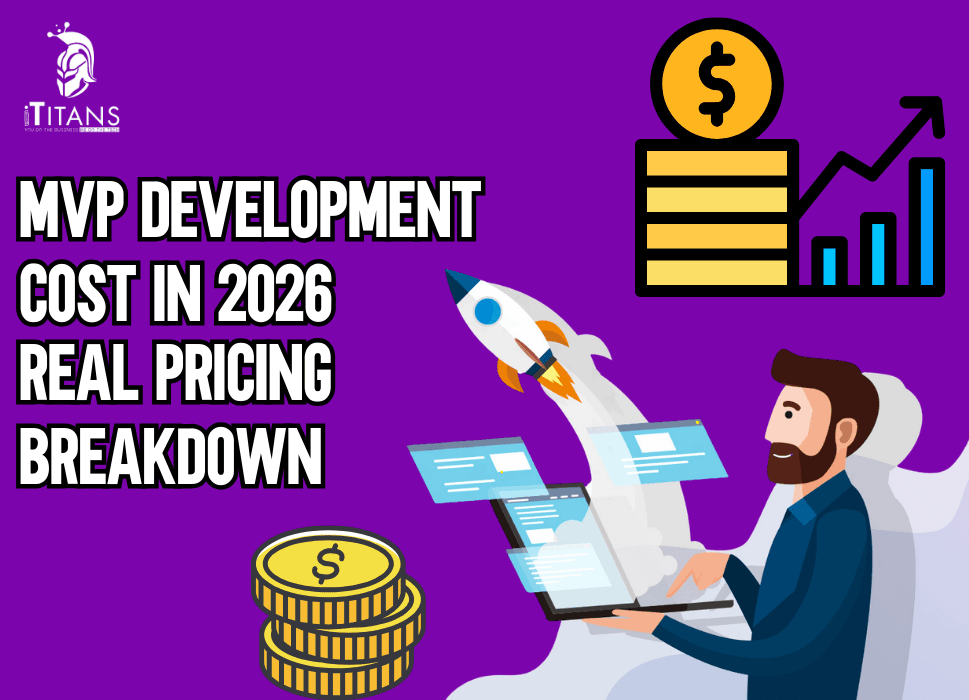
MVP Development Cost in 2026 | Real Pricing Breakdown
In today’s fast-moving tech world, launching a product without testing the market is risky. That’s why understanding MVP Development Cost in 2026 is more important than ever. Whether you’re a startup founder, enterprise leader, or digital entrepreneur, knowing how much it costs to build a Minimum Viable Product (MVP) can save you time, money, and stress.
The global startup ecosystem is growing rapidly. According to recent startup reports, there are over 150 million startups worldwide, with thousands launching every year. However, nearly 90% of startups fail, and one of the top reasons is building a product without proper validation. That’s where MVP development becomes crucial. Let’s break down the real pricing, hidden expenses, cost factors, and how to make smarter financial decisions in 2026.
What is an MVP and Why It Matters in 2026?
An MVP, or Minimum Viable Product, is the simplest version of your product that includes only the core features needed to solve a specific problem. It is not a half-finished app. Instead, it is a focused product built to test assumptions, gather user feedback, and validate business ideas.
In 2026, the demand for MVP development services has increased significantly. Businesses are no longer spending millions upfront on full-scale platforms. Instead, they prefer lean product development to test the waters before scaling.
Cloud computing, AI integration, automation tools, and no-code technologies have influenced how MVPs are built today. However, even with advanced tools, development costs still vary widely depending on complexity and location.
Average MVP Development Cost in 2026
Now let’s address the big question: What is the MVP Development Cost in 2026? The average cost typically falls between:
- $15,000 to $30,000 for a simple MVP
- $30,000 to $70,000 for a moderately complex MVP
- $70,000 to $150,000+ for complex MVPs with advanced features
These numbers depend on several variables like development approach, feature set, UI/UX design, and team location.
In the United States, hourly development rates in 2026 range between $80 to $180 per hour. In comparison, offshore development teams may charge between $25 to $70 per hour, depending on expertise and region.
For example:
- A basic web app MVP with login, dashboard, and basic database integration may cost around $25,000.
- A mobile app MVP with payment integration, API connections, and admin panel may cost $50,000 or more.
NOTE: Keep in mind, these are general estimates. Every project is different.
6 Key Factors That Influence MVP Development Cost in 2026
1. Product Complexity
The more complex your idea, the higher the cost. A simple landing page with user registration is far less expensive than a marketplace platform with real-time chat, payment gateways, and AI recommendations.
Complexity depends on:
- Number of features
- Third-party integrations
- Backend infrastructure
- Data processing requirements
A SaaS product with analytics dashboards and role-based access control will naturally require more development hours.
2. Platform Choice: Web, Mobile, or Both
Choosing between web development and mobile app development significantly affects cost.
A web MVP is usually cheaper than building both iOS and Android apps. However, cross-platform frameworks like Flutter and React Native have helped reduce costs in recent years.
In 2026, many startups prefer:
- Web-first approach for B2B products
- Mobile-first approach for consumer apps
Building for multiple platforms increases development time by 30% to 60%.
3. UI/UX Design Requirements
User experience is not optional anymore. According to research, 88% of users are less likely to return to a website after a bad user experience.
Professional UI/UX designing may add $5,000 to $15,000 to your MVP budget, depending on the number of screens and interactions. However, investing in clean design improves user retention and conversion rates.
Good design is not just about looks. It directly impacts customer satisfaction and product adoption.
4. Development Team Location
Location plays a huge role in MVP development pricing.
- US-based teams: $80–$180/hour
- Western Europe: $70–$150/hour
- Eastern Europe: $40–$90/hour
- South Asia: $25–$60/hour
While offshore teams may appear cheaper, quality, communication, and project management must also be considered.
Many companies now prefer hybrid models, combining local project management with offshore technical teams to balance cost and quality.
5. Technology Stack
Your chosen technology stack influences both development time and long-term scalability.
Modern frameworks like:
- React and Next.js for web apps
- Flutter for mobile apps
- Node.js or Django for backend development
These technologies offer faster development cycles and strong community support.
AI-powered features, blockchain integration, or IoT connectivity will increase development costs significantly due to specialized expertise requirements.
6. Third-Party Integrations
Most MVPs integrate with:
- Payment gateways
- CRM systems
- Cloud storage
- Marketing automation platforms
Each integration adds development time and testing requirements. For example, integrating Stripe for payment processing may take 20–40 development hours.
Hidden Costs in MVP Development
When people talk about MVP Development Cost in 2026 | Real Pricing Breakdown, they usually focus on design, development hours, and maybe testing. But here’s the thing—those are just the visible costs. The real surprise often comes from the hidden costs that quietly increase your total budget.
In 2026, with rising developer rates, stricter data regulations, and increasing tech stack complexity, these hidden expenses can add 20% to 40% more than your initial estimate. Let’s break down what most founders don’t see coming.
Product Discovery and Market Research Gaps
Many teams skip deep research to save money. But poor validation can cost far more later. If your MVP isn’t aligned with user needs, you may need a pivot, which means redesigning and rebuilding features.
Recent startup reports show that nearly 42% of startups fail due to lack of market demand. That’s not a coding issue it’s a research gap. Investing in proper user interviews, competitor analysis, and validation testing might add upfront cost, but it prevents massive rework down the road.
Scope Creep During Development
This one’s a silent budget killer. You start with a “minimal” product, then add “just one more feature.” Before you know it, your MVP isn’t minimal anymore.
Even small feature additions can increase development cost by 10–25%. In 2026, average developer hourly rates range between $40–$150 per hour, depending on region. That extra login option or dashboard widget suddenly becomes a few thousand dollars more.
UI/UX Revisions and Redesign Cycles
Good design isn’t cheap and bad design is even more expensive. Many founders underestimate how many revisions it takes to create an intuitive interface.
If early usability testing reveals friction points, you may need to rework user flows, wireframes, and even frontend logic. Redesigning after development has started can cost 2–3 times more than getting it right during the design phase. And in competitive markets, poor UX simply isn’t an option anymore.
Third-Party Integration Fees
Your MVP likely relies on tools like payment gateways, SMS APIs, analytics platforms, or AI services. While integration may seem simple, usage fees add up fast.
For example, cloud services like AWS or Google Cloud operate on pay-as-you-go models. According to industry reports, cloud spending grew by over 20% globally in the past year. If your user base grows unexpectedly, your server bills grow too. And don’t forget API call charges they scale with traffic.
Infrastructure and DevOps Costs
Many founders think infrastructure is just “hosting.” But in 2026, infrastructure includes security layers, CI/CD pipelines, database optimization, backups, and monitoring systems.
Setting up proper DevOps can cost thousands upfront. Skipping it may seem cheaper but poor infrastructure often leads to downtime, slow performance, or data loss. Downtime alone can cost startups hundreds to thousands per hour in lost revenue and user trust.
Security and Compliance Requirements
Security is no longer optional. With stricter global regulations like GDPR, CCPA, and new 2026 data protection updates in multiple regions, compliance adds complexity.
Penetration testing, data encryption, secure authentication systems, and compliance audits all increase MVP costs. A basic security audit can range from $3,000 to $10,000 depending on product size. Ignoring this risk? That could lead to fines or reputational damage far more expensive than prevention.
Quality Assurance and Testing Overruns
Testing always takes longer than expected. Always.
Manual testing, automated testing scripts, performance testing, and bug fixing cycles extend timelines. In agile development, every new sprint can introduce unexpected bugs. QA teams typically account for 20–30% of total development time, which directly affects cost.
Skipping deep testing may reduce short-term expenses, but fixing bugs post-launch can cost up to 4–5 times more.

Post-Launch Maintenance and Support
Once your MVP goes live, you’ll need ongoing updates, bug fixes, server monitoring, and possibly feature adjustments based on user feedback. Industry averages suggest annual maintenance costs run about 15–25% of the original development cost.
Many founders don’t include this in their initial budget. That’s a big mistake.
Performance Optimization
Your MVP may work fine with 100 users. But what happens at 10,000?
Performance tuning, database indexing, caching layers, and load balancing often become necessary as traction grows. These optimizations weren’t urgent during early development but they quickly become critical when users complain about slow loading times.
In 2026, users expect sub-2-second load speeds. Anything slower and you risk losing conversions instantly.
Hiring and Communication Costs
If you’re working with remote teams or international agencies, communication gaps can slow progress. Extra meetings, clarifications, and documentation take time and time equals money.
Additionally, onboarding new developers mid-project increases ramp-up time. Even replacing one team member can delay delivery by weeks, adding unexpected payroll costs.
Technology Stack Changes Midway
Choosing the wrong tech stack can be expensive to fix.
Sometimes startups realize their initial framework won’t scale or support required integrations. Migrating to a new backend or frontend framework means rewriting code. That’s not a small tweak it can increase total costs by 30% or more.
Tech decisions made early in MVP development can impact long-term expenses significantly.
App Store and Platform Fees
If your MVP includes a mobile app, don’t forget platform fees. Apple and Google charge annual developer fees plus commission on transactions (typically around 15–30%).
These fees might not feel “hidden,” but they’re often excluded from early cost projections. Over time, transaction commissions significantly affect profitability.
Marketing and User Acquisition
Technically, marketing isn’t development but it absolutely impacts MVP cost planning.
In 2026, average customer acquisition costs (CAC) continue rising due to increased digital ad competition. If your MVP requires traction to validate success, you’ll need budget for paid ads, influencer partnerships, or content marketing.
Without user acquisition, even the best MVP doesn’t generate meaningful data.
Opportunity Cost of Delays
Every delay costs money. If your MVP launch is postponed by two months due to technical issues, you lose potential revenue and market advantage.
In fast-moving industries like AI, fintech, and SaaS, competitors can launch similar solutions quickly. The longer development drags on, the higher your opportunity cost becomes.
Scaling Beyond “Minimum”
Ironically, success creates its own hidden costs.
If your MVP gains traction faster than expected, you’ll need to scale infrastructure, expand customer support, and possibly hire additional developers. Rapid growth sounds exciting but it demands immediate investment.
Planning scalable architecture early may increase initial costs, but it prevents chaotic spending later.
MVP Development Timeline in 2026
Cost is closely tied to time.
- A simple MVP may take 2–3 months.
- A moderate MVP may require 4–6 months.
- Complex platforms can take 6–9 months.
Faster development may require larger teams, which increases expenses.
However, cutting corners to save money often leads to technical debt, which becomes more expensive to fix later.
Cost Comparison: In-House vs Outsourcing
Building an in-house team is expensive.
Hiring a full team in the US may require:
- Frontend developer: $90,000–$130,000 annually
- Backend developer: $100,000–$150,000 annually
- UI/UX designer: $75,000–$110,000 annually
- Project manager: $85,000–$120,000 annually
For early-stage startups, outsourcing MVP development services is usually more cost-effective.
Outsourcing eliminates recruitment, training, office space, and employee benefits expenses.
Industry-Specific MVP Costs
Different industries require different levels of compliance and technology.
Fintech MVP
Requires high security, encryption, and regulatory compliance. Costs often start at $70,000.
Healthcare MVP
Must comply with HIPAA and other regulations. Development can exceed $100,000.
eCommerce MVP
Usually costs between $30,000 and $80,000 depending on features like inventory management and payment integration.
SaaS MVP
Typically ranges from $40,000 to $120,000 depending on subscription management and analytics complexity.
How to Reduce MVP Development Cost in 2026
MVP development is already proposed to keep things budget friendly. However, you can still save costs by taking a few measures which are mentioned below:
- Smart budgeting does not mean compromising quality.
- Start by defining clear business goals. Avoid feature overload. Focus only on core functionality.
- Use pre-built components where possible. Open-source libraries can reduce development time.
- Adopt Agile development practices. Iterative releases help control scope and budget.
- Choose an experienced development partner who understands lean startup methodology.
Role of Digital Transformation in MVP Strategy
Digital transformation continues to shape MVP development in 2026. Businesses are integrating AI chatbots, automation tools, and data analytics into early-stage products.
According to industry research, over 70% of organizations now prioritize digital transformation initiatives. MVPs act as testing grounds for these innovations before full-scale rollout.
Investing in scalable architecture during MVP stage ensures smoother growth later.
Why Choosing the Right Development Partner Matters?
Selecting the right software development company directly affects your cost, timeline, and product quality.
A reliable partner offers:
- Transparent pricing
- Clear project roadmap
- Experienced developers
- Strong communication
- Ongoing technical support
This reduces rework and unexpected expenses.
How iTitans Helps Manage MVP Development Cost in 2026
When it comes to balancing quality and affordability, iTitans stands out as a trusted technology partner. iTitans is a full-service software development company based in the United States with a global reach.
Reliable MVP Development
With strong expertise in MVP development services, iTitans focuses on building scalable, high-performance products tailored to business goals. Their approach emphasizes lean development, user-centric design, and cost-efficient architecture.
Focus on Quality
Instead of overbuilding features, iTitans works closely with clients to identify core functionality that delivers real value. This reduces unnecessary spending while ensuring strong market validation.
Saving Costs
Additionally, their experience in mobile app development and website development allows businesses to choose the most cost-effective platform strategy.
For startups aiming to reduce MVP Development Cost in 2026 without compromising quality, partnering with an experienced team like iTitans can make a significant difference.
Future Trends Impacting MVP Development Cost
Looking ahead, several trends are shaping pricing structures:
- Artificial intelligence integration is becoming more common, increasing demand for specialized developers.
- Low-code and no-code platforms are reducing development time for simple applications.
- Cloud-native architecture is improving scalability but requires proper planning.
- Cybersecurity investment is rising due to stricter global regulations.
- As technology evolves, MVP costs may shift, but strategic planning will always remain the key factor.
MVP Development Cost in 2026
Understanding the true MVP Development Cost in 2026 helps you plan smarter and avoid financial surprises. While average costs range from $15,000 to $150,000, the final number depends on complexity, location, technology, and long-term goals.
Building an MVP is not just about coding. It’s about validating your idea, reducing risks, and preparing for scalable growth. Start lean. Focus on core features. Choose the right development partner. Invest in quality UI/UX design. Plan for maintenance. When done correctly, an MVP is not just a test product. It becomes the foundation of a successful digital business.
Ready to launch your next MVP in the market? Get in touch with iTitans and share your requirements to let us help you build mobile apps that dominate the market.
FAQs
What is the average MVP development cost in 2026?
The average MVP development cost in 2026 ranges between $15,000 and $120,000, depending on complexity, features, and development location. Simple MVPs with core functionality cost less, while AI-driven or SaaS platforms require higher budgets. Costs also vary based on the tech stack, UI/UX design quality, and integration requirements. Proper planning can help control expenses without compromising essential features.
What factors influence MVP development cost in 2026?
Several factors affect pricing, including feature complexity, design requirements, platform choice (web, iOS, Android), and development team location. Advanced technologies like AI, blockchain, or IoT increase costs significantly. Project timeline, third-party integrations, and ongoing support also impact the total investment. The clearer your scope, the more accurate your cost estimate will be.
How much does it cost to build a startup MVP?
For startups, MVP development typically costs between $20,000 and $80,000 in 2026. A basic MVP with limited features may stay within the lower range, while scalable SaaS or marketplace platforms fall on the higher end. Startups can reduce costs by focusing strictly on must-have features. Using cross-platform frameworks like Flutter or React Native also helps optimize budgets.
Does the location of the development team affect MVP pricing?
Yes, developer rates vary globally. In 2026, U.S. or Western European agencies charge between $100–$200 per hour, while Eastern Europe averages $40–$80 per hour. Asian development teams may charge $20–$50 per hour. Choosing offshore or nearshore teams can significantly reduce total MVP development costs without sacrificing quality.
How long does MVP development take in 2026?
Most MVPs take 2 to 6 months to develop, depending on project complexity. A simple web application may require 8–10 weeks, while feature-rich platforms may take longer. Faster timelines usually mean higher development costs due to larger teams or overtime work. Proper sprint planning helps balance time and budget efficiently.
How can startups reduce MVP development cost in 2026?
Startups can lower costs by prioritizing core features and avoiding unnecessary functionalities. Using ready-made templates, open-source tools, and cloud services reduces development time. Opting for cross-platform development instead of separate native apps also cuts expenses. Additionally, validating the idea with prototypes before full development minimizes costly revisions.
Is custom MVP development more expensive than using no-code tools?
Yes, custom MVP development is generally more expensive than no-code solutions. No-code platforms may cost between $1,000 and $10,000, depending on subscriptions and customization. However, custom-built MVPs offer better scalability, flexibility, and performance. For long-term growth, investing in custom development often provides higher ROI.