
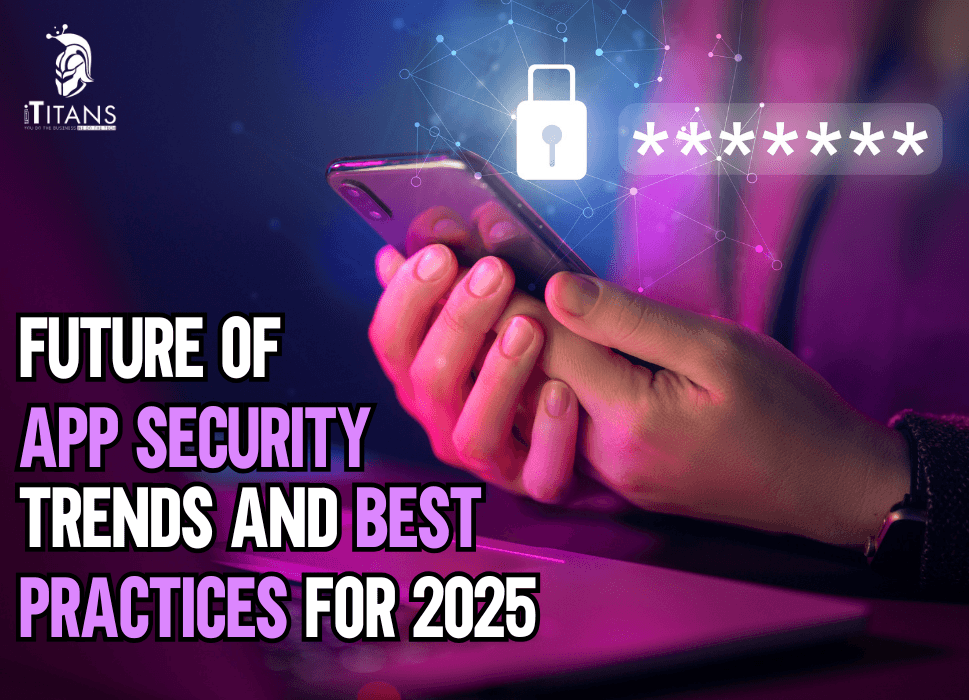
Future of App Security | Trends and Best Practices for 2025
With more than 70% of internet users surfing online via handheld devices, the security of mobile apps should not be neglected. As applications become more sophisticated and integral to daily operations, the need to protect them from cyber threats has never been more critical. The year 2025 brings with it new challenges and innovations in app security, necessitating a proactive approach to safeguard sensitive data and maintain user trust.
This comprehensive article delves into the emerging trends and best practices in application security for 2025, providing insights into how organizations can fortify their applications against evolving threats. Additionally, we will explore how iTitans, a leading software development company, is poised to assist businesses in navigating the complex landscape of app security.
Why is Mobile Application Security Important?
In today’s digital age, mobile application development have become the cornerstone of both personal convenience and business operations. From banking and healthcare to entertainment and education, mobile apps are embedded in almost every aspect of our daily lives. But with this convenience comes a major concern: security. The question “Why is mobile application security important?” isn’t just rhetorical, it’s one that businesses, developers, and users alike must understand and prioritize. Let’s explore why this topic is more vital than ever in the current cyber landscape.
Protection Against Data Breaches
Safeguarding Sensitive User Information
One of the primary reasons mobile application security is important is the protection of user data. Apps often store or access sensitive information such as names, addresses, banking details, health records, and even biometric data. If these apps are not properly secured, hackers can easily exploit vulnerabilities and access this private information.
A data breach not only compromises user trust but also exposes companies to legal and financial consequences. For example, regulatory bodies like GDPR and HIPAA impose heavy fines for the mishandling or leakage of consumer data.
Defending Business Reputation
Trust is Hard to Build and Easy to Lose
Maintaining strong mobile security helps businesses protect their brand image and proves their commitment to user safety. Reputation is everything in business. A single security lapse can ruin years of customer trust. When users hear that an app has been breached, their first instinct is to uninstall it and avoid the company altogether. Moreover, negative press can deter potential users and investors.
Compliance With Legal and Regulatory Standards
Avoiding Penalties and Ensuring Legal Protection
Another compelling reason mobile app security is critical is compliance. Global data protection regulations are becoming increasingly strict. Whether it’s GDPR in Europe, CCPA in California, or PIPEDA in Canada, these regulations mandate that companies implement strong security measures to protect consumer data.
Non-compliance can result in fines ranging from thousands to millions of dollars, not to mention the cost of litigation and damage control. Securing mobile apps helps companies stay compliant and avoid legal complications.
Preventing Unauthorized Access and Fraud
Mitigating Cyber Threats
Implementing robust app security mitigates these threats and reduces the chances of account takeovers and data manipulation. Mobile apps are constantly targeted by hackers aiming to gain unauthorized access to user accounts, especially apps related to banking, e-commerce, and social media. Without proper security protocols like multi-factor authentication (MFA), encryption, and tokenization, cybercriminals can easily intercept communications and perform malicious actions such as identity theft and financial fraud.
Ensuring App Integrity and Authenticity
Guarding Against Tampering and Reverse Engineering
A less obvious but equally important reason for securing mobile applications is to prevent tampering and reverse engineering. Hackers often dissect applications to discover vulnerabilities, inject malicious code, or redistribute fake versions of apps. App tampering not only puts users at risk but can also harm the company’s intellectual property. Security measures like code obfuscation, secure APIs, and app shielding can effectively counter these threats.
Enabling Secure Digital Transformation
Building a Safe Mobile-First World
Companies investing in secure mobile apps are better equipped to scale and adapt in a digital-first economy, without compromising safety. As more companies move toward digital transformation, the reliance on mobile apps is growing exponentially. From remote work solutions to digital payments, mobile apps are key enablers of modern business. However, a secure foundation is essential for these innovations to thrive.

Improving Customer Confidence and Retention
Peace of Mind Encourages Engagement
This confidence not only boosts user engagement but also increases retention rates—a key metric for business success. Users are becoming increasingly aware of privacy and security issues. They are more likely to use apps that reassure them of secure usage. An app with clear privacy policies, secure login mechanisms, and regular updates fosters a sense of safety.
Maintaining Competitive Advantage
Security as a Value Proposition
Offering a secure app also opens doors to B2B partnerships where data security is a non-negotiable requirement. In today’s saturated app market, security can be a strong differentiator. Businesses that market themselves as privacy-first or security-driven often win over customers who prioritize safety. It becomes a unique selling proposition (USP) that sets them apart from the competition.
Reducing Financial Losses
Proactive Security Saves Money
Proactive security significantly reduces the risk of financial disasters stemming from cyber incidents. The cost of a data breach or cyberattack can be astronomical—not just in terms of fines but also recovery efforts, customer compensation, and business downtime. Investing in preventive security measures may seem expensive, but it’s far more cost-effective in the long run.
Supporting Safe App Store Deployment
Meeting App Store Guidelines
Both Google Play and Apple’s App Store have stringent requirements for app security. Apps that fail to meet these standards are rejected or removed. A secure mobile application is more likely to be approved, remain compliant, and avoid delisting. Security readiness also speeds up deployment, updates, and user adoption.
Encouraging Developer Accountability
Shifting Security Left in the Development Cycle
Secure mobile development encourages developers to integrate security into every stage of the app lifecycle—from design and coding to testing and deployment. This proactive approach, often termed “shift-left security,” reduces vulnerabilities and makes the development process more efficient. It instills a culture of responsibility and minimizes future patchwork.

Emerging Trends in Application Security for 2025
1. The Rise of AI-Driven Threat Detection
Artificial Intelligence (AI) is revolutionizing the way we approach application security. In 2025, AI-driven threat detection systems are becoming increasingly prevalent, enabling real-time identification and mitigation of potential security breaches. These systems leverage machine learning algorithms to analyze vast amounts of data, identifying patterns and anomalies that may indicate malicious activity.
For instance, AI can detect unusual user behavior, such as multiple failed login attempts or access from unfamiliar locations, triggering immediate security protocols. This proactive approach significantly reduces the window of opportunity for cybercriminals to exploit vulnerabilities.
2. Emphasis on Zero Trust Architecture
The traditional security model of trusting entities within a network perimeter is becoming obsolete. In 2025, the Zero Trust Architecture (ZTA) model is gaining traction, operating on the principle of “never trust, always verify.” This approach requires continuous authentication and authorization of users and devices, regardless of their location within or outside the network.
Implementing ZTA involves micro-segmentation of networks, strict access controls, and continuous monitoring, ensuring that only authenticated users can access specific resources. This model significantly reduces the risk of lateral movement by attackers within a network.
3. Integration of DevSecOps Practices
DevSecOps, the integration of security practices into the DevOps workflow, is becoming a standard in 2025. This approach ensures that security is considered at every stage of the software development lifecycle, from design to deployment.
By incorporating automated security testing tools, such as Static Application Security Testing (SAST) and Dynamic Application Security Testing (DAST), developers can identify and remediate vulnerabilities early in the development process. This proactive approach not only enhances security but also reduces the cost and time associated with fixing security issues post-deployment.
4. Adoption of Password-less Authentication
Traditional password-based authentication methods are increasingly being replaced by password-less solutions in 2025. Technologies such as biometrics (fingerprint and facial recognition), hardware tokens, and one-time passcodes sent to trusted devices are becoming the norm.
Password-less authentication enhances security by eliminating the risks associated with password reuse, phishing attacks, and credential stuffing. It also improves user experience by simplifying the login process.
5. Enhanced Focus on API Security
As applications become more interconnected through APIs, securing these interfaces is paramount. In 2025, API security is a top priority, with organizations implementing measures such as API gateways, rate limiting, and robust authentication mechanisms.
Regular API security assessments, including penetration testing and vulnerability scanning, are essential to identify and address potential weaknesses. Additionally, maintaining comprehensive API documentation and monitoring API usage can help detect and prevent unauthorized access.
Best Practices for Application Security in 2025
1. Implementing Secure Coding Standards
Adhering to secure coding standards is fundamental to building resilient applications. Developers should be trained in secure coding practices, such as input validation, output encoding, and proper error handling. Regular code reviews and static code analysis can help identify and rectify security flaws early in the development process.
In 2025, adhering to secure coding standards has become a non-negotiable element of application development. Developers must integrate security from the earliest stages by following frameworks like OWASP’s Secure Coding Guidelines.
Writing clean, well-structured, and vulnerability-free code significantly reduces the risk of attacks such as SQL injection, cross-site scripting (XSS), and buffer overflows. Regular code reviews, static code analysis, and developer training play a crucial role in reinforcing secure coding practices across teams.
2. Regular Security Audits and Penetration Testing
Conducting regular security audits and penetration testing is crucial to uncover vulnerabilities that may not be apparent during development. These assessments simulate real-world attack scenarios, providing insights into potential weaknesses and enabling organizations to implement necessary safeguards.
Routine security audits and penetration testing are vital to uncovering hidden vulnerabilities before attackers do. In 2025, organizations are leveraging AI-powered tools and ethical hackers to simulate real-world attacks and evaluate the robustness of their applications.
These tests not only expose weak points but also validate the effectiveness of current security measures. Conducting audits at every stage of the software development lifecycle ensures proactive threat mitigation and strengthens overall application resilience.

3. Data Encryption and Secure Data Storage
Encrypting sensitive data, both at rest and in transit, is essential to protect it from unauthorized access. Utilizing strong encryption algorithms and secure key management practices ensures that even if data is intercepted, it remains unintelligible to attackers.
Additionally, implementing secure data storage solutions, such as encrypted databases and secure cloud storage, further enhances data protection. With data breaches growing more sophisticated, encrypting sensitive information both in transit and at rest remains a top priority.
In 2025, advanced encryption standards like AES-256 and TLS 1.3 are widely adopted to safeguard data against unauthorized access. Secure data storage practices, including the use of hardware security modules (HSMs) and zero-trust architecture, help prevent data leaks and tampering. Encrypting user data ensures compliance and builds trust among users in an increasingly privacy-conscious digital world.
4. Continuous Monitoring and Incident Response Planning
Establishing continuous monitoring systems allows organizations to detect and respond to security incidents promptly. Implementing Security Information and Event Management (SIEM) solutions can provide real-time analysis of security alerts generated by applications and network hardware.
Having a well-defined incident response plan ensures that organizations can effectively manage and mitigate the impact of security breaches, minimizing downtime and data loss. Application security is no longer a one-time task but an ongoing commitment. Continuous monitoring solutions powered by machine learning help detect unusual behavior, suspicious access attempts, or anomalies in real time.
Alongside monitoring, having a well-documented incident response plan is essential in 2025 to minimize the impact of any security breach. Quick detection, timely alerts, and coordinated response strategies allow teams to contain threats swiftly and recover with minimal disruption.
5. Compliance with Regulatory Standards
Adhering to regulatory standards, such as the General Data Protection Regulation (GDPR) and the California Consumer Privacy Act (CCPA), is not only a legal requirement but also a best practice in application security. Compliance demonstrates a commitment to data protection and can enhance customer trust.
Regular compliance audits and staying informed about changes in regulations are essential to maintain adherence and avoid potential penalties. Staying compliant with regional and international regulations such as GDPR, CCPA, HIPAA, and PCI-DSS is critical in 2025 to avoid legal repercussions and reputational damage.
Organizations must implement policies that align with these standards, including data minimization, user consent mechanisms, and audit logging. Compliance not only ensures legal safety but also demonstrates a commitment to protecting user data. Regular training and compliance audits help teams stay up to date with the evolving regulatory landscape.

The Role of iTitans in Enhancing Application Security
iTitans, a leading software development firm, is at the forefront of implementing robust application security measures in 2025. With an experienced software development team and security experts, iTitans offers comprehensive solutions tailored to meet the unique security needs of businesses across various industries.
1. Secure Software Development Lifecycle (SSDLC) Implementation
iTitans integrates security at every phase of the software development lifecycle, ensuring that applications are built with security in mind from the outset. This approach includes threat modeling, secure coding practices, and rigorous testing to identify and address vulnerabilities early.
2. Customized Security Solutions
iTitans has a team of experts with industrial knowledge and experience to customize the security standards in accordance to your business requirements. Understanding that each business has unique security requirements, iTitans provides customized security solutions, including the development of secure APIs, implementation of advanced authentication mechanisms, and integration of encryption technologies.
3. Ongoing Security Support and Maintenance
Beyond development, iTitans offers ongoing security support and maintenance services. This includes regular security audits, updates to address emerging threats, and continuous monitoring to ensure applications remain secure over time. With constant support, updates, and maintenance, iTitans ensure that your mobile app security remains compatible in the ever upgrading world of technology.
4. Compliance and Risk Management
iTitans assists businesses in achieving compliance with relevant regulatory standards, conducting risk assessments, and implementing necessary controls to mitigate potential security risks. This proactive approach helps organizations avoid legal repercussions and maintain customer trust. By maintaining the right practices and fulfilling the vulnerabilities, iTitans help businesses to achieve the right compliance with little to no risks in mobile app security.
FAQs
What are the key trends shaping the future of app security in 2025?
In 2025, app security is being driven by AI-powered threat detection, zero-trust architectures, and privacy-by-design approaches. The rise of edge computing and 5G also demands more robust endpoint security. Automation and DevSecOps integration are also gaining momentum to ensure continuous security.
Why is zero-trust security important for app development in 2025?
Zero-trust means “never trust, always verify.” In 2025, as remote work and API interactions increase, adopting zero-trust ensures every user and device is authenticated and authorized. It reduces attack surfaces and enhances data protection across cloud-native environments.
How is AI improving app security practices in 2025?
AI helps in proactively identifying threats by analyzing user behavior, code vulnerabilities, and traffic patterns. In 2025, it’s used in real-time anomaly detection, auto-patching, and threat response—minimizing manual efforts and improving the accuracy of security operations.
What are the best practices for mobile app security in 2025?
Best practices include secure coding, encrypting sensitive data, using biometric authentication, and regular code audits. With emerging threats, integrating security testing into CI/CD pipelines and staying compliant with privacy regulations are also vital in 2025.
How does DevSecOps support better app security in 2025?
DevSecOps integrates security into the development lifecycle from the start. In 2025, it promotes automation, collaboration, and early vulnerability detection. This approach ensures faster delivery without compromising security, aligning with agile and continuous deployment models.
What role does compliance play in future app security?
Compliance ensures that apps meet legal and industry standards like GDPR, HIPAA, and ISO/IEC 27001. In 2025, adhering to compliance helps build user trust, avoid hefty fines, and maintain secure data handling practices in a rapidly evolving regulatory environment.
How can developers stay updated with app security advancements in 2025?
Developers can stay informed through security blogs, threat intelligence platforms, official documentation, and online courses. Participating in development forums and adopting open-source security tools also helps in staying ahead of new vulnerabilities and solutions.
What is the impact of 5G and edge computing on app security?
5G and edge computing introduce faster data transfers and decentralized processing. This creates more endpoints and potential vulnerabilities. In 2025, securing data-in-transit, enforcing strong authentication, and monitoring edge devices are crucial strategies to mitigate these risks.
How do API security practices evolve in 2025?
With growing reliance on APIs, 2025 sees stronger emphasis on OAuth 2.0, rate limiting, input validation, and token-based access controls. Continuous API monitoring and threat modeling help prevent injection attacks, data breaches, and unauthorized access.
Conclusion
So, why is mobile application security important? The answer is clear: it protects user data, maintains business integrity, ensures legal compliance, prevents fraud, and supports business growth. In a world where cyber threats are evolving daily, prioritizing mobile security isn’t optional, but a necessity of advancement.
As the digital landscape continues to evolve, so too do the threats facing applications. In 2025, staying ahead of these threats requires a proactive and comprehensive approach to application security. By embracing emerging trends, implementing best practices, and partnering with experienced security professionals like iTitans, businesses can secure their applications against potential breaches and ensure the protection of sensitive data.
Investing in application security is not just a technical necessity but a strategic imperative to maintain competitiveness and trust in an increasingly digital world. So, are you looking for a mobile app that provides interactive user experience with reliable security features? Get in touch with iTitans now and let us help you turn your vision into a digital reality with compliance and guarantee of highest mobile app security standards.
Related Posts