
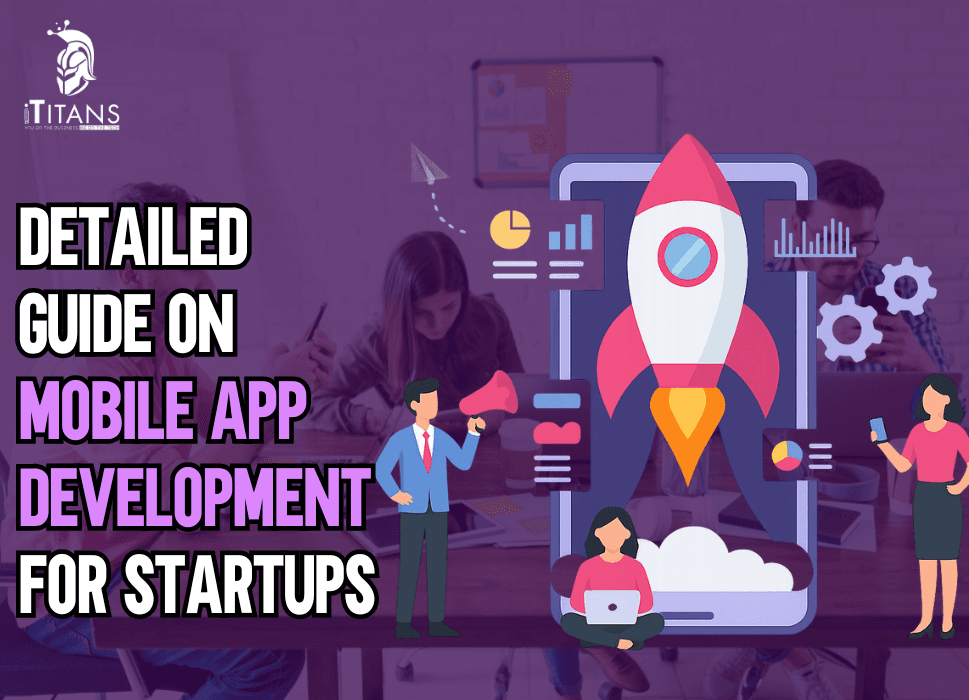
Detailed Guide On Mobile App Development For Startups
Launching a startup in 2025 means entering one of the most competitive business landscapes. With global funding crossing $445 billion in 2024, and over 90% of startups failing within their first five years, the stakes have never been higher.
One factor that separates the success stories from those that fade away is the adoption of technology, especially mobile apps.
Today, more than 6.9 billion people worldwide use smartphones, making apps the fastest way for startups to connect with customers, scale operations, and attract investors.
Whether it’s creating a disruptive marketplace, building a SaaS tool, or offering an on-demand service, a mobile app often becomes the core product or, at the very least, the strongest growth channel for new businesses.
This guide provides a step-by-step breakdown of mobile app development for startups in 2025, complete with real-world examples, detailed cost breakdowns, tech stack comparisons, funding insights, common mistakes, and proven strategies to drive growth post-launch.

Why Startups Need a Mobile App
Mobile apps are no longer optional for startups, they’re often the product itself. Think of Airbnb, Uber, or Careem, all began with a mobile-first approach. Today, over 70% of internet traffic comes from smartphones, and more than 90% of mobile time is spent inside apps.
For startups, an app isn’t just about convenience. It’s about:
- Building credibility in the eyes of early adopters.
- Attracting investors who want proof that your product is more than an idea.
- Reaching users where they spend time, their phones.
- Testing product-market fit faster than traditional methods.
Without an app, many startups struggle to keep users engaged. With one, you have the chance to gather data, optimize features, and scale faster.
Step 1: Validating Your App Idea
Before diving into startup app development, the first step is idea validation. Too many founders skip this stage, only to burn through savings on an app nobody actually wants.
How to Validate Your App Idea:
- Market Research: Look at existing competitors. If you’re building a food delivery app, ask yourself, what makes yours different?
- Landing Pages: Create a one-page website with the app’s value proposition and see how many people sign up for early access.
- Customer Interviews: Talk to at least 20–30 potential users. If they wouldn’t use your app today, it’s a red flag.
- Prototypes: Tools like Figma or InVision let you design a clickable prototype. Share it with potential users to test usability.
Validation doesn’t have to be expensive. Spending a few weeks testing your concept is better than wasting months of development time.
Step 2: Planning the MVP
Once you’ve validated the idea, the next move is building a Minimum Viable Product (MVP). This is the simplest version of your app that solves a core problem. Think of it as the test drive before buying the car.
Why an MVP matters for startups:
- Keeps mobile app development cost for startups low.
- Gets your product to market faster.
- Helps attract investors with something tangible.
- Allows you to test product-market fit in real time.
What to Include in an MVP:
- Core features only: Focus on the top 2–3 features users can’t live without.
- Basic design: Clean, functional UI beats fancy animations at this stage.
- User feedback loop: Include a way to gather insights, in-app feedback, analytics, or simple surveys.
For example, Instagram’s first version only had photo sharing + filters. No Stories, no DMs, no reels. That MVP helped them grow into the giant they are today.
Step 3: Choosing the Right Tech Stack
One of the most significant decisions in mobile app development for startups is selecting the right tech stack. Should you build native apps for iOS and Android separately, or go for cross-platform frameworks like Flutter or React Native?
Native vs Cross-Platform:
- Native Development (Swift for iOS, Kotlin for Android): Best for performance-heavy apps (like gaming or AR). Downside? Double the cost and timeline.
- Flutter: Developed by Google, it allows one codebase for iOS and Android. Known for fast development and smooth UI.
- React Native: Backed by Meta (Facebook), also allows cross-platform development with good performance and large community support.
So, which is best for startups?
For most, Flutter vs React Native for startups is the key debate. Both are cost-effective and reduce time-to-market. Unless your app demands heavy native features (like AR or 3D gaming), cross-platform frameworks usually make more sense.
Step 4: Estimating Cost and Timeline
Now comes the big question: how much does it cost to build a mobile app for a startup?
There’s no single number, but here’s a breakdown:
- Simple MVP app: $10,000 – $25,000
- Medium complexity app: $25,000 – $60,000
- Advanced app (multiple features, integrations): $60,000+
Cost Drivers:
- Features: More features = more cost.
- Design: Custom design takes time (and money).
- Platform: Native development costs more than cross-platform.
- Team location: Hiring in the US vs hiring developers from South Asia can cut costs by up to 60%.
Timeline estimates:
- MVP: 2–4 months
- Mid-level app: 4–8 months
- Complex app: 9–12 months
If you’re worried about budget, start with an MVP. It’s the fastest way to launch without burning all your resources.
Step 5: Hiring the Right Development Team
Once you’ve set the scope, the next challenge is hiring mobile app developers for startups. Should you build in-house, hire freelancers, or partner with an agency?
Options for Startups:
- In-house team: Best for long-term projects, but costly (salaries, benefits, office space).
- Freelancers: Cheaper, but harder to manage quality and timelines.
- Agencies / Development companies: Balanced option. You get a full team (designers, developers, testers) without hiring overhead.
If you go with an agency, look for case studies and portfolio. A company that has already built startup apps knows the unique challenges of budget and speed.
For instance, at ITitans, our mobile app development services for startups focus on building MVPs fast, with a clear roadmap for scaling later.
Step 6: Designing for User Experience
You’ve validated your idea, planned your MVP, and picked your tech stack. Now comes one of the most critical parts of startup app development, design.
In a crowded app marketplace, design isn’t just about looks; it’s about function. If your app feels confusing, users will abandon it within minutes. Research shows that 88% of users don’t return to an app after a bad experience. That’s why UI and UX design can make or break a startup.
Principles of Good App Design:
- Clarity over complexity: Keep navigation simple. Avoid overcrowded screens.
- Consistency matters: Fonts, colors, and icons should feel cohesive.
- Accessibility: Think about all users, text size, color contrast, and voice assistance features can expand your reach.
- Feedback loops: A simple vibration, sound, or animation when an action is completed makes the experience smoother.
At the MVP stage, don’t obsess over fancy visuals. Instead, focus on app UI/UX for startups that allows users to achieve their goals with minimal friction.
Step 7: Testing Your App Before Launch
No matter how good your design looks, bugs can ruin user trust instantly. Testing is non-negotiable in mobile app development for startups.
Types of Testing to Prioritize:
- Functional Testing: Does every button, feature, and screen work as expected?
- Usability Testing: Is the app easy to use for someone new?
- Performance Testing: Does the app load quickly and run smoothly under different conditions?
- Security Testing: Are user data and transactions safe?
- Device Testing: Does the app work equally well on different iPhones, Android devices, and screen sizes?
Use real devices, not just emulators. Real-world conditions matter, especially for startups targeting diverse markets.
Step 8: Preparing for App Store Launch
Getting approved on Google Play or the Apple App Store is a process in itself. Both platforms have strict rules that can delay your launch if ignored.
Checklist Before Submission:
- Follow design guidelines (Apple’s Human Interface Guidelines, Google’s Material Design).
- Make sure your app doesn’t crash during review.
- Optimize metadata: app name, description, keywords, and screenshots.
- Create a privacy policy page (mandatory for most apps).
This is where App Store Optimization (ASO) plays a role. Just like SEO for websites, ASO helps users find your app.
Key ASO Tips:
- Use target keywords like startup app development or “MVP app” naturally in the app title and description.
- Add high-quality screenshots and demo videos.
- Encourage positive reviews early, they influence rankings.
Step 9: Marketing Your App Pre- and Post-Launch
Many startups make the mistake of waiting until launch day to think about marketing. The best time to start is while the app is being built.
Pre-Launch Marketing Ideas:
- Landing page with waitlist: Collect emails before launch.
- Social media teasers: Share behind-the-scenes updates.
- Beta testing community: Give early access to selected users to create buzz.
Post-Launch Marketing Strategies:
- Influencer partnerships: Work with micro-influencers in your niche.
- Content marketing: Blog posts, podcasts, and guest articles around your app’s problem space.
- Paid ads: Run small campaigns on Facebook, Instagram, or Google to boost early traction.
- PR outreach: A press release or startup feature in tech blogs can amplify awareness.
Remember, building the app is just half the job. Marketing is what brings users in.
Step 10: Monetization Strategies for Startup Apps
A common question in mobile app development for startups is: How will this app make money? Without a monetization plan, even a popular app can struggle to survive.
Popular Monetization Models:
- Freemium: Basic version is free, premium features require payment. (Spotify, Dropbox).
- In-app purchases: Users pay for extras, gaming apps use this heavily.
- Ads: Free app supported by advertisements. Works best with large user bases.
- Subscription: Recurring payments for continuous value (Netflix, Calm, Duolingo).
- One-time purchase: Less common today, but still works for niche apps.
Your choice depends on your target market. For startups, freemium or subscription models usually work best, as they allow fast scaling while keeping users engaged.

Step 11: Tracking KPIs and Analytics
Once your app is live, data becomes your best friend. Tracking performance helps you understand if your startup is on the right path.
Key Metrics to Track:
- Downloads: How many users installed the app.
- Daily Active Users (DAU) / Monthly Active Users (MAU): Measures engagement.
- Retention Rate: How many users return after first use.
- Churn Rate: Percentage of users who stop using the app.
- Lifetime Value (LTV): Average revenue per user.
- Customer Acquisition Cost (CAC): How much it costs to gain one user.
A good rule of thumb: focus less on vanity metrics like total downloads and more on user retention strategies. A smaller but loyal user base is more valuable than thousands of inactive installs.
Step 12: Scaling Post-Launch
Once your app gains traction, the next step is scaling. This means adding more features, improving performance, and expanding your user base.
Scaling Checklist:
- Add features based on feedback, not assumptions.
- Upgrade infrastructure: As user numbers grow, servers must handle more traffic.
- Expand platforms: If you launched on Android first, consider iOS, and vice versa.
- Continuous updates: Regular bug fixes and improvements keep users happy.
Scaling isn’t just technical, it’s strategic. Startups that scale too quickly without clear demand often burn cash and collapse. Grow steadily, and let data guide your roadmap.
Cost Considerations in Mobile App Development for Startups
Budget is often the biggest concern for startups venturing into mobile app development. Unlike established enterprises, startups operate with limited funds, and every dollar matters. Understanding the mobile app development cost structure helps in making informed decisions and avoiding financial pitfalls.
- Basic Apps: A simple app with core features (such as a calculator, notes app, or a basic e-commerce MVP) may cost between $10,000 to $40,000.
- Medium Complexity Apps: Apps with features like user login, payment gateways, APIs, and database management usually range from $40,000 to $100,000.
- Complex Apps: If your app requires AI integration, AR/VR support, high-level security, or complex backends, the cost can exceed $150,000.
Factors affecting cost include the number of platforms (iOS, Android, or both), design complexity, developer experience, and post-launch support. Startups should also account for ongoing maintenance costs, which usually consume around 15–20% of the original development budget annually.

How Mobile Apps Strengthen Startup Funding & Investor Confidence
In today’s startup world, having a great idea isn’t enough to convince investors. What truly matters is traction, proof, and a clear path to scalability. That’s where mobile apps play a powerful role.
An app, even at the MVP stage, instantly shifts your pitch from being purely theoretical to something tangible. Investors can see, download, and test your idea in action. It’s proof that you’re not just talking about a vision but actually building it. For many founders, this difference has been the deciding factor between a polite rejection and a signed term sheet.
Apps also tell an important story about scalability. A website may be enough for the early days, but investors know that mobile usage dominates modern markets. An app shows that you’re building with growth in mind, capable of reaching millions of users without reinventing your entire infrastructure.
In fact, some VCs openly admit they look for mobile readiness before they even dive into financials.
More importantly, apps generate hard data, the kind of numbers that make investors lean forward. Metrics like daily active users, retention rates, customer acquisition cost, and churn can all be tracked from day one.
A founder who can say, “We have 2,000 downloads, a 35% week-one retention rate, and a $12 acquisition cost compared to the $30 industry average” immediately earns credibility.
These figures tell investors the product isn’t just viable, it’s already competing.
Take the example of a health-tech founder who entered a seed pitch with just a simple MVP. Instead of a slick presentation, she showed usage dashboards and user feedback straight from the app.
That raw evidence of adoption and stickiness led to a quicker-than-expected funding round. Stories like these are becoming common because investors no longer want promises; they want proof.
Avoiding Common Mistakes in Mobile App Development
Many startups rush into development without a clear strategy, which can lead to wasted resources and failed launches. Here are the most frequent mistakes:
- Ignoring Market Research: Skipping competitor analysis or not validating user needs can result in building an app no one wants.
- Poor User Experience (UX): A confusing interface or slow app leads to uninstalls. Always focus on user-friendly navigation and clean design.
- Overloading Features: Many startups try to add every possible feature in their first release. This increases costs and delays launch. Instead, build a minimum viable product (MVP).
- Not Planning for Scalability: If your app succeeds, it should handle more users and data. Neglecting scalability can cause crashes.
- Weak Testing: Bugs damage reputation. Continuous testing is critical before and after launch.
Avoiding these mistakes keeps your startup mobile app development journey smooth and cost-efficient.
Trends Shaping Mobile App Development for Startups
The mobile app industry is constantly evolving, and startups that adapt quickly gain an edge. Some notable mobile app development trends include:
- AI-Powered Apps: Artificial intelligence is driving personalization, chatbots, predictive search, and smart recommendations.
- Blockchain Integration: Startups are using blockchain for secure transactions, decentralized apps, and transparent record keeping.
- AR/VR Experiences: Augmented and virtual reality are no longer just for gaming; they are expanding into retail, education, and healthcare.
- 5G Technology: Faster connectivity means richer mobile experiences, real-time interactions, and reduced latency.
- Wearable App Integration: Health apps, productivity tools, and IoT solutions now connect seamlessly with wearable devices.
Understanding these trends allows startups to design apps that stay relevant for years, not months.
Post-Launch Strategy: What Comes After Deployment?
Launching your app is not the finish line, it’s just the beginning. Startups must focus on mobile app maintenance and growth strategies after deployment.
- App Store Optimization (ASO): Optimize app title, description, and keywords to boost visibility in app stores.
- Marketing Campaigns: Use digital marketing strategies like SEO, social media ads, influencer marketing, and PR campaigns.
- Gather Feedback: Encourage reviews and ratings, but also analyze feedback to improve features.
- Regular Updates: Fix bugs, enhance security, and release new features to keep users engaged.
- Analytics Tracking: Tools like Firebase and Mixpanel help track user behavior and measure retention.
This stage is crucial for building long-term success in startup app development.

Building a Team for Mobile App Development
For startups, choosing between in-house teams and outsourcing is often a key decision. Each option has pros and cons:
- In-House Team: Offers direct control, quick communication, and cultural alignment. However, it’s costly and requires long-term commitment.
- Outsourcing to Agencies: More affordable, access to global talent, and faster turnaround times. Agencies bring experience but require careful vetting.
- Freelancers: A good choice for startups with small, short-term projects, but consistency and quality can vary.
Many successful startups adopt a hybrid approach, where core development is outsourced but product strategy and oversight stay in-house.
Ready to Build Your Startup’s Mobile App?
At ITitans, we specialize in mobile app development for startups, helping founders turn concepts into scalable, high-performing apps. Whether you need an MVP or a full-featured product, our team ensures your app is designed to grow with your business.
FAQs
1. How do startups decide between Android and iOS app development first?
Most startups choose based on their target audience, Android suits wider reach in Asia and Africa, while iOS is better for premium users in North America and Europe.
2. What is the smartest way for startups to cut mobile app development costs?
The most effective way is to build an MVP first, outsource non-core tasks, and focus only on features that solve the primary user problem.
3. Why do many startup apps fail after launch?
Startup apps often fail due to poor market validation, lack of marketing, or ignoring user experience, even when the tech side is strong.
4. How long does it take for a startup to see results from an app launch?
Startups typically see meaningful traction within 3–6 months if they actively promote the app and update it based on user feedback.
5. Which monetization model works best for startup apps in early stages?
Freemium and subscription-based models are usually the safest choices because they balance free access with steady revenue potential.
6. How can startups ensure user retention after the app launch?
Retention improves with simple onboarding, push notifications, regular updates, and in-app feedback loops that make users feel heard.
7. What KPIs should startups track to measure mobile app success?
Startups should track retention rate, daily active users (DAU), churn rate, and customer acquisition cost (CAC) to understand growth and profitability.