
Cloud App Development Roadmap
Cloud app development has transitioned from being a future trend to an essential part of how modern businesses operate. In 2025, the demand for robust, scalable, and user-centric cloud applications is growing faster than ever, driven by digital transformation across industries. If you’re planning to dive into cloud app development, understanding the roadmap, related costs, realistic timelines, and must-have elements can make or break your project.
In 2025, the cloud continues to be the powerhouse behind digital transformation. Gartner reports that public cloud will replace traditional on-premises tech for apps and infrastructure by 2025, rising from 41 % in 2022 to 51 % now. Additionally, end-user spending on cloud services is projected to hit $723.4 billion, up 21.5 % from 2024. These stats underline why building cloud-native apps is more relevant and in-demand than ever.
But before you dive into your next cloud-based project, let’s walk you through the expected costs, development timeline, major steps, and key considerations, while spotlighting top players in the field.

Why Cloud App Development is Booming in 2025
According to a recent Gartner report, over 95% of new digital workloads will be deployed on cloud-native platforms by the end of 2025 up from 30% in 2021. This rapid shift isn’t surprising when you consider the advantages of cloud-based applications: they offer flexibility, rapid scalability, reduced operational costs, and seamless remote accessibility.
Cloud computing allows businesses to deliver products and services faster, scale operations with minimal downtime, and offer better customer experiences. It’s no longer just about cost-cutting—it’s about staying competitive and relevant in an ever-evolving digital landscape.
With tech powerhouses like AWS, Microsoft Azure, and Google Cloud setting new standards in cloud infrastructure, developers now have unprecedented tools and services to build smarter, faster, and more secure applications.
What is a Cloud App and How is it Different?
A cloud app is essentially a software application that runs on cloud servers rather than local machines. Unlike traditional apps, which are confined to specific devices or systems, cloud apps are accessible from any device with internet access.
They’re built using cloud-native principles, which means they’re designed to take full advantage of distributed computing. These applications can auto-scale, recover from failures quickly, and offer a seamless user experience across platforms.
In 2025, the lines between web apps, mobile apps, and cloud apps continue to blur. Thanks to advancements in hybrid and cross-platform development, cloud apps are often designed to work on both mobile and web environments with a single codebase.
9 Key Stages of the Cloud App Development Roadmap
Cloud app development isn’t just about coding. It’s a comprehensive process that involves multiple stages, from idea validation to post-launch monitoring. Let’s explore each of these stages in detail.
1. Discovery and Research
Before writing a single line of code, it’s critical to validate your idea. This phase includes understanding your target audience, analyzing competitors, identifying pain points, and defining clear business objectives.
Companies like iTitans begin every project with a discovery workshop, where they dive deep into your brand goals and technical requirements. This ensures alignment between business strategy and technology from the get-go.
2. Defining the Architecture
The backbone of any cloud application is its architecture. This includes choosing the right cloud platform (e.g., AWS, Azure, GCP), deciding on the tech stack, selecting data storage systems, and defining how the app will scale.
In 2025, microservices and containerization using tools like Docker and Kubernetes dominate the scene. These methods allow for better modularity and independent scalability, essential features for modern cloud apps.
3. UI/UX Design
Today’s users expect fast, intuitive, and visually appealing interfaces. A good UI/UX design not only enhances usability but also builds trust and increases user engagement.
iTitans places a strong emphasis on human-centered design, ensuring that their apps aren’t just functional but also delightful to use. From wireframes to interactive prototypes, the design phase sets the tone for development.
4. MVP Development
Developing a Minimum Viable Product (MVP) is a common approach in cloud app development. It involves launching a stripped-down version of the app with core features to test market demand quickly. MVP development can be a beneficial part of cloud development and this is where iTitans shines. With their expertise in MVP development, they help clients launch quickly, gather feedback, and iterate without wasting time or resources on features users don’t want.
5. Backend & Frontend Development
The development phase is typically split between frontend (what the user sees) and backend (server-side logic, databases, APIs). Cloud apps often use frameworks like React, Angular, or Vue.js for the frontend, while backend languages like Node.js, Python, and Go are popular for server-side logic.
In 2025, the trend is clearly toward serverless architecture, where developers can focus on writing code without managing infrastructure. This reduces complexity and operational overhead.

6. Integration and API Development
Most cloud apps need to integrate with third-party services such as payment gateways, CRMs, analytics tools, and more. Secure and scalable APIs are crucial here. REST and GraphQL remain the most widely used protocols for API communication in cloud apps.
7. Testing & Quality Assurance
Quality assurance is not an afterthought. In 2025, automated testing tools powered by AI have become mainstream. From unit tests to load testing and security assessments, QA ensures your app is robust and reliable before it hits the market.
8. Deployment and Launch
Once everything is tested and approved, it’s time to go live. Thanks to CI/CD pipelines (Continuous Integration/Continuous Deployment), launching a cloud app today is faster and safer than ever. Deployment can be staged regionally or globally, depending on your target audience.
9. Monitoring, Maintenance, and Scaling
The journey doesn’t end at launch. In fact, it’s just the beginning. Monitoring tools like Datadog, New Relic, and AWS CloudWatch help developers track performance, catch bugs, and optimize user experience. With cloud-based apps, scaling is easier than ever. If your user base grows, the app can be configured to auto-scale without manual intervention.
How Long Does It Take to Develop a Cloud App in 2025?
The development timeline varies based on complexity, team size, and project scope. However, here’s a general breakdown:
- Simple Cloud Apps (basic functionality, single platform): 3 to 4 months
- Mid-Level Apps (integrations, user management, analytics): 6 to 8 months
- Complex Apps (real-time features, scalability, multi-platform): 9 to 12+ months
Working with an experienced team like iTitans can significantly reduce time-to-market, thanks to their agile processes, cross-functional teams, and pre-built modules that speed up development.
What Are the Costs Involved in Cloud App Development?
Budgeting is one of the trickiest aspects of any development project. Cloud app development costs in 2025 range widely based on factors like:
- Complexity of features
- UI/UX design depth
- Choice of cloud provider and infrastructure
- Security requirements
- Geographic location of development team
Here’s a rough idea:
- Basic App: $20,000 – $50,000
- Mid-Level App: $50,000 – $120,000
- Enterprise-Grade App: $150,000 – $300,000+
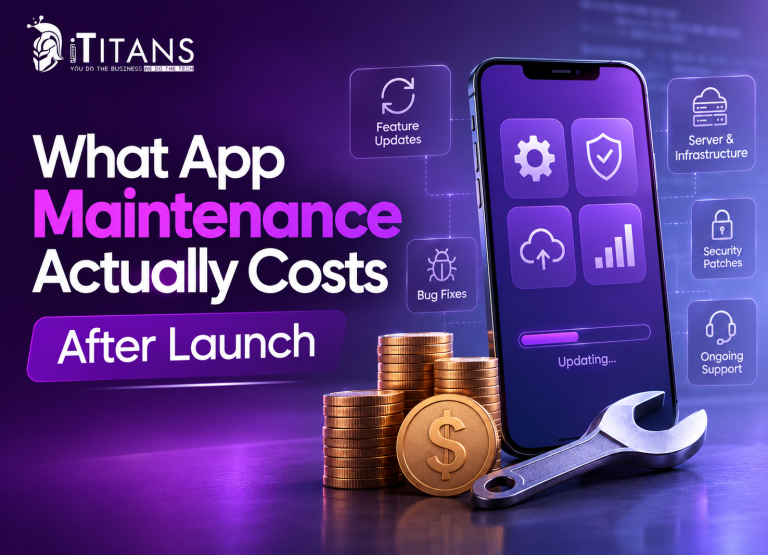
Keep in mind, cloud hosting, ongoing maintenance, and API usage can add recurring monthly costs of around $500 to $5,000+ depending on app usage. Companies like iTitans help clients with transparent cost estimation and optimized cloud configurations, ensuring there are no surprises down the road.
Cloud Security and Compliance in 2025
Security is a top concern for any cloud-based application, especially with the increase in data breaches and regulatory scrutiny. According to IBM’s latest Cost of a Data Breach report, the average data breach cost in 2024 hit $4.45 million, up 15% from 2020. In 2025, there’s a stronger emphasis on compliance with standards like GDPR, HIPAA, and SOC 2. This includes:
- End-to-end encryption
- Multi-factor authentication
- Role-based access controls
- Regular security audits
- Disaster recovery planning
iTitans integrates these security protocols right from the design phase, not as an afterthought, ensuring your app is compliant and protected from day one.
How to Save Costs and Time on Cloud App Development
1. Define Clear Requirements Early On
Unclear or shifting requirements are one of the biggest contributors to budget overruns and delays. Start by documenting every functionality your cloud app needs core features, user roles, third-party integrations, and compliance requirements. This clarity reduces back-and-forth between teams and prevents costly rework down the line. It also allows developers to estimate timelines and resources accurately from the beginning.
2. Choose the Right Cloud Provider and Pricing Model
All cloud platforms such as AWS, Google Cloud, and Azure, offer various pricing tiers like pay-as-you-go, reserved instances, and spot pricing. Choosing the wrong model can inflate your costs dramatically. Select a provider that aligns with your business needs and scalability goals. Opt for usage-based pricing when launching a new app and transition to reserved capacity once usage becomes predictable.
3. Use a Minimum Viable Product (MVP) Approach
Launching with a full-featured cloud app often leads to wasted development time on features users may not want. Instead, develop a Minimum Viable Product (MVP) with only the core functionalities. This allows you to release your app faster, gather user feedback, and iterate based on real-world data—saving both development time and money.
4. Automate Infrastructure with IaC (Infrastructure as Code)
Manual setup of cloud environments is time-consuming and error-prone. Using Infrastructure as Code tools like Terraform or AWS CloudFormation allows developers to create repeatable, version-controlled infrastructure. This not only accelerates deployment but also reduces human error and environment inconsistencies—leading to lower operational costs and quicker testing cycles.
5. Leverage Serverless Architecture Where Possible
Traditional cloud apps often require managing backend servers, which adds to maintenance and operational costs. Serverless platforms like AWS Lambda or Google Cloud Functions remove this burden by charging only for actual execution time. This drastically reduces idle resource costs and allows developers to focus purely on application logic.
6. Implement DevOps and Continuous Integration/Continuous Deployment (CI/CD)
Integrating DevOps practices and CI/CD pipelines early in development ensures rapid, automated testing and deployment. It streamlines version control, identifies bugs early, and facilitates quick rollbacks. This reduces downtime, speeds up updates, and saves costs by minimizing manual intervention and late-stage reworks.
7. Monitor Usage and Scale Wisely
Over-provisioning cloud resources leads to unnecessary spending, while under-provisioning risks poor app performance. Use auto-scaling features and real-time usage monitoring tools like AWS CloudWatch or Google Stackdriver. They help right-size your infrastructure dynamically, ensuring optimal performance at minimal cost.
8. Choose Pre-Built Cloud Services Instead of Building from Scratch
Cloud providers offer a wide range of managed services, databases, authentication, caching, and machine learning APIs. Instead of building these components from scratch, integrate pre-built services to drastically cut down development time and reduce the need for ongoing maintenance. This also improves reliability, as managed services come with built-in SLAs and security.
9. Optimize Database and Storage Use
Data-heavy applications often incur unexpected cloud storage and database costs. Use the right storage class for different data types, e.g., cold storage for infrequently accessed files. Regularly archive logs, delete unused data, and apply indexing and caching strategies to reduce storage and database query costs over time.
10. Employ Cross-Platform Frameworks
Developing separate apps for iOS, Android, and web can be expensive and time-intensive. Frameworks like Flutter, React Native, and Xamarin allow you to build once and deploy across platforms. This shared codebase approach reduces development cycles and costs while still offering a near-native experience.
Related Posts