
Role of AI and Machine Learning in Modern Software Development
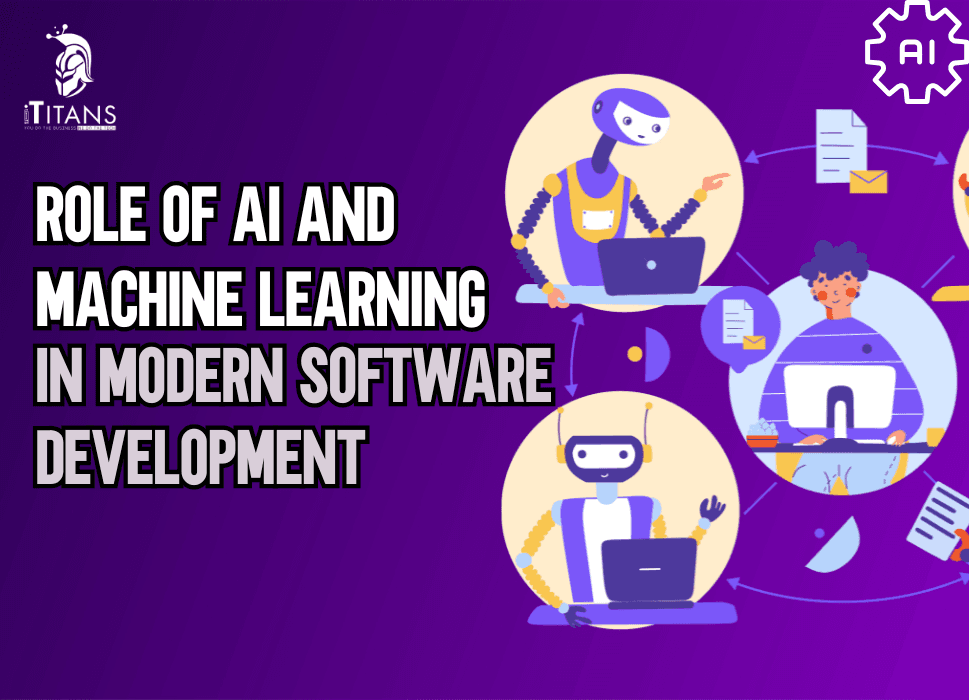
The landscape of software development has evolved significantly in recent years, with Artificial Intelligence (AI) and Machine Learning (ML) becoming integral components of modern applications. These technologies have not only streamlined development processes but have also introduced automation, predictive analytics, and intelligent decision-making for a software development company.
From optimizing code generation to improving cybersecurity, AI and ML have reshaped the way software is designed, developed, tested, and deployed. As businesses strive to enhance efficiency, reduce costs, and deliver superior user experiences, leveraging AI and ML has become more of a necessity than an option.
This article explores the role of AI and Machine Learning in modern software development, examining their impact on different stages of the software lifecycle, their benefits, and the challenges associated with their adoption.

AI and ML in the Software Development Lifecycle
Automating Code Generation and Optimization
AI-powered tools have made it possible to automate code writing and optimization, reducing the workload for developers. Advanced AI models can analyze programming patterns and suggest optimal coding techniques, improving code quality and reducing redundancy.
For example, tools like GitHub Copilot, powered by OpenAI’s Codex, assist developers by suggesting entire lines or blocks of code based on contextual understanding. Similarly, AI-driven low-code and no-code platforms enable non-developers to create software applications with minimal coding knowledge.
Intelligent Debugging and Error Detection
One of the most time-consuming tasks in software development is identifying and fixing bugs. Traditionally, developers had to manually go through thousands of lines of code to find errors. However, AI and ML have significantly simplified this process by automating debugging.
AI-driven debugging tools analyze historical data, detect patterns of coding mistakes, and predict potential errors before they occur. Platforms like DeepCode and Snyk use ML to scan codebases and provide recommendations to enhance security and functionality.
Enhancing Software Testing and Quality Assurance
Software testing is a critical phase in development, ensuring that applications are free from bugs and vulnerabilities. AI and ML have transformed testing and quality assurance (QA) by introducing automation into test case generation, execution, and defect identification.
AI-powered testing tools like Testim, Applitools, and Mabl use ML algorithms to perform automated testing, reducing the need for manual intervention. These tools can simulate real-user interactions, identify unexpected behaviors, and even predict future system failures. This not only accelerates the testing process but also enhances software reliability.
AI in Cybersecurity and Threat Detection
With the rise in cyber threats and data breaches, software developers must prioritize security. AI and ML have become essential in cybersecurity, enabling real-time threat detection and automated response mechanisms.
ML models analyze network traffic, identify anomalies, and flag potential security threats before they can cause harm. AI-driven security services such as Darktrace and IBM’s Watson for Cybersecurity continuously monitor systems, providing predictive insights and proactive risk mitigation.
Improving User Experience with AI-driven Interfaces
Modern software applications are designed with intelligent user interfaces (UI) that enhance user engagement and satisfaction. AI and ML help in developing personalized experiences, adapting interfaces based on user preferences, behavior, and interaction patterns.
For instance, AI-powered chatbots and virtual assistants like Siri, Google Assistant, and ChatGPT provide human-like interactions, improving customer support services. Recommendation systems, as seen in platforms like Netflix and Amazon, use ML to suggest content and products tailored to individual users.
AI-driven Project Management and Resource Allocation
Software development projects require efficient resource management, task allocation, and workflow optimization. AI-powered project management tools assist in tracking project progress, predicting delays, and optimizing team performance.
Tools like Jira, Monday.com, and Trello leverage AI for smart task recommendations, deadline forecasting, and workload balancing. By analyzing past project data, these platforms help managers allocate resources more effectively and improve productivity.
Natural Language Processing (NLP) for Enhanced Development
Natural Language Processing (NLP), a subfield of AI, has greatly impacted software development by enabling human-like interactions between developers and software systems. NLP-driven AI assistants can help developers write, understand, and translate code more efficiently.
For example, OpenAI’s Codex interprets natural language queries and converts them into executable code, reducing the learning curve for new developers. Additionally, NLP-powered documentation tools automate the generation of code comments, API documentation, and user manuals.
Benefits of AI and ML in Software Development
Increased Development Speed
AI and ML automate repetitive tasks such as code generation, testing, and debugging, significantly reducing development time. This enables teams to bring products to market faster while maintaining high quality.
Improved Code Quality and Security
AI-powered tools help maintain clean, optimized, and error-free code, reducing the likelihood of security vulnerabilities. Automated security testing ensures compliance with industry standards and regulations.
Cost Reduction and Efficiency
By automating various development tasks, AI and ML help businesses cut operational costs. Companies can reduce the need for extensive manual testing and debugging, allowing developers to focus on more complex and creative problem-solving.
Personalized and Adaptive Applications
AI and ML enable software applications to provide personalized user experiences, enhancing customer satisfaction and engagement. From intelligent search engines to smart content recommendations, AI-driven features make applications more user-friendly.
Continuous Learning and Improvement
Machine Learning models continuously learn from new data and user interactions, allowing software applications to adapt and evolve over time. This ensures that applications remain relevant and efficient as user needs change.

Challenges in Adopting AI and ML in Software Development
High Implementation Costs
While AI and ML offer numerous advantages, their initial implementation costs can be high. Businesses must invest in AI infrastructure, skilled developers, and data processing capabilities to fully leverage these technologies.
Data Privacy and Ethical Concerns
AI-driven software development services rely heavily on large datasets. Ensuring data privacy, security, and ethical AI usage is a major challenge. Companies must comply with regulations like GDPR and CCPA to protect user data.
Complexity in Model Training and Maintenance
Developing and maintaining AI and ML models requires specialized knowledge. Training models with high accuracy demands large datasets and computational power, making it challenging for smaller enterprises.
Bias in AI Algorithms
AI and ML models are only as good as the data they are trained on. Bias in training data can lead to unfair or inaccurate predictions, affecting software functionality. Developers must implement fair and unbiased AI models to avoid ethical dilemmas.
Future of AI and ML in Software Development
The role of AI and ML in software development will only grow stronger as technology advances. Future trends include:
- AI-driven software engineering: Automated software development with minimal human intervention.
- Explainable AI (XAI): Making AI decisions more transparent and interpretable.
- AI-powered DevOps: AI integration into DevOps processes to optimize deployment and maintenance.
- Autonomous software development: Fully AI-generated applications requiring little to no human input.
- As businesses embrace digital transformation, AI and ML will continue to revolutionize software development, paving the way for smarter, more efficient, and highly adaptive applications.
FAQs
How is AI transforming modern software development?
AI is revolutionizing software development by automating code generation, debugging, and testing, leading to faster development cycles. It enhances software reliability through predictive analytics and intelligent recommendations, allowing developers to focus on complex problem-solving rather than repetitive tasks.
What are the benefits of using machine learning in software development?
Machine learning improves software development by enabling adaptive algorithms, enhancing security through anomaly detection, and automating decision-making processes. It also allows for personalized user experiences by analyzing data patterns and predicting user behavior in applications.
Can AI replace human software developers in the future?
AI can assist developers by automating routine tasks, but it is unlikely to replace human creativity, problem-solving, and critical thinking. Software development requires innovative solutions, domain expertise, and ethical considerations, which AI alone cannot fully handle without human intervention.
Which AI-powered tools are used in software development?
Popular AI-powered tools include GitHub Copilot for code suggestions, Tabnine for AI-assisted coding, and DeepCode for intelligent code analysis. Other tools like TensorFlow and PyTorch help integrate machine learning models into applications, improving their intelligence and automation.
How does AI contribute to software testing and quality assurance?
AI enhances software testing by automating test case generation, identifying potential bugs through predictive analysis, and improving accuracy with self-learning algorithms. AI-driven testing tools like Testim and Applitools optimize the quality assurance process by reducing manual efforts and detecting subtle errors efficiently.
Conclusion
AI and Machine Learning are no longer just futuristic concepts; they have become fundamental elements of modern software development. From automating coding processes and enhancing cybersecurity to improving user experiences, AI-driven solutions are reshaping the industry.
Despite challenges like high implementation costs and ethical concerns, the benefits of AI and ML outweigh the drawbacks, making them indispensable for businesses looking to stay competitive. As technology evolves, AI and ML will drive the next wave of innovation in software development, transforming the way applications are built, deployed, and maintained.
By integrating AI-powered tools and intelligent automation, companies can accelerate software development, enhance security, and deliver personalized user experiences, ensuring sustainable growth in the digital age.
Related Post