
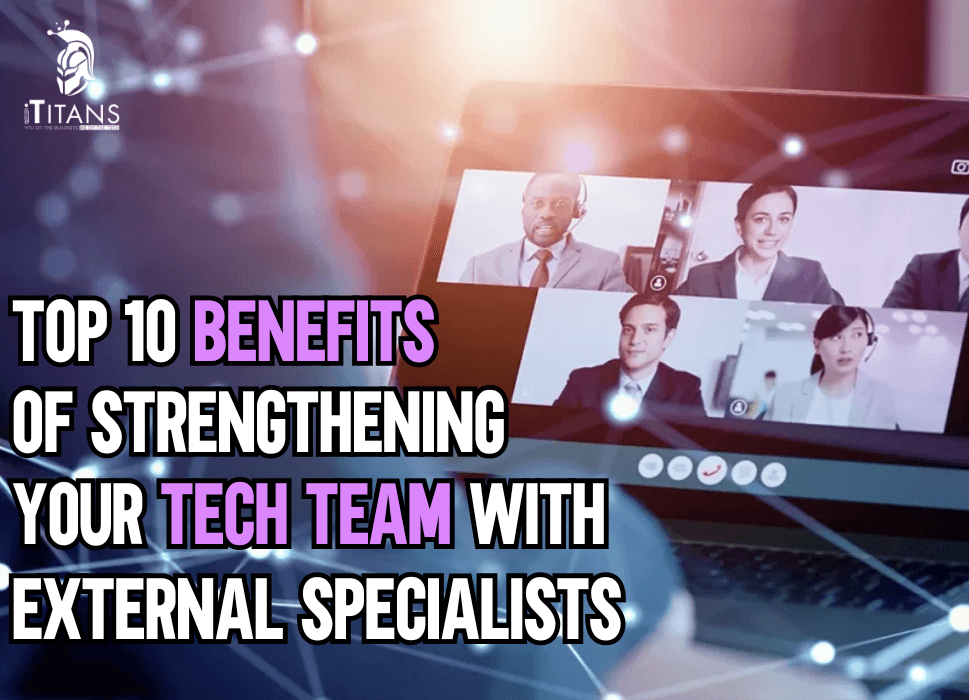
Top 10 Benefits of Strengthening Your Tech Team with External Specialists
In today’s fast-evolving digital landscape, businesses face mounting pressure to stay ahead through innovation, speed, and efficiency. The demand for skilled technical talent has skyrocketed, yet the global tech talent shortage continues to widen.
According to ManpowerGroup’s 2024 Talent Shortage Report, 78% of employers struggle to find professionals with the right technical expertise. This gap is pushing organizations to explore smarter strategies for building stronger, more agile teams.
One of the most impactful approaches is strengthening internal teams by collaborating with external specialists seasoned experts who bring fresh perspectives, niche skills, and unmatched agility to your projects.
Whether it’s for web development, mobile app creation, or digital transformation, integrating external professionals can elevate productivity, reduce costs, and accelerate innovation. To get better insights, top 10 benefits of strengthening your tech team with external specialists.
1. Access to a Wider Talent Pool
One of the most immediate advantages of bringing in external specialists is gaining access to a global talent pool. Instead of being limited to local hiring constraints, businesses can tap into a diverse range of developers, designers, data engineers, and digital marketers from around the world.
A Gartner survey (2024) found that 64% of IT leaders are now sourcing external experts to overcome the limitations of in-house hiring. This expanded access ensures that your projects benefit from the best minds available, not just those within commuting distance.
External specialists bring varied experiences from working on multiple projects and industries, allowing them to contribute fresh ideas and innovative approaches that internal teams may overlook.

2. Faster Project Execution and Time-to-Market
In a world where speed defines competitiveness, partnering with external specialists helps businesses reduce development cycles and deliver projects faster. External teams are accustomed to working under tight deadlines and can immediately plug into existing workflows.
Unlike traditional hiring, which may take months due to lengthy recruitment and onboarding external professionals can start contributing within days. This flexibility helps companies accelerate product launches, especially for software development, mobile app creation, and website development projects.
For instance, integrating skilled frontend and backend developers or UI/UX designers externally can shave weeks off project timelines, helping businesses capitalize on emerging market opportunities sooner.
3. Cost-Effectiveness Without Compromising Quality
Hiring full-time employees involves more than just salaries it includes recruitment expenses, training, benefits, and infrastructure costs. External specialists eliminate many of these overheads, making them a financially attractive choice for growing businesses.
A report by Deloitte (2023) revealed that companies leveraging external expertise in IT and software development reduce operational costs by an average of 30% while maintaining quality and innovation.
Moreover, businesses can adopt flexible engagement models allowing them to scale up or down according to their budget and project requirements. This adaptability is crucial for startups and enterprises looking to balance costs with technological advancement.
4. Immediate Access to Specialized Expertise
The tech world is vast, with countless programming languages, frameworks, and emerging technologies. Building an internal team that masters them all is nearly impossible. External specialists bridge this gap by bringing niche skills and certifications to the table.
Whether your project requires AI integration, eCommerce development, MVP development, or SEO optimization, external professionals already have the expertise to handle complex challenges. They stay up to date with the latest industry trends, tools, and technologies helping your company stay competitive in a fast-moving digital economy.
This access to specialized knowledge not only improves efficiency but also empowers your business to explore new opportunities such as digital transformation and custom software development with confidence.
5. Enhanced Innovation and Fresh Perspectives
When internal teams work on the same projects for extended periods, creativity can plateau. External specialists bring a fresh perspective such as new methodologies, innovative tools, and creative problem-solving approaches that can inspire internal teams.
These experts are often exposed to a variety of industries and challenges, which sharpens their ability to think outside the box. This cross-industry experience helps them identify creative approaches to issues that internal teams might consider unsolvable.
By merging your internal team’s institutional knowledge with the external team’s innovation-driven mindset, you create a collaborative ecosystem that fuels groundbreaking ideas and results.
6. Increased Flexibility and Scalability
Modern business environments demand adaptability. Project requirements can shift overnight, and having the flexibility to scale your tech team up or down quickly is crucial.
External specialists provide that scalability. Need extra developers during a product’s testing phase? Or additional UI/UX designers for an app redesign? External professionals can be integrated temporarily without the long-term commitments of full-time hires.
This flexibility also allows companies to experiment with new technologies or markets without overcommitting resources. By leveraging external expertise during high-demand periods, businesses can manage workloads efficiently and maintain steady progress without burnout or delays.
7. Reduced Risk and Enhanced Project Management
Bringing in experienced external professionals can significantly reduce project risks. They come equipped with proven methodologies, risk management frameworks, and quality assurance processes that ensure project success.
Many external teams are accustomed to working in Agile or Scrum environments, ensuring transparent communication and iterative progress tracking. This structured approach minimizes the risk of scope creep, missed deadlines, and miscommunication.
Additionally, external professionals often come with their own tools and processes, which enhances efficiency and reduces the burden on internal resources. This proactive risk management leads to smoother project execution and higher-quality outcomes.
8. Knowledge Transfer and Skill Enhancement for Internal Teams
Collaborating with external experts isn’t just about getting the job done it’s also an opportunity for your internal team to learn and grow. External specialists bring fresh knowledge and advanced techniques that can upskill your in-house employees.
Through joint projects, code reviews, and design workshops, internal staff can gain insights into new technologies, frameworks, and industry best practices. Over time, this knowledge transfer strengthens your organization’s technical foundation, making your internal team more capable and confident.
In essence, external collaboration becomes a long-term investment in talent development and organizational growth.

9. Focus on Core Business Functions
By bringing in external specialists to handle complex technical tasks, your internal team can focus on what they do best by driving strategy, marketing, operations, and customer engagement.
Instead of stretching resources thin across multiple functions, companies can delegate specialized projects such as app development, software integration, or digital marketing to external experts.
This division of labor enhances overall productivity and ensures that core business objectives remain in focus while technical goals are achieved simultaneously. It’s a smart approach that allows leaders to maintain operational balance and efficiency.
10. Global Competitiveness and Future Readiness
Finally, integrating external specialists strengthens your organization’s ability to compete on a global scale. As industries move toward digital-first operations, having access to diverse, skilled, and globally-aware professionals give your business an edge.
By combining internal expertise with external agility, companies can stay ahead of technological shifts and evolving customer expectations. From developing cutting-edge software to optimizing SEO strategies, external experts ensure that your organization remains relevant, efficient, and ready for future challenges.
How iTitans Helps Businesses Strengthen Their Tech Teams
When it comes to collaborating with trusted experts, iTitans stands out as a leader in empowering businesses through technology and innovation. Based in the United States with a global reach, iTitans provides a wide range of digital services designed to help companies scale efficiently while staying competitive.
Their expertise spans across Website Development, Mobile App Development, Software Development, MVP Development, UI/UX Designing, eCommerce Development, SEO, Social Media Marketing, Digital Transformation, and Staff Augmentation.
The Staff Augmentation service, in particular, enables businesses to integrate external specialists seamlessly into their teams. iTitans provides access to highly skilled developers, designers, and digital marketers who can work alongside your internal staff enhancing your technical capacity without disrupting your existing workflows.
This approach allows organizations to stay flexible, access niche talent quickly, and execute complex projects with confidence. Whether you’re building a new mobile app, redesigning your website, or transforming your digital ecosystem, iTitans’ external specialists bring the expertise and dedication needed to deliver excellence.
How to Hire the Right Marketing Specialists
Hiring the right marketing specialists can make or break your company’s growth strategy especially if you’re integrating external experts into your tech team. With digital marketing evolving faster than ever, businesses need skilled professionals who can navigate everything from SEO and PPC to social media analytics and automation tools.
In this section, we’ll break down the key steps and insights to help you hire marketing specialists who truly deliver results.
1. Clearly Define Your Marketing Needs
Before jumping into recruitment, it’s essential to pinpoint what kind of marketing expertise your team actually needs. Are you looking for someone to manage paid campaigns, handle content strategy, or lead data-driven performance marketing? Each role requires different skill sets.
For instance, a 2024 HubSpot report found that companies with specialized marketing roles (SEO experts, data analysts, etc.) saw a 27% higher ROI on campaigns compared to teams where marketers handled multiple tasks. When you define your needs clearly, you attract candidates who align with your specific goals by saving time, effort, and resources in the long run.
2. Choose Between In-House and External Specialists
One major decision is whether to bring marketers on board permanently or hire external specialists. External experts often bring a fresh perspective and niche expertise that your in-house team might lack. For tech companies, hiring external marketing specialists can also help bridge temporary skill gaps or handle high-demand projects without the overhead of full-time employment.
According to Statista (2025), over 41% of tech companies now rely on external marketing consultants to manage digital transformation projects. The flexibility of this approach allows your internal team to focus on core innovation while specialists handle specific marketing challenges efficiently.
3. Look for Data-Driven Mindsets
Marketing today is as much about numbers as creativity. The right specialist knows how to read analytics, optimize campaigns, and make strategic decisions based on performance data.
A Google Marketing Insights report revealed that 67% of high-performing marketers regularly adjust their strategies based on analytics rather than intuition. So when interviewing candidates, ask about their experience with platforms like Google Analytics, HubSpot, or SEMrush, and how they use data to refine campaigns. A marketer who can interpret and act on insights is worth their weight in gold.
4. Evaluate Technical and Soft Skills
Modern marketing blends tech-savviness with strong communication. Look for candidates who can balance both. They should be comfortable with automation tools, CRMs, and analytics dashboards but also capable of collaborating effectively across departments.
For instance, a marketing specialist who understands how your tech stack operates can communicate better with developers, ensuring smoother execution of marketing campaigns. LinkedIn’s 2025 Global Skills Report notes that soft skills like adaptability, creativity, and teamwork are now just as valuable as technical expertise in marketing roles.
5. Check Their Portfolio and Case Studies
A strong portfolio is a reflection of a marketer’s impact. Ask for case studies or project results that highlight measurable achievements. Did they grow organic traffic by a specific percentage? Did their ad campaigns achieve a high ROI?
Look for concrete data which focuses on real-world success stories show not only skill but also accountability. For example, a marketing specialist who demonstrates a 200% traffic boost through SEO optimization proves both technical proficiency and strategic thinking.
6. Test Real-World Problem-Solving Skills
Interviews are important, but tests reveal practical ability. Consider giving candidates a short marketing challenge like creating a content strategy outline or analyzing a sample campaign’s performance.
This approach lets you see how they think, structure ideas, and handle deadlines. A Harvard Business Review study noted that companies using skill-based tests during hiring saw 24% better performance outcomes from new employees. It’s a simple but powerful way to find genuine problem solvers.

7. Assess Their Understanding of Your Industry
A marketing specialist might be talented, but if they don’t understand your industry, they could struggle to create relevant campaigns, especially in the tech industry. Industry knowledge ensures they can speak your customers’ language and position your brand effectively.
Look for candidates with experience in B2B tech, SaaS, or IT services if that’s your niche. Someone familiar with complex tech products will craft messaging that resonates more deeply with your target audience, speeding up campaign success.
8. Prioritize Strategic Thinkers Over Task-Doers
You don’t just want someone who executes instructions you need a strategic thinker who can help shape marketing direction. Great specialists identify opportunities, predict market shifts, and suggest proactive solutions.
A Gartner report (2024) found that organizations with strategy-oriented marketing hires experienced 32% faster growth in lead generation. When interviewing, ask about their approach to long-term planning or how they’ve pivoted strategies when markets changed.
9. Evaluate Cultural Fit and Team Compatibility
Even if a candidate checks all the skill boxes, they must also fit into your company’s culture. Cultural alignment influences collaboration, creativity, and overall productivity.
If your tech team thrives on open communication and experimentation, your marketing specialist should complement that dynamic. A positive team culture encourages innovation and helps both marketing and tech specialists work toward common goals seamlessly.
10. Offer Competitive Compensation and Growth Opportunities
Finally, don’t forget that top marketing talent is in high demand. Offer not just a competitive salary but also opportunities for learning and professional growth.
According to Glassdoor (2025), digital marketing specialists now earn an average of $78,000 per year in the U.S. which is a 12% increase since 2022. To attract and retain the best, provide access to new tools, training, and clear career advancement paths. A motivated specialist will invest more energy in driving your brand’s success.
Ready to make your IT operations more efficient? Get in touch with iTitans and share your requirements to let our experts become your professionals.
FAQs
Why should I bring in external specialists instead of trying to hire every skill in-house?
Even if you try hard, the tech talent market has serious shortages. For example, 57% of hiring managers report difficulty finding skilled IT staff. External specialists help you bypass that bottleneck by instantly giving your team niche or high-demand expertise you’d otherwise spend months recruiting or training. They let you respond faster without compromising on quality.
Will hiring external experts really save costs?
Yes! Many companies see tangible cost savings. Some reports estimate outsourcing IT can cut operational costs by 50 % to 70 %, by reducing overheads like office space, benefits, and infrastructure. And in one survey, nearly 48 % of HR leaders said their top reason to outsource was cost savings. So while there’s an investment, the return can be compelling.
How does using external specialists boost speed to market?
External specialists come ready with domain knowledge and best practices, so they don’t spend weeks ramping up. That means your projects can get going faster. Also, using distributed teams across time zones can lead to “round-the-clock” progress. That agility helps you launch products or features faster than if you waited to build everything internally from scratch.
Will external specialists really bring higher technical depth or innovation?
Absolutely. External specialists often have experience across many clients, industries, and projects. That exposure lets them bring fresh ideas, optimizations, or architecture patterns you might not encounter internally. Because they’re focused on innovation and staying current, they can push your team into new territory, whether that’s AI, cloud, cybersecurity or emerging frameworks.
How does adding external experts help with scaling my tech team?
Growth is seldom linear. Sometimes you need extra hands for a big project but don’t want to hire full-time. External specialists let you scale up or down flexibly: add people for the parts of work you need, then reduce when the load decreases. This turns fixed labor costs into variable ones and helps avoid overstaffing or underutilization.
Are there service or quality risks when using external specialists?
There can be but many companies manage those risks well. For instance, IT outsourcing averages 85 % success in delivering equal or better service compared to in-house operations. Choosing reputable specialists, clear SLAs (service level agreements), regular communication, and integrating them into your processes mitigate risks. The right external partner becomes an extension of your team, not a separate silo.
How does this arrangement affect team morale and internal collaboration?
Mixed teams (internal + external) can work smoothly if you foster inclusion. Share goals, use consistent tools, build trust, and treat external specialists as full collaborators.
Studies of teamwork quality in software show that trust, value sharing, and coordination of expertise explain a large portion of performance. So when external specialists are integrated well (not isolated), they can elevate morale and productivity rather than disrupt it.
Does this approach help with technological debt and legacy systems?
Yes. Many internal teams are busy just firefighting or maintaining legacy code. External specialists bring specific experience in refactoring, modernization, or migrating old systems. They can tackle high-risk, high-technical-debt areas that your internal team might avoid or not have bandwidth for. This helps you improve architecture over time without derailing ongoing work.
Is there any proof that companies are increasingly relying on external tech talent?
There is. The global IT outsourcing market is projected to hit around US$731 billion in 2025, with IT outsourcing making up about 74 % of global outsourcing contracts. Also, 92 % of the world’s top 2000 companies already use IT outsourcing in some form. These numbers reveal that external expertise isn’t fringe it’s mainstream for scalable, competitive tech teams.
How can I ensure external specialists align with my company’s culture and vision?
Start by selecting providers who emphasize alignment, communication, and shared values (not just cost). In onboarding, immerse them in company goals, roadmaps, and workflows. Encourage open feedback, hold joint retrospectives, pair them with internal team members, and measure both outcome and collaboration metrics.
What long-term advantages can companies gain from collaborating with external tech experts?
Beyond immediate skills and cost efficiency, the long-term gain lies in strategic knowledge transfer and innovation. External experts often mentor in-house teams, introduce automation tools, and streamline workflows that continue delivering value long after the project ends.
What type of increase can companies see in efficiency by hiring external teams?
Many companies report up to a 30% increase in project efficiency after long-term partnerships with external specialists. This collaboration transforms your tech function from reactive to strategically future-ready.