
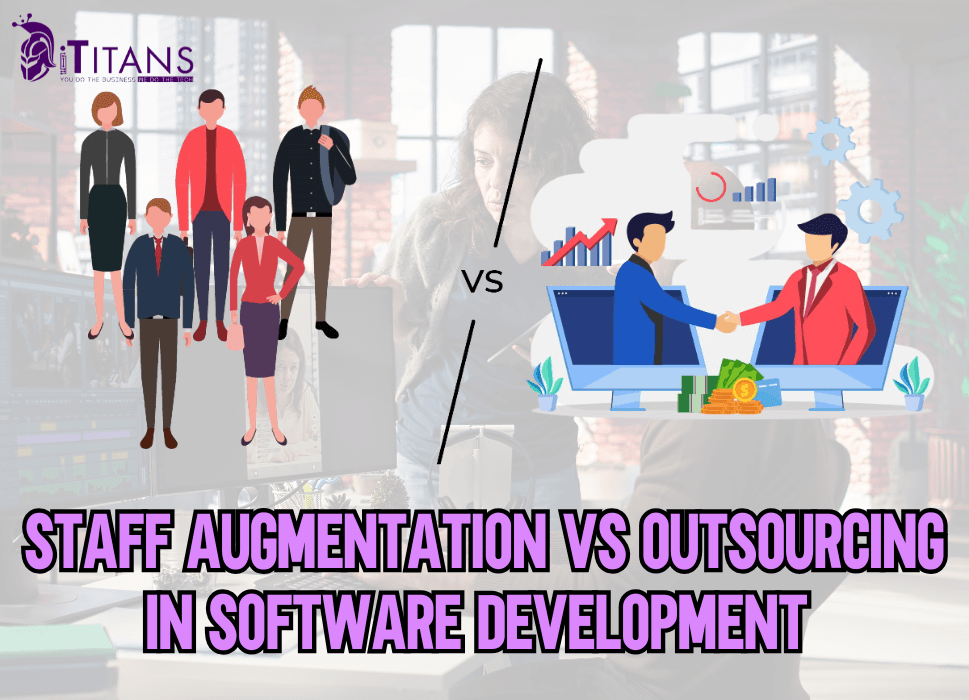
Staff Augmentation vs Outsourcing in Software Development
The demand for skilled software developers is higher than ever. Businesses are racing to launch new products, keep up with rapid technological changes, and meet evolving customer expectations.
But there’s one roadblock almost every company faces, finding the right talent at the right time.
That’s where two popular approaches come into play: staff augmentation and outsourcing software development. Both models aim to solve the talent shortage problem, but they work very differently.
Understanding the pros and cons of staff augmentation versus outsourcing development is crucial before deciding which one fits your project goals, budget, and timeline.
In this guide, we’ll break down exactly what these models are, how they differ, when to choose one over the other, and the real-world cost comparison of staff augmentation vs outsourcing.
Whether you’re a startup founder, CTO, or project manager, you’ll walk away with a clear picture of which approach is best for your business needs.

What is Staff Augmentation in Software Development?
Staff augmentation software development is a hiring model where you add external developers or specialists to your existing in-house team for a set period. Think of it as renting talent, you maintain full control over the project while the external staff fills skill gaps or boosts capacity.
This approach is popular with companies that already have a strong internal development process but need additional hands to meet deadlines, add specialized skills, or scale quickly without the long-term commitment of permanent hires.
Key Characteristics:
- Control stays in-house: You manage the augmented team just like your own employees.
- Scalable commitment: Add or remove developers as your project needs change.
- Integration with existing team: External staff work alongside your in-house team, following your workflows.
Common Scenarios for Staff Augmentation:
- Launching a new product feature that requires specialized skills.
- Meeting a sudden project deadline without overworking your internal team.
- Testing a new technology before hiring permanent staff.
- Handling short-term spikes in workload.
What is Outsourcing in Software Development?
Outsourcing software development means handing over a project, or a significant part of it, to an external company. The outsourcing vendor manages everything: staffing, processes, and delivery.
Your role shifts from direct management to setting requirements, reviewing progress, and approving final deliverables.
This model appeals to companies that want to focus on core business activities while letting experts handle development from start to finish.
Key Characteristics:
- Vendor takes full responsibility: They handle hiring, managing, and delivering the project.
- Less direct involvement: Your internal team is free to focus on other priorities.
- Project-based billing: Often based on milestones or fixed-price agreements.
Common Scenarios for Outsourcing:
- Building an entire product from scratch without internal dev resources.
- Long-term maintenance of legacy systems you don’t want to manage internally.
- Offloading side projects to free up your team’s time.
- Gaining access to niche expertise not available locally.

Staff Augmentation vs Project Outsourcing: The Core Differences
While both models involve external talent, the relationship, control, and risk distribution are very different.
Let’s break it down.
Project Control
- Staff Augmentation: You keep full control and manage the team directly.
- Outsourcing: Vendor oversees and delivers the entire project.
Talent Integration
- Staff Augmentation: External hires work within your existing processes.
- Outsourcing: Vendor operates independently, often with their own workflows.
Cost Structure
- Staff Augmentation: Pay based on developer hours.
- Outsourcing: Pay per project or milestone
Flexibility
- Staff Augmentation: Highly flexible, allowing quick scaling up or down.
- Outsourcing: Moderate flexibility; changes may need contract revisions.
Best For
- Staff Augmentation: Short-term needs, filling skill gaps, or rapid scaling.
- Outsourcing: Complete project delivery and long-term initiatives.
Pros and Cons of Staff Augmentation
Pros:
- Greater control over project quality: Since you manage the team directly, you set the standards.
- Quick scaling: Bring in additional developers within days instead of months.
- Skill-specific hires: Ideal for filling niche technical gaps without long-term contracts.
- Cultural alignment: Augmented staff can adapt to your company’s culture and processes.
Cons:
- Management overhead: You still need to oversee the team daily.
- Onboarding time: External hires need to learn your systems and workflows.
- Possible communication gaps: Especially if working across time zones.
Pros and Cons of Outsourcing Software Development
Pros:
- Lower management burden: Vendor handles hiring, training, and supervision.
- End-to-end delivery: You focus on business strategy while the vendor delivers the product.
- Access to diverse expertise: Vendors often have specialists across multiple technologies.
- Scalability for large projects: Easily handle big workloads without internal hiring.
Cons:
- Less control over daily progress: The vendor’s processes might differ from your expectations.
- Risk of misalignment: If requirements are unclear, results can deviate from your vision.
- Potential hidden costs: Contract changes, scope creep, and communication barriers can increase costs.
Cost Comparison: Staff Augmentation vs Outsourcing
When it comes to cost, both models can be efficient, but in different ways.
- Staff Augmentation Costs: Usually charged per hour or per month, based on the developer’s role and experience. For example, mid-level developers might cost $25–$40/hour offshore, while senior engineers could go up to $70/hour or more.
- Outsourcing Costs: Often billed per project or milestone. A full outsourcing project may seem expensive upfront (e.g., $50,000–$150,000) but can include project management, QA, and post-launch support.
Key takeaway:
- Choose staff augmentation if you want to manage costs based on actual hours worked.
- Choose outsourcing if you prefer a predictable lump sum with less management involvement.
When to Choose Staff Augmentation Over Outsourcing
Staff augmentation vs outsourcing software development isn’t about one being “better” than the other, it’s about which matches your situation. Choose staff augmentation when:
- You already have a project management structure in place.
- You need to fill a specific skill gap temporarily.
- You want greater control over day-to-day development.
- You need to scale up or down quickly without long-term contracts.
Example:
A fintech startup needs two experienced React Native developers for six months to meet a product release deadline. Instead of hiring full-time staff, they bring in augmented developers who work under their CTO.
When Outsourcing Works Better
Outsourcing might be the smarter choice when:
- You lack an in-house development team.
- You want an entire product built from scratch.
- You need expertise in areas your internal team doesn’t cover.
- You want to free internal resources for other priorities.
Example:
A retail company wants to launch an e-commerce app but has no mobile development expertise. They hire an outsourcing partner to handle everything from UI design to backend development.
Hybrid Approach: The Best of Both Worlds
Some companies use a staff augmentation outsourcing hybrid approach.
For example:
- Core features developed by an outsourcing vendor.
- In-house or augmented staff handle integrations and ongoing maintenance.
This approach combines the control benefits of staff augmentation with the scalability of outsourcing, useful for complex, multi-phase projects.
Real-World Examples of Staff Augmentation
To understand staff augmentation software development better, it helps to see how companies actually use it.
Example 1: Scaling for a Seasonal Product Launch
A SaaS company in the travel industry knew that demand for its booking platform would skyrocket before the holiday season. Their in-house developers were already working at full capacity, so they brought in three augmented backend developers for six months.
These new team members integrated seamlessly with the internal staff, followed existing coding standards, and helped deliver performance upgrades in time for the seasonal spike.
Example 2: Filling a Specialized Skill Gap
A health-tech startup needed a blockchain developer to integrate secure patient data handling into their platform. Hiring a permanent blockchain expert didn’t make sense for their budget, so they used staff augmentation to bring in a specialist for just three months.
The expert completed the task, documented the work, and the startup avoided long-term payroll commitments.
Example 3: Rapid Scaling for a Funding Round
When a fintech startup secured Series A funding, it needed to speed up product development. Instead of spending months recruiting, they quickly onboarded a team of augmented front-end and QA engineers, enabling them to meet aggressive investor deadlines.
Real-World Examples of Outsourcing Software Development
Example 1: Full Product Build for a Non-Tech Company
A logistics company wanted to build a mobile app to track deliveries. They had no internal development team, so they outsourced the entire project to a vendor specializing in mobile app development.
The outsourcing partner handled everything, from design and coding to testing and deployment, and delivered within six months.
Example 2: Ongoing Maintenance for a Legacy System
A financial services firm relied on outdated internal software that required constant fixes. Maintaining it internally was eating up resources, so they outsourced the maintenance to a dedicated vendor. This freed up their IT staff to focus on modernizing their systems.
Example 3: Side Project Delegation
A gaming company wanted to experiment with an educational game. Instead of pulling their main team off a major release, they outsourced the side project to a smaller development studio, reducing distractions for the core team.
Risks of Outsourcing Software Development
While outsourcing software development offers clear benefits, it also carries specific risks that need to be managed.
- Loss of Direct Control: You depend on the vendor’s project management style, which might not align with your expectations.
- Communication Barriers: Time zone differences, language challenges, and cultural differences can cause misunderstandings.
- Quality Variability: Not all vendors maintain the same coding and QA standards.
- Hidden Costs: Scope changes, additional features, or extended deadlines can increase costs beyond the original estimate.
- Data Security Risks: Sharing sensitive business or customer data with an external party can raise security and compliance concerns.

Risks of Staff Augmentation
Similarly, staff augmentation isn’t risk-free.
- Onboarding Overhead: Augmented staff need time to learn your systems, processes, and tools before becoming fully productive.
- Management Workload: You still have to assign tasks, monitor progress, and ensure quality, which can be time-consuming.
- Potential for Over-Reliance: Depending too heavily on augmented staff without building internal capability can create dependency.
- Integration Challenges: Cultural and workflow differences may slow down collaboration.
- Contractual Complexity: Short-term contracts may need frequent renewals, creating administrative work.
How to Manage Augmented Teams Effectively
If you choose staff augmentation, the success of your project depends on how well you integrate the external team members.
Best Practices:
- Clear Onboarding Process: Provide detailed documentation, access to systems, and a dedicated onboarding buddy from your in-house team.
- Set Expectations Early: Define roles, responsibilities, and communication channels from day one.
- Use Collaboration Tools: Tools like Jira, Slack, and Confluence keep everyone on the same page.
- Daily or Weekly Standups: Maintain regular updates to catch issues early.
- Promote Inclusion: Treat augmented staff as part of the team, invite them to team meetings and discussions.
How to Manage Outsourced Projects Successfully
With outsourcing software development, you’re relying on an external team to deliver results. To make this work:
Best Practices:
- Detailed Project Scope: Document requirements, timelines, and deliverables clearly before signing a contract.
- Regular Check-ins: Schedule milestone reviews and demos to ensure progress aligns with expectations.
- Choose the Right Partner: Vet vendors for relevant experience, portfolio quality, and client references.
- Protect Your IP: Use clear contracts and NDAs to safeguard intellectual property and sensitive data.
- Plan for Handover: Ensure the vendor provides documentation, source code, and training if the project will be managed internally later.
Decision-Making Framework: Which Model Should You Choose?
If you’re stuck between staff augmentation vs outsourcing software development, here’s a quick decision guide.
Choose Staff Augmentation When:
- You have an existing in-house development team.
- You need extra capacity quickly.
- You want to keep full control over the project.
- The work requires close collaboration with internal staff.
Choose Outsourcing When:
- You don’t have internal development capabilities.
- You need a complete product or feature set delivered.
- You want to focus on core business operations.
- The project requires diverse skills and resources.
Cost Comparison Scenarios
Scenario 1: Small Feature Upgrade
A mid-sized SaaS company needs a new analytics dashboard.
- Staff Augmentation Cost: Hire a senior front-end developer for 3 months at $40/hour means $19,200 total.
- Outsourcing Cost: Vendor bids $30,000 for complete design and development.
Staff augmentation wins if you have internal QA and backend resources.
Scenario 2: Full Mobile App Development
A startup wants an iOS and Android app with a custom backend.
- Staff Augmentation Cost: Would require hiring multiple roles (UI/UX, backend, mobile devs, QA), costing $120k+ over 6–8 months.
- Outsourcing Cost: Vendor offers full delivery for $95,000 with post-launch support.
Outsourcing wins for speed and cost in this case.
Hybrid Model in Action
Some businesses combine both models for maximum flexibility.
For example:
- Use outsourcing for the core product build.
- Bring in staff augmentation for post-launch feature updates and integrations.
This staff augmentation outsourcing hybrid approach can:
- Reduce initial time-to-market.
- Maintain internal control over critical parts of the project.
- Avoid long-term dependence on a single vendor.
The Role of Location in Decision Making
One important factor in both models is location:
- Nearshore Outsourcing: Similar time zones, easier communication.
- Offshore Outsourcing: Lower costs but may have time zone challenges.
- Onshore Staff Augmentation: Highest cost but easiest integration.
- Offshore Staff Augmentation: Balances cost savings with direct management.
Companies often mix these, for example, offshore staff augmentation for development plus onshore QA for quality control.
Security and Compliance Considerations
Whether you choose staff augmentation or outsourcing, you must consider:
- Data Security: How will external team members access your systems? Are they using secure connections?
- Regulatory Compliance: If you operate in industries like healthcare or finance, ensure the external team follows required regulations (HIPAA, GDPR, PCI DSS).
- Access Control: Use role-based permissions and revoke access immediately after the contract ends.
How to Choose Between Staff Augmentation and Outsourcing in Software Development
Choosing between staff augmentation and outsourcing in software development is not just a budget decision, it’s about aligning your hiring and project execution approach with your business’s current priorities, skill gaps, and long-term goals.
Let’s break down the factors you should consider before making a call.
1. Project Complexity and Scope
If your project is long-term with evolving needs, staff augmentation gives you the flexibility to scale your team as requirements shift. You can handpick experts for specific phases, such as front-end developers for UI upgrades or cloud engineers for deployment optimization.
On the other hand, outsourcing works better when your project has a well-defined scope, for instance, developing a mobile app with a fixed set of features in a fixed timeline.
- For dynamic, evolving projects go for staff augmentation
- For clearly scoped, end-to-end projects go for outsourcing
2. Level of Control Needed
If you need hands-on control of your development process, staff augmentation keeps your internal project managers in charge. You decide the workflow, assign daily tasks, and monitor progress.
Outsourcing in software development shifts this control to the vendor, ideal when you want to focus on the bigger picture while the vendor manages the execution.
3. Speed of Onboarding
If you urgently need to fill technical gaps without waiting for a long hiring cycle, staff augmentation allows rapid onboarding, sometimes within days.
However, if you want a complete project team to start immediately, outsourcing can save you the hassle of assembling multiple resources.
4. Cost Transparency
With staff augmentation, you’re typically billed on a per-resource, per-hour or per-month basis. You know exactly how much each developer costs.
In outsourcing, costs can be project-based or milestone-based, which can be predictable for fixed-scope projects but harder to adjust if changes occur mid-project.
Industry Examples: When Each Works Best
Let’s look at real-world scenarios where staff augmentation or outsourcing in software development delivers better results.
When Staff Augmentation Wins
- A SaaS company needs a React Native developer for six months to finish a feature upgrade before launch.
- An AI startup requires temporary data scientists to train and refine its machine learning models.
- An enterprise IT department wants to enhance cybersecurity capabilities but can’t justify hiring full-time security analysts.
When Outsourcing Wins
- An e-commerce startup wants to launch a complete website and mobile app without building an in-house tech team.
- A logistics company needs a cloud migration handled entirely by a vendor within a fixed deadline.
- A healthcare provider requires a HIPAA-compliant patient management system built from scratch.
Risks and How to Minimize Them
Whether you choose staff augmentation or outsourcing in software development, you’ll face challenges. The good news? You can prepare for them.
Risks in Staff Augmentation
- Integration Issues: External hires may struggle to adapt to internal workflows.
Solution: Provide thorough onboarding and assign a buddy system.
- Overdependence on Temporary Staff: Relying too heavily on augmented staff can limit skill growth in your internal team.
Solution: Pair external experts with internal members for skill transfer.
- Budget Overruns: Long-term augmentation without review can increase costs.
Solution: Set review checkpoints every 3–6 months.
Risks in Outsourcing
- Quality Concerns: Vendors may meet deadlines but compromise quality.
Solution: Set quality benchmarks and include penalties in the contract.
- Communication Gaps: Time zones and language barriers can slow collaboration.
Solution: Schedule overlapping hours and use shared project management tools.
- Vendor Lock-In: Over-reliance on a single vendor can make switching difficult.
Solution: Keep code repositories and documentation accessible to your team.
Hybrid Approach: Combining the Best of Both Worlds
Some companies avoid the “either/or” dilemma by blending staff augmentation with outsourcing. This hybrid model allows you to keep strategic control while outsourcing execution-heavy tasks.
Example:
A fintech company might outsource backend development to a vendor while augmenting its in-house team with specialized UX designers to maintain brand consistency.
Advantages of Hybrid:
- Retain control over critical components.
- Speed up delivery by splitting responsibilities.
- Reduce dependency on a single approach.
Future Trends: How These Models Are Evolving
The debate between staff augmentation and outsourcing in software development isn’t static, it’s changing with technology and market demands.
1. Rise of Remote-First Development
Companies are more comfortable hiring remote developers from anywhere, blurring the lines between augmentation and outsourcing.
2. AI-Assisted Development
AI tools like GitHub Copilot are speeding up coding tasks, but human expertise remains crucial, especially in augmented roles where team integration is key.
3. Vendor Specialization
Outsourcing vendors are increasingly focusing on niche areas such as blockchain, IoT, or AR/VR development, making them attractive for specialized projects.

Decision Framework for Your Business
To decide between staff augmentation and outsourcing in software development, ask:
- Is your project scope fixed or flexible?
- Fixed go for outsourcing
- Flexible go for staff augmentation
- Do you need short-term specialists or a full project team?
- Specialists go for staff augmentation
- Full team go for outsourcing
- Do you want to maintain daily control or delegate entirely?
- Daily control go for staff augmentation
- Delegation go for outsourcing
- Is cost predictability or flexibility more important?
- Predictability go for outsourcing
- Flexibility go for staff augmentation
Get the Right Development Support for Your Business Today
At iTitans, we help businesses assess their needs and provide the right development model to achieve results without overcomplicating the process. Contact us today to discuss your project, and let’s build the solution that fits your exact goals.
FAQs
What is staff augmentation in software development?
Staff augmentation means adding skilled developers to your existing in-house team for a specific project or time period.
How does outsourcing differ from staff augmentation?
Outsourcing involves hiring an external company to handle an entire software project, while staff augmentation only fills skill gaps within your own team.
Which is more cost-effective: staff augmentation or outsourcing?
The answer depends on project scope and duration; outsourcing can save costs for complete projects, while staff augmentation can be cheaper for short-term skill needs.
Can staff augmentation work for long-term projects?
Yes, but it’s more common for short- to mid-term needs where you require specific skills temporarily.
Is outsourcing better for startups?
Outsourcing can be ideal for startups that lack in-house technical resources and need a complete development team quickly.
How do I decide between staff augmentation and outsourcing?
Evaluate your in-house capabilities, budget, timeline, and project complexity before choosing.