
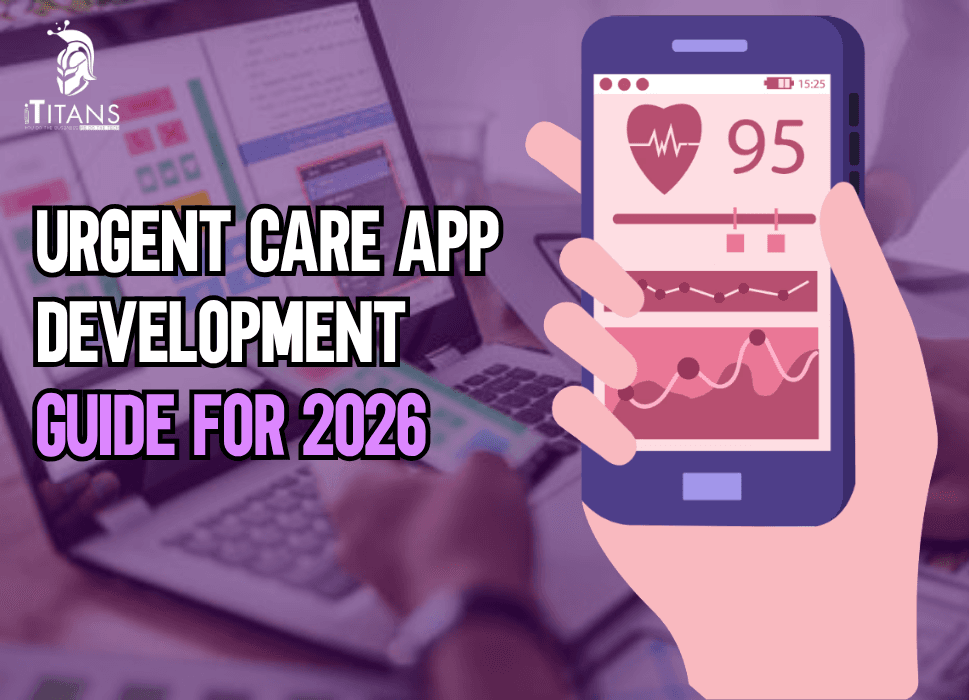
Urgent Care App Development Guide for 2026
Urgent care app development is rapidly transforming how patients access medical services in the United States and across the world. As we move into 2026, healthcare providers are under growing pressure to deliver faster, more accessible, and digitally enhanced care experiences.
Patients no longer want to wait in long queues or struggle to find nearby clinics. Instead, they expect immediate access to care through intuitive mobile applications. The demand for urgent care app development services has grown significantly in recent years.
According to industry reports, the global digital health market is expected to surpass $660 billion by 2026, driven largely by mobile health (mHealth) applications. In the United States alone, over 70% of patients prefer using digital platforms to book appointments and consult healthcare professionals.
This shift presents a major opportunity for healthcare providers, startups, and enterprises to invest in custom healthcare app development. By building a reliable urgent care app, businesses can improve patient engagement, streamline operations, and stay competitive in a rapidly evolving industry.
Why Urgent Care Apps Are Essential in Modern Healthcare
The healthcare landscape has changed dramatically over the past decade. Urgent care centers are now playing a crucial role in providing quick and affordable treatment for non-life-threatening conditions. However, managing patient flow and delivering efficient care can be challenging without digital tools.
Role of Urgent Care Apps
Urgent care mobile app development addresses these challenges by offering features such as real-time appointment booking, telemedicine consultations, and digital health records. These apps reduce waiting times and improve patient satisfaction.
Recent statistics show that nearly 60% of urgent care visits in the U.S. could be handled through telehealth platforms. This highlights the growing importance of integrating telemedicine features into urgent care apps.
Moreover, healthcare providers are increasingly adopting digital transformation strategies. With over 80% of hospitals investing in mobile technology, urgent care app development has become a top priority.

Key Features of a Successful Urgent Care App
A well-designed urgent care app must focus on user experience, functionality, and security. Patients expect a seamless and intuitive interface that allows them to access healthcare services quickly.
Book Appointments in Real-Time
One of the most important features is real-time appointment scheduling. This allows users to book visits instantly without calling the clinic. Another essential feature is telemedicine integration, enabling video consultations with doctors.
Integrated Database
Electronic Health Records (EHR) integration is also crucial. It ensures that patient data is stored securely and can be accessed easily by healthcare providers. Additionally, GPS-based clinic locator helps users find nearby urgent care centers.
Push Notifications
Push notifications play a vital role in reminding patients about appointments, medications, and follow-ups. Payment gateway integration is equally important, allowing users to pay bills securely through the app.
Secure Mobile Apps
Security features such as data encryption and compliance with regulations like HIPAA are non-negotiable. In 2026, patients are more aware of data privacy, making secure healthcare app development a necessity.
Latest Trends in Urgent Care App Development for 2026
Technology is evolving rapidly, and urgent care app development is no exception. One of the most significant trends is the use of Artificial Intelligence (AI). According to recent data, over 75% of healthcare organizations are expected to adopt AI-driven technologies by 2026. This shows how critical it is to incorporate advanced features into urgent care apps.
Influence of Artificial Intelligence
AI-powered chatbots can assist patients by answering basic health queries and guiding them to the right care options.
Wearable Feature
Another growing trend is wearable device integration. Devices like smartwatches can track vital signs such as heart rate and oxygen levels, which can be synced with urgent care apps for real-time monitoring.
Blockchain Revolution
Blockchain technology is also gaining attention in healthcare app development. It enhances data security and ensures transparency in patient records.
Cloud Integration
Cloud-based healthcare applications are becoming more popular as they offer scalability and flexibility. This is especially important for urgent care centers that need to handle a large number of users.
Steps to Develop an Urgent Care App
Step #1: Requirement Gathering
Developing an urgent care app requires careful planning and execution. The process begins with understanding the target audience and their needs. This includes identifying key pain points such as long wait times and limited access to care.
Step #2: Developing Key Features
The next step is defining the app’s features and functionality. This stage involves collaboration between healthcare professionals and app developers to ensure the app meets industry standards.
Step #3: Creating the Right Interface
UI/UX design plays a crucial role in the success of the app. A simple and user-friendly interface can significantly improve user engagement.
Step #4: Development in Action
Once the design is finalized, the development phase begins. This includes front-end and back-end development, API integration, and database management.
Step #5: Quality Assurance Testing
Testing is a critical step to ensure the app functions smoothly without errors. After testing, the app is deployed on platforms such as iOS and Android.
Step #6: Post Launch Maintenance
Post-launch maintenance and updates are essential to keep the app relevant and secure. Regular updates help in adding new features and improving performance.
Cost of Urgent Care App Development in 2026
The cost of urgent care app development varies depending on several factors. These include the complexity of the app, features, technology stack, and development team location.
On average, developing a basic urgent care app can cost between $30,000 and $70,000. A more advanced app with AI integration and telemedicine features can range from $80,000 to $200,000 or more.
In the United States, development costs are generally higher due to the expertise and quality of services. However, investing in high-quality development ensures better performance and long-term success.
Maintenance costs should also be considered. Typically, annual maintenance can range from 15% to 20% of the initial development cost.

Challenges in Urgent Care App Development
As digital health adoption continues to grow, developers and healthcare providers face a unique set of challenges that can make or break the success of an urgent care solution. Let’s walk through the most critical hurdles and what makes them so tricky.
Ensuring Data Security and Patient Privacy
Handling sensitive health data is one of the biggest challenges in urgent care app development. Users are sharing personal details, medical histories, prescriptions, and sometimes even real-time health data. Any breach can lead to serious consequences, both legally and ethically.
Healthcare apps must comply with strict regulations like HIPAA (in the U.S.) or GDPR (in Europe). According to recent reports, healthcare data breaches increased by over 20% in the past two years, making security more critical than ever. Developers must implement end-to-end encryption, secure APIs, and multi-factor authentication, which can significantly increase development complexity and cost.
Real-Time Availability and Scheduling Complexity
Urgent care apps must provide real-time doctor availability, which sounds simple—but it’s not. Doctors’ schedules can change rapidly due to emergencies, cancellations, or overbooking. Ensuring accurate, up-to-date information is technically demanding.
If a patient books an appointment and finds out the doctor isn’t available, it creates frustration and loss of trust. Developers must integrate dynamic scheduling systems, real-time updates, and intelligent load balancing to ensure seamless booking experiences, which adds layers of backend complexity.
Integration with Healthcare Systems
One of the toughest parts of urgent care app development is integrating with existing healthcare systems like Electronic Health Records (EHRs), lab systems, and pharmacy databases. These systems often use different formats and standards, making smooth integration a real challenge.
Maintaining High Performance Under Pressure
Urgent care apps are often used in high-stress situations where every second matters. Imagine an app crashing or lagging when someone is trying to book immediate care that’s a major failure. Apps must be optimized for high performance, even during peak usage times. This means handling thousands of concurrent users, minimizing load times, and ensuring uptime reliability.
Delivering a User-Friendly Experience
Users of urgent care apps aren’t always tech-savvy they may be elderly, stressed, or dealing with medical emergencies. This makes user experience (UX) design especially challenging.
The interface must be simple, intuitive, and fast. Too many steps or confusing layouts can discourage users. Developers need to focus on accessibility, clear navigation, and minimal input requirements, while still offering advanced features. Balancing simplicity with functionality is not easy.
Managing Regulatory Compliance Across Regions
Healthcare regulations vary widely across countries and even regions within the same country. This makes scaling an urgent care app globally quite difficult.
For example, telemedicine laws differ significantly between jurisdictions, affecting how consultations are conducted. Developers must constantly update the app to remain compliant with changing laws. Failure to do so can lead to legal penalties or even app shutdowns.
Integration of Telemedicine Features
Telemedicine is now a core feature of urgent care apps, but implementing it is far from straightforward. It requires high-quality video and audio streaming, secure communication channels, and stable connectivity.
According to recent data, telehealth usage stabilized at levels 38 times higher than pre-pandemic levels. Supporting this demand means building reliable video infrastructure, minimizing latency, and ensuring cross-device compatibility.
Handling Emergency Situations Effectively
Urgent care apps must be designed to respond quickly in emergency scenarios. This includes features like emergency contact buttons, location tracking, and quick access to nearby healthcare facilities.
However, integrating these features requires accurate geolocation services and real-time data processing. There’s also the challenge of ensuring the app doesn’t replace emergency services but complements them responsibly. Misuse or delays can have serious consequences.
Balancing Cost and Advanced Features
Developing a feature-rich urgent care app can be expensive. From AI-driven symptom checkers to real-time chat support and telemedicine, every feature adds to the cost.
Startups and healthcare providers often struggle to balance budget constraints with user expectations. According to industry estimates, a fully functional healthcare app can cost anywhere between $50,000 to $300,000 or more.
Ensuring Cross-Platform Compatibility
Users expect urgent care apps to work seamlessly across devices like smartphones, tablets, and even desktops. This means developers must ensure compatibility with both iOS and Android platforms.
Each platform has its own design guidelines, performance standards, and technical requirements. Building and maintaining consistent performance across platforms increases development time and effort. Ignoring this can lead to poor user experiences and reduced adoption.
Incorporating AI and Advanced Technologies
AI is becoming a key part of healthcare apps, powering features like symptom checkers, predictive analytics, and personalized recommendations. However, implementing AI is complex and resource-intensive.
Developers must ensure that AI algorithms are accurate, unbiased, and clinically validated. There’s also the challenge of processing large datasets while maintaining speed and privacy. A poorly designed AI feature can do more harm than good.

How iTitans Supports Urgent Care App Development
When it comes to building high-quality urgent care apps, choosing the right development partner is essential. iTitans stands out as a full-service software development company with expertise in mobile and website app development.
Based in the United States with a global reach, iTitans offers a wide range of services including mobile app development, software development, MVP development, and UI/UX designing. Their team focuses on creating user-friendly and scalable healthcare applications tailored to client needs.
Embracing the Digital Transformation
iTitans also provides digital transformation services, helping healthcare providers adopt modern technologies. Their expertise in SEO and social media marketing ensures that the app reaches the right audience.
Right Talent at Your Service
iTitans offers staff augmentation services, allowing businesses to scale their development teams efficiently. This flexibility is particularly useful for urgent care providers looking to expand their digital capabilities.
By leveraging iTitans’ expertise, healthcare organizations can build reliable and efficient urgent care apps that enhance patient care and operational efficiency.
Role of Custom Development in Building Urgent Care Apps
Custom app development services play a vital role in creating tailored healthcare applications. Unlike generic apps, custom-built urgent care apps are designed to meet specific business needs.
These services ensure that the app includes all necessary features and integrates seamlessly with existing systems. Custom development also allows for scalability, enabling the app to grow with the business.
Moreover, custom healthcare app development provides better security and compliance. This is crucial in the healthcare industry where data privacy is a top concern.
Future of Urgent Care App Development
The future of urgent care app development looks promising. With advancements in technology, these apps will become more intelligent and user-friendly.
AI and machine learning will play a bigger role in diagnosing conditions and providing personalized care recommendations. Augmented reality (AR) may also be used for remote consultations and medical training.
The integration of Internet of Things (IoT) devices will further enhance patient monitoring. This will enable healthcare providers to deliver proactive care rather than reactive treatment.
By 2026, it is expected that over 90% of healthcare interactions will involve digital tools. This highlights the importance of investing in urgent care app development services.
As we move into 2026, the demand for digital healthcare services will continue to grow. By investing in custom urgent care app development, businesses can meet patient expectations and achieve long-term success.
Partnering with experienced companies like iTitans can make a significant difference in building high-quality applications. With the right strategy and technology, urgent care apps can transform the way healthcare is delivered.
Get in touch with iTitans today for urgent care app development services where we combine quality with reliability.
FAQs
What is an urgent care app and how does it work in 2026?
An urgent care app is a digital healthcare solution that connects patients with medical professionals for immediate, non-emergency treatment. In 2026, these apps use AI-driven triage systems, real-time video consultations, and integrated health records.
What technologies are used in urgent care app development?
Urgent care apps in 2026 rely on technologies like artificial intelligence, cloud computing, and blockchain for secure data management. Developers use frameworks like Flutter or React Native for cross-platform compatibility. APIs for video calls, payment gateways, and health data integration are essential. IoT integration with wearable devices is also gaining popularity.
How can AI improve urgent care apps?
AI enhances urgent care apps by providing intelligent symptom analysis and automated triage. It helps prioritize cases based on severity and recommends appropriate care. AI chatbots offer 24/7 assistance and reduce the workload on medical staff.
What are the compliance requirements for urgent care apps?
Urgent care apps must comply with healthcare regulations such as HIPAA in the US or GDPR in Europe. These regulations ensure patient data privacy and secure handling of medical information. Developers must implement encryption, secure authentication, and audit trails.
How do urgent care apps ensure patient data security?
Data security is ensured through encryption protocols, secure cloud storage, and multi-factor authentication. Regular security audits and vulnerability testing are conducted to prevent breaches. In 2026, blockchain is also used for tamper-proof medical records.
What role does telemedicine play in urgent care apps?
Telemedicine is the backbone of urgent care apps, enabling virtual consultations between patients and doctors. It allows patients to receive medical advice without visiting a clinic. Video, voice, and chat-based communication options improve accessibility.
How long does it take to develop an urgent care app?
The development timeline depends on the complexity and features of the app. A basic app may take 3–6 months, while a fully-featured solution can take 9–12 months or longer. Time is also required for testing, compliance checks, and deployment.