
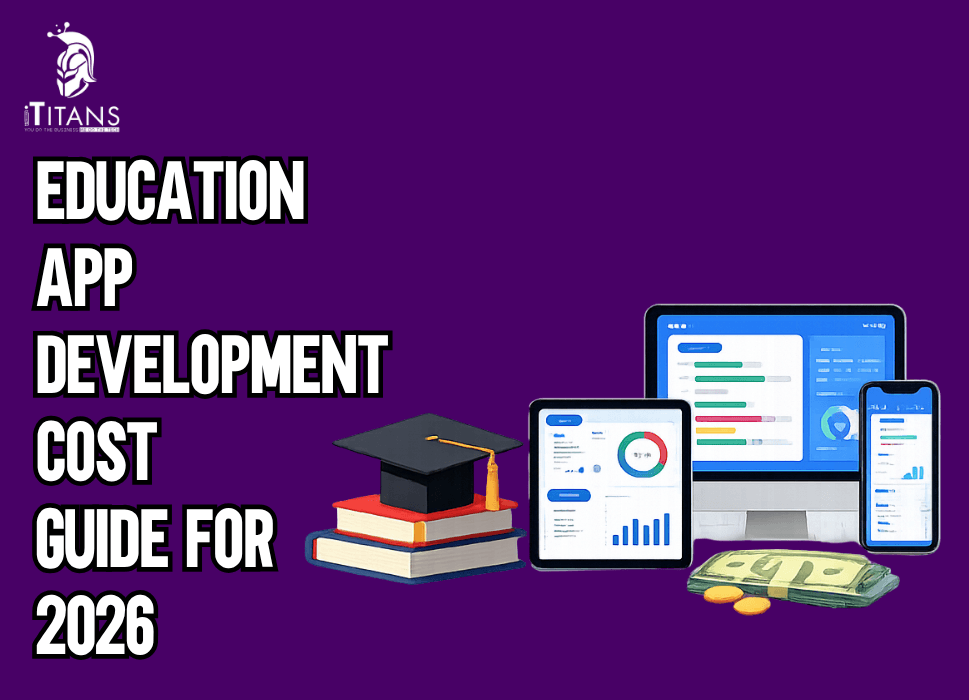
Education App Development Cost Guide for 2026
In the last five years, the education technology market has shifted from experimental projects to full-scale digital infrastructure. Universities, corporate training providers, EdTech startups, and even K-12 institutions are investing heavily in mobile learning platforms.
Yet one question continues to dominate boardroom discussions before any product roadmap is approved: how much will it actually cost to build an education app?
If you are planning an EdTech platform, budgeting mistakes can derail your entire product strategy. Founders often underestimate development complexity, miscalculate team costs, or hire offshore vendors who promise low prices but deliver unstable products.
By the time these problems surface, timelines slip, budgets inflate, and investor confidence drops.
This guide breaks down the realistic education app development cost landscape for 2026. Instead of vague ranges and recycled industry estimates,

How Much Does Education App Development Cost in 2026?
The first reality most founders encounter is that education app development price estimates online vary wildly. Some blogs claim you can build a learning platform for $5,000. Others suggest budgets exceeding $300,000.
Both figures can be technically true, but they apply to entirely different product categories.
A realistic estimate for educational mobile app development cost depends on three major tiers of complexity.
Basic Education Apps
Basic learning apps usually focus on a single core function. These might include quiz apps, flashcard learning tools, or simple course viewers with limited interactivity.
Typical features include:
- user registration
- course access
- basic video lessons
- progress tracking
- simple quizzes
A typical cost to develop an eLearning mobile app at this level ranges between $20,000 and $50,000, depending on UI design quality and backend infrastructure.
These apps are often launched as MVPs for startups validating product ideas or testing early user adoption.
However, even at this level, founders frequently encounter unexpected costs if the development team lacks experience building educational platforms.
Mid-Level Education Apps
Mid-tier EdTech platforms introduce more advanced learning experiences. These platforms often support instructors, course marketplaces, interactive lessons, and user analytics.
Typical capabilities include:
- instructor dashboards
- payment integrations
- course management systems
- real-time notifications
- advanced learning analytics
At this stage, the eLearning app development cost typically ranges from $60,000 to $120,000.
This category includes many early-stage EdTech startups launching subscription learning platforms or niche training products.
The complexity increases significantly because these apps require backend systems that manage thousands of users, course data, payments, and analytics simultaneously.
Poor architecture decisions at this stage often cause massive scaling problems later.
Advanced EdTech Platforms
The third category includes sophisticated digital learning ecosystems. These platforms compete with products like Duolingo, Coursera, or enterprise training systems.
Such platforms often involve:
- AI-driven learning recommendations
- adaptive learning algorithms
- gamification systems
- live classrooms and video streaming
- instructor marketplaces
- multi-tenant architecture
For projects at this level, the budget required for education app development can range from $150,000 to $400,000 or more.
Large EdTech companies spend significantly beyond this range when they build global platforms.
At this stage, cost is no longer just about development hours. It involves infrastructure design, security architecture, compliance requirements, and long-term product scalability.
Why Education App Budgets Often Spiral Out of Control
One of the most common reasons founders search for how much does it cost to develop an education app in 2026 is because their initial estimates quickly collapse during development.
This usually happens when project scope expands without proper technical planning.
In many cases, the development team begins building features without establishing a stable architecture for learning data, user roles, course management, and analytics.
As the platform grows, developers start rewriting systems that were originally built for smaller workloads.
The result is a cascading cycle of delays, bug fixes, and additional development costs.
Another common problem occurs when founders outsource development purely based on hourly rates.
Lower hourly costs do not necessarily reduce the cost to build a student learning app. Inexperienced teams often require far more development hours to complete the same features.
Poor communication also becomes a significant financial risk. Product owners frequently discover that offshore teams misunderstood key requirements after months of development.
At that point, correcting the architecture can cost more than the original project budget.
This is why many successful EdTech startups now prioritize experienced development partners instead of chasing the lowest quote.
Companies working with an experienced mobile app development company often avoid the hidden costs that inexperienced teams introduce during later stages of development.
Core Factors That Influence Education App Development Cost
No two EdTech platforms share identical budgets. Several technical and operational variables influence the final price.
Understanding these factors is critical when estimating the cost to build an education app.
App Complexity and Feature Scope
Feature complexity is the single biggest cost driver.
An app offering recorded courses requires a relatively simple architecture compared to platforms supporting live classrooms, real-time collaboration, and AI-based learning recommendations.
For example, the cost to build an eLearning app like Duolingo is significantly higher than a standard course platform because it includes:
- gamified progress systems
- language learning algorithms
- AI-driven personalization
- large-scale content management
These systems require advanced backend engineering and machine learning expertise.
Platform Choice
Another major factor affecting the cost of building an online learning platform is the platform strategy.
Founders usually choose between:
- native iOS and Android apps
- cross-platform frameworks
- web-based learning platforms
Native development offers strong performance but doubles development workload. Cross-platform frameworks reduce costs but sometimes limit performance for highly interactive learning experiences.
The platform decision should align with the product’s long-term growth strategy rather than short-term budget constraints.
UI and User Experience Design
Education apps rely heavily on user engagement. Poor interface design can reduce course completion rates dramatically.
Students abandon platforms quickly when navigation becomes confusing or when progress tracking is unclear.
Professional design teams working on mobile app UI/UX design services spend significant time designing intuitive learning journeys.
This includes lesson flow, quiz interactions, progress dashboards, and notification systems that keep learners engaged.
While strong design increases upfront costs, it significantly improves product adoption and retention.
Development Team Location
Another widely discussed factor affecting education app development cost is the geographic location of your development team.
Hourly development rates vary dramatically across regions.
North American development agencies may charge between $120 and $250 per hour. European firms often charge between $70 and $150 per hour.
Development teams in Asia or Eastern Europe may offer rates between $25 and $60 per hour.
While these differences appear attractive from a budgeting perspective, hourly rates alone rarely reflect the total project cost.
Teams with extensive experience building custom mobile app development services for EdTech platforms often deliver projects faster and with fewer architectural mistakes.
That efficiency frequently reduces total development costs despite higher hourly rates.
Technology Stack and Architecture Decisions
Technology choices play a major role in determining the LMS mobile app development cost estimate for an EdTech platform.
Selecting the wrong architecture early can result in expensive rebuilds once user traffic grows.
Modern education platforms often rely on combinations of:
- cloud infrastructure
- video streaming services
- scalable backend frameworks
- real-time communication systems
For platforms supporting live classrooms, real-time messaging and video streaming add substantial engineering complexity.
These features require stable backend systems capable of handling thousands of concurrent connections without latency issues.
Companies planning enterprise training systems often require deeper integration with existing business software through custom software development company solutions.
These integrations can increase development complexity but are often necessary for corporate learning environments.
Cost Breakdown by Education App Type
Understanding these distinctions helps founders estimate the cost of building an online learning platform with far greater accuracy before development begins.
Language Learning Apps
Language learning platforms have become one of the most popular segments of the EdTech market. Apps like Duolingo, Babbel, and Memrise have set extremely high standards for user engagement.
Building a language learning platform requires far more than displaying vocabulary lessons. These systems usually include gamification engines, learning streaks, personalized lesson recommendations, speech recognition, and detailed progress analytics.
Because of these features, the cost to build an eLearning app like Duolingo can easily reach $150,000 to $300,000 for an initial version.
Several technical components increase complexity:
- adaptive learning algorithms that adjust difficulty levels
- voice recognition for pronunciation assessment
- interactive quiz systems
- reward and achievement mechanics
- AI-driven learning suggestions
The development team must design systems capable of processing learning data in real time while maintaining an engaging user experience.
Without a well-planned architecture, these systems become extremely difficult to scale as user numbers grow.
Learning Management System (LMS) Apps
Another major category is LMS-based applications used by schools, universities, and corporations for structured training programs.
An LMS platform must support multiple user roles including administrators, instructors, and learners. Each role requires a unique interface and permission structure.
When founders research cost to develop a learning management system app, they often overlook the backend complexity involved in managing course structures, assessments, grading systems, and student analytics.
Key LMS features often include:
- course management dashboards
- assignment submissions
- grading systems
- discussion forums
- instructor analytics
- student progress reporting
Because of these operational requirements, the LMS mobile app development cost estimate typically ranges between $80,000 and $200,000, depending on how advanced the platform becomes.
Corporate training systems frequently require additional integrations with HR software, employee databases, and compliance reporting tools.
These integrations increase development scope but are essential for enterprise environments.
Organizations building corporate training systems often rely on custom software development company services to integrate learning platforms with existing business infrastructure.
Virtual Classroom Apps
Live learning environments are becoming increasingly common as remote education expands globally.
Virtual classroom platforms replicate the experience of physical classrooms through video conferencing, collaborative tools, and real-time communication.
However, these systems introduce some of the most technically demanding features in EdTech development.
Platforms offering live teaching sessions must support:
- real-time video streaming
- screen sharing
- interactive whiteboards
- live chat messaging
- student attendance tracking
- session recordings
Building these capabilities significantly increases the educational mobile app development cost.
Video streaming alone requires powerful backend infrastructure and bandwidth optimization to prevent lag during live classes.
For platforms supporting thousands of concurrent learners, the infrastructure must scale dynamically without affecting performance.
Because of these requirements, virtual classroom apps typically cost $120,000 to $250,000 to develop.
Startups entering this space must also consider ongoing cloud hosting expenses, which can grow significantly as the platform gains users.
Kids Learning Apps
Children’s learning applications represent another large segment of the EdTech market. These apps often focus on interactive learning experiences using animations, games, and storytelling.
Although kids learning apps may appear simple on the surface, they require specialized design approaches.
Children interact with digital interfaces differently from adults. Designers must simplify navigation, use vibrant visual elements, and ensure interactions are intuitive even for young learners.
Development teams working on these products often collaborate closely with mobile app UI/UX design services specialists to create engaging learning environments.
Key features include:
- animated lessons
- game-based learning systems
- reward mechanisms
- parental dashboards
- content moderation systems
Depending on the number of interactive elements and animations involved, the cost to build a student learning app for children typically ranges from $40,000 to $120,000.
The design process plays a particularly important role in determining development cost for this category.

Feature-Based Cost Drivers in Education Apps
Beyond the overall product category, individual features significantly influence the education app development cost.
Some features require relatively small development effort, while others demand complex backend engineering and third-party integrations.
User Accounts and Profiles
Every education platform begins with account management. Students need profiles that track learning progress, achievements, and course history.
While this feature seems basic, it becomes more complex when apps support multiple user roles such as instructors, administrators, and moderators.
Account systems must also handle authentication, password security, and user data storage.
Even this foundational feature contributes to the overall cost to build an education app because it forms the backbone of the entire system.
Course Management Systems
Course management systems allow instructors to upload learning materials, organize lessons, and monitor student performance.
These systems require flexible content structures capable of supporting video lessons, quizzes, assignments, downloadable resources, and interactive activities.
Platforms offering course marketplaces also require payment gateways and subscription management.
Because these features involve backend logic and database architecture, they contribute significantly to the eLearning app development cost.
Gamification Systems
Gamification has become one of the most powerful engagement tools in modern education apps.
Points, badges, leaderboards, and achievement systems motivate learners to continue progressing through lessons.
However, building gamification engines requires careful data tracking and algorithm design.
These systems must monitor user behavior in real time and trigger rewards when milestones are reached.
For apps targeting younger audiences or language learners, gamification features can increase the budget required for education app development considerably.
AI-Powered Learning Recommendations
Artificial intelligence is rapidly becoming a major component of advanced EdTech platforms.
AI systems analyze learner behavior, performance patterns, and course progress to recommend personalized lessons.
Building these capabilities increases development complexity significantly.
Machine learning models require large datasets, backend infrastructure, and ongoing optimization.
Platforms implementing AI tutors or adaptive learning systems will see higher cost to develop an eLearning mobile app estimates.
However, these features can dramatically improve learning outcomes and user retention.
Development Timeline and Its Impact on Cost
Time is another critical factor when estimating the education app development price.
A rushed development schedule often leads to poor code quality, incomplete testing, and unstable infrastructure.
On the other hand, overly long development cycles increase project costs and delay product launches.
Most education platforms follow a multi-stage development process.
Product Planning Phase
Before development begins, product teams define platform features, user flows, and technical architecture.
This stage includes market research, feature prioritization, and technical feasibility analysis.
Skipping this phase often leads to scope confusion and costly redesigns later.
Design and Prototyping
During the design phase, teams create wireframes and interactive prototypes to visualize the learning experience.
This stage ensures that navigation, lesson flow, and user interactions work effectively before coding begins.
Design decisions made here directly affect development complexity and overall education app development cost.
Development and Testing
The core development stage includes backend engineering, mobile app development, database design, and third-party integrations.
Testing occurs simultaneously to identify bugs and performance issues early.
Complex platforms supporting live classrooms or AI learning systems may require longer development cycles.
Deployment and Launch
Once testing is complete, the app is deployed to cloud infrastructure and submitted to app stores.
Teams must also monitor system performance closely during the early launch period.
Post-launch support and updates are essential to maintain platform stability and improve user experience.
Many companies partner with a trusted mobile app development company to manage ongoing updates and feature expansions after launch.
Hidden Costs Many Founders Overlook
When founders search for how much does it cost to develop an education app in 2026, they often focus only on development expenses.
In reality, several additional costs appear after the product is launched.
These may include:
- cloud hosting infrastructure
- video streaming bandwidth
- third-party API subscriptions
- content creation and course production
- ongoing maintenance and bug fixes
Maintenance alone can account for 15–20 percent of initial development costs annually.
Ignoring these operational costs leads to serious financial strain once the platform begins attracting users.
Planning for these expenses early allows startups to maintain product stability without unexpected budget shocks.
How to Reduce Education App Development Costs Without Sacrificing Quality
One of the biggest fears founders have before launching an EdTech product is watching development costs spiral out of control. Many startups begin with optimistic estimates only to discover that timelines stretch, feature requirements expand, and technical problems appear unexpectedly.
Reducing the education app development cost does not mean building a cheaper product. It means making smarter strategic decisions early in the development lifecycle.
When product teams approach budgeting with the right strategy, they can launch powerful learning platforms without unnecessary financial risk.
Start with a Minimum Viable Product
The most common mistake founders make when estimating the cost to build an education app is attempting to launch a full-featured platform immediately.
This approach often results in months of development before any real user feedback is collected.
Successful EdTech companies typically start with a minimum viable product. An MVP focuses on delivering the core learning experience while postponing complex features until user demand is validated.
For example, a startup planning a language learning platform may initially launch with recorded lessons, quizzes, and progress tracking. More advanced features like AI tutors, gamification systems, and adaptive learning algorithms can be added once the product begins gaining traction.
This phased strategy dramatically reduces the budget required for education app development while allowing founders to refine the product based on real user behavior.
Choose the Right Development Approach
Another major factor influencing the cost to develop an eLearning mobile app is the development approach.
Founders generally choose between three options:
- in-house development teams
- freelance developers
- specialized development agencies
Building an internal engineering team offers maximum control but requires large upfront investment. Salaries, infrastructure, and hiring costs quickly push budgets beyond what many startups can sustain.
Freelancers may offer lower hourly rates, but managing multiple independent contractors introduces coordination challenges. Communication gaps, inconsistent coding standards, and unclear ownership often cause delays.
Many companies choose to work with a professional mobile app development company that specializes in building complex digital products.
Experienced teams already have established development workflows, quality assurance processes, and technical leadership. This structure reduces the likelihood of costly architectural mistakes that inexperienced teams sometimes introduce.
Prioritize the Features That Drive Learning Outcomes
Another common reason development costs increase is feature overload.
Founders often add new ideas during development without evaluating whether those features actually improve learning outcomes.
When product teams try to include every possible capability from the start, the education app development price increases significantly.
Instead, product leaders should prioritize features that directly support the platform’s learning objectives.
For example, platforms focused on professional certification training may prioritize:
- structured course modules
- detailed progress tracking
- certification assessments
A language learning platform may instead focus on:
- interactive quizzes
- pronunciation tools
- gamified lesson progression
Each product category requires a unique feature hierarchy.
By focusing development efforts on the most valuable capabilities first, founders keep the cost of building an online learning platform under control while delivering meaningful user experiences.
Use Proven Technology Frameworks
Technology decisions play a critical role in determining the educational mobile app development cost.
Experienced development teams typically rely on stable frameworks and scalable backend architectures that have already proven successful in similar products.
Using well-established technologies reduces development risks and speeds up implementation.
For example, modern learning platforms frequently rely on cloud-based infrastructure that automatically scales as user demand increases.
Cloud architecture also simplifies system updates, security management, and data storage.
Organizations developing corporate learning systems often require additional integrations through custom software development company solutions.
These integrations allow learning platforms to communicate with enterprise tools such as HR systems, employee databases, and internal reporting dashboards.
How to Choose the Right Education App Development Partner
Selecting the right development partner is one of the most important decisions founders make when estimating the cost to build a student learning app.
Technical expertise, communication practices, and project management discipline all influence the final project outcome.
Choosing the wrong team can lead to months of rework and major financial losses.
Evaluate Industry Experience
Education platforms have unique requirements compared to traditional mobile apps.
Learning systems must manage course content, track student progress, support instructor workflows, and maintain long-term data accuracy.
Development teams with EdTech experience understand these challenges from the start.
They design backend systems capable of handling large user bases and complex learning data structures.
Without this experience, teams may build systems that appear functional initially but fail under real-world usage conditions.
This often leads founders back to the question they originally researched: how much does it cost to develop an education app in 2026 after their first development attempt fails.
Review Previous Projects
Experienced development partners should be able to demonstrate past projects involving digital learning platforms, mobile applications, or complex SaaS products.
Case studies provide insight into how the team approaches architecture design, product strategy, and long-term scalability.
Founders should also evaluate how development teams handle ongoing support and updates.
Education platforms evolve continuously as new content, features, and user demands emerge.
Working with a company offering custom mobile app development services ensures the platform continues improving after launch.
Assess Communication and Project Management
Many development failures are not caused by technical problems but by communication breakdowns.
Product requirements change frequently during development. Teams must adapt quickly while maintaining clear documentation and progress tracking.
Strong development partners use structured workflows, sprint planning, and transparent reporting systems to keep projects on schedule.
Regular progress reviews allow founders to identify potential issues early before they affect the overall education app development cost.

Build Your Education App with the Right Development Partner
At iTitans, our team helps startups, enterprises, and educational institutions design and develop powerful digital learning platforms.
Explore our mobile app development services and connect with our team to discuss your product vision.
FAQs
1. How much does it cost to maintain an education app after launch?
Annual maintenance typically costs 15–20% of the initial education app development cost, covering updates, security patches, performance improvements, and server infrastructure.
2. Is it cheaper to build an education app for Android or iOS first?
Yes. Launching on a single platform first can reduce the cost to build an education app by 30–40%, allowing startups to validate the product before expanding.
3. What is the cost difference between an LMS and a simple learning app?
A basic learning app may cost $20,000–$50,000, while a full LMS mobile app development cost estimate can range from $80,000 to $200,000 due to dashboards, analytics, and user roles.
4. Does adding AI increase the cost of education app development?
Yes. AI-powered features like personalized learning paths and recommendation systems can increase the cost to develop an eLearning mobile app by $30,000–$100,000 depending on complexity.
5. How much does video streaming impact education app development cost?
Live classes and recorded streaming can significantly increase the educational mobile app development cost due to infrastructure, bandwidth optimization, and real-time communication systems.
6. What is the typical development timeline for an education mobile app?
Most platforms take 4–9 months to build depending on complexity, integrations, and the number of learning features included.
7. Can startups build an education app with a small budget?
Yes. Launching a minimum viable product with core features can reduce the budget required for education app development to $20,000–$40,000 initially.
8. What technologies are commonly used to build education apps?
Modern platforms often use cloud infrastructure, scalable backend frameworks, video streaming APIs, and cross-platform mobile frameworks for efficient development.