
Inside a Custom App Development Agency | Agile Development Explained
When a company decides to build a digital product, the decision rarely begins with technology. It begins with pressure. Pressure from competitors launching new apps, from customers demanding better digital experiences, or from internal teams struggling with outdated systems.
That pressure leads to a search for the right custom app development agency.
But what happens after a company hires one?
For many founders and product leaders, the development process still feels like a black box. Budgets get approved, roadmaps are discussed, and sprint plans are mentioned, yet few people outside the development team truly understand how modern product teams actually build applications today.
The reality is that successful agencies no longer follow rigid development pipelines. They rely on agile app development, an iterative approach designed to reduce risk, improve product quality, and respond quickly to real user feedback.
This guide takes you inside a modern development team to explain how custom mobile app development projects really unfold and why the agile software development process has become the standard across the industry.
What a Custom App Development Agency Actually Does
The term “development agency” often creates the wrong image. Many executives imagine a room full of programmers writing code all day while project managers send occasional updates.
In reality, building modern digital products involves far more than writing code.
A high-performing custom software development agency operates more like a product studio. Its responsibility is not simply to build software but to guide a product from concept to market while reducing technical and business risk.
When companies approach an agency, they usually bring one of three things:
- A startup idea that needs validation
- A legacy system that must be rebuilt
- A digital product that needs major improvements
In each case, the agency becomes responsible for translating business objectives into a structured development process.
This is where the mobile app development process begins.
The agency’s first responsibility is not development. It is understanding the problem the software must solve.
If this step is rushed or ignored, the consequences often appear months later as missed deadlines, runaway costs, and products that fail to gain traction.
The Strategic Layer Most Companies Overlook
The best agencies treat software development as a product strategy exercise rather than a coding project.
Before any engineering begins, the team evaluates several factors:
- Market opportunity
- Product scope
- User behavior
- Technical feasibility
- Integration requirements
- Security concerns
These insights shape the roadmap that determines how the application will evolve through development cycles.
Without this preparation, companies often experience the same painful outcomes that plague poorly managed projects: shifting requirements, constant redesigns, and escalating development costs.
This is one reason the steps in custom app development process have changed dramatically over the last decade.
Instead of building entire products before testing them, modern agencies release features gradually through agile cycles.
Custom Applications vs Off-the-Shelf Software
Many organizations initially consider buying ready-made platforms instead of building their own applications. On the surface, prebuilt software appears faster and cheaper.
But these systems often introduce long-term limitations that slow down growth.
Off-the-shelf software is designed to serve thousands of businesses simultaneously. That means the workflows, features, and integrations are built for average use cases rather than specific business models.
Custom applications solve the opposite problem.
Instead of forcing companies to adapt to existing systems, custom mobile app development allows organizations to design technology around their operations.
This difference becomes especially important in industries where digital platforms drive competitive advantage.
For example, logistics companies often require specialized routing algorithms. Financial platforms need complex compliance controls. Healthcare applications must manage sensitive patient data and regulatory requirements.
Trying to modify generic software for these scenarios usually creates technical complexity and operational inefficiencies.
Custom software eliminates those constraints by allowing the product to evolve alongside the business.
But building software from scratch introduces another challenge: development risk.
Without the right methodology, custom projects can become expensive and unpredictable.
That is why modern agencies rely on agile methodology in app development rather than rigid development frameworks.
Why the Traditional Development Model Failed
Before agile methods became common, software teams followed a rigid structure known as the waterfall model.
In waterfall development, projects move through fixed phases:
- Requirements gathering
- Design
- Development
- Testing
- Deployment
Each stage must be completed before the next begins.
On paper, this process looks organized and predictable. In practice, it creates serious problems.
Software projects rarely remain static. Market conditions change. Customer needs evolve. Product ideas improve as teams gain new insights.
Waterfall development does not adapt well to these realities.
If requirements change after development begins, teams must often redesign major parts of the system. This leads to delays, budget overruns, and frustration for both clients and developers.
These limitations pushed the industry toward a more flexible model.
This is where agile development process for mobile apps reshaped how software products are built.
What Is Agile Development in App Development
The concept of agile development emerged in the early 2000s when software engineers began challenging the rigid planning structures of traditional development methods.
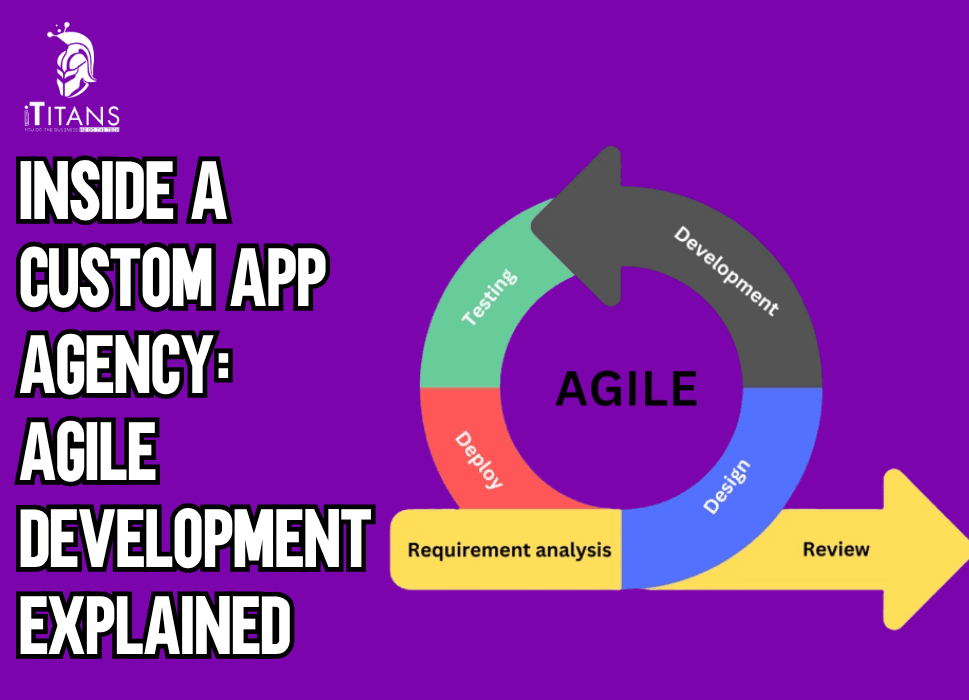
Agile focuses on short development cycles rather than long sequential phases.
Instead of building an entire application before releasing it, teams deliver small functional pieces of the product through repeated iterations.
Each iteration typically lasts between one and four weeks.
During these cycles, development teams complete a series of tasks known as sprints. These sprints allow teams to build features, test functionality, and gather feedback quickly.
This structure dramatically reduces the risk of building the wrong product.
It also allows companies to launch early versions of applications while continuing to improve them.
Understanding how agile development works in mobile app development requires looking at how work flows through an agile team.
How Agile Teams Actually Operate Inside an Agency
Agile development is often misunderstood as simply working faster. In reality, it is a structured collaboration model designed to keep projects aligned with business goals.
Inside a development agency, agile teams typically include several roles:
- Product managers who define priorities
- Developers responsible for engineering features
- Designers shaping user experience
- Quality assurance specialists testing functionality
- DevOps engineers managing infrastructure and deployments
Together, these roles form a cross-functional team capable of delivering complete product increments.
Work begins with a document called the product backlog.
The backlog is a dynamic list of product requirements, features, improvements, and technical tasks.
During sprint planning sessions, the team selects a set of backlog items to complete during the upcoming development cycle.
Each sprint produces a working version of the product that can be tested, evaluated, and refined.
This iterative structure allows teams to identify problems early rather than discovering them months later.
It also creates transparency for stakeholders who want to see how development is progressing.
Inside the Agile Sprint Cycle in App Development
To outsiders, agile development often appears chaotic. Work moves quickly, priorities shift, and new features appear every few weeks. But inside a well-run agency, the agile sprint cycle in app development follows a disciplined rhythm that keeps teams aligned and projects moving forward.
Each sprint is essentially a miniature product development cycle compressed into a short period, usually two weeks. During this time, the team focuses on delivering a defined set of features drawn from the product backlog.
The sprint begins with a planning session where developers, designers, and product managers review upcoming tasks. Instead of discussing abstract ideas, the team breaks features into concrete deliverables that can be completed within the sprint window.
This step is crucial. Poor sprint planning is one of the main reasons projects fall behind schedule. When tasks are too large or poorly defined, developers run into unexpected technical challenges that slow progress and disrupt timelines.
Once the sprint begins, the team moves into focused development mode. Engineers build features, designers refine interfaces, and testers begin evaluating early versions of new functionality.
At the end of the sprint, the team demonstrates working features during a sprint review. Stakeholders can see exactly what has been completed and provide feedback before the next cycle begins.
This continuous feedback loop is one of the biggest advantages of the agile development process for mobile apps. Instead of waiting months to evaluate progress, product owners review real functionality every few weeks.
The Real App Development Lifecycle Inside an Agency
Although agile development breaks work into short cycles, the broader app development lifecycle still follows several important phases. These stages ensure that each product moves from concept to launch in a structured and reliable way.
Understanding this lifecycle helps founders and product leaders avoid common misunderstandings about timelines, budgets, and technical complexity.
Discovery and Product Strategy
Every successful product begins with clarity. During the discovery phase, the agency works with stakeholders to define the product vision, identify user needs, and evaluate technical feasibility.
This stage often includes workshops where product managers explore key questions:
What problem is the product solving? Who are the primary users? What features are essential for the first release?
This process shapes the roadmap that guides development. It also helps determine the benefits of agile development for startups, particularly when companies need to validate product ideas before committing large budgets.
Many failed products skip this step entirely. Teams rush directly into development without understanding how users will interact with the application.
Discovery prevents that mistake.
Product Architecture and System Design
Once the product direction is clear, engineers begin designing the underlying architecture.
Architecture decisions determine how the application will handle:
- Data storage
- User authentication
- API integrations
- Security protocols
- Infrastructure scalability
A poorly designed system can cause long-term problems. If the architecture cannot handle increased traffic or new features, development becomes increasingly difficult as the product grows.
Agile development allows architecture to evolve over time, but the initial structure must still support the product’s core requirements.
User Experience and Interface Design
Before developers write large amounts of code, designers create interactive prototypes that illustrate how the product will function.
User experience design focuses on workflows, navigation patterns, and user interactions. Interface design translates those workflows into visual layouts that guide users through the application.
This phase reduces costly revisions later in development. When teams build software without validated design flows, they often discover usability issues after significant engineering work has already been completed.
Design prototypes allow teams to test ideas quickly before committing engineering resources.
Development Through Agile Iterations
After the foundation is established, the development team begins building the product through agile cycles.
Each sprint focuses on a defined set of tasks drawn from the backlog. These tasks might include building authentication systems, developing payment integrations, or implementing core product features.
Throughout the process, teams track progress using project management platforms that monitor sprint velocity and task completion.
This transparency is one reason companies prefer working with agencies that specialize in agile app development. Instead of receiving vague progress reports, stakeholders can monitor development in real time.
Continuous Testing and Quality Assurance
Testing is not a separate phase in agile development. It happens continuously throughout each sprint.
Quality assurance engineers evaluate new features as they are built, identifying bugs before they accumulate into larger problems.
Automated testing frameworks also play a major role in modern development environments. These systems automatically verify that new code changes do not break existing functionality.
Without continuous testing, small issues can quickly evolve into major system failures.
For founders who have experienced projects collapsing under technical debt, this stage alone demonstrates how custom app development agencies work differently from unstructured development teams.
Agile vs Waterfall in App Development
One of the most common questions from business leaders is whether agile development is truly better than traditional project management models.
Understanding agile vs waterfall in app development requires examining how each method handles uncertainty.
Waterfall development assumes that requirements can be defined completely at the beginning of a project. Once those requirements are approved, the development team proceeds through fixed phases until the product is complete.
This model works reasonably well for projects where requirements rarely change, such as building internal systems with predictable functionality.
But most digital products evolve rapidly as teams learn more about their users and market conditions.
Agile development embraces this uncertainty.
Instead of locking every requirement upfront, agile teams allow product priorities to shift based on feedback and data.
For example, a startup building a financial app may initially believe that budgeting features will drive user engagement. After launching an early version, the team might discover that users care far more about investment tracking.
Agile development allows teams to adjust priorities and build the features users actually want.
Waterfall development would require extensive redesign and planning before making such a shift.
This flexibility is one reason why companies use agile for app development, particularly when building new digital products where assumptions are constantly tested.
The Cost Problem Most Businesses Experience
Despite the advantages of agile development, many companies still encounter serious problems when outsourcing development.
The most common issues include:
- Projects running far beyond their original budgets
- Communication breakdowns between clients and offshore teams
- Features delivered months after deadlines
- Code quality problems that make future development difficult
These failures rarely happen because agile development itself is flawed. They occur because the methodology is poorly implemented.
Some agencies claim to use agile practices but still operate like traditional outsourcing vendors. Instead of collaborating closely with clients, they simply deliver batches of code with limited transparency.
True agile development requires constant communication between product owners and development teams.
Weekly sprint reviews, backlog refinements, and strategy discussions ensure that the product evolves according to real business priorities.
Without this collaboration, agile becomes little more than a buzzword.
For founders evaluating agencies, understanding what happens inside an app development agency can reveal whether a team truly follows agile principles or merely claims to.
How High-Performing Agencies Coordinate Product Teams
The difference between an average development vendor and a serious custom app development agency is rarely about programming talent alone. Many developers can write functional code. The real difference lies in how teams coordinate product decisions, engineering work, and client communication throughout the development cycle.
Inside a mature agency, product development operates as a structured collaboration between multiple disciplines. Each role focuses on a specific layer of the product while remaining aligned with business goals.
The Role of Product Managers
The product manager acts as the bridge between business strategy and technical execution. Their responsibility is not simply to collect feature requests but to translate company objectives into product priorities that guide the development roadmap.
The Role of Designers
Designers focus on user behavior and interaction patterns. They ensure that features make sense from a human perspective rather than simply from a technical standpoint. Their work shapes the experience users have with the product.
The Role of Engineers
Engineers build the systems that bring those designs to life. But in agile environments, developers are also involved in shaping solutions rather than blindly implementing specifications.
The Role of Quality Assurance Teams
Quality assurance specialists test every feature before it reaches users. Their job is to identify edge cases, security concerns, and usability problems that might not appear during development.
The Role of DevOps Engineers
DevOps engineers manage infrastructure, deployment pipelines, and system performance. Their work ensures that applications run reliably once they reach production environments.
When these roles operate in isolation, projects fall apart. Agile development works because these disciplines collaborate continuously.
This structure explains how custom app development agencies work differently from traditional outsourcing vendors.
How Agile Development Reduces Product Risk
One of the biggest misconceptions about software development is that the greatest risk lies in technical complexity. In reality, most failed applications collapse because they solve the wrong problem.
Companies often spend months building features before validating whether users actually need them.
The agile development process for mobile apps addresses this risk by prioritizing early feedback.
Early Product Validation
Instead of launching a fully completed product after months of development, agile teams release smaller functional versions of the application.
These early releases often include only the core features necessary to test the product concept. This approach is frequently called MVP development.
Continuous Feedback Loops
The advantage is speed. Teams can observe real user behavior and adjust product direction before investing additional development resources.
Why Agile Helps Startups Move Faster
For startups, this approach dramatically reduces financial risk. Instead of committing an entire development budget upfront, founders can validate product ideas gradually.
This is one reason the benefits of agile development for startups are widely recognized across the technology sector.
Communication: The Hidden Factor Behind Project Success
Technology discussions often dominate conversations about development. Companies debate programming languages, frameworks, and infrastructure choices.
But in practice, communication is often the most important factor in determining whether projects succeed or fail.
Daily Standup Meetings
Daily stand-ups allow teams to review progress quickly and identify blockers that could slow development.
Sprint Reviews
Sprint reviews give stakeholders direct visibility into completed features and upcoming work.
Backlog Refinement Sessions
Backlog refinement ensures that upcoming development tasks are clearly defined before entering the next sprint cycle.
These communication routines create transparency throughout the agile development process for mobile apps.
Choosing the Right Custom Software Development Agency
For founders and product leaders, selecting the right development partner can determine whether a product succeeds or fails.
Evaluate Development Methodology
Teams that follow real agile practices demonstrate transparent workflows, frequent client communication, and iterative product releases.
Examine Discovery Processes
Agencies that rush into development without understanding business goals often produce technically functional products that fail commercially.
Assess Technical Leadership
Strong engineering leadership ensures proper architecture planning, automated testing frameworks, and reliable infrastructure.
Review Previous Work
Agencies with strong portfolios typically demonstrate experience building complex systems across multiple industries.
These indicators help founders distinguish between vendors that simply build software and partners that contribute strategic value.
How Long Does Custom App Development Take
One of the most common questions from business leaders is how long does custom app development take.
Factors That Influence Development Timeline
Several factors determine project duration:
- Product complexity
- Feature scope
- System integrations
- Security requirements
- Design complexity
Agile Development Changes Timeline Expectations
Instead of waiting for the entire product to be finished, companies can release early versions while development continues.
This approach allows businesses to begin generating value earlier.

What Determines Custom Mobile App Development Cost
Another question frequently asked by founders is how much does a custom mobile app cost.
Feature Complexity
The number and complexity of features significantly influence development cost.
Third-Party Integrations
Applications that integrate payment systems, external APIs, or enterprise platforms often require additional development effort.
Security and Infrastructure
Applications handling sensitive data require additional compliance and security layers.
Design and User Experience
Sophisticated user interfaces and advanced user interactions increase design and development effort.
Agile development also helps control costs because companies can continuously evaluate priorities and adjust development scope.
Build Your Next Product With an Experienced Development Team
At iTitans, our engineers, designers, and product specialists help businesses turn complex ideas into reliable digital products through proven custom mobile app development and agile delivery models.
FAQs
1. Why do many app development projects fail even when teams use agile?
Projects often fail because agile is implemented poorly. Without clear product ownership, defined sprint goals, and regular stakeholder feedback, agile turns into unstructured development rather than controlled iteration.
2. How do agile teams handle changing requirements during development?
Agile teams manage changes through backlog prioritization. New requirements are evaluated and scheduled into upcoming sprints without disrupting features already in development.
3. What is the difference between agile sprints and development milestones?
Sprints are short development cycles focused on delivering working features, while milestones represent larger project checkpoints such as MVP launch, beta release, or production deployment.
4. How do agencies estimate timelines in agile app development?
Agile teams estimate timelines using sprint velocity, which measures how much work a team can complete during each sprint based on previous development cycles.
5. How involved should founders be during agile development?
Founders should stay actively involved through sprint reviews and backlog discussions. Regular input ensures the product stays aligned with business goals and user expectations.
6. What tools do agile app development agencies use to manage projects?
Most agencies rely on tools like Jira for sprint management, Figma for design collaboration, GitHub for version control, and CI/CD systems for automated deployments.
7. How do agile teams maintain code quality during rapid development?
Code quality is maintained through automated testing, peer code reviews, continuous integration pipelines, and regular refactoring during development sprints.
8. Can agile development work for large enterprise applications?
Yes. Agile frameworks are widely used for enterprise systems because they allow large teams to coordinate complex development efforts while adapting to changing requirements.