
How Startups Validate Product Ideas Before Development
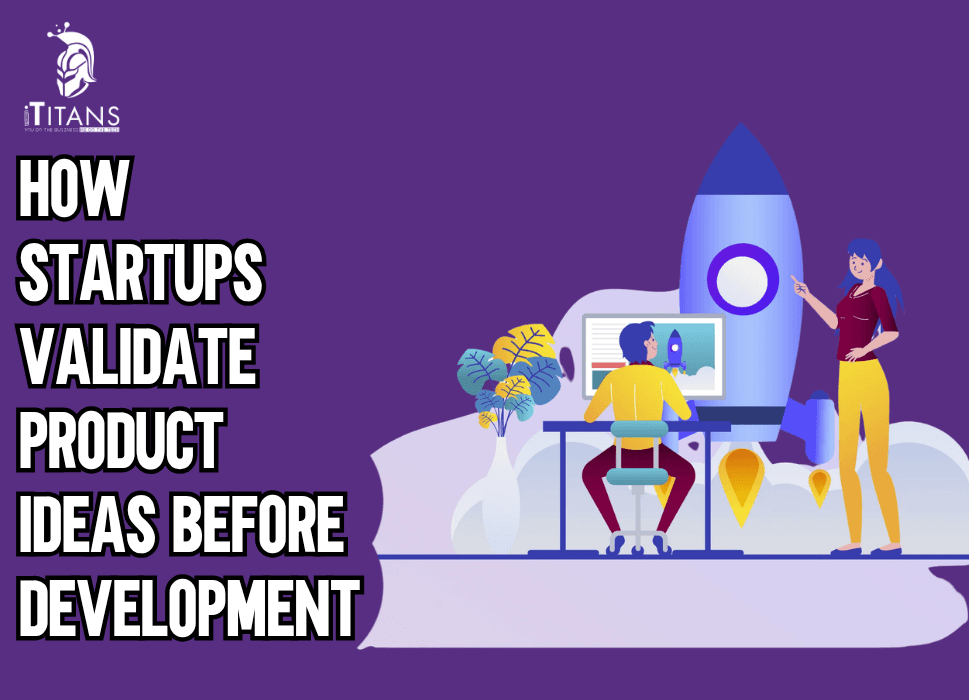
Every year, thousands of startups burn through budgets building products nobody asked for. It is rarely because the team lacked technical skill. More often, the failure begins much earlier, at the idea stage. This is where product idea validation becomes the difference between a calculated business move and an expensive gamble.
That is how projects spiral into missed deadlines, rework cycles, and products that never reach product-market fit. Learning how to approach validate startup idea strategies before writing a single line of code is not optional anymore. It is the foundation of sustainable product development.
This guide breaks down how experienced startup teams approach validation, what processes actually work in real-world scenarios, and how to avoid the costly mistakes that most early-stage companies repeat.

What Is Product Idea Validation?
At its core, validation is about proving one thing: does this idea solve a real problem that people are willing to pay for?
The term product validation process is often misunderstood. Many assume it means building a prototype or launching a beta version. In reality, validation starts much earlier. It begins before development, before design, and even before hiring a development team.
Validation answers critical business questions:
- Is the problem real or assumed?
- Does the target audience actually care?
- Are people already paying for alternatives?
- Can this idea generate demand before it exists?
Without these answers, development becomes speculation. And speculation is expensive.
The Cost of Skipping Validation
Startups that ignore validation often fall into predictable traps. They invest heavily in development only to discover weak demand. They rely on assumptions instead of data. Offshore teams build features that users never use. Communication gaps widen because the product direction itself is unclear.
The result is not just financial loss. It is lost time, damaged credibility, and missed market opportunities.
In contrast, teams that follow structured idea validation techniques reduce uncertainty early. They make smaller bets, gather real feedback, and refine direction before scaling development efforts.
Why Validating Ideas Before Development Saves More Than Money
Most founders think validation is about saving costs. That is only part of the picture.
Validation protects three critical assets: time, focus, and execution clarity.
Preventing Cost Overruns Before They Start
Once development begins, every change becomes expensive. A small shift in product direction can mean weeks of rework, especially when dealing with distributed or offshore teams. Without validation, these changes are inevitable.
By validating early, startups avoid building unnecessary features. They eliminate guesswork and reduce development waste.
Avoiding Misalignment with Development Teams
One of the biggest issues founders face is communication breakdown with technical teams. When the idea itself is unclear, developers are forced to interpret requirements. This leads to inconsistent outputs, delays, and frustration on both sides.
A validated idea creates alignment. It provides clear direction, defined user problems, and measurable outcomes.
Reducing Risk in Offshore Development Models
Many startups choose offshore development to manage costs. However, without proper validation, this approach can backfire. Teams may deliver exactly what was asked, but not what the market needs.
Validation ensures that development efforts, regardless of location, are grounded in real user demand.
The Real Goal: Problem-Solution Fit Before Product-Market Fit
Most startup advice focuses on product-market fit. But before reaching that stage, there is a more immediate objective: problem-solution fit.
This is where lean startup validation plays a critical role.
Understanding Problem-Solution Fit
Problem-solution fit means confirming that:
- A specific audience has a clear problem
- The problem is significant enough to solve
- Your proposed solution resonates with that audience
If this foundation is weak, no amount of development or marketing can fix it.
Why Founders Get This Wrong
Founders often fall in love with their ideas. They assume demand instead of testing it. They prioritize building over learning. This mindset leads to premature development.
The discipline of validation forces a shift. It moves the focus from “building something impressive” to “solving something meaningful.”
Step-by-Step Product Idea Validation Process
A structured approach is what separates successful startups from those that rely on intuition alone. The product validation process is not a single action. It is a sequence of deliberate steps designed to reduce uncertainty at every stage.
Step 1: Define the Problem Clearly
Before testing any solution, the problem itself must be validated.
This is where many startups fail. They jump straight into solution mode without fully understanding the problem space.
Strong validation starts with:
- Identifying a specific pain point
- Understanding who experiences it
- Evaluating how frequently it occurs
If the problem is vague, the solution will be too.
Step 2: Identify the Target Audience
Not all users are equal. Early-stage validation depends on focusing on a specific group of potential users.
This involves:
- Segmenting the audience
- Defining user personas
- Understanding behavior patterns
Without a clear audience, feedback becomes inconsistent and difficult to interpret.
Step 3: Conduct Market Research
Market research is often treated as a formality. In reality, it is one of the most critical steps in startup idea validation methods.
Effective research includes:
- Analyzing competitors
- Identifying existing solutions
- Understanding pricing models
- Evaluating market demand
This step prevents startups from entering saturated markets without differentiation.
Step 4: Test the Value Proposition
A value proposition is more than a tagline. It is a clear statement of why someone should care about your solution.
Validation at this stage involves testing:
- Messaging clarity
- Problem relevance
- Perceived value
If users do not understand the value immediately, the idea needs refinement.
Step 5: Validate Demand Before Building
This is where real validation begins.
Instead of building a product, startups test demand using simple methods:
- Landing pages
- Waitlists
- Pre-orders
- Early access signups
These approaches provide measurable signals. They show whether users are willing to take action, not just express interest.
This step aligns closely with long-tail strategies like how to validate a startup idea without building a product, which has become increasingly important for early-stage founders with limited budgets.
Proven Methods Startups Use to Validate Ideas
Validation is not theoretical. It is practical, measurable, and repeatable. The most successful startups rely on a combination of methods to reduce risk and gather real insights.
Landing Page Validation
One of the fastest ways to test an idea is through a simple landing page.
The concept is straightforward:
- Present the problem
- Offer your solution
- Include a clear call to action
User behavior becomes your data. Clicks, signups, and conversions reveal whether the idea resonates.
This approach is widely used in best ways to validate product ideas before development because it requires minimal investment while providing strong signals.
Customer Interviews
Direct conversations with potential users provide insights that data alone cannot capture.
Interviews help uncover:
- Real pain points
- Buying behavior
- Objections and concerns
However, the quality of insights depends on asking the right questions. Leading questions or biased assumptions can distort results.
Surveys and Feedback Loops
Surveys allow startups to collect structured feedback at scale. They are particularly useful when validating assumptions across a broader audience.
Combined with ongoing feedback loops, they help refine the idea continuously.
Pre-Sales and Smoke Tests
Few validation methods are as powerful as asking users to pay before the product exists.
Pre-sales and smoke tests answer the most important question: are people willing to invest in this solution?
This approach aligns with commercial intent and is often used in tools for validating startup ideas quickly, where speed and clarity are essential.
Where Most Startups Go Wrong
Even with access to these methods, many startups still fail to validate effectively.
The issue is not lack of tools. It is how those tools are used.
Common mistakes include:
- Seeking validation instead of truth
- Ignoring negative feedback
- Overbuilding early prototypes
- Relying on opinions instead of behavior
Validation is not about proving your idea right. It is about discovering whether it is worth pursuing.
MVP vs MMP: What Should You Use to Validate?
One of the most misunderstood areas in early-stage product strategy is deciding what to build first. Founders often rush into development assuming that creating a Minimum Viable Product will automatically validate their idea. In reality, misuse of MVPs is one of the biggest reasons startups burn through budgets without gaining real traction.
Understanding the difference between MVP and MMP is critical to effective minimum viable product validation.
What an MVP Is Supposed to Do
An MVP is not a stripped-down version of your final product. It is a learning tool. Its purpose is to test assumptions with minimal effort and gather real user feedback.
However, many teams treat MVPs as early production builds. They invest weeks or months into development, only to realize they are still guessing about user needs.
This defeats the entire purpose of validation.
When an MVP Becomes a Liability
If your team is building features without clear validation signals, your MVP is no longer a validation tool. It becomes a cost center.
This is especially risky when working with external or offshore teams. Misaligned expectations, unclear requirements, and evolving scope often lead to delays and poor code quality. By the time feedback comes in, the cost of change is already high.
What Is an MMP?
An MMP, or Minimum Marketable Product, is built for launch. It includes enough functionality to deliver a complete experience and generate revenue.
The mistake many startups make is jumping directly to MMP without validating demand first.
The Right Sequence
Validation should follow a clear progression:
- Validate the problem
- Validate the demand
- Validate the solution concept
- Then build an MVP
- Only after that, move toward an MMP
This sequence aligns with lean startup validation, ensuring that each step is backed by evidence rather than assumptions.

Tools to Validate Startup Ideas Faster
Speed matters in startups, but speed without direction leads to chaos. The right tools can accelerate validation while keeping decisions grounded in data.
When used correctly, these tools help founders answer critical questions tied to product idea validation without committing to full-scale development.
Market Demand Tools
Platforms like Google Trends and keyword research tools allow startups to gauge interest in a problem or solution.
These tools help answer:
- Are people actively searching for this solution?
- Is interest growing or declining?
- What language does the audience use?
This aligns closely with long-tail queries like how to test a business idea with no money, where founders rely on free or low-cost tools to validate demand.
Landing Page Builders
No-code tools such as Webflow, Carrd, or Framer allow startups to create high-converting landing pages quickly.
These pages act as validation assets. They test messaging, positioning, and user intent without requiring backend development.
User Behavior Analytics
Tools like Hotjar or Microsoft Clarity provide insight into how users interact with your validation assets.
They reveal:
- Where users drop off
- What captures attention
- How users navigate content
This data is far more valuable than opinions because it reflects actual behavior.
Survey and Feedback Platforms
Tools like Typeform or Google Forms allow startups to collect structured feedback at scale.
However, the effectiveness of these tools depends on how questions are framed. Poorly designed surveys lead to misleading insights, which can derail validation efforts.
No-Code Prototyping Tools
For startups exploring how to validate SaaS product ideas, no-code platforms such as Bubble or Glide offer a way to simulate functionality without full development.
These prototypes are not meant for scaling. They are designed to test usability, flow, and user reactions.
Common Mistakes Founders Make During Validation
Even with access to the right tools and frameworks, validation often fails because of flawed execution.
The issue is not lack of effort. It is misplaced focus.
Confusing Interest with Demand
Many founders mistake positive feedback for validation. Users may express interest, but that does not mean they are willing to pay or switch from existing solutions.
Real validation requires action. Signups, pre-orders, and usage data matter more than opinions.
Building Too Early
This is the most common mistake.
Teams rush into development because it feels like progress. In reality, it increases risk. Without validated assumptions, development becomes a guessing game.
This is particularly dangerous in distributed teams where communication gaps can amplify misunderstandings.
Ignoring Negative Feedback
Negative feedback is often the most valuable input during validation.
It highlights gaps, reveals hidden objections, and forces refinement. Ignoring it leads to products that look good on paper but fail in the market.
Overcomplicating the Process
Validation does not require complex systems. Simple methods often provide clearer insights.
Overcomplication slows down learning and creates unnecessary friction.
Real Startup Examples of Idea Validation
Understanding theory is useful, but real-world examples provide clarity on how validation works in practice.
Dropbox: Validating Before Building
Before building a full product, Dropbox created a simple explainer video demonstrating how the product would work.
The response was immediate. Thousands of users signed up for early access, proving demand without writing production-level code.
This approach aligns perfectly with how to validate a startup idea without building a product, showing that demand can be tested with minimal resources.
Airbnb: Testing Demand in a Real Market
Airbnb’s founders started by renting out air mattresses in their apartment during a conference.
This small experiment validated a key assumption: people were willing to pay for alternative accommodations.
Instead of building a platform first, they tested behavior in a real-world scenario.
Buffer: Pre-Validation Through Landing Pages
Buffer validated its idea using a two-step landing page.
The first page explained the product. The second page displayed pricing plans. When users clicked to proceed, they were informed that the product was not yet available.
This method measured intent and willingness to pay before development began.
How to Validate a Startup Idea Without Coding
For many founders, especially non-technical ones, the biggest barrier to validation is the assumption that coding is required.
It is not.
In fact, some of the most effective validation strategies require zero development.
Use Landing Pages as Your First Product
A well-structured landing page can simulate a real product experience.
It communicates value, captures interest, and measures user intent.
This approach directly addresses queries like how to validate a startup idea without building a product, making it one of the most practical validation strategies.
Leverage Existing Platforms
Instead of building from scratch, startups can use existing platforms to test ideas.
Examples include:
- Selling through marketplaces
- Offering services manually before automating
- Using social media to test demand
These methods reduce risk while providing real-world feedback.
Offer Manual Solutions First
Before building software, some startups validate ideas by delivering the service manually.
This approach, often called “concierge validation,” allows founders to understand user needs deeply before automating processes.
It is particularly effective for early-stage concepts where assumptions are still untested.
The Role of Product-Market Fit in Validation
Validation does not end once an idea shows initial traction.
It evolves into the pursuit of product-market fit.
What Product-Market Fit Really Means
Product-market fit occurs when a product satisfies strong market demand.
It is reflected in:
- Consistent user engagement
- Organic growth
- Customer retention
However, reaching this stage requires continuous validation.
Why Early Validation Still Matters
Even after initial success, assumptions can change. Markets evolve, competitors emerge, and user expectations shift.
Ongoing validation ensures that the product remains relevant and aligned with user needs.
Building a Repeatable Validation Framework
Most founders treat validation as a phase. Something you do before development, check off, and move on. That approach is exactly why products drift off course after launch.
Validation is not an event. It is a system.
The strongest startups build a repeatable framework that continues to guide decisions long after the initial idea is tested. This is where many teams begin to separate themselves from competitors who rely on instinct instead of structured learning.
A mature validation framework connects directly to business outcomes. It ensures that every feature, every iteration, and every release ties back to real user needs and measurable demand.
Turning Validation Into an Ongoing Process
To make validation sustainable, startups need to embed it into their workflow:
- Every feature starts with a hypothesis
- Every release includes a measurable goal
- Every user interaction becomes a source of feedback
This approach aligns with advanced startup idea validation methods where learning cycles are continuous, not limited to the pre-development phase.
It also reduces dependency on guesswork. Instead of reacting to problems after launch, teams proactively test assumptions before committing resources.
Aligning Validation With Business Strategy
Validation is not just a product exercise. It is a strategic function that influences revenue, positioning, and long-term growth.
When done correctly, it answers questions that go beyond product features:
- Is this market worth entering?
- Are we solving a high-value problem?
- Can this idea support a sustainable business model?
These questions are critical for founders who are balancing investor expectations with execution realities.
Connecting Validation to Revenue Potential
One of the biggest gaps in early-stage startups is the disconnect between product decisions and revenue strategy.
Validation helps bridge that gap.
By testing pricing models, willingness to pay, and user behavior early, startups avoid building products that attract users but fail to generate income.
This is particularly important for SaaS founders exploring how founders validate product market fit early, where early traction must translate into sustainable growth.
Internal Alignment: The Hidden Advantage of Proper Validation
Most discussions around validation focus on external users. However, one of the most overlooked benefits is internal alignment.
When validation is done properly, it creates clarity across teams:
- Founders understand the market direction
- Product managers define clear priorities
- Developers work with concrete requirements
- Marketing teams communicate a validated value proposition
Without this alignment, even the most skilled teams struggle to deliver consistent results.
Reducing Communication Breakdowns
In many startups, especially those working with distributed teams, communication issues are a major source of delays.
Validation reduces ambiguity. It replaces assumptions with data, making it easier for teams to stay aligned.
Instead of debating opinions, teams can refer to validated insights.
Where Development Actually Fits In
After all the validation steps, development finally begins. But at this point, it is no longer a leap of faith. It is a calculated move.
This is where many startups realize how much time and money they have saved by not rushing into development earlier.
From Validation to Execution
Once demand is validated, the transition to development becomes smoother:
- Requirements are clearer
- Features are prioritized based on real needs
- Scope is controlled
- Timelines are more predictable
This directly addresses common issues like missed deadlines and poor code quality, which often stem from unclear direction rather than technical limitations.
Advanced Validation Strategies Most Startups Overlook
While basic validation methods are widely discussed, advanced strategies often remain underutilized.
These approaches provide deeper insights and stronger validation signals.
Behavioral Data Over Verbal Feedback
What users say and what they do are often very different.
Advanced validation focuses on behavior:
- Click patterns
- Conversion rates
- Engagement metrics
This data reveals real intent, making it far more reliable than survey responses.
Testing Pricing Early
Many startups delay pricing decisions until after development. This creates a major risk.
Validation should include pricing tests from the beginning. It helps determine:
- Will users pay?
- What price points work?
- How pricing affects demand
This aligns closely with commercial intent and strengthens the overall product validation process.
Micro-Experiments Instead of Big Launches
Instead of launching fully developed features, leading startups run small experiments.
These experiments test specific assumptions:
- Feature usefulness
- User behavior
- Conversion impact
This approach reduces risk and accelerates learning.

Final Checklist for Product Idea Validation
Before committing to development, every startup should be able to confidently answer:
- Have we validated the problem with real users?
- Do we have clear evidence of demand?
- Have users taken meaningful action (not just expressed interest)?
- Do we understand our target audience deeply?
- Have we tested our value proposition in real scenarios?
- Are we making decisions based on data, not assumptions?
If any of these answers are unclear, validation is not complete.
Ready to Validate and Build With Confidence?
At ititans.com, we work with startups to validate ideas, define product strategy, and build solutions that align with real market demand.
FAQs
1. How do startups validate product ideas with real customers, not assumptions?
Startups validate ideas by testing user behavior through landing pages, pre-orders, and interviews instead of relying on opinions or internal guesses.
2. What is the fastest way to validate a product idea before development?
The fastest method is creating a simple landing page with a clear value proposition and tracking signups or conversions to measure real demand.
3. Can you validate a startup idea without spending money?
Yes, founders can use free tools like surveys, social media testing, and manual outreach to validate demand without upfront investment.
4. How many users are enough to validate a startup idea?
There is no fixed number, but consistent patterns in feedback and user actions are more important than sample size.
5. What are early signs that a product idea will fail?
Low engagement, weak conversion rates, and lack of urgency from users indicate poor demand and signal that the idea needs rework.
6. How do you validate a B2B product idea effectively?
B2B ideas are validated through direct conversations with decision-makers, pilot programs, and testing willingness to pay early.
7. Should validation include pricing from the beginning?
Yes, testing pricing early helps confirm whether users are willing to pay and prevents building products that cannot generate revenue.
8. How long should product idea validation take?
Validation timelines vary, but most startups can gather meaningful signals within a few weeks if they focus on real user actions.