
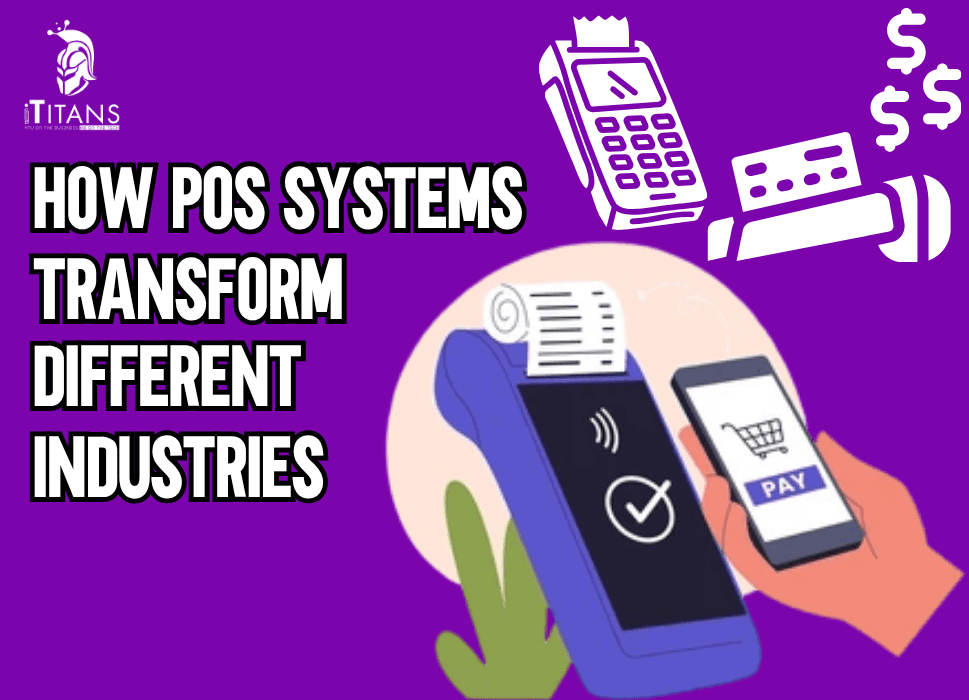
How POS Systems Transform Different Industries
In today’s fast-moving digital economy, businesses must operate efficiently, deliver excellent customer experiences, and make data-driven decisions. This is where POS systems (Point of Sale systems) play a major role.
From retail stores to restaurants and healthcare centers, POS systems have evolved far beyond simple cash registers. They now act as complete business management platforms that help organizations streamline operations and boost revenue.
Recent data shows that the global POS market is expected to surpass $150 billion by 2030, driven by increasing demand for digital payments and real-time analytics. In the United States alone, over 70% of small and medium businesses have already adopted advanced POS systems to improve workflow and customer engagement.
In this blog, we will explore how POS systems transform different industries, highlighting their features, benefits, and future impact.
What are POS Systems and Their Core Functions?
A POS system is the place where a customer completes a transaction, but modern POS platforms do much more than process payments. They integrate hardware and software to manage sales, inventory, customer data, and reporting.
At its core, a POS system includes:
- Payment processing tools
- Inventory management features
- Sales tracking and reporting
- Customer relationship management (CRM)
- Employee management capabilities
Cloud-based POS systems have become especially popular because they allow business owners to access data anytime, anywhere. This flexibility is a key factor in their growing adoption across industries.

How POS Systems Transform the Retail Industry
The retail sector has experienced one of the biggest transformations due to POS technology. Traditional checkout counters have been replaced by smart systems that offer speed, accuracy, and convenience.
Real Time Tracking
Modern retail POS systems enable businesses to track inventory in real time. This means store owners always know which products are in stock and which need restocking. According to industry reports, retailers using POS systems reduce inventory errors by up to 30%, leading to fewer losses and better planning.
Better Customer Experience
Another important benefit is personalized customer experiences. POS systems collect data on customer purchases, allowing businesses to recommend products and offer targeted promotions. This improves customer satisfaction and increases repeat sales.
Additionally, mobile POS systems allow staff to assist customers anywhere in the store, reducing wait times and improving service quality.
Role of POS Systems in the Restaurant and Hospitality Industry
Restaurants and hotels rely heavily on speed and accuracy, and POS systems have revolutionized how they operate. Orders can now be taken digitally and sent directly to the kitchen, reducing errors and improving efficiency.
Better Service
POS systems in restaurants also help manage tables, track orders, and handle billing. This leads to faster service and better customer experiences. Studies show that restaurants using POS systems can increase order accuracy by over 20%, which directly impacts customer satisfaction.
Integrated Database
In the hospitality sector, POS systems integrate with reservation platforms and customer databases. This allows hotels to manage bookings, track guest preferences, and offer personalized services.
Digital Payments
Another major advantage is digital payment integration. Customers can pay using cards, mobile wallets, or contactless methods, making transactions quicker and more convenient.
Healthcare Industry: Enhancing Efficiency Through POS Systems
POS systems are also transforming the healthcare industry by simplifying billing and improving patient management. Clinics, pharmacies, and hospitals use POS platforms to handle payments, manage inventory, and track patient records.
For example, pharmacies use POS systems to monitor medication stock levels and prevent shortages. Healthcare providers can also generate accurate billing reports, reducing errors and saving time.
Online Integration
With the rise of telemedicine and digital healthcare services, POS systems are increasingly integrated with online platforms. This allows patients to make payments remotely, improving accessibility and convenience.
According to recent studies, healthcare organizations using digital POS systems have reported up to 25% improvement in administrative efficiency, highlighting their importance in modern healthcare.
POS Systems in the E-commerce and Online Business Sector
E-commerce businesses also benefit from POS systems, especially when they operate both online and offline. A unified POS platform allows businesses to manage inventory, sales, and customer data across multiple channels.
Strategy Management
This integration ensures that stock levels are updated in real time, preventing overselling or stockouts. It also provides valuable insights into customer behavior, helping businesses improve marketing strategies.
With the growth of online shopping, businesses need systems that can handle large volumes of transactions. POS systems provide the scalability required to manage this demand effectively.
Transforming the Beauty and Wellness Industry
Salons, spas, and wellness centers are increasingly adopting POS systems to manage appointments, payments, and customer relationships. These systems help businesses keep track of bookings and reduce scheduling conflicts.
Learn About Customers
POS platforms also allow businesses to store customer preferences, such as favorite services or products. This enables personalized experiences, which are essential for customer retention.
Additionally, POS systems simplify payment processing and generate detailed reports, helping business owners make informed decisions.

How POS Systems Improve Data Analytics and Business Insights
Real-Time Data Tracking and Reporting
One of the biggest advantages of modern POS systems is real-time data access. Instead of waiting for end-of-day or weekly reports, businesses can instantly see what’s happening at any moment. Whether it’s sales volume, revenue, or product performance, everything updates live.
This real-time visibility allows managers to react quickly. For example, if a product suddenly spikes in demand, businesses can restock immediately or adjust pricing strategies. According to recent retail technology reports, over 70% of businesses using cloud-based POS systems say real-time analytics significantly improves their decision-making speed.
Customer Behavior Analysis
POS systems collect detailed customer data with every purchase, helping businesses understand buying patterns. They can track what customers buy, how often they visit, and how much they spend on average.
This data helps businesses create personalized marketing strategies. For instance, if customers frequently buy certain products together, businesses can offer bundles or targeted promotions. Studies show that personalized experiences can increase sales by up to 20%, making this insight incredibly valuable for growth.
Inventory Management Insights
Gone are the days of manual stock counting. POS systems automatically track inventory levels and provide insights into product performance. Businesses can see which items are fast-moving and which ones are sitting on shelves.
This helps reduce waste and avoid stockouts. For example, restaurants can monitor ingredient usage, while retail stores can identify slow-selling products and discount them. Research indicates that businesses using automated inventory systems reduce inventory errors by up to 30%, improving overall efficiency.
Sales Trend Identification
POS systems allow businesses to analyze sales trends over time. They can identify peak hours, seasonal patterns, and top-selling products. This kind of insight helps businesses plan better for the future.
For example, a clothing store might notice higher sales during weekends or holidays and adjust staffing accordingly. Similarly, restaurants can prepare for busy hours by optimizing kitchen operations. These insights help businesses maximize revenue while minimizing operational stress.
Employee Performance Tracking
Another powerful feature of POS systems is the ability to track employee performance. Businesses can monitor sales made by each employee, transaction speed, and even customer interactions.
This data helps identify top performers and areas where staff may need training. For example, if one employee consistently upsells more products, their techniques can be shared with the team. Companies that use performance analytics often see a 10–15% improvement in employee productivity.
Improved Financial Accuracy
POS systems automatically record every transaction, reducing the chances of human error. This ensures accurate financial reporting and simplifies accounting processes.
Businesses can generate detailed reports on revenue, taxes, and profits with just a few clicks. This not only saves time but also ensures compliance with financial regulations. In fact, automation in financial tracking can reduce accounting errors by nearly 40%, according to industry studies.
Data-Driven Decision Making
With all this data available, businesses can make smarter, data-driven decisions instead of relying on guesswork. POS systems provide dashboards and visual reports that make complex data easy to understand.
For instance, if a product isn’t performing well, businesses can decide whether to improve marketing, adjust pricing, or discontinue it altogether. Data-driven companies are 23 times more likely to acquire customers and 6 times more likely to retain them, highlighting the importance of analytics.
Multi-Location Business Insights
For businesses with multiple locations, POS systems provide centralized data management. Owners can compare performance across different stores and identify which locations are doing better.
This helps in standardizing operations and sharing best practices across branches. For example, if one store performs exceptionally well, its strategies can be replicated elsewhere. Centralized analytics also make it easier to track overall business growth and scalability.
Enhanced Customer Loyalty Programs
POS systems often integrate with loyalty programs, allowing businesses to track customer rewards and engagement. They can see which customers are most loyal and what incentives work best.
This insight helps businesses refine their loyalty strategies. For example, if customers respond better to discounts rather than points, businesses can adjust their programs accordingly. Research shows that loyalty program members generate 12–18% more revenue than non-members, making this feature highly impactful.
Better Marketing Campaign Analysis
Marketing efforts become much more effective when backed by data. POS systems allow businesses to track the success of promotions, discounts, and campaigns.
For example, a business can analyze whether a specific discount led to increased sales or just reduced profit margins. This helps in optimizing future campaigns and ensuring better return on investment (ROI). Businesses that use analytics-driven marketing are known to improve campaign effectiveness by up to 30%.
Integration with Other Business Tools
Modern POS systems can integrate with other tools like CRM software, accounting platforms, and e-commerce systems. This creates a unified data ecosystem where all business information is connected.
Such integration provides a complete view of operations, from sales and customer data to financial performance. Businesses can easily analyze cross-channel data and make more informed decisions. This interconnected approach is becoming essential, especially as omnichannel retail continues to grow rapidly worldwide.
Predictive Analytics for Future Planning
Advanced POS systems now include predictive analytics, which uses historical data to forecast future trends. This helps businesses prepare for demand fluctuations and plan inventory accordingly.
For example, a retailer can predict increased demand for certain products during specific seasons and stock up in advance. Predictive analytics can improve forecasting accuracy by up to 20–30%, helping businesses reduce losses and maximize opportunities.
Rise of Cloud-Based and Mobile POS Systems
Cloud-based POS systems have become a game changer for businesses of all sizes. Unlike traditional systems, cloud POS platforms store data online, making it accessible from any device.
This flexibility allows business owners to monitor operations remotely and make quick decisions. Mobile POS systems take this a step further by enabling transactions on smartphones or tablets.
These systems are especially useful for small businesses and startups, as they require lower upfront costs and offer easy scalability.
Security and Compliance in Modern POS Systems
With the increase in digital transactions, security has become a top priority for businesses. Modern POS systems include advanced security features such as encryption, tokenization, and secure payment gateways.
These features help protect customer data and prevent fraud. Businesses must also comply with regulations such as PCI DSS (Payment Card Industry Data Security Standard) to ensure safe transactions.
Investing in a secure POS system not only protects businesses but also builds customer trust.

Future of POS Systems Across Industries
The future of POS systems looks promising, with new technologies continuing to shape their development. Artificial intelligence, machine learning, and automation are being integrated into POS platforms to provide even deeper insights and improved efficiency.
For example, AI-powered POS systems can predict customer preferences and recommend products automatically. This enhances the shopping experience and increases sales.
Contactless payments and digital wallets are also becoming more popular, further driving the adoption of advanced POS systems.
How iTitans Supports Businesses with Advanced POS-Integrated Services
When it comes to adopting modern POS systems and digital transformation, companies need a reliable technology partner. This is where iTitans stands out as a trusted name in the industry.
iTitans is a full-service software development company based in the United States with a global reach. The company offers a wide range of services, including website development, mobile app development, software development, MVP development, UI/UX designing, eCommerce development, SEO, social media marketing, digital transformation, and staff augmentation.
Customized Services
iTitans helps businesses integrate POS systems with custom software and mobile applications, ensuring smooth operations and better performance. Their expertise in UI/UX design ensures that POS interfaces are user-friendly and efficient.
Business Centric Approach
For businesses looking to expand their digital presence, iTitans also provides eCommerce development and SEO services. This allows companies to connect their POS systems with online platforms, creating a seamless customer experience.
Additionally, iTitans supports businesses with staff augmentation, providing skilled professionals to manage and optimize POS systems and related technologies.
Why POS Systems Are Essential for Modern Businesses
POS systems have become a critical part of modern business operations. They go beyond simple transactions, offering tools for inventory management, customer engagement, data analytics, and more.
From retail and hospitality to healthcare and e-commerce, POS systems are transforming industries by improving efficiency and enhancing customer experiences. With the market continuing to grow, businesses that invest in advanced POS systems will have a significant advantage.
Partnering with experienced companies like iTitans ensures that businesses can fully leverage the power of POS systems and stay ahead in today’s competitive landscape.
FAQs
How do POS systems improve efficiency in retail businesses?
POS systems streamline the checkout process by reducing manual entry and human errors. They also provide real-time inventory updates, helping retailers avoid stock shortages or overstocking. With integrated payment options, transactions become faster and more convenient for customers.
How do POS systems support inventory management across industries?
POS systems automatically update inventory levels after each sale, providing accurate stock data. This helps businesses monitor product movement and identify best-selling items. Automated alerts can notify managers when stock is low.
How do POS systems contribute to better financial reporting?
POS systems generate detailed reports on sales, profits, and expenses. These reports help business owners understand performance trends and make strategic decisions. Real-time data access ensures that financial information is always up to date.
How are POS systems transforming the hospitality industry?
In hotels and hospitality businesses, POS systems handle bookings, guest check-ins, and service billing. They integrate with other management systems to provide a seamless guest experience. Staff can quickly access guest preferences and service history.
How do POS systems support e-commerce integration?
Modern POS systems can integrate with online stores, syncing sales and inventory data across platforms. This ensures consistency between physical and digital sales channels. Businesses can manage everything from a single dashboard.
How do POS systems help in employee management?
POS systems track employee performance, work hours, and sales contributions. Managers can assign roles and monitor productivity easily. This helps in fair scheduling and performance evaluation.