
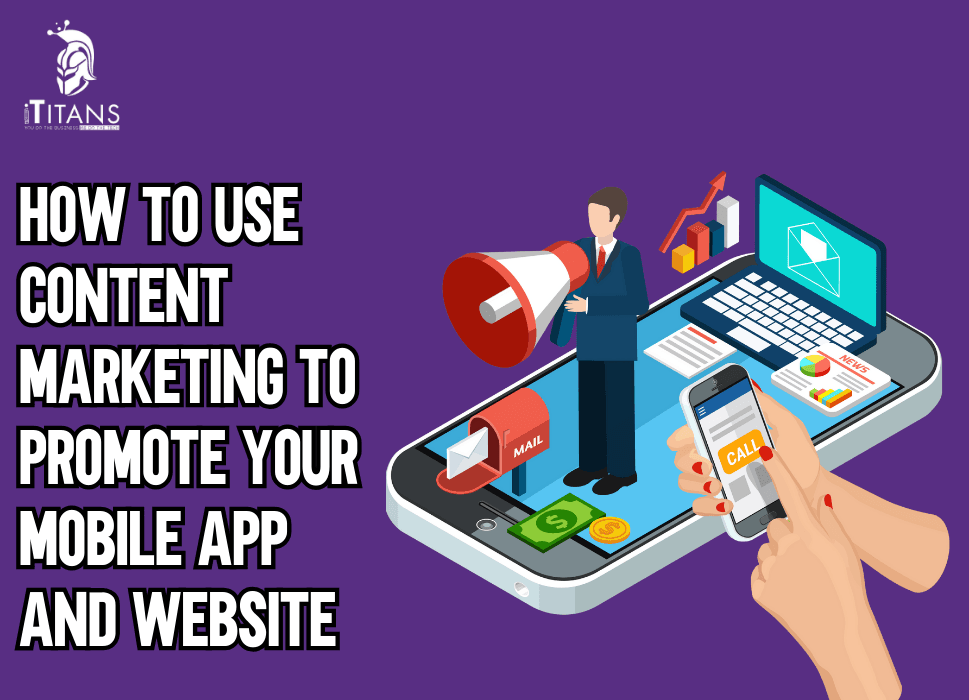
How to Use Content Marketing to Promote Your Mobile App and Website
Launching a mobile app or website is not the hard part anymore. Thousands go live every day. The real challenge starts after launch. No traffic. No installs. No engagement. That is where content marketing for apps and websites becomes the deciding factor between growth and invisibility.
Most founders focus on ads first. Ads stop the moment the budget ends. Content keeps working long after it is published. When done right, mobile app marketing strategies built on content help you attract users, educate them, build trust, and push them toward installs and conversions without burning cash.
This guide breaks down how to promote your mobile app with content marketing in a way that actually works.

Why Content Marketing Matters for Mobile App and Website Growth
People do not install apps because they exist. They install apps because they understand the value. Content bridges that gap.
Here is what strong content marketing for mobile apps achieves:
- Builds awareness before users search for your app
- Educates users before they hit the App Store or Play Store
- Answers objections before users hesitate
- Drives organic traffic that converts into installs
- Supports long-term SEO for mobile apps
Unlike ads, content works across the entire user journey. From discovery to decision.
If you are asking “How do I market my app without paid ads?” Content is the answer.
Understanding Content Marketing for Mobile Apps and Websites
Content marketing for apps means creating helpful, relevant, and search-focused content that attracts users who already have a problem your app solves.
This includes:
- Blog posts answering user questions
- Landing pages focused on use cases
- SEO content that ranks for high-intent keywords
- Guides, comparisons, and how-to content
- Content that supports app user acquisition
Your website becomes the main growth engine. Your app becomes the solution users move toward.
When done correctly, content marketing best practices for apps and websites help you rank on Google and push users toward installs.
Start With Clear Goals Not Random Content
Before writing a single blog post, you need clarity.
Ask yourself:
- Do I want more app installs?
- Do I want website traffic that converts?
- Do I want users to understand my app features?
- Do I want to reduce churn through education?
Every piece of content must serve one clear goal.
For example:
- Blog content = discovery and SEO
- Feature pages = conversion
- Tutorials = retention
- Use-case pages = decision stage
This is how mobile app promotion strategies stay focused instead of scattered.
Define the Right Audience for Content Marketing
Many apps fail because they create content for “everyone.”
Effective mobile marketing tips start with narrowing the audience.
Define:
- User pain points
- Problems they Google before installing an app
- Language they use in searches
- Content formats they trust
For example:
- A fintech app audience searches for “how to manage monthly expenses”
- A fitness app audience searches for “home workout plan without equipment”
- A SaaS app audience searches for “automate reporting process”
This is where long-tail keywords matter.
Keywords like how to promote your mobile app with content marketing or content ideas for mobile app promotion bring users who already want solutions.
Keyword Mapping: The Backbone of App Content Strategy
Random blogs do not rank. Structured keyword mapping does.
Your content should be built around keyword clusters, not single posts.
For this blog alone, you are targeting:
- mobile app marketing strategies
- content marketing for apps
- SEO for mobile apps
- how to increase app downloads organically
Each keyword supports a different stage of user intent.
Example Mapping:
- Informational: “What is content marketing for mobile apps?”
- Commercial: “Best content marketing practices for apps and websites”
- Transactional: “How to increase app downloads organically”
This structure helps Google understand topical depth and improves rankings faster.
Types of Content That Actually Promote Apps and Websites
Not all content drives installs. Some only bring traffic. You need both.
1. Educational Blog Content
This content answers questions users search before installing apps.
Examples:
- “How to track expenses without spreadsheets”
- “Best ways to manage tasks for remote teams”
This supports content marketing for app downloads by warming users.
2. Use-Case Driven Content
This is where conversions happen.
Examples:
- “How startups use [your app] to save time”
- “How our app solves [specific problem]”
This content pushes users from awareness to action.
3. SEO-Focused Long-Form Guides
Long-form content ranks better when structured properly.
This blog itself targets:
- mobile app marketing plan step-by-step
- SEO and content strategy for mobile apps
These guides establish authority and keep users on-site longer.
Content Marketing and SEO for Mobile Apps: How They Work Together
Content without SEO is invisible. SEO without content has nothing to rank.
SEO for mobile apps focuses on:
- High-intent keyword placement
- Optimized headings and structure
- Internal linking to service pages
- Content depth and clarity
When users search “how can SEO help increase app downloads?” your content should already answer it.
Search engines reward:
- Clear explanations
- Structured headings
- Natural keyword usage
- Strong internal linking
This is why content strategy for app growth must align with SEO from day one.
How Content Drives App Installs
Here is how successful apps use content to grow organically:
- User searches a problem on Google
- Blog post answers the question clearly
- Content introduces the app as a solution
- User clicks to feature or landing page
- App install or website conversion happens
This flow supports app marketing content ideas that convert instead of just attracting views.
Common Mistake: Creating Content Without Conversion Paths
Traffic alone does nothing.
Every blog post must:
- Link to relevant app pages
- Include contextual CTAs
- Guide users naturally toward the next step
This is where many blogs fail.
Content must support mobile app promotion strategies, not just rankings.

Content Distribution Strategies That Actually Drive App Installs and Website Traffic
Creating strong content is only half the job. Distribution decides whether your content marketing for mobile apps and websites brings installs or stays invisible.
Most apps fail here. They publish blogs and wait. Growth-focused teams push content into the right channels repeatedly and intentionally.
Let’s break down mobile app promotion strategies that use content beyond just “publish and hope.”
Social Media Content That Supports App Growth
Social media should not exist only for likes. It should support app user acquisition.
The goal is simple:
- Take high-performing blog content
- Break it into short, clear pieces
- Drive users back to your website
Best Content Formats for App Promotion on Social Media
- Problem-focused posts
- Highlight a pain point
- Link to your blog that solves it
- Support keywords like content ideas for mobile app promotion
- Highlight a pain point
- Educational threads or carousels
- Explain one feature or benefit
- Push users to a detailed guide on your website
- Explain one feature or benefit
- Short video explainers
- Turn blog sections into reels or shorts
- Send traffic back to SEO pages
- Turn blog sections into reels or shorts
Social platforms amplify content marketing for apps when used as distribution, not the core platform.
Email Content Marketing for Mobile Apps and Websites
Email remains one of the highest converting channels when combined with content.
Use email to:
- Distribute new blog posts
- Educate users about app features
- Reduce churn through tutorials
Email Content Ideas That Support App Promotion
- “How to solve [problem] using our app”
- “Most common mistakes users make before installing [type of app]”
- “Step-by-step guide to [solution]”
This supports best content marketing practices for apps and websites because users already trust email more than ads.
Using Blog Content to Increase App Downloads Organically
If your blog does not lead users toward installs, it is incomplete.
Here’s how high-converting blogs are structured:
- Clear problem definition
- In-depth explanation
- Soft introduction of the app
- Internal link to app feature pages
- Clear but natural CTA
This flow helps how to increase app downloads organically without aggressive selling.
Avoid banners everywhere. Let content guide users naturally.
Content Distribution Through Influencers and Partnerships
You do not need celebrities. You need relevance.
Micro-influencers and niche creators:
- Trust content more
- Share educational blogs
- Drive higher-intent traffic
Instead of asking them to “promote the app,” ask them to:
- Share a guide
- Review a feature explained in your blog
- Link back to your website
This improves:
- Referral traffic
- Brand credibility
- SEO through backlinks
It also strengthens content marketing for app downloads.
Repurposing Content for Maximum Reach
One blog post should not live once.
A single article can become:
- 10 social posts
- 3 email campaigns
- 2 videos
- 1 downloadable guide
This is how mobile app marketing strategies scale without creating new content every time.
Focus on depth, not quantity.
Measuring Content Marketing Success for Apps and Websites
If you do not measure performance, you cannot improve.
Here are the KPIs that actually matter:
Content Performance Metrics
- Organic traffic growth
- Keyword ranking improvements
- Time on page
- Bounce rate
App-Focused Metrics
- App installs from blog pages
- Conversion rate from content to install
- Retention of content-driven users
This answers the question: “How do I measure success of mobile app content marketing?”
Traffic is only step one. Conversions matter more.
SEO Optimization Inside Content
Many blogs talk about SEO but fail to execute it correctly.
Here is what actually helps SEO and content strategy for mobile apps:
Smart Keyword Placement
- Primary keyword in H1
- Supporting keywords in H2 and H3
- Long-tail keywords in body naturally
- Question-based keywords in FAQs
Internal Linking That Makes Sense
- Link blogs to service pages
- Link guides to feature pages
- Link educational posts together
This improves crawlability and topical authority.
Avoid These Content Marketing Mistakes for Apps
Even good content can fail if these mistakes exist.
Mistake 1: Writing for Search Engines Only
Google rewards content written for humans first.
Mistake 2: Ignoring User Intent
Ranking for the wrong keyword brings useless traffic.
Mistake 3: No Content Updates
Old content loses rankings. Update regularly.
Mistake 4: No Clear CTA
Every article must guide the reader somewhere.
Avoiding these mistakes strengthens content strategy for app growth.
How Content Marketing Supports Long-Term App Growth
Content is not a campaign. It is a system.
Over time, content:
- Builds trust
- Reduces customer acquisition cost
- Improves brand recall
- Supports SEO for years
Apps that grow organically focus on:
- Consistency
- Depth
- User-focused education
This is why content marketing best practices for apps and websites always outperform short-term ad tactics.
Advanced Content Frameworks That Drive Real App and Website Growth
Most blogs stop at “create content and distribute it.” That is not enough anymore. If you want content marketing for mobile apps and websites to outperform competitors, you need frameworks that guide users from curiosity to action.
Let’s break down strategies that high-growth apps actually use.
Step 1: Clearly Define the Problem
Users search because something is broken, slow, confusing, or expensive.
Examples:
- Manual tracking wastes time
- Existing apps feel complicated
- Users struggle to stay consistent
Your content must show you understand the problem deeply.
This is where keywords like mobile marketing tips and content marketing for apps fit naturally.
Step 2: Explain the Solution in Detail
Do not jump to selling the app.
Explain:
- How the problem can be solved
- What approaches work
- Why most people fail
This builds trust and positions your brand as helpful, not pushy.
Step 3: Show Proof and Real Use Cases
This is where conversions start.
Proof can be:
- Scenarios
- Before-and-after explanations
- Feature walkthroughs
- Real-world examples
Content that follows this flow improves app user acquisition without aggressive selling.
Content Mapping Across the User Journey
Not all users are ready to install an app immediately.
Your mobile app marketing strategies should support every stage:
Awareness Stage
Content examples:
- “What is content marketing for mobile apps?”
- “Common mistakes apps make after launch”
Purpose: Education
Consideration Stage
Content examples:
- “Best content marketing practices for apps and websites”
- “SEO and content strategy for mobile apps”
Purpose: Comparison and evaluation
Decision Stage
Content examples:
- “How our app solves [specific problem]”
- “How to increase app downloads organically using content”
Purpose: Conversion
Mapping content properly avoids random publishing and improves rankings.
How SEO Content Supports App Store Optimization (ASO)
Many teams treat SEO and ASO separately. That is a mistake.
Blog content:
- Educates users before they visit the app store
- Builds brand trust before the install decision
- Improves branded searches
When users search your app name after reading a blog, app store conversion rates increase.
This is how SEO for mobile apps indirectly boosts installs.

Turning Blog Readers Into App Users
Traffic without direction is wasted opportunity.
Here’s how to guide readers smoothly:
- Mention app features only when relevant
- Link to feature pages naturally
- Use contextual CTAs inside content
- Avoid popups that interrupt reading
This approach supports content marketing for app downloads while keeping user experience strong.
Turn Your App and Website Content Into a Growth Engine
At iTitans, we build SEO-driven content strategies that attract the right users, educate them, and move them toward real action. If you want content that fuels long-term app and website growth, now is the time to start.
FAQs
1. How long does content marketing take to show results for a mobile app?
Content marketing for apps usually starts showing SEO traction within 3–4 months, but install-driven results often improve steadily over 6–9 months. Results depend on keyword intent, content depth, and internal linking strength.
2. Can content marketing work for mobile apps without a strong social media presence?
Yes, SEO-focused content marketing for mobile apps can drive installs through organic search alone if keywords target problem-aware users. Social media accelerates reach but is not mandatory for success.
3. What type of content drives the highest app install conversion rate?
Use-case blogs, problem-solution guides, and feature-driven educational content convert better than promotional posts. These formats support how to increase app downloads organically by building trust before the install decision.
4. Should content marketing focus more on the app or the website?
Content should live on the website but be written to support the app journey. This approach strengthens SEO for mobile apps while guiding users toward installs naturally.
5. How do I choose keywords for content marketing for my mobile app?
Focus on problem-based and solution-oriented keywords rather than app-related terms. This strategy aligns with mobile app marketing strategies that attract users before they compare apps.
6. Does blogging really help mobile app SEO and ASO together?
Yes, blogging supports ASO indirectly by increasing brand searches, trust, and pre-install education. This strengthens SEO and content strategy for mobile apps beyond app store optimization alone.
7. How many blog posts are needed to promote a mobile app effectively?
There is no fixed number, but apps usually see momentum after publishing 15–25 high-quality, keyword-focused posts. Consistency matters more than volume in content strategy for app growth.
8. What mistakes reduce content-driven app installs even with good traffic?
Common issues include targeting the wrong keywords, weak internal links, and no clear content-to-install flow. Traffic alone does not guarantee content marketing for app downloads.